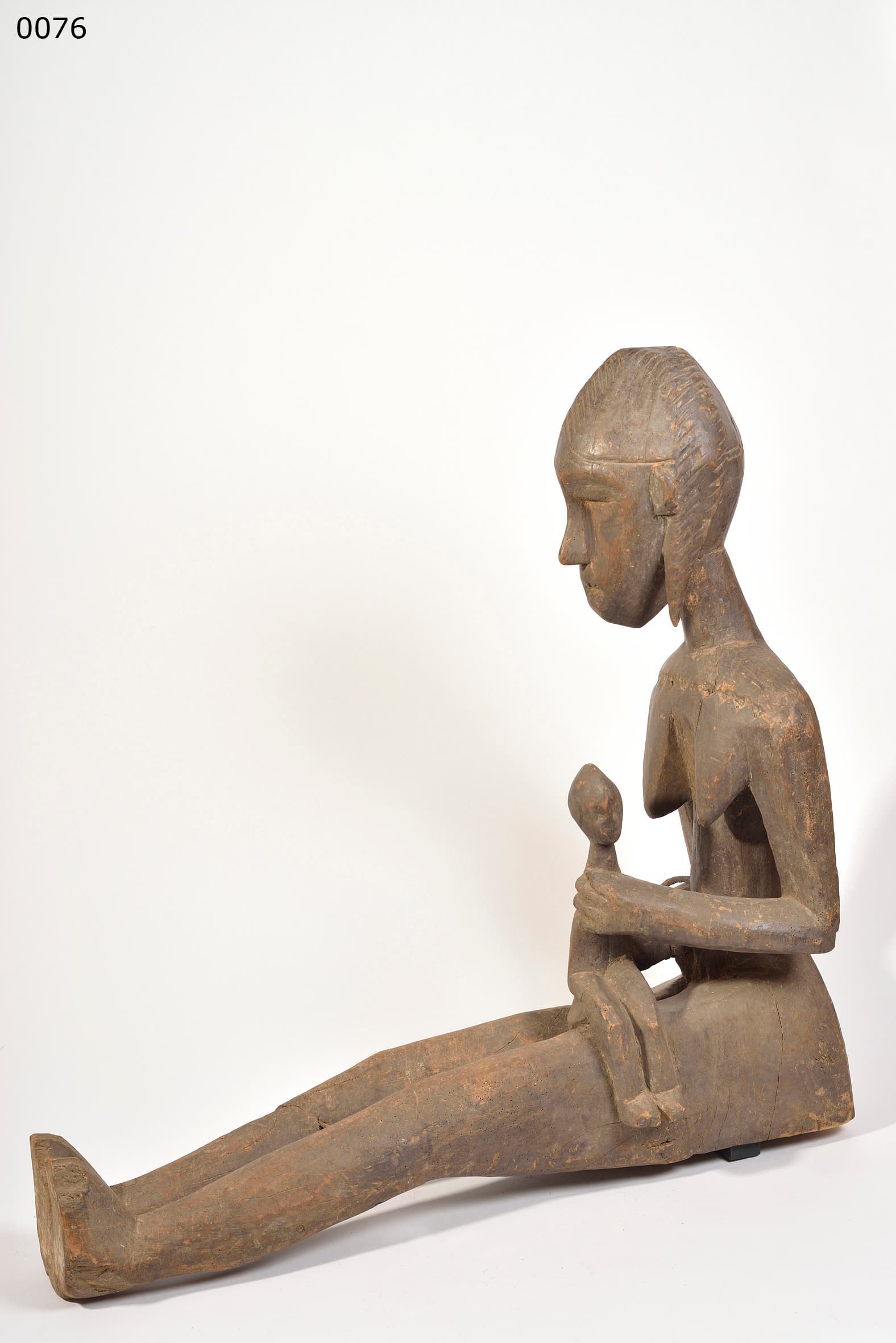
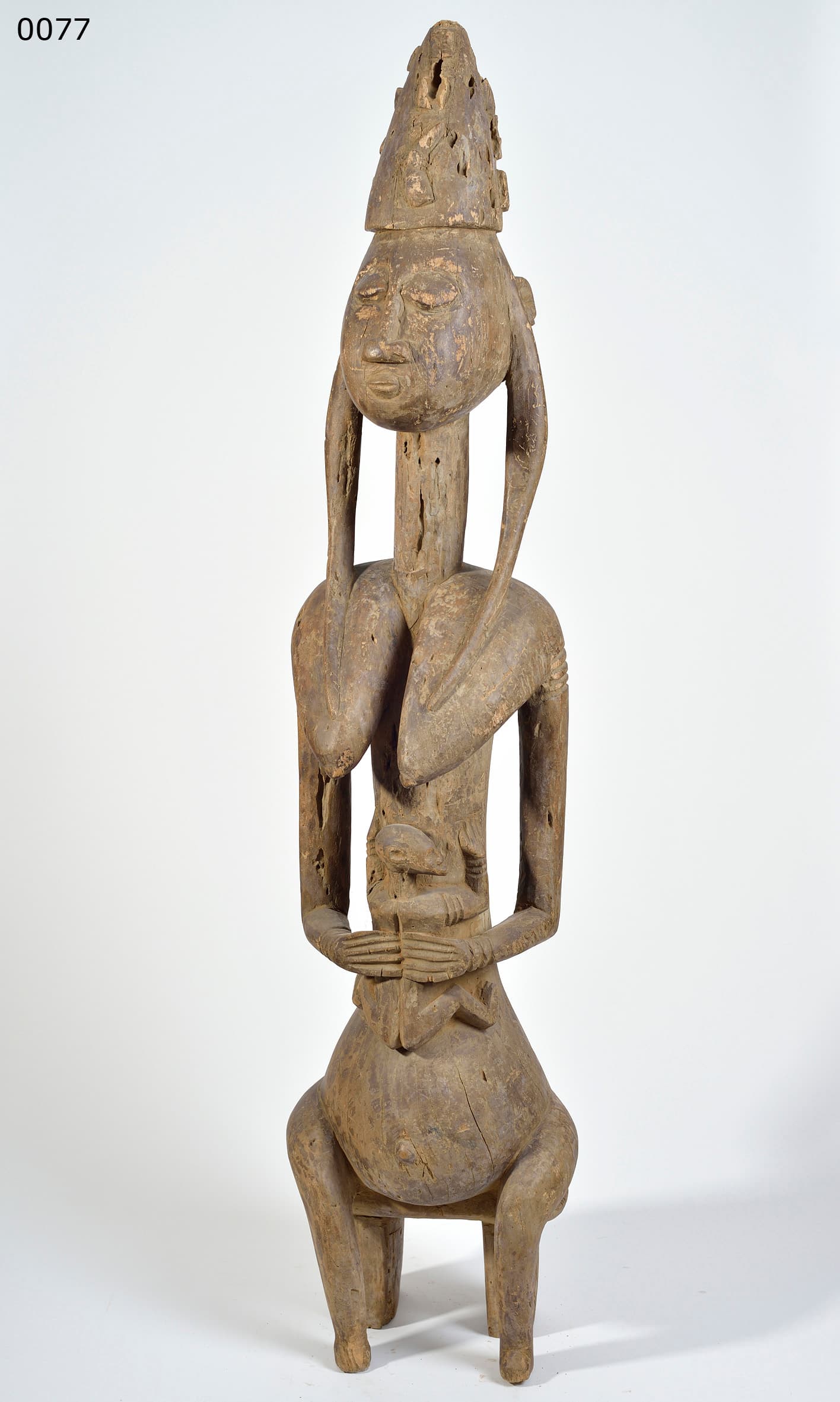
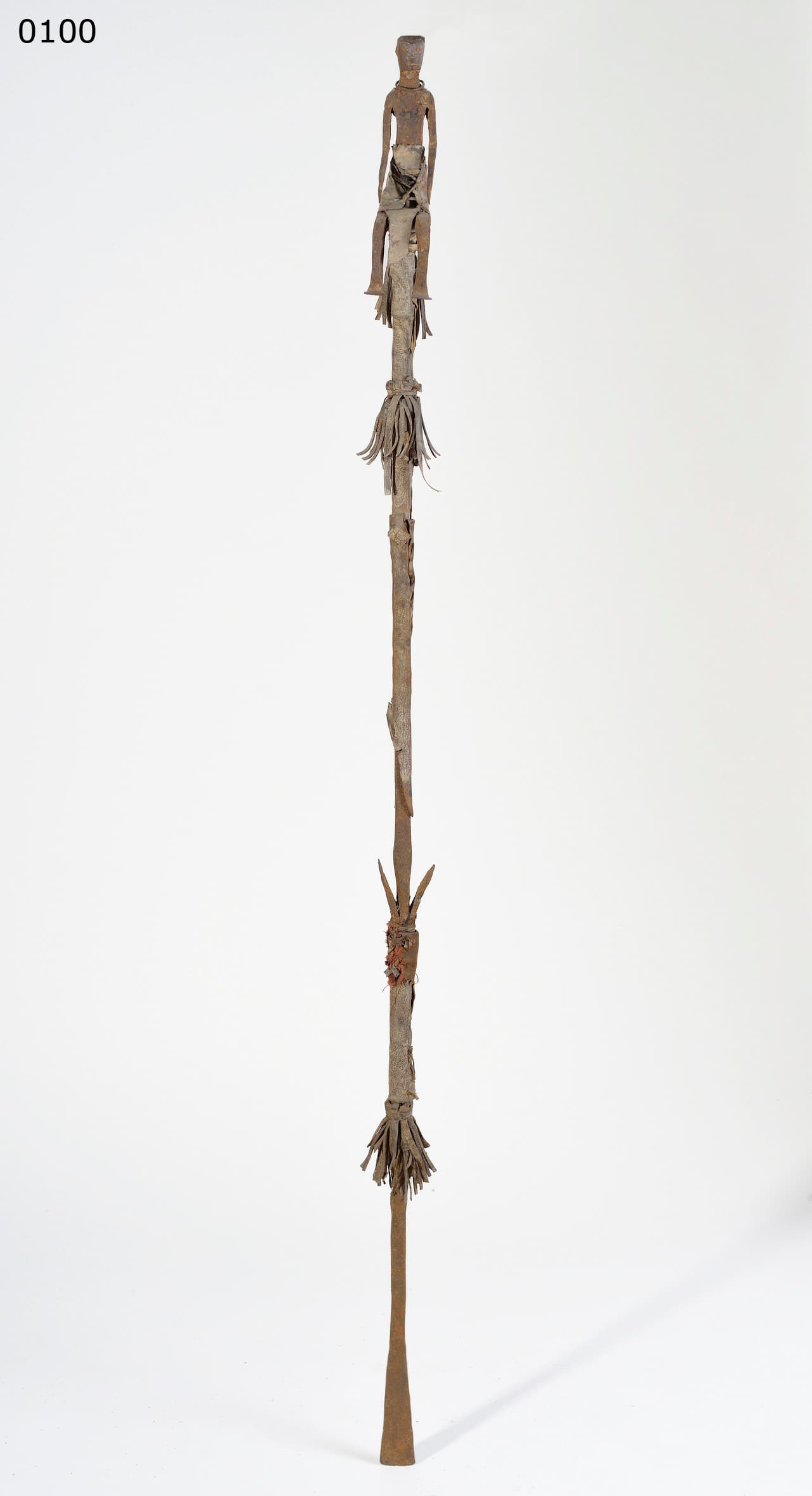
Ein sehr minimalistisches geschmiedetes Vierbeiner aus Eisen (frühes 20. Jh., 33 cm) aus dem Bamana von Mali - wahrscheinlich ein Pferd oder eine Giraffe, mit einem unmöglich langen, schlanken Hals, spitzem Kopf und zarten, spindeldürren Beinen. Das Eisen ist stark korrodiert und hat eine trockene, dunkle, stark strukturierte rostige Oberfläche.
1. Eisenminimalismus in der Sahelzone
Bamana-Schmiede (numuw) sind absolute Meister der reduktiven Abstraktion.
- Zugfähige Silhouette: Die Figur verzichtet auf jegliche anatomische Masse und nutzt die Zugfestigkeit des geschmiedeten Eisens, um eine geschmeidige, schwebende Silhouette zu schaffen.
- Essenz statt Realismus: Der extreme Minimalismus fängt die reine geistige Essenz und kinetische Energie des Tieres ein und nicht seine buchstäbliche physische Realität - schwerelose Präsenz durch das, was entfernt wird.
2. Altargefäße und Weissagung
Kleine Eisentiere dieser Art sind mächtige, lokalisierte Altäre, die von Wahrsagern und Priestern verwendet werden.
- Pferdesymbolik: Wenn die Figur ein Pferd darstellt, signalisiert sie aristokratisches Prestige, militärische Macht und spirituelles Reisen.
- Giraffen-Lesart: Wenn sie als Giraffe gelesen wird (was durch den extremen Hals angedeutet wird), steht sie für weitreichende Visionen und die Verbindung zum himmlischen Reich. In jedem Fall dient die Figur als unzerstörbarer Kanal für Gebete und Opfergaben.
3. Korrosion im frühen 20. Jahrhundert
Die Echtheit ist durch die starke Oxidation eindeutig belegt.
- Rituelle Rückstandsschichten: Dicker ungleichmäßiger Rost und Patinierung, die mit jahrzehntelanger Einwirkung von Blut, Kolanuss und den Elementen auf einem offenen malischen Altar übereinstimmen.
- Strukturelle Härten: Tiefe Lochfraß und gehärtetem Eisen bestätigen frühen 20. Jahrhundert Ursprünge und authentische rituelle Geschichte und nicht vor kurzem geschmiedet.
Zusammenfassung
Diese zoomorphe Figur aus Bamana-Eisen ist ein Triumph der sahelischen Schmiedekunst, elegant aufsteigend und brutal minimalistisch. Ihre kinetischen Linien und die tiefe, authentische Rostpatina machen sie zu einem sehr begehrten ethnografischen Artefakt.
KI-unterstützt erstellt aus Sammlungsgutachten, Objektfotografie und eigener Recherche, redaktionell geprüft. Fehler sind möglich — Hinweise darauf sind uns willkommen. Zum Verfahren →