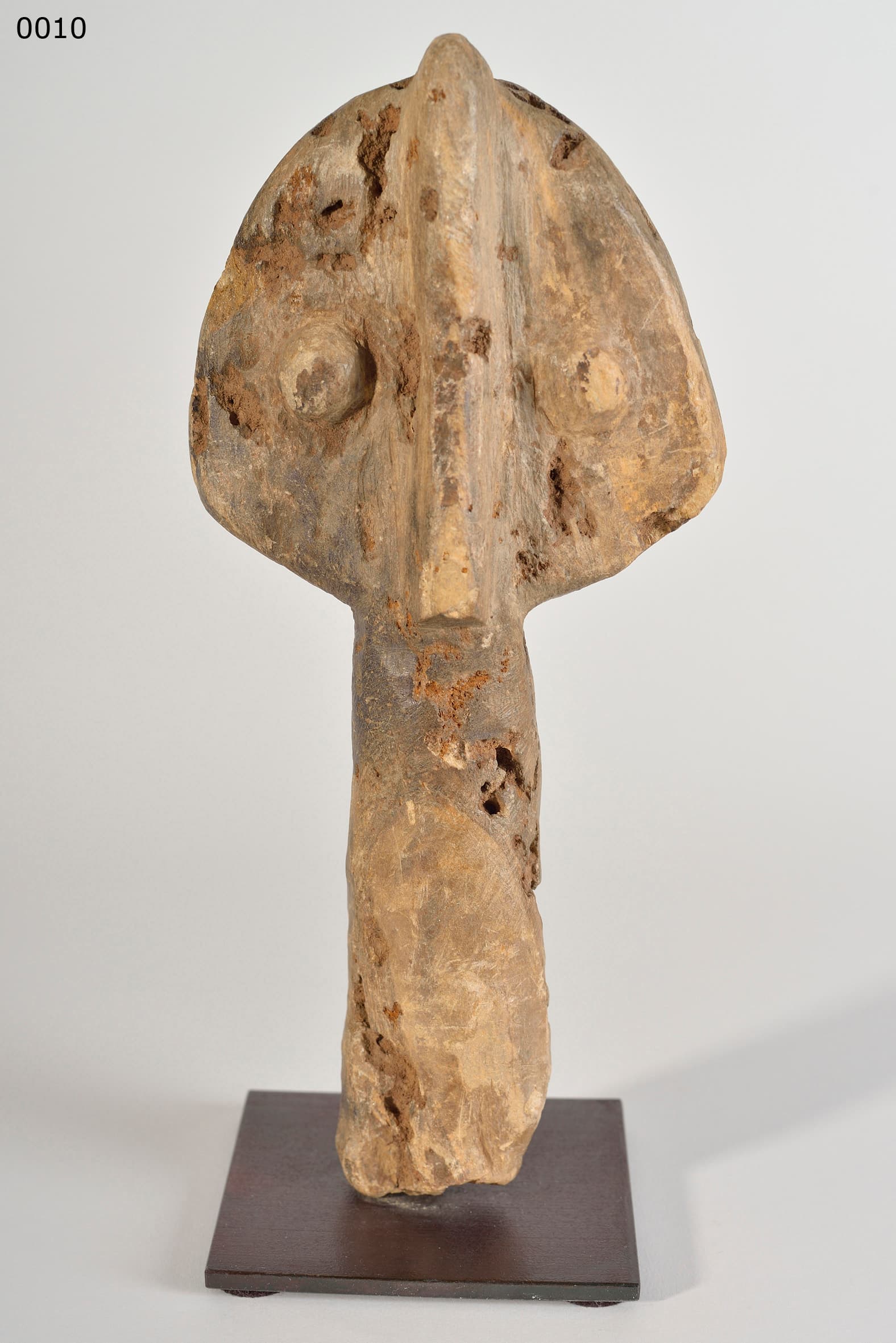
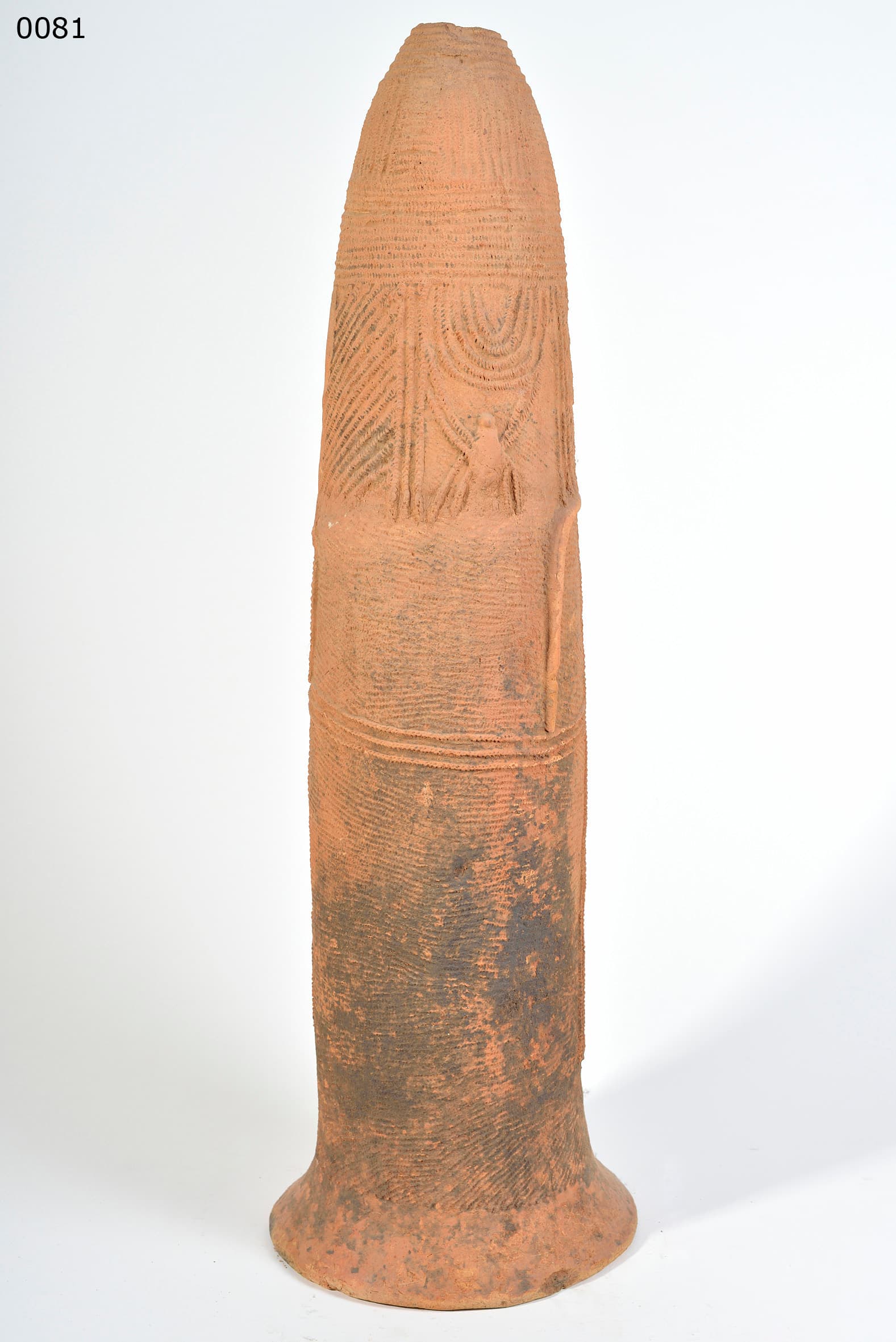
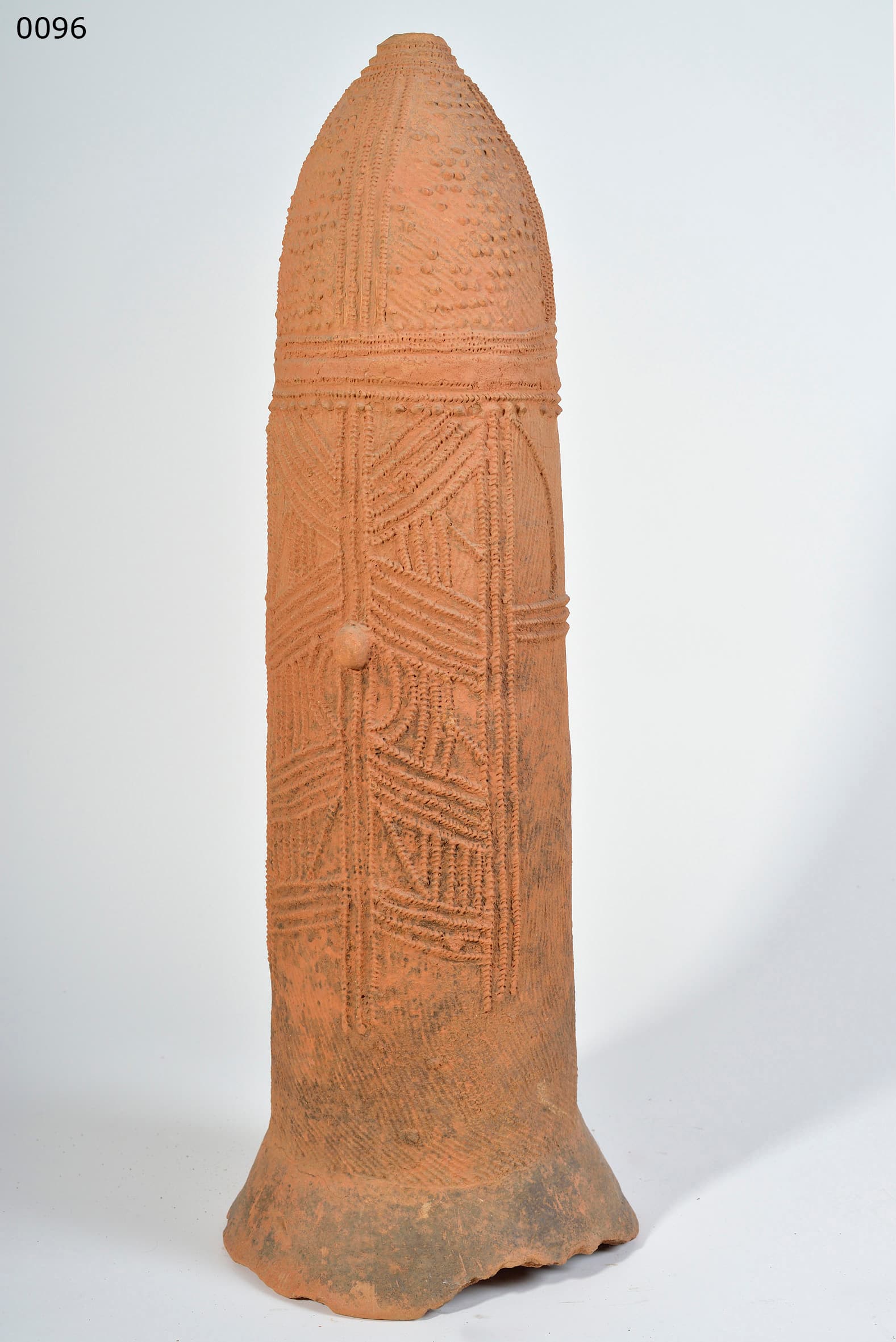
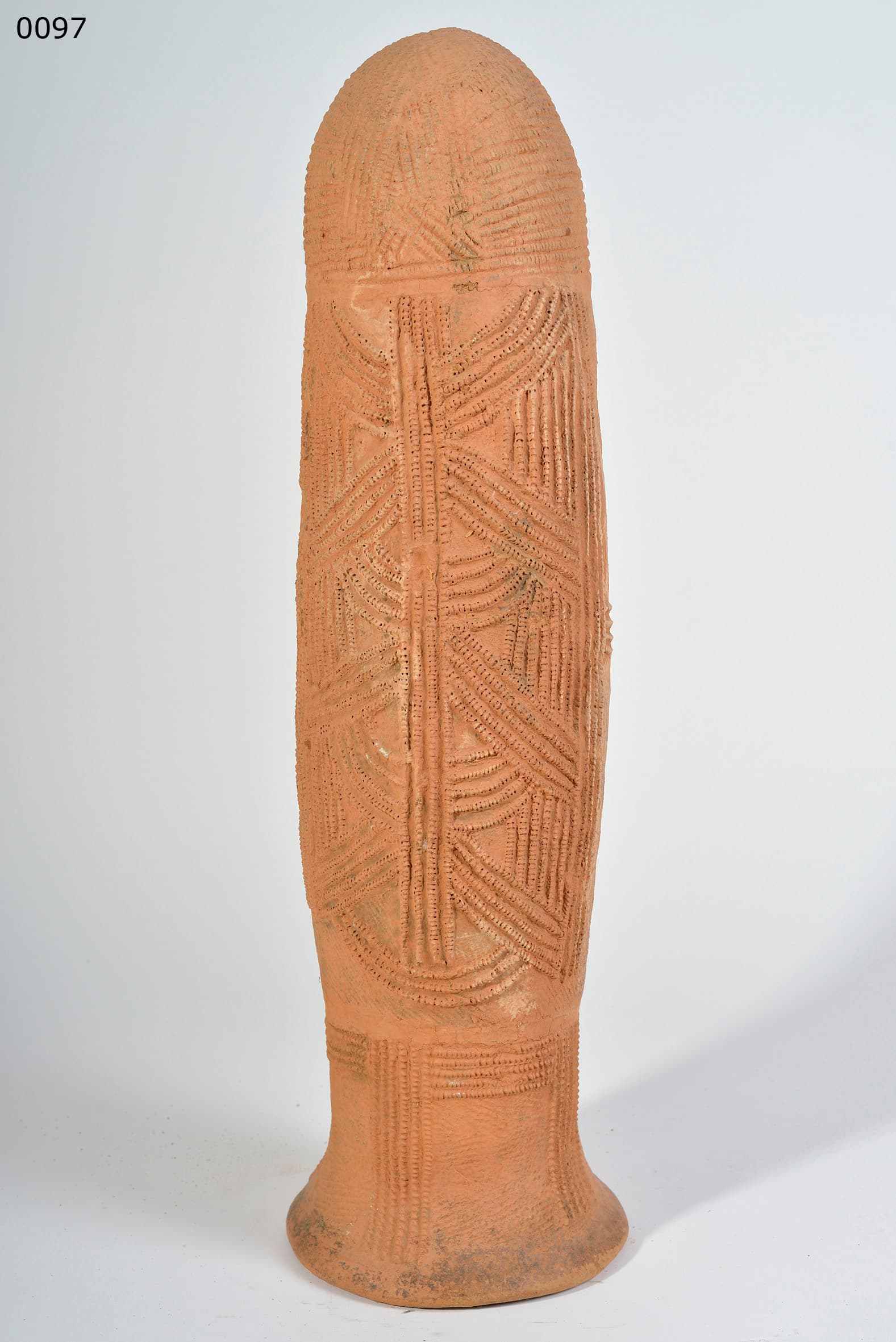
Kopf eines Bura-Terrakotta-Gefäßes (3.-11. Jh., 22 cm) aus Niger / Burkina Faso - die stilisierte Spitze einer Bura-Graburne, mit stark vereinfachten, minimalen Gesichtszügen, die im Flachrelief auf eine gewölbte Phallusform gemeißelt sind. Der blass-orangerote Ton ist tief entsteint, stark erodiert und vollständig mit kalzifizierter Erde verkrustet. Komplementär zu 0298.
1. Das Nekropolensystem von Bura-Asinda
Die im unteren Niger-Tal entdeckte Bura-Asinda-Kultur (3.-11. Jahrhundert n. Chr.) brachte Tausende von bemerkenswerten Terrakotta-Grabgefäßen hervor.
- Urnenspitze: Dieser Kopf ist die Spitze einer einst massiven Urne.
- Elementare Abstraktion: Der Bildhauer reduziert die menschliche Form auf ihre grundlegendste architektonische Essenz - er verlässt sich auf einfache, aufgetragene Tonknoten oder minimale Einschnitte, um Augen und Mund zu kennzeichnen, und gibt der unnachgiebigen Beständigkeit den Vorzug vor einer zarten Porträtdarstellung.
2. Avatare der Verstorbenen
Diese Gefäße wurden umgedreht über den Überresten der Verstorbenen beigesetzt, wobei der Kopfteil knapp über oder knapp unter der Erdoberfläche hervortrat.
- Dauerhafter Wächter: Indem die Künstler der phallischen Urne ein menschliches Gesicht gaben, schufen sie einen dauerhaften, wachenden Avatar des Verstorbenen.
- Die Köpfe ermöglichten den lebenden Nachkommen eine visuelle Interaktion mit dem Vorfahren - sie dienten als Mittelpunkt für Trankopfer und Gebete, um die Kontinuität der Abstammung zu gewährleisten.
3. Tausendjährige Taphonomie und Verkalkung
Die Oberfläche ist ein Zeugnis für die jahrtausendelange Einbettung in den Sand der Sahelzone.
- Knochenähnliche Verkrustung: Starke Verkalkung durch Mineralien, die im Laufe der Jahrhunderte in die poröse Keramik ausgewaschen wurden, hat eine dicke knochenähnliche Kruste gebildet.
- Diagnostisches Pitting: Diese zementähnliche Kruste, kombiniert mit tiefem natürlichem Pitting des darunter liegenden Tons, ist das absolute Kennzeichen authentischer, ungestörter archäologischer Funde aus Bura.
Zusammenfassung
Dieser Terrakottakopf aus Bura ist ein monumentaler Ausdruck antiker Bestattungsarchitektur und verbindet auf eindrucksvolle Weise abstrakte Porträtdarstellung mit Ahnenverehrung. Seine extreme Verkalkung und die blasse, von der Wüste verwitterte Oberfläche machen ihn zu einem höchst bedeutenden Relikt des westafrikanischen Altertums.
KI-unterstützt erstellt aus Sammlungsgutachten, Objektfotografie und eigener Recherche, redaktionell geprüft. Fehler sind möglich — Hinweise darauf sind uns willkommen. Zum Verfahren →