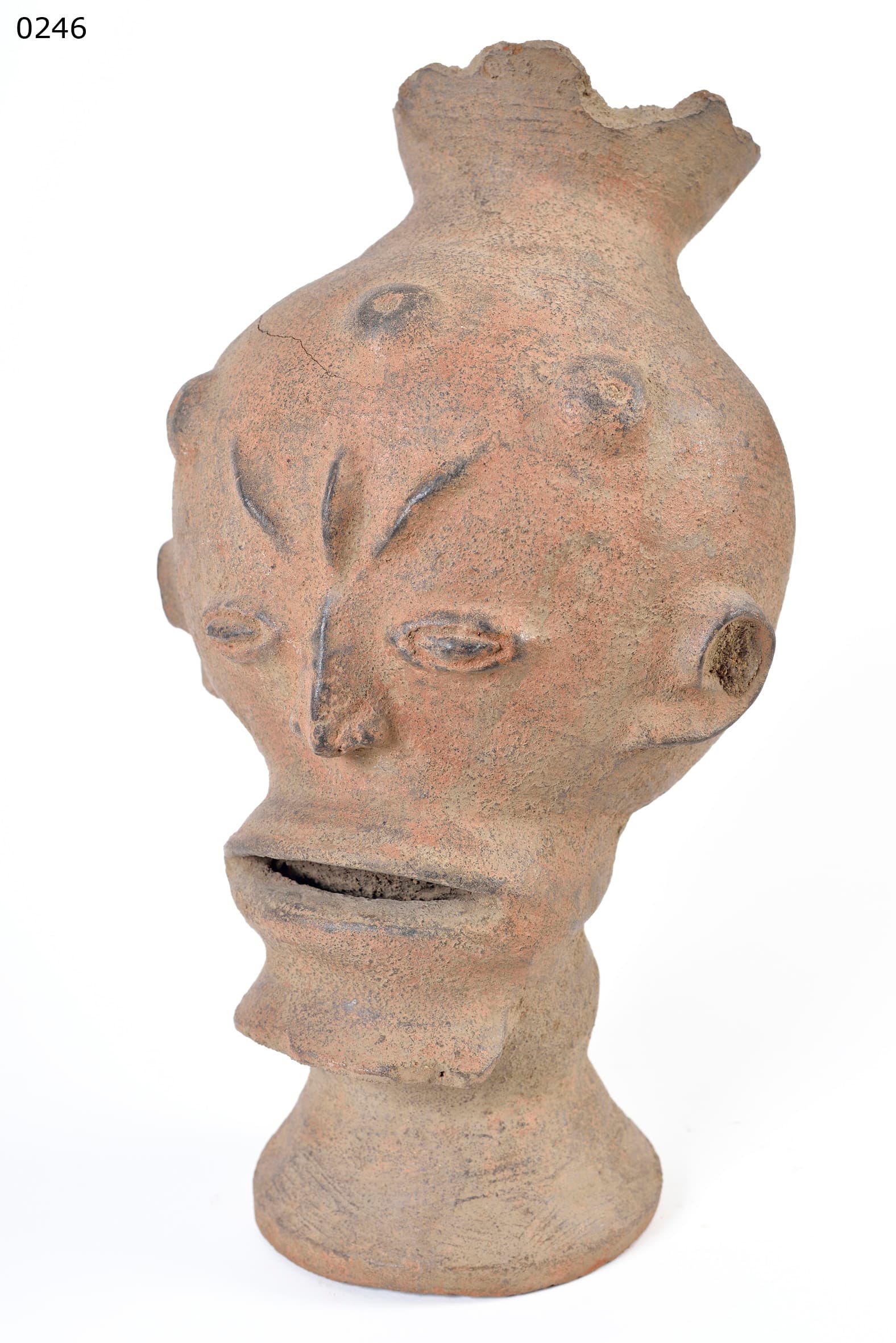
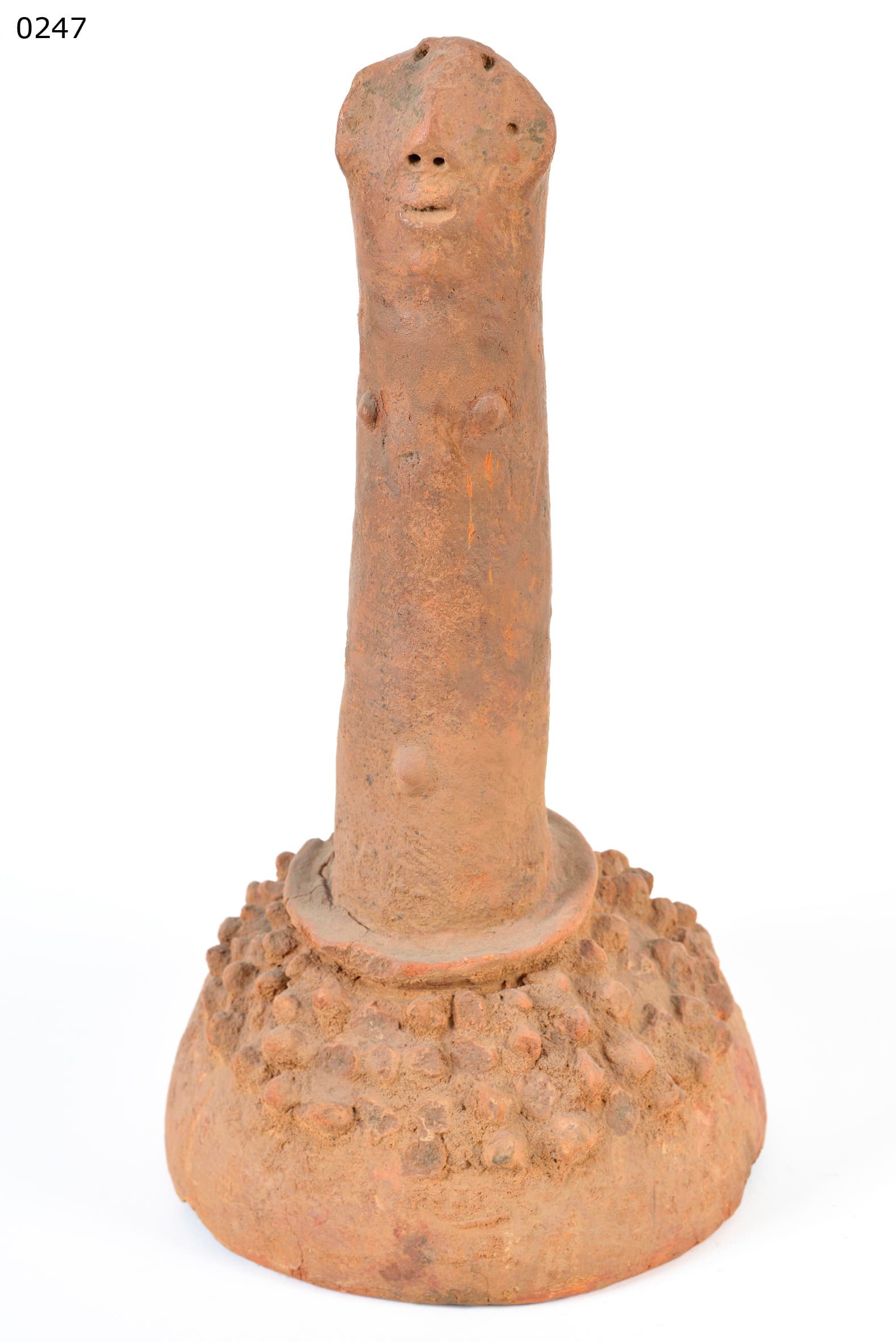
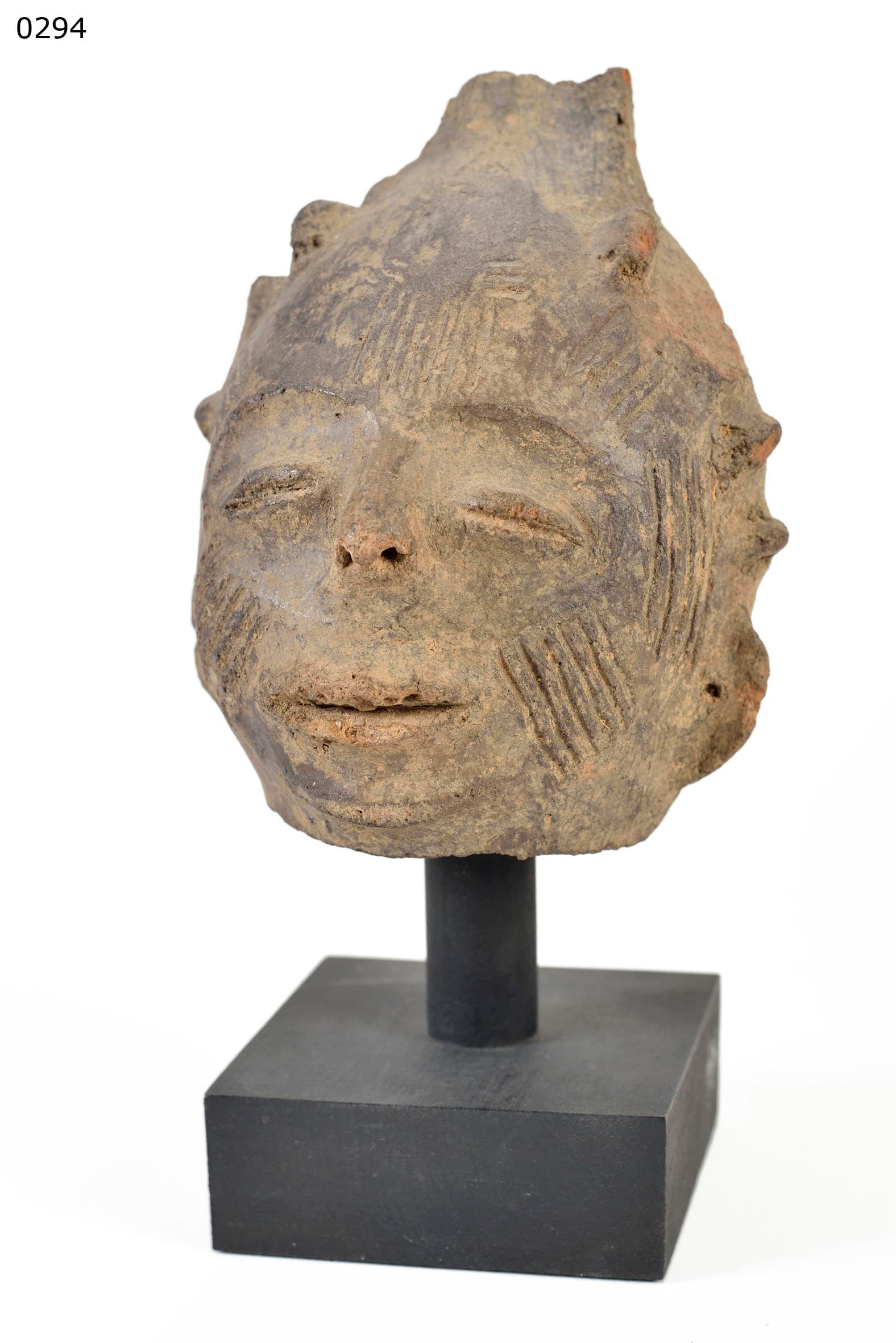
Eine begleitende Akan-Terrakotta (12.-18. Jh., 18 cm) aus Ghana - in Stil und ritueller Rolle mit 0303 gepaart, mit dem klassischen abgeflachten Gesicht, dem beringten länglichen Hals, den stilisierten Gesichtszügen und der komplizierten Frisur. Die Oberfläche weist eine stark verwitterte, erdige Patina auf, mit kleinen Absplitterungen und Erdverkrustungen, die von der langen Exposition im Schrein herrühren.
1. Die "Mma"-Tradition und ästhetische Stilisierung
Akan-Terrakotta-Gedenkköpfe, bekannt als mma, stehen für eine hochentwickelte Tradition der Idealisierung königlicher Schönheit und spiritueller Gelassenheit.
- Abgeflachte Flächen, geschwungene Stirne: Die Künstler haben die Gesichtsflächen absichtlich abgeflacht und die hohe geschwungene Stirn betont, um Weisheit, Würde und einen gehobenen sozialen Status darzustellen.
- Halsring-Kanon: Der horizontale Halsring ist bei allen Akan-Untergruppen ein kanonisches Zeichen für Schönheit - er steht für Fettrollen, die Wohlstand, Fruchtbarkeit und körperliches Wohlbefinden symbolisieren.
2. Begräbnisriten und Ahnenverehrung
Bei diesen Köpfen handelte es sich nicht um exakte naturalistische Porträts, sondern um spirituelle Gefäße, die die Seele eines verstorbenen Königs oder Gemeindevorstehers beherbergen sollten.
- Nsamien-Platzierung: Sie wurden in den nsamien (heiliger Ahnenhain) gebracht und nach aufwendigen Begräbnisriten auf Altären aufgestellt.
- Brennpunkt für Trankopfer: Dienten als ständiger Brennpunkt für Trankopfer und Fürbitte der Ahnen und sorgten für das kosmische Gleichgewicht zwischen der lebenden Gemeinschaft und dem Reich der Toten.
3. Archäologische Patinierung und Brenntechniken
Die bei relativ niedrigen Temperaturen in offenen Brennöfen gebrannten Terrakotten der Akan sind von Natur aus porös und über Jahrhunderte hinweg sehr empfänglich für Umwelteinflüsse.
- Verwitterung im tropischen Hain: Tief gesprenkelte braune und graue Patina von Jahrhunderten tropischer Erde, saisonalen Regenfällen und Opfertränken.
- Verifizierte Chronologie: Organischer Oberflächenabbau kombiniert mit eingebettetem irdenem Aggregat verifiziert sicher die Chronologie des 12. bis 18. Jahrhunderts.
Zusammenfassung
Dieser Akan-Kopf ist ein Pendant zu 0303 und weist denselben heiteren, idealisierten Ausdruck und dieselbe tiefgreifende rituelle Verwitterung auf - zusammen bilden sie ein Paradebeispiel für ein ghanaisches königliches Erinnerungsporträt.
KI-unterstützt erstellt aus Sammlungsgutachten, Objektfotografie und eigener Recherche, redaktionell geprüft. Fehler sind möglich — Hinweise darauf sind uns willkommen. Zum Verfahren →