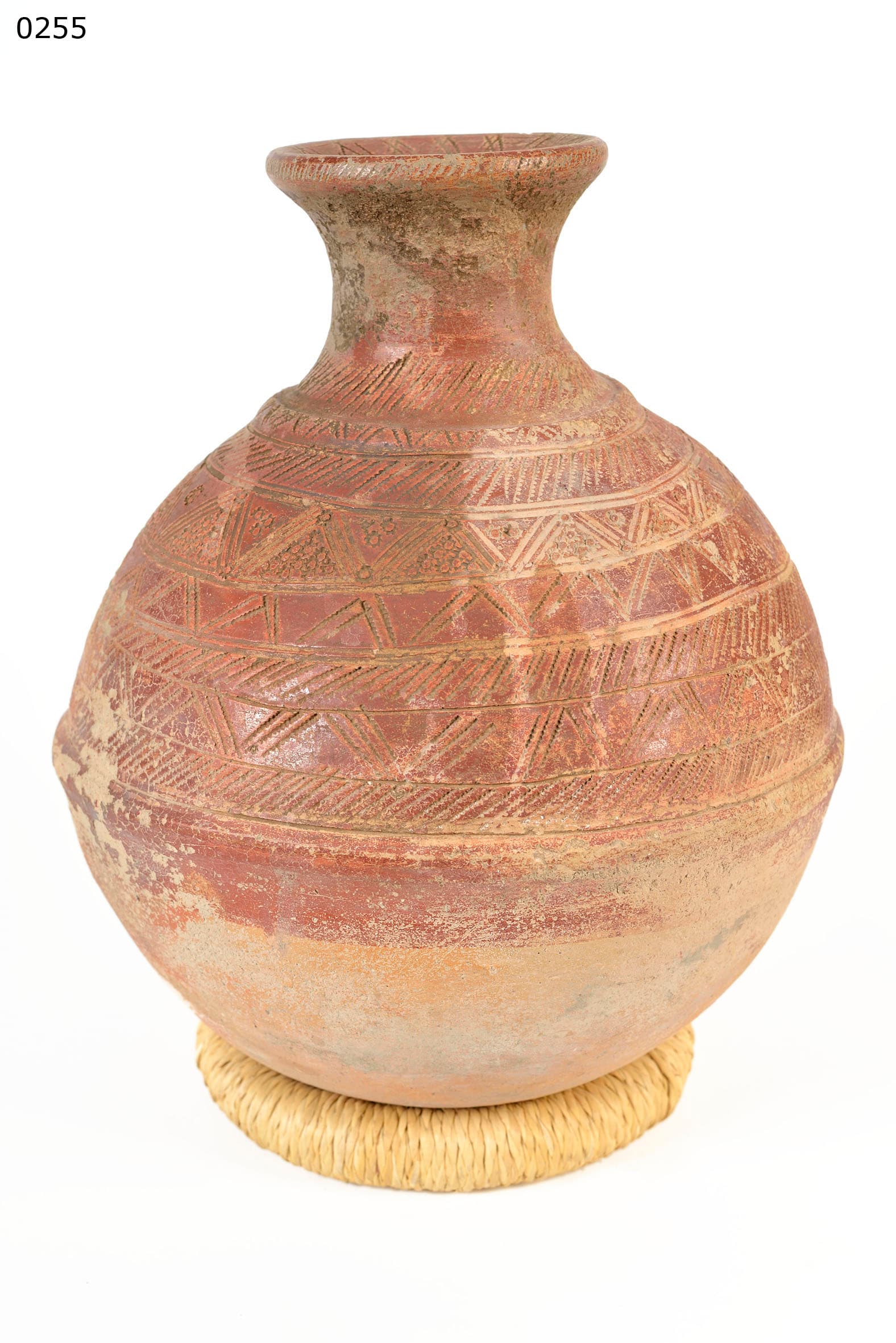
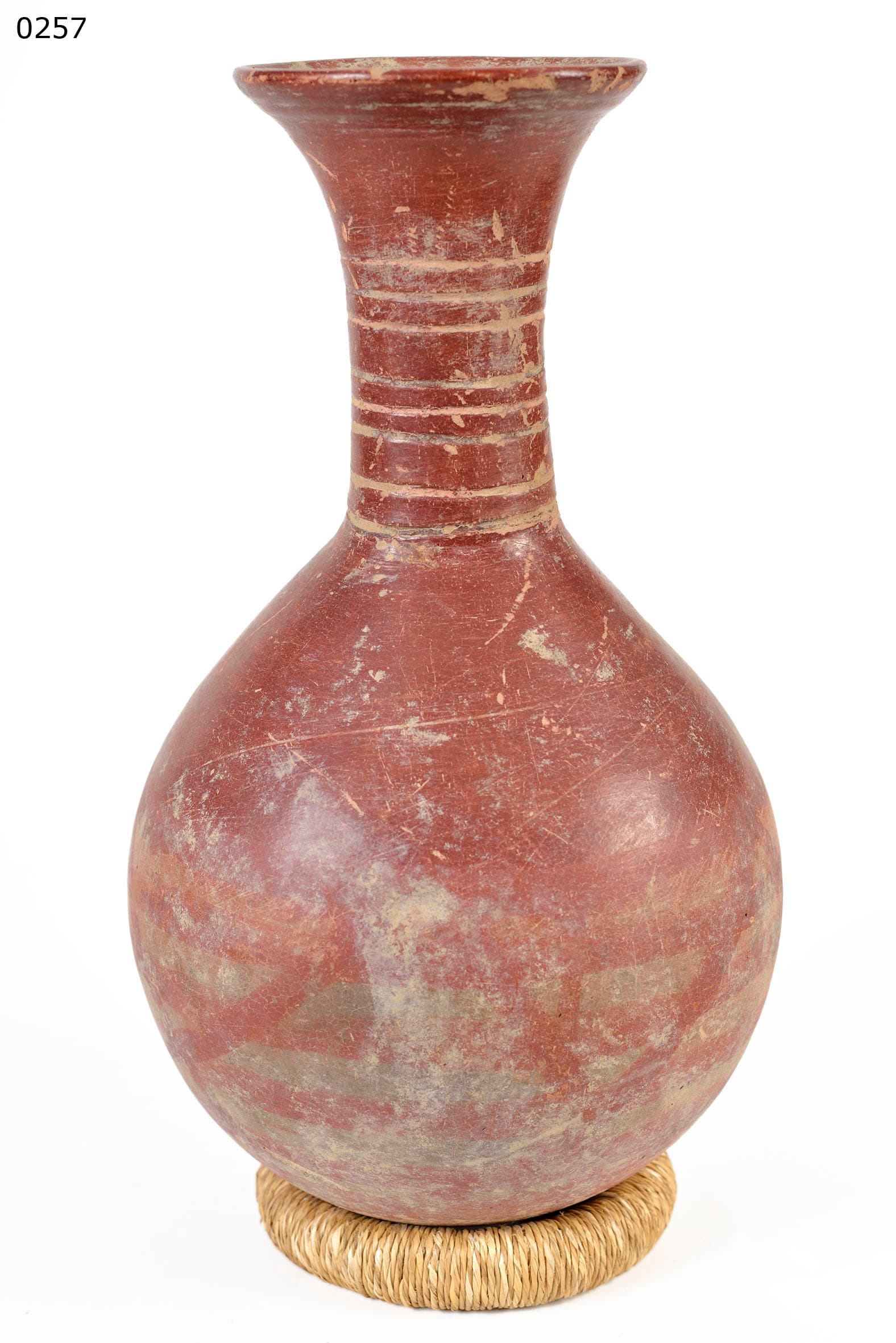
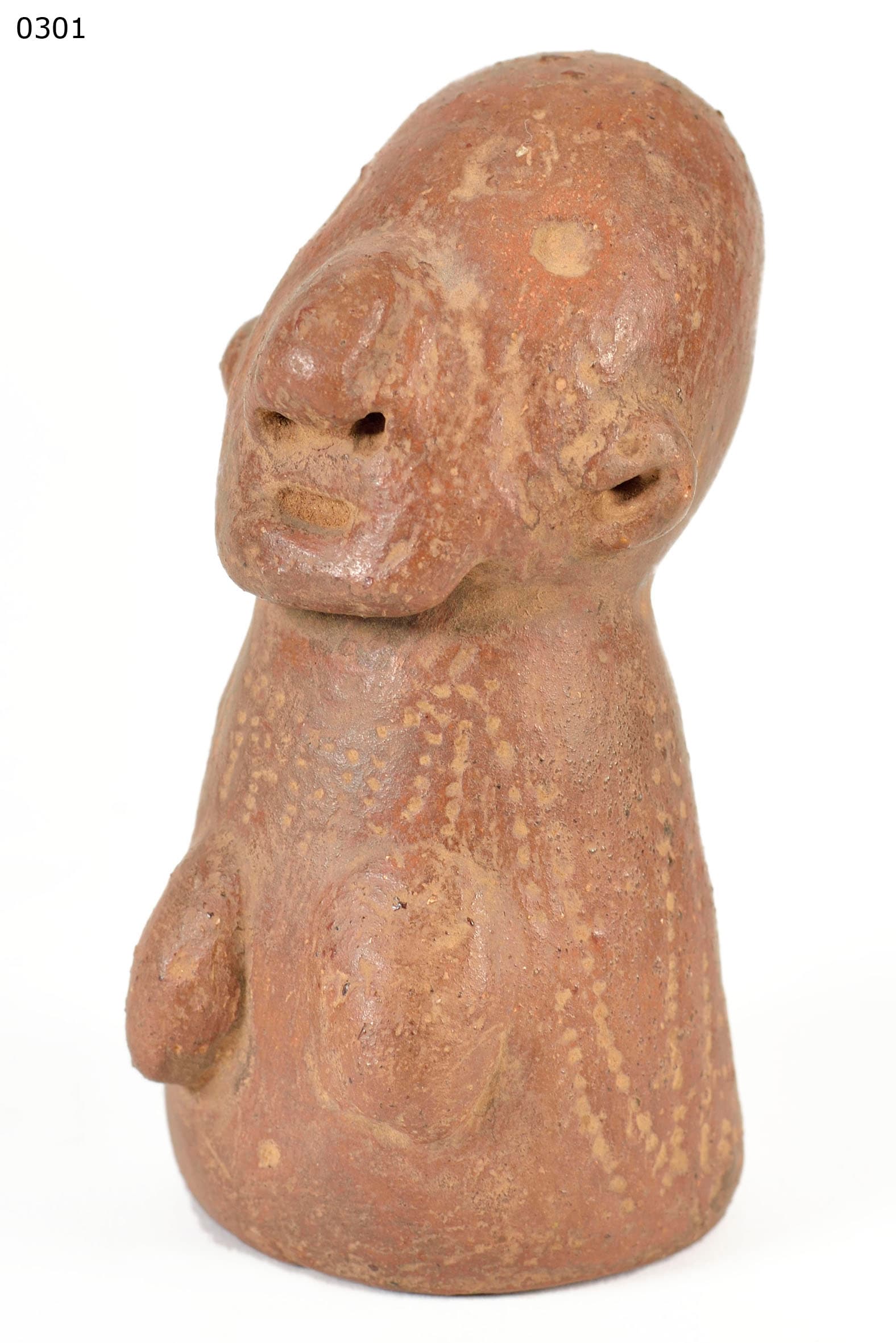
Eine Terrakotta aus dem Inland des Nigerdeltas (12.-16. Jh., 18 cm) aus Mali - eine Figur, die eine große, hervorstehende Gefäßschale hält. Der rötliche Ton, der für das malische Delta charakteristisch ist, ist durch Schwemmlandablagerungen stark gesprenkelt. Gepaart mit 0318.
1. Das ausdrucksstarke Vokabular des malischen Deltas
Die Künstler von Djenne-Jeno und dem weiteren Inland des Nigerdeltas waren Meister der psychologischen Körperhaltung.
- Opferträger-Typologie: Dies ist eine klassische Opferträgerfigur - die große Schale, die vor dem Körper gehalten wird, empfängt physisch die täglichen Opfergaben.
- Statusmarkierungen durch Applikationen: Die sorgfältige Verwendung von Applikationsrollen zur Darstellung von Schmuck, Körperskarifikationen und Gesichtszügen weist auf den gehobenen Status der dargestellten Person hin.
2. Votivgefäße und Bittgebete
Diese Figuren fungierten als aktive Vermittler in häuslichen und kommunalen Schreinen.
- Entgegennahme täglicher Opfergaben: Die große Schale nahm physisch tägliche Opfergaben in Form von Getreide, Bier oder Blut von Personen entgegen, die um die Gunst der Ahnen baten.
- Kontinuierliche Ausstrahlung: Durch das Aufstellen einer sich ewig opfernden Figur auf einem Altar stellte der Schutzherr sicher, dass Appelle an die Geisterwelt kontinuierlich ausgestrahlt wurden - auch in Abwesenheit vom Schrein.
3. Anschwemmungsstratigraphie und Restaurierungsmarker
Diese aus den saisonal überschwemmten Schlammebenen von Mali geborgenen Figuren weisen eine komplexe, mehrschichtige Patina auf.
- Gehärtete grau-ockerfarbene Kruste: Durch die jahrhundertelange abwechselnde Einwirkung von Wasser und sengender Sonne entstand eine ausgeprägte gehärtete Kruste aus grauem und ockerfarbenem Schlamm, die mit der Terrakotta-Oberfläche verbunden ist.
- Authentische Ausgrabungsspuren: Stabile Spannungsrisse und geringfügige Erosion an den Extremitäten stehen im Einklang mit authentischen Ausgrabungsschäden und bestätigen die Altersschätzung des 12. bis 16. Jahrhunderts.
Zusammenfassung
Mit ihrer emotionalen Intensität und strukturellen Eleganz, die für den Djenne-Jeno-Stil charakteristisch sind, ist diese Opferträgerfigur eine meisterhafte Darstellung der mittelalterlichen afrikanischen Frömmigkeit. Ihre hervorragenden Applikationsdetails und die authentische Anschwemmungspatina machen sie zu einem herausragenden Beispiel subsaharischer Keramikkunst.
KI-unterstützt erstellt aus Sammlungsgutachten, Objektfotografie und eigener Recherche, redaktionell geprüft. Fehler sind möglich — Hinweise darauf sind uns willkommen. Zum Verfahren →