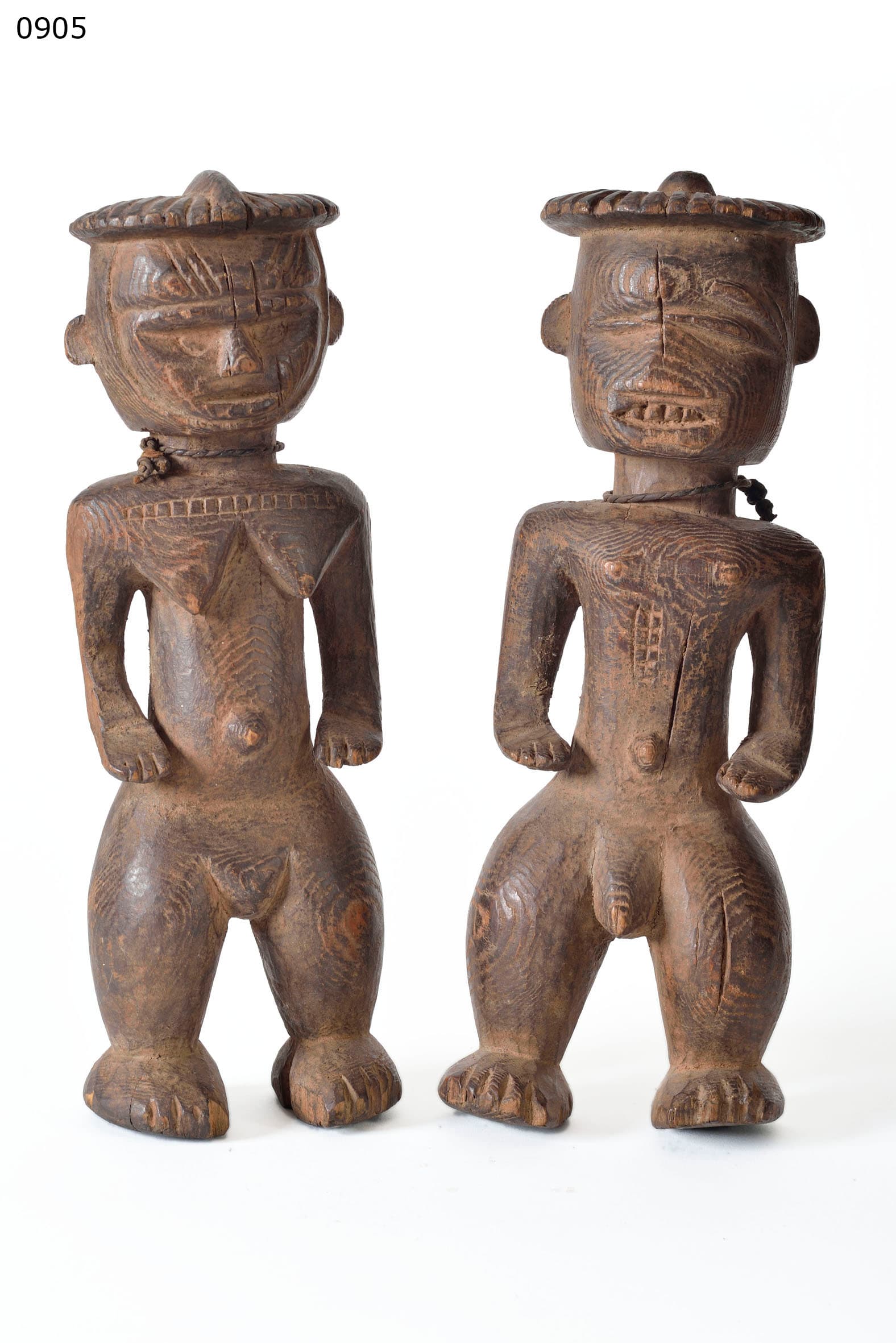
Eine schwere Montol-Terrakottafigur (18.-19. Jh., 52 cm) aus Nigeria - stämmiger zylindrischer Torso, dicke abgestumpfte Beine und ein übergroßer runder Kopf mit minimal verdeckten Gesichtszügen. Die gesamte Keramikoberfläche ist in eine außergewöhnlich dicke krustige dunkelbraun-schwarze Opferpatina gehüllt, die die darunter liegende Form stark aufweicht.
1. Zylindrischer Minimalismus und die Benue-Ästhetik
Die Montol, die im Benue-Tal in Nigeria leben, bevorzugen ein ausgeprägtes, stark vereinfachtes künstlerisches Vokabular.
- Raue zylindrische Kraft: Die Figur verlässt sich auf die rohe Kraft des Zylinders - der Künstler hat keine naturalistischen Proportionen angestrebt, sondern den massiven Kopf und den dicken Rumpf so gestaltet, dass sie eine solide, unbewegliche Präsenz ausstrahlen.
- Universelles spirituelles Gefäß: Der intensive Minimalismus ist eine bewusste theologische Entscheidung - die Abschaffung der individuellen Identität, um ein universelles Gefäß für die Energie der Ahnen oder des Geistes zu schaffen.
2. Der Geheimbund Komtin
Statuen dieser Art waren das exklusive Eigentum des männlichen Geheimbundes Komtin.
- Private rituelle Verwendung: Sie wurden nicht öffentlich zur Schau gestellt, sondern in sehr privaten Ritualen zur Heilung, Wahrsagung und Aufhebung von Flüchen verwendet.
- Geisteranker: Die Figur diente als physischer Anker für den angerufenen Geist - während einer Heilungskrise konsultierte der Komtin-Praktizierende die Statue und fütterte sie mit Medizin, Bier und Blut, um sich ihrer Kooperation bei der Heilung der kranken Person zu versichern.
3. Extreme Opferverkrustung
Die Zuschreibung an das 18. bis 19. Jahrhundert wird durch die auffällige Patinierung visuell gestützt.
- Untergegangene ursprüngliche Oberfläche: Die ursprüngliche Terrakotta-Oberfläche ist kaum noch zu erkennen - sie ist vollständig von einem dicken, gehärteten Panzer aus organischem Material bedeckt.
- Jahrhunderte von Flüssigkeitsopfern: Die Kruste deutet auf das akkumulierte Ergebnis zahlreicher Flüssigkeitsopfer hin, die im Laufe der Zeit über die Figur gegossen wurden – die Art und Weise, wie diese Kruste abgeblättert und verkalkt ist, spricht für eine über einen langen Zeitraum entstandene Patina und verweist auf die rituelle Geschichte des Objekts.
Zusammenfassung
Diese Altarstatue der Montol zeigt eine eindrucksvolle Präsenz, geprägt von einer dichten Schicht aus rituellen Opfergaben. Ihr zylindrischer Minimalismus und ihre ausgeprägte rituelle Verkrustung machen sie zu einem bedeutenden Beispiel nigerianischer Geheimbundkunst.
KI-unterstützt erstellt aus Sammlungsgutachten, Objektfotografie und eigener Recherche, redaktionell geprüft. Fehler sind möglich — Hinweise darauf sind uns willkommen. Zum Verfahren →