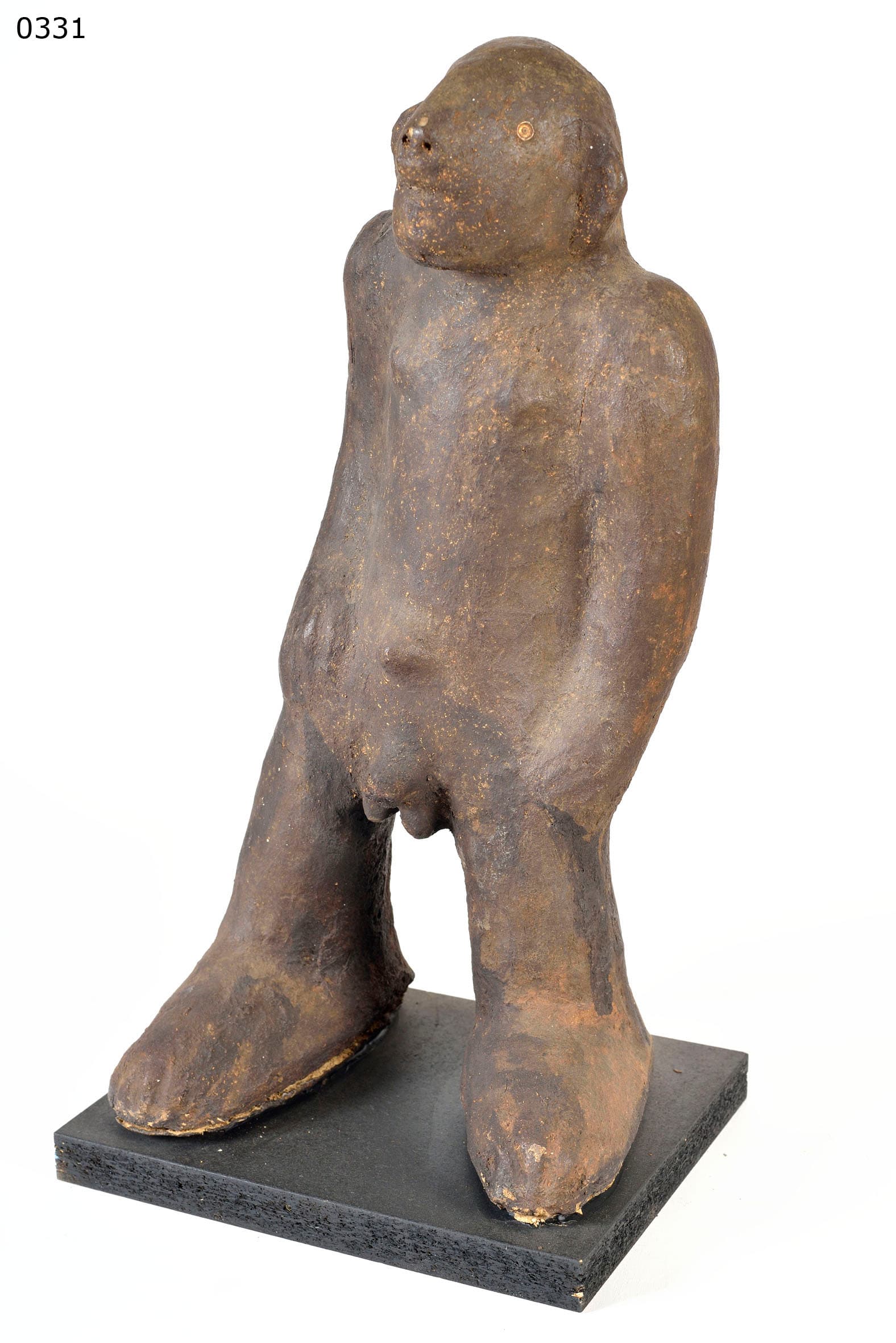
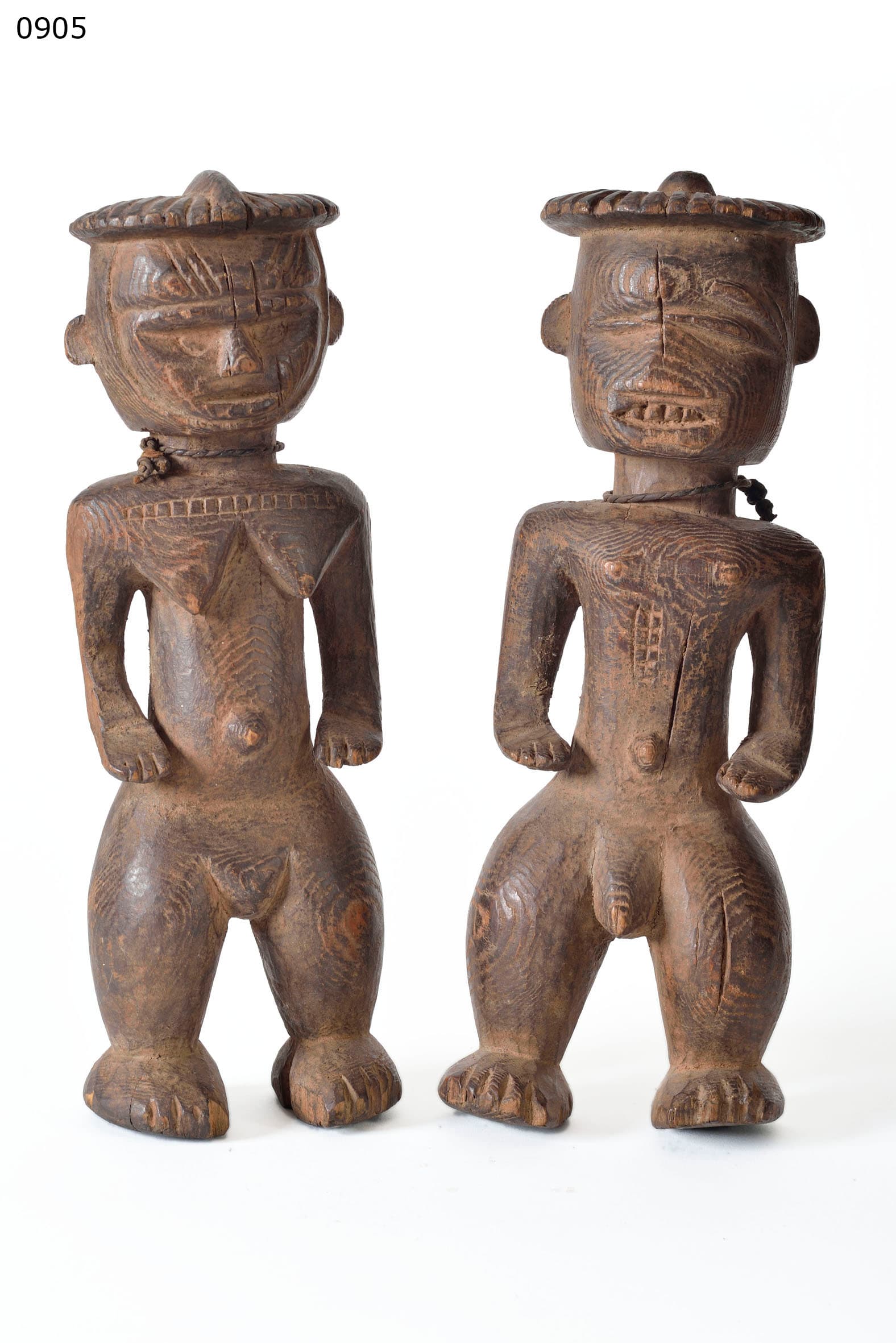
Diese beiden langgestreckten Holzfiguren zeichnen sich durch ihren kantigen Minimalismus aus. Sie haben blockartige, gewölbte Köpfe, fein geschnitzte Gesichtszüge und dicke, röhrenförmige Gliedmaßen (eine steht gerade, die andere hat leicht gebeugte Knie). Beide Figuren sind mit einer dicken, trockenen, rötlich-braunen Patina überzogen, die aus pulverisiertem Rotholz und Ocker besteht.
1. Ästhetischer Stil und regionale Eigenheiten
Die Holzschnitzerei von Montol stammt aus dem Benue-Tal in Nigeria und zeichnet sich durch eine radikale, proto-kubistische Abstraktion aus. Der Bildhauer vermeidet aktiv eine naturalistische Muskulatur und konstruiert stattdessen den menschlichen Körper aus schweren, sich kreuzenden geometrischen Volumen. Die Köpfe sind gewölbt und bis auf rudimentäre Schlitze funktionslos, während die Gliedmaßen als schwere, unnachgiebige Zylinder dargestellt sind. Dieser strenge Minimalismus schafft eine intensive, grüblerische Silhouette, die eher rohe spirituelle Kraft als menschliche Schwäche vermittelt.
2. Rituelle Funktion und Geheimbund-Kontext
Diese Figuren werden traditionell als heiliges Eigentum des Komtin-Geheimbundes angesehen, einer exklusiven Männerorganisation, die für Heilung, Wahrsagerei und soziale Kontrolle zuständig ist. Die Figuren wurden in abgelegenen, dunklen Schreinen aufbewahrt und dienten als physische Behälter für die Geister der Vorfahren. Während der Komtin-Zeremonien konsultierten die Eingeweihten die Statuen, um Krankheiten zu heilen, Praktiker schädigender Magie zu identifizieren und das moralische Gefüge der Gemeinschaft aufrechtzuerhalten. Die Statuen wurden rituell gepflegt, um ihre inneren Geister aktiv gegen Bedrohungen der Gemeinschaft zu halten.
3. Physische Patina und Altersnachweis
Das charakteristische Merkmal von Montol-Komtin-Figuren dieser Stilgruppe ist ihre ausgeprägte, verkrustete Patina. Beide Statuen sind mit einer dicken, brüchigen Kruste aus rotem Ocker, Rotholzpulver und Palmöl überzogen. Diese Opferschicht wird traditionell mit rituellen Handlungen über einen längeren Zeitraum hinweg in Verbindung gebracht, um den Geist im Inneren zu besänftigen und zu aktivieren. Die Kruste ist so dicht, dass sie die ursprünglichen Werkzeugspuren des Schnitzers verwischt, während das darunter liegende Holz deutliche Austrocknungsrisse aufweist, was eine Entstehung im frühen 20. Jahrhundert nahelegt.
Zusammenfassung
Diese Montol-Figuren sind eindrucksvolle Beispiele des Proto-Kubismus des Benue-Tals und spiegeln die strenge Kraft der Komtin-Gesellschaft wider. Ihre rohen geometrischen Formen und die dichten, rötlich-braunen Opferkrusten machen sie zu bedeutenden Zeugnissen der nigerianischen Sakralkunst.
KI-unterstützt erstellt aus Sammlungsgutachten, Objektfotografie und eigener Recherche, redaktionell geprüft. Fehler sind möglich — Hinweise darauf sind uns willkommen. Zum Verfahren →