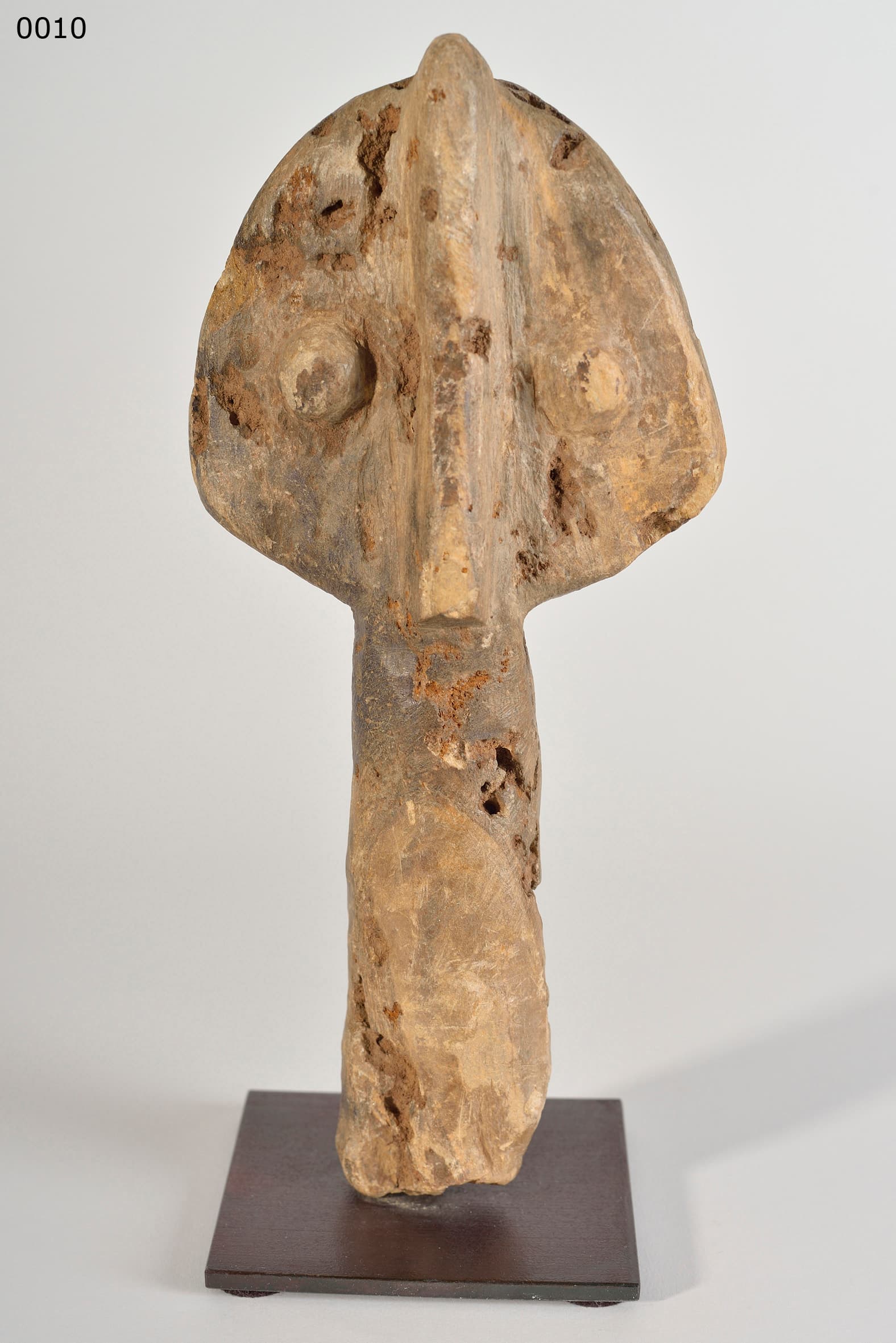
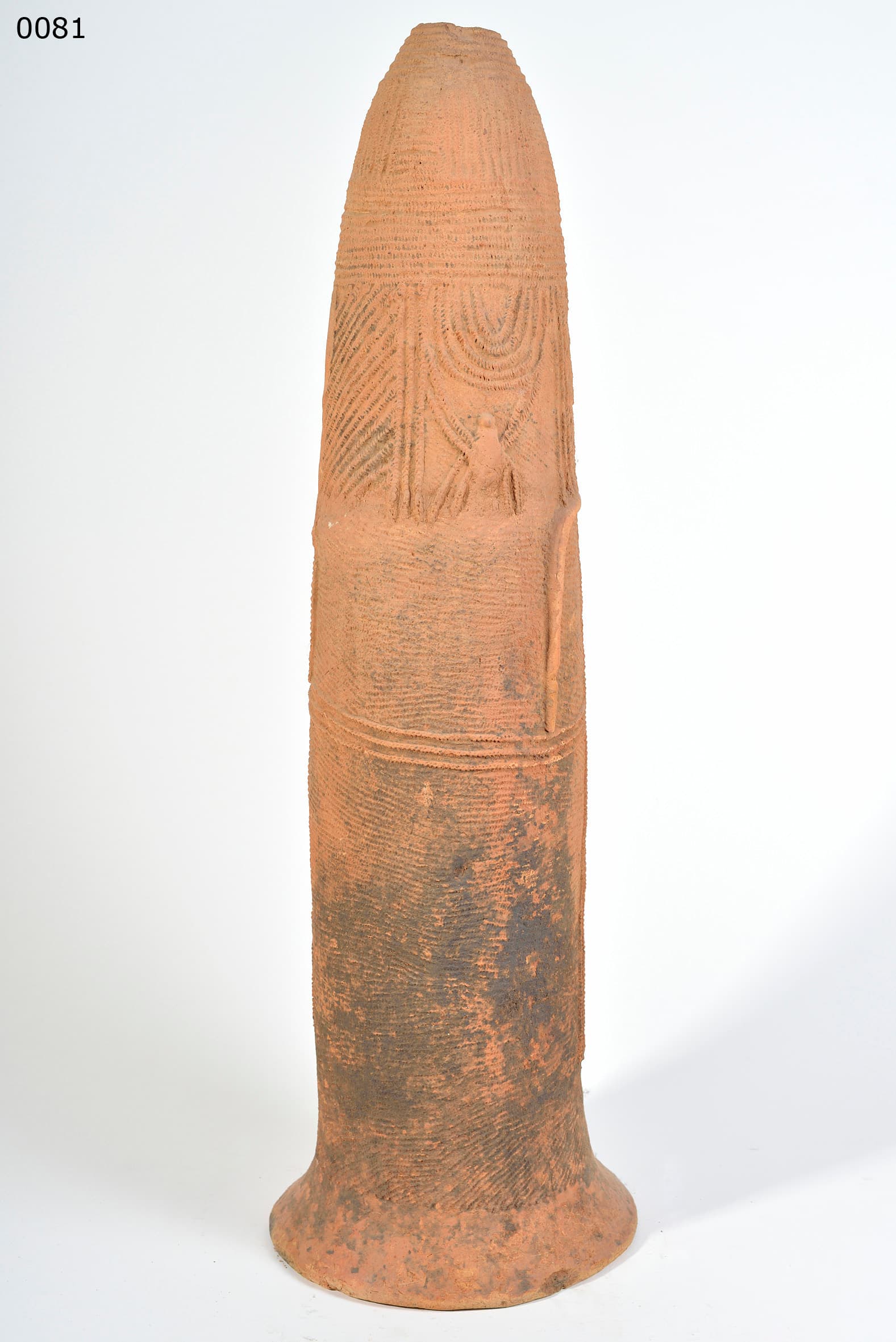
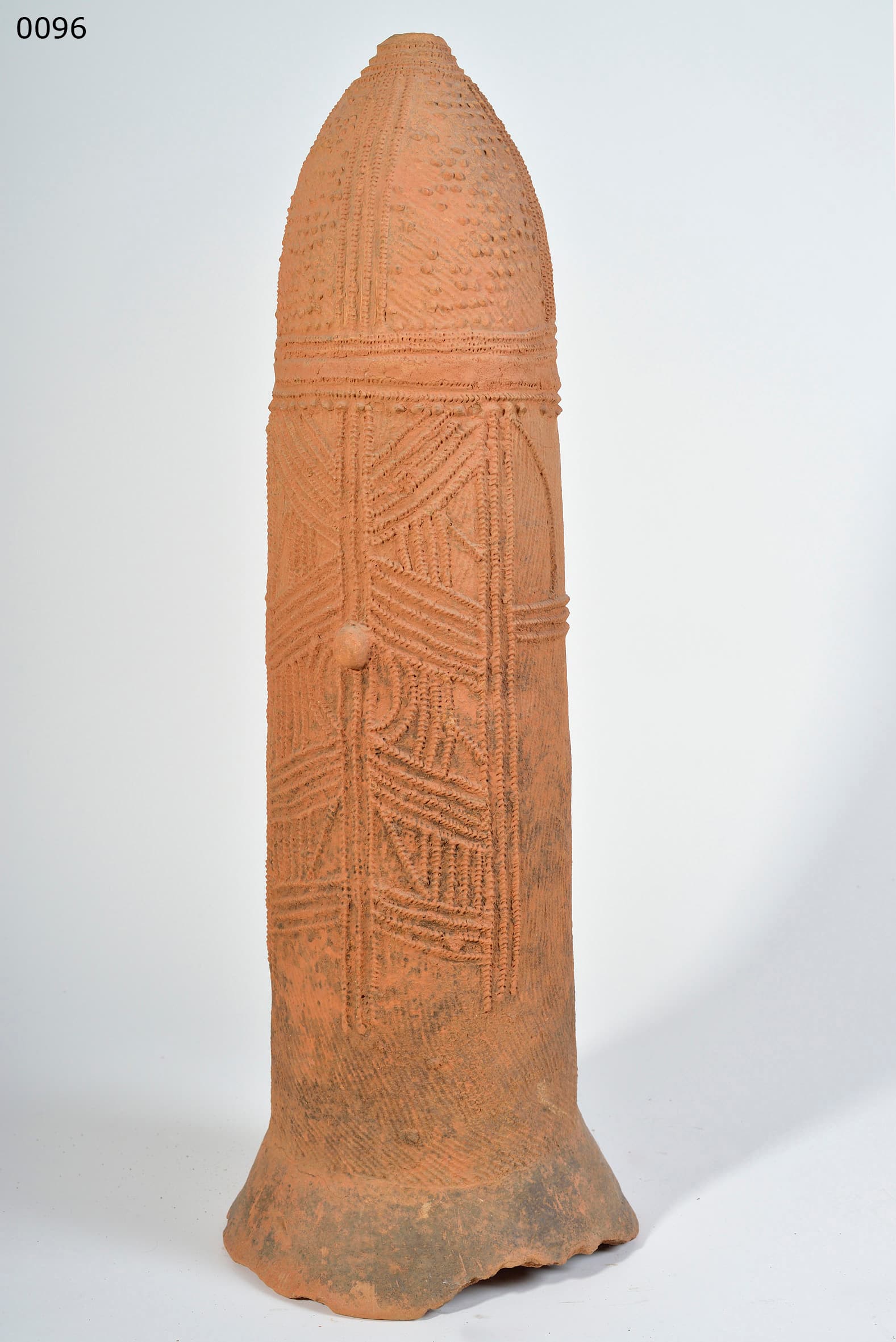
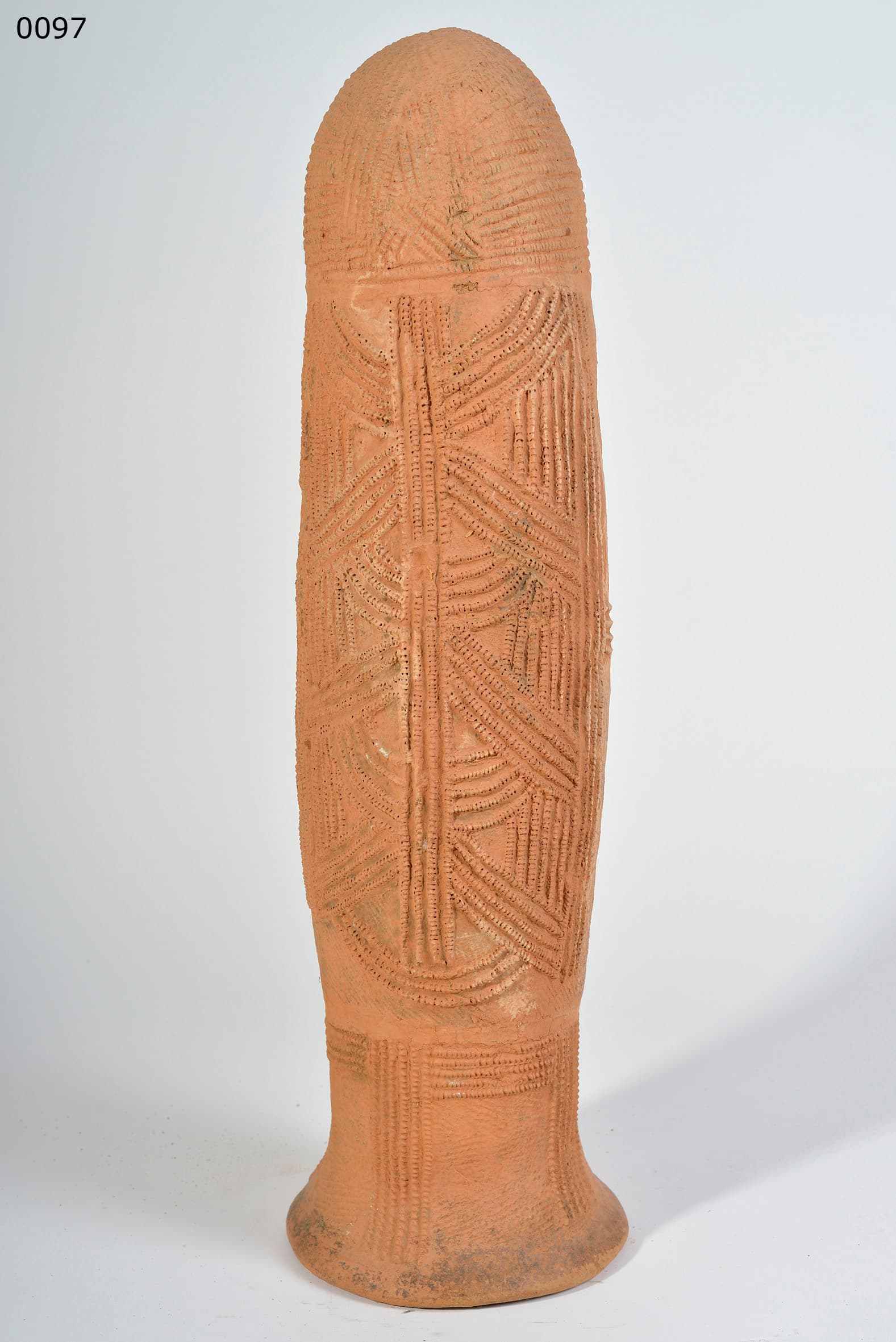
Eine lithische Bura-Grabfigur (3.-11. Jh., 20 cm) aus Niger / Burkina Faso - aus dichtem, grobkörnigem Granit oder Sandstein mit minimal eingeschnittenen oder erhabenen geometrischen Gesichtszügen. Die Steinoberfläche ist unter einer trockenen, gesprenkelten Patina aus tiefer Umwelterosion, Flechtenresten und mineralischer Oxidation stark abgebaut. Teil einer sechsteiligen Bura-Lithengruppe (0334, 0338, 0339, 0340, 0341, 0342).
1. Das lithische Vokabular von Asinda-Sikka
Die archäologische Kultur von Bura-Asinda-Sikka zeichnet sich durch einen extrem monolithischen Ansatz zur Abstraktion aus.
- Masse vor Detail: Im krassen Gegensatz zu späteren Holzschnitztraditionen gaben die Bura-Künstler der absoluten Masse und dem geometrischen Volumen den Vorzug vor naturalistischen Details.
- Elementare Merkmale: Die Gesichtszüge sind auf ihre elementarsten Bestandteile reduziert - einfache kreisförmige Vertiefungen für die Augen und ein durchgehender T-förmiger Kamm, der die Nase und die Stirn definiert - und strahlen eine ruhige monumentale Schwere aus.
2. Wächter der Nekropole und Grabmäler
Diese schweren Steinmonolithen dienten direkt als Grabmarkierungen in den ausgedehnten Nekropolen von Bura im Südwesten von Niger und Burkina Faso.
- Erdgebundener Seelenanker: Über den Grabhügeln errichtet oder neben den unterirdischen Terrakotta-Urnen aufgestellt, dienten sie als Erdanker für die Geister der Verstorbenen.
- Regeneration und Abstammung: Sie waren eng mit animistischen Konzepten der Regeneration, Fruchtbarkeit und der ewigen Fortsetzung der Familienlinie verbunden und stellten sicher, dass die Toten aktiv mit dem Lebenszyklus der lebenden Gemeinschaft verbunden blieben.
3. Geologische Verwitterung und jahrtausendealtes Altertum
Diese Steine weisen eine charakteristische geologische Verwitterung auf, die auf ein hohes Alter schließen lässt.
- Sandgeglättete Meißelspuren: Windige Sanderosion der Sahara über Jahrhunderte hat die ursprünglichen Meißelspuren geglättet.
- Laterit und Flechtenschatten: Eingebetteter Lateritboden in den Spalten und das Vorhandensein von verkalkten Flechtenschatten auf der Felswand sprechen für eine sehr lange Aussetzung gegenüber den harten zyklischen Extremen der sahelischen Umwelt.
Zusammenfassung
Diese Grabfigur ist Teil eines sechsteiligen Sets von Bura-Lithen und repräsentiert die monolithischen Ursprünge der westafrikanischen Skulptur. Ihre ausgeprägte geometrische Abstraktion und die geologische Erosion unterstreichen ihre historische Bedeutung.
KI-unterstützt erstellt aus Sammlungsgutachten, Objektfotografie und eigener Recherche, redaktionell geprüft. Fehler sind möglich — Hinweise darauf sind uns willkommen. Zum Verfahren →