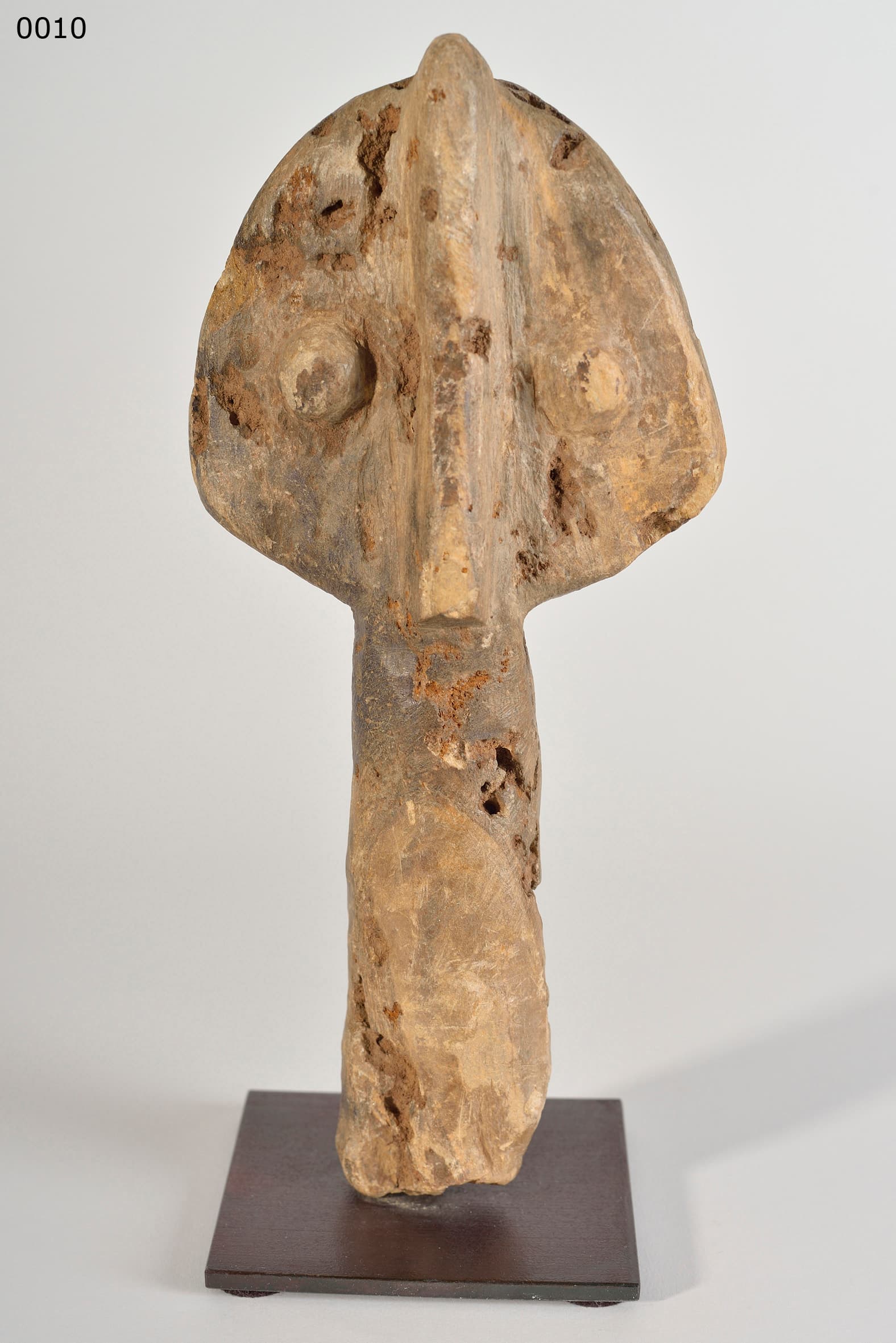
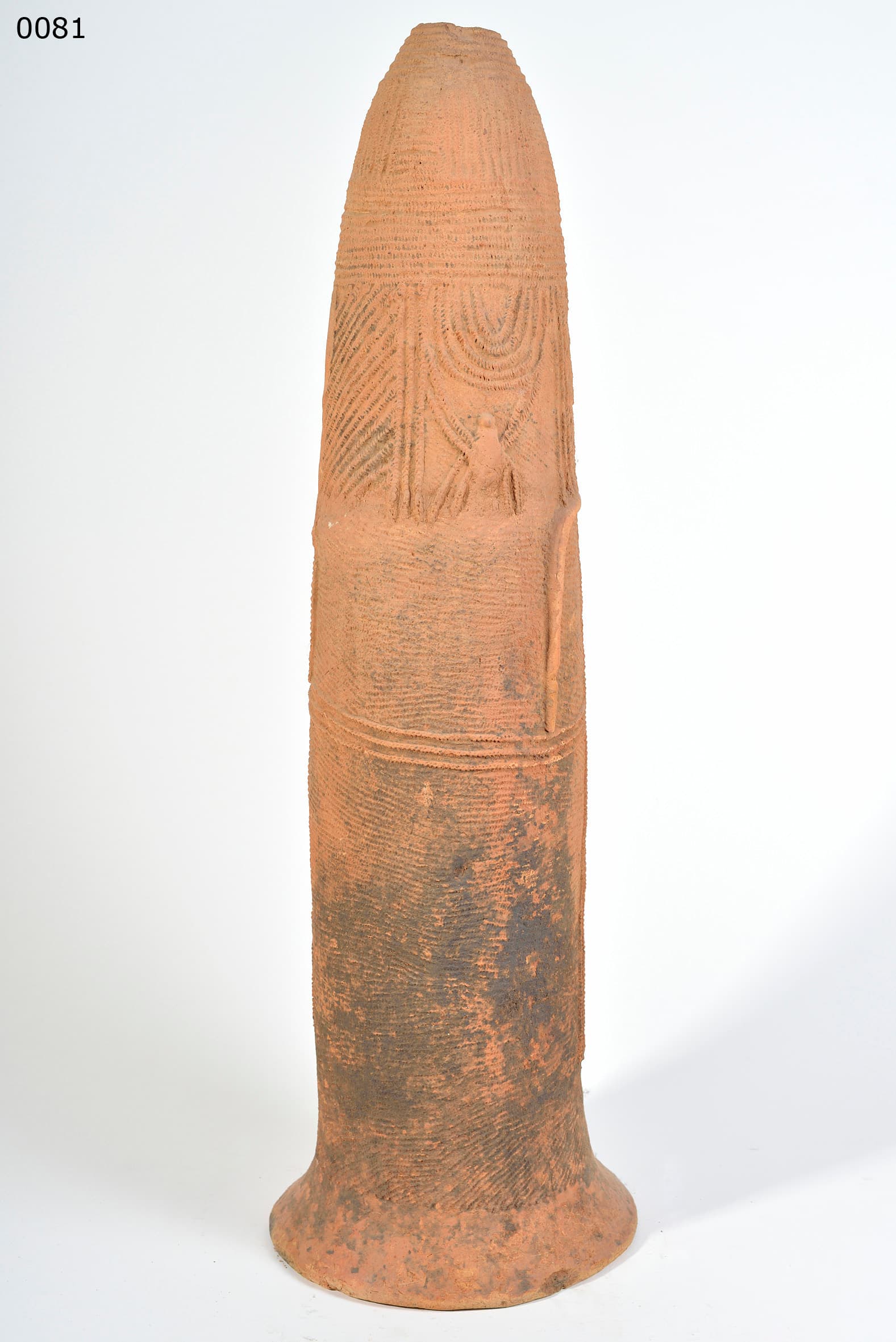
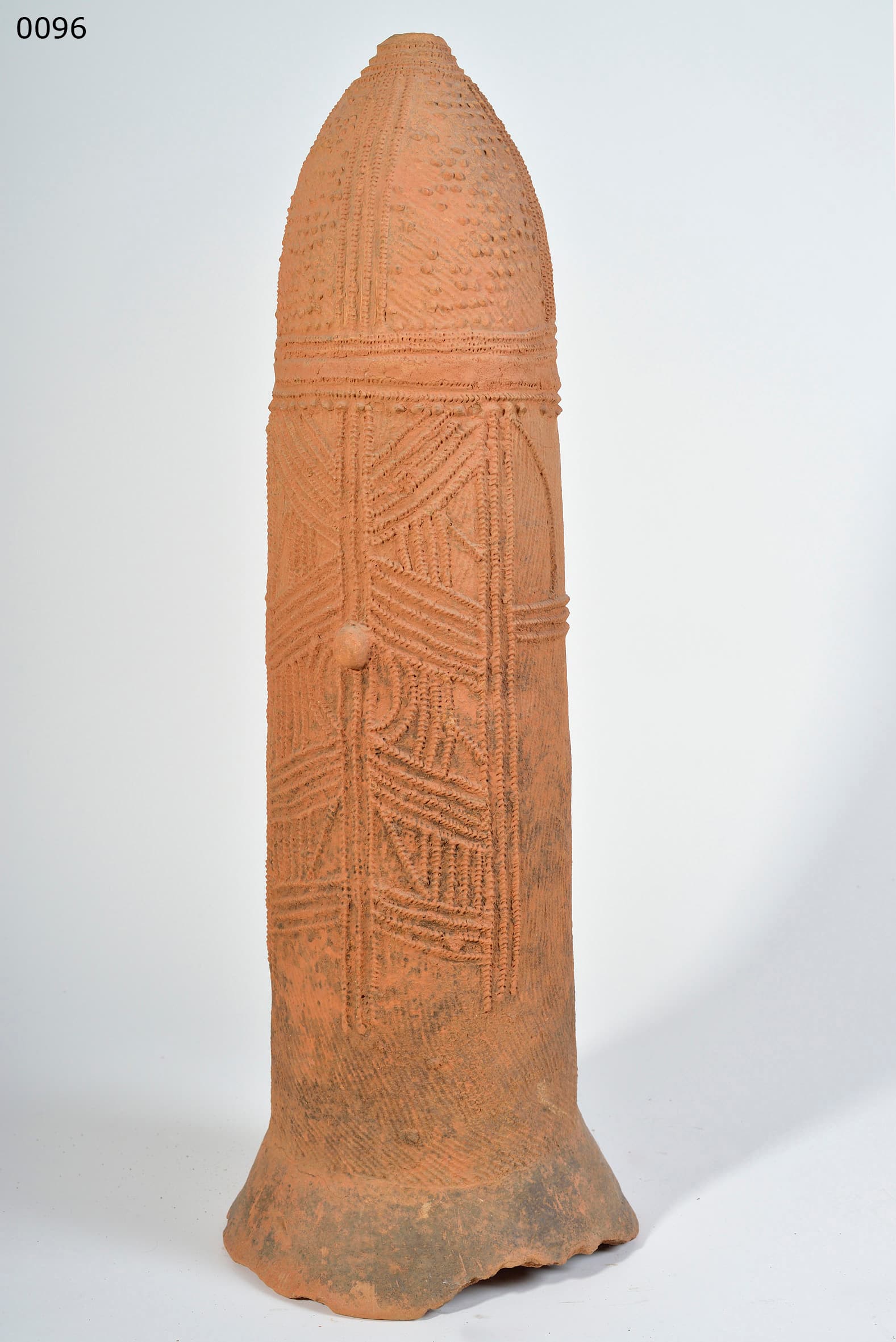
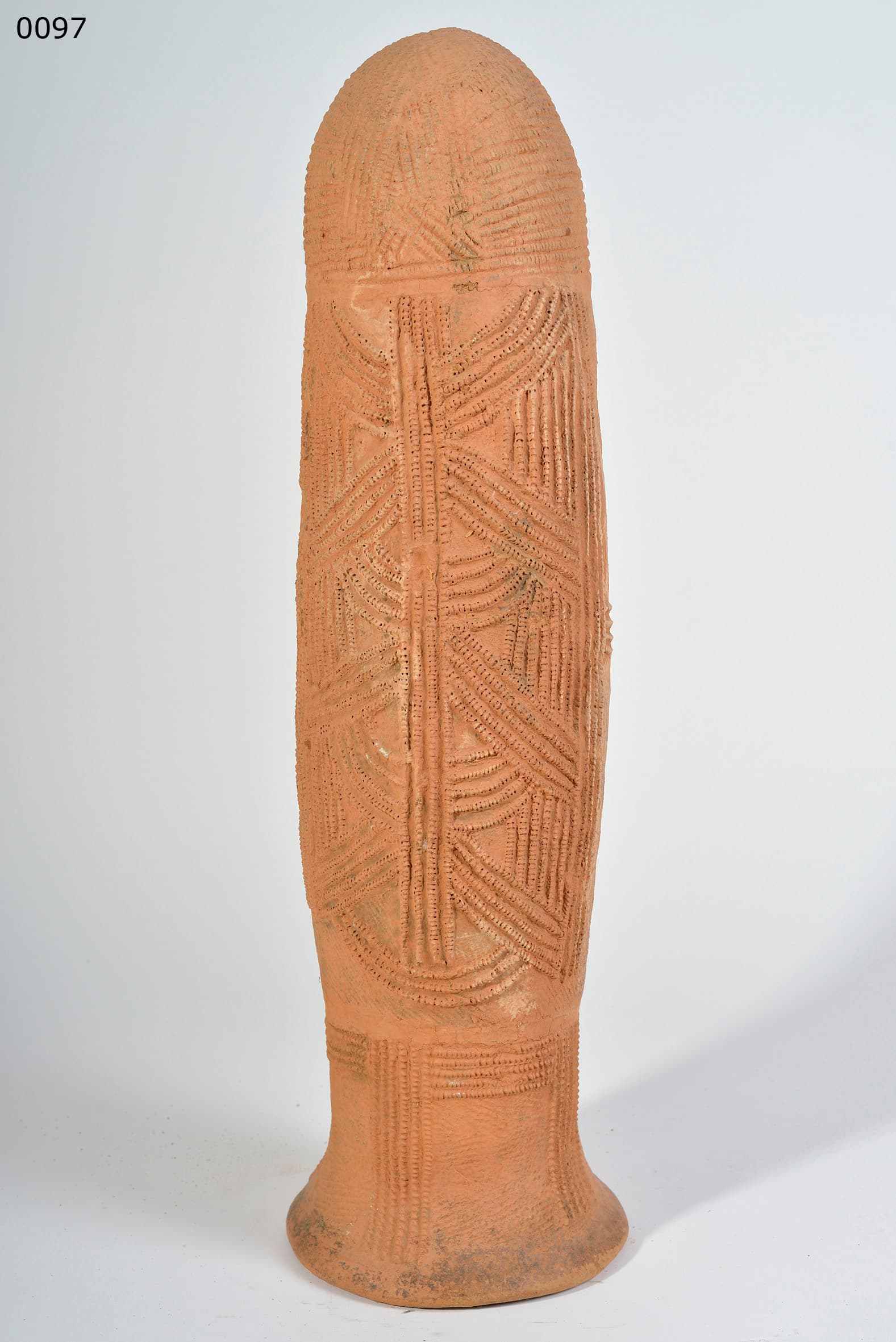
Eine lithische Grabfigur aus Bura (3.-11. Jh., 43 cm) aus Niger / Burkina Faso - eine abgeflachte, paddelartige, anthropomorphe Form aus dichtem, grobkörnigem Granit oder Sandstein. Die Steinoberfläche ist unter einer trockenen, gesprenkelten Patina aus Umwelterosion, Flechtenresten und Mineraloxidation stark degradiert. Teil einer sechsteiligen Bura-Lithengruppe (0334, 0338, 0339, 0340, 0341, 0342).
1. Das lithische Vokabular von Asinda-Sikka
Die archäologische Kultur von Bura-Asinda-Sikka ist durch einen extrem monolithischen Ansatz zur Abstraktion gekennzeichnet.
- Paddelähnlicher Anthropomorphismus: Abgeflachte paddelähnliche Formen stellen den expliziteren figuralen Zweig des grundlegenden sahelischen Vokabulars dar - eine menschliche Silhouette, destilliert zu reiner planarer Geometrie.
- Elementare Merkmale: Kreisförmige Einbuchtungen für die Augen und ein durchgehender T-förmiger Grat, der Nase und Stirn definiert, projizieren eine ruhige, monumentale Schwere.
2. Wächter der Nekropole und Grabmäler
Diese schweren Steinmonolithen dienten als Grabmarkierungen in den ausgedehnten Nekropolen von Bura im Südwesten von Niger und Burkina Faso.
- Terrestrischer Seelenanker: Über Grabhügeln errichtet oder neben unterirdischen Terrakotta-Urnen aufgestellt - terrestrische Anker für die Geister der Verstorbenen.
- Aktive Verbindung: Tief verbunden mit animistischen Konzepten der Fruchtbarkeit und der ewigen Fortführung des Familiengeschlechts - so wurde sichergestellt, dass die Toten aktiv mit dem Lebenszyklus der lebenden Gemeinschaft verbunden blieben.
3. Geologische Verwitterung und hohes Alter
Nicht wiederholbare geologische Verwitterung spricht für ein hohes Alter.
- Sandgeglättete Flächen: Die Erosion des Saharasandes durch den Wind hat über Jahrhunderte die ursprünglichen Meißelspuren auf den ebenen Flächen geglättet.
- Laterit und Flechtenschatten: Eingebetteter Laterit in den Spalten und verkalkte Flechtenschatten sprechen für eine jahrhundertelange sahelische Exposition.
Zusammenfassung
Als paddelförmiges Mitglied der sechsteiligen Bura-Lithengruppe demonstriert diese Grabfigur den planar-figuralen Zweig der alten sahelischen Steintradition. Ihre geometrische Abstraktion und die charakteristische geologische Erosion machen sie zu einem bedeutenden archäologischen Artefakt.
KI-unterstützt erstellt aus Sammlungsgutachten, Objektfotografie und eigener Recherche, redaktionell geprüft. Fehler sind möglich — Hinweise darauf sind uns willkommen. Zum Verfahren →