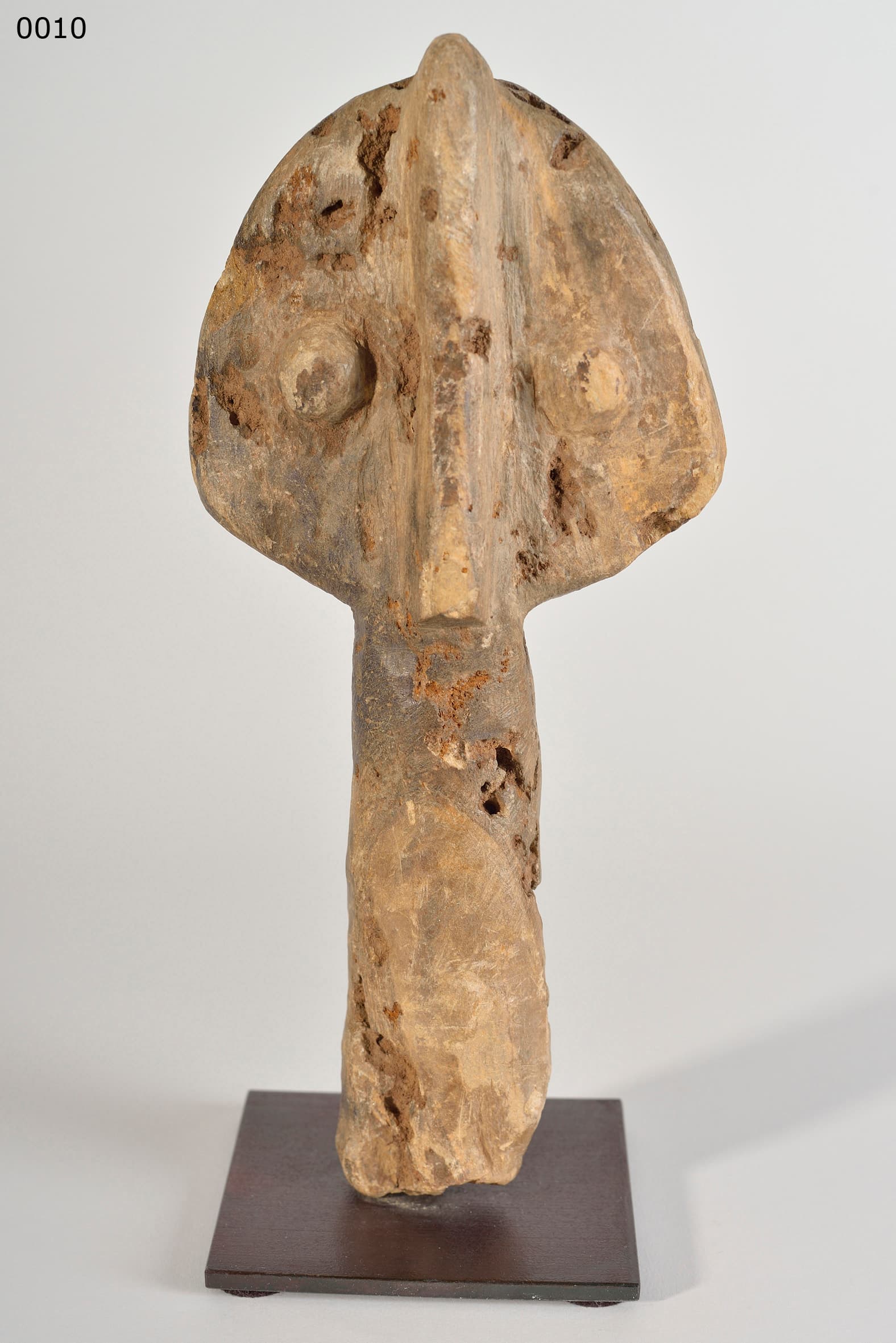
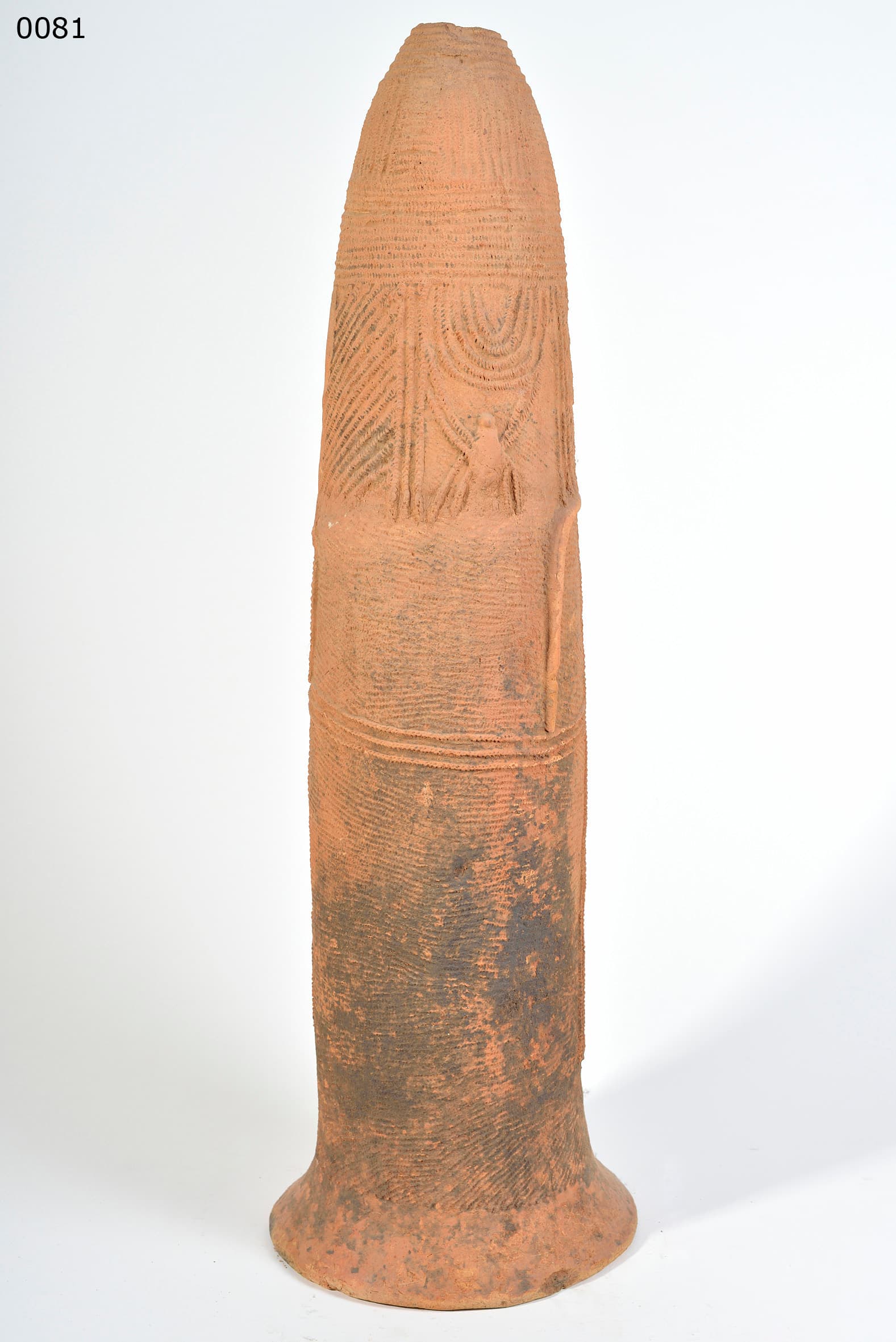
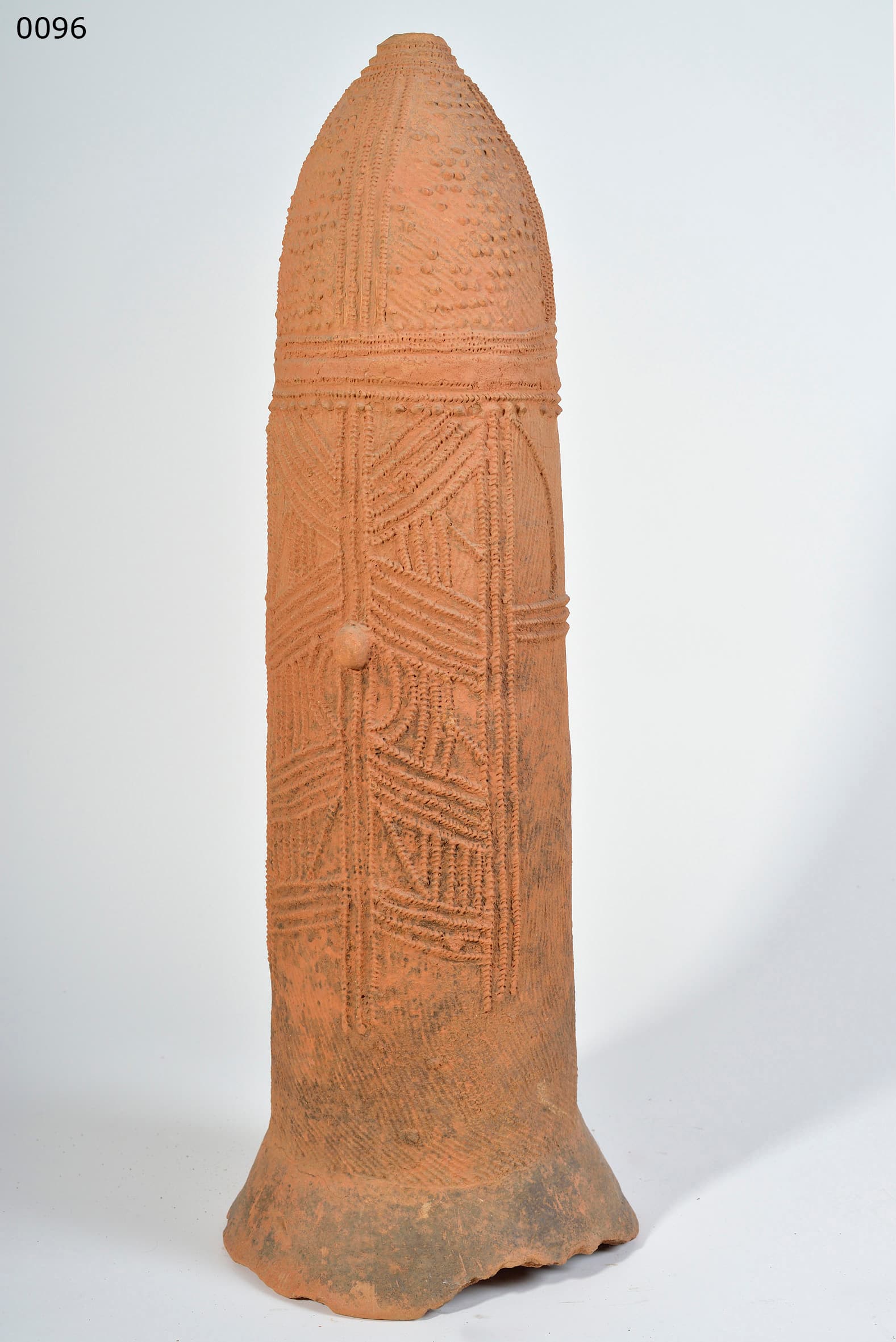
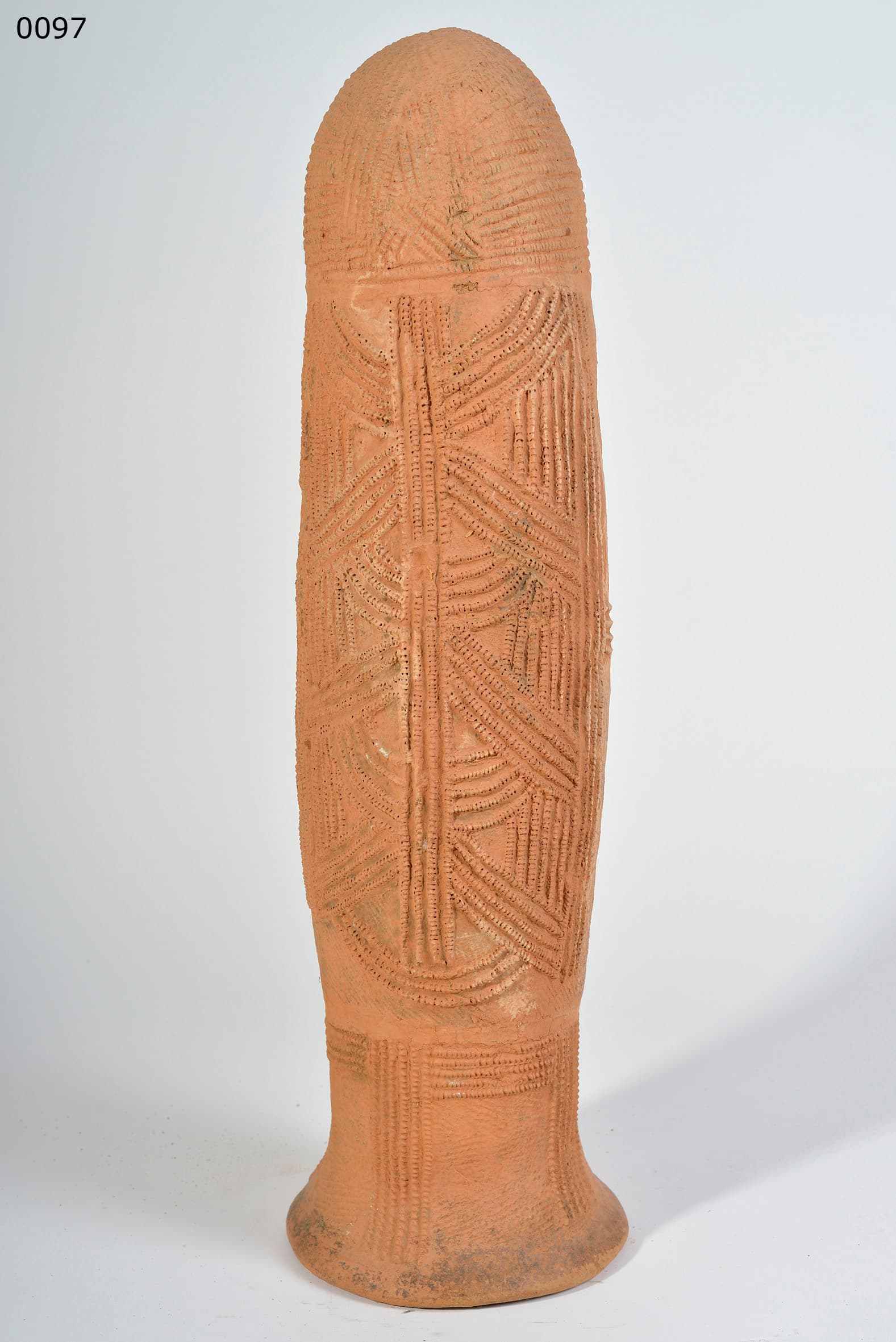
Eine phallische Steinsäule aus Bura (3.-11. Jh., 55 cm) aus Niger/Burkina Faso - ein zylindrischer Stein aus dichtem, grobkörnigem Granit oder Sandstein, dessen Oberfläche unter einer trockenen, gesprenkelten Patina aus Umwelterosion, Flechtenresten und mineralischer Oxidation stark degradiert ist. Komplementärpfeiler zum monumentalen 0339; Teil eines sechsteiligen Bura-Lithensatzes.
1. Das lithische Vokabular von Asinda-Sikka
Die archäologische Kultur von Bura-Asinda-Sikka zeichnet sich durch einen extrem monolithischen Ansatz zur Abstraktion aus.
- Phallische Säulentradition: Die zylindrische Phallusform stellt das grundlegende visuelle Vokabular der alten Sahelzone dar - pure absolute Masse.
- Gegenstück zu 0339: Mit 55 cm ist diese Säule das kleinere Gegenstück zur monumentalen 77 cm hohen 0339 - gemeinsam bilden sie den regenerativen Pol des Sets.
2. Wächter der Nekropole und Regenerations-Symbolik
Diese schweren Steinmonolithen dienten vermutlich als Grabmarkierungen innerhalb der ausgedehnten Nekropolen von Bura.
- Terrestrische Seelenanker: Sie wurden wohl über Grabhügeln oder neben unterirdischen Terrakotta-Urnen errichtet - als symbolische Anker für die Geister der Verstorbenen.
- Verkörperte Regeneration: Die phallische Form wird in der Literatur mit animistischen Konzepten der Regeneration, der Fruchtbarkeit und der Fortführung des Familiengeschlechts verbunden - ein Hinweis darauf, dass die Toten aktiv mit dem Lebenszyklus der Gemeinschaft verbunden bleiben sollten.
3. Geologische Verwitterung und hohes Alter
Die geologische Verwitterung spricht für ein hohes Alter des Objekts.
- Windgeglätteter Monolith: Die Erosion des Saharasandes durch den Wind hat über Jahrhunderte die ursprünglichen Meißelspuren geglättet und eine sanft gewellte Oberfläche hinterlassen.
- Laterit- und Flechtenspuren: Eingebetteter Laterit und verkalkte Flechtenschatten weisen auf eine jahrhundertelange Exposition in der Sahelzone hin.
Zusammenfassung
Zusammen mit der monumentalen 0339 aus dem sechsteiligen Bura-Lithenset unterstreicht diese phallische Säule das regenerative Thema, das sich durch die Gruppe zieht. Ihre ausgeprägte geometrische Abstraktion und die charakteristische geologische Erosion machen sie zu einem bedeutenden archäologischen Zeugnis.
KI-unterstützt erstellt aus Sammlungsgutachten, Objektfotografie und eigener Recherche, redaktionell geprüft. Fehler sind möglich — Hinweise darauf sind uns willkommen. Zum Verfahren →