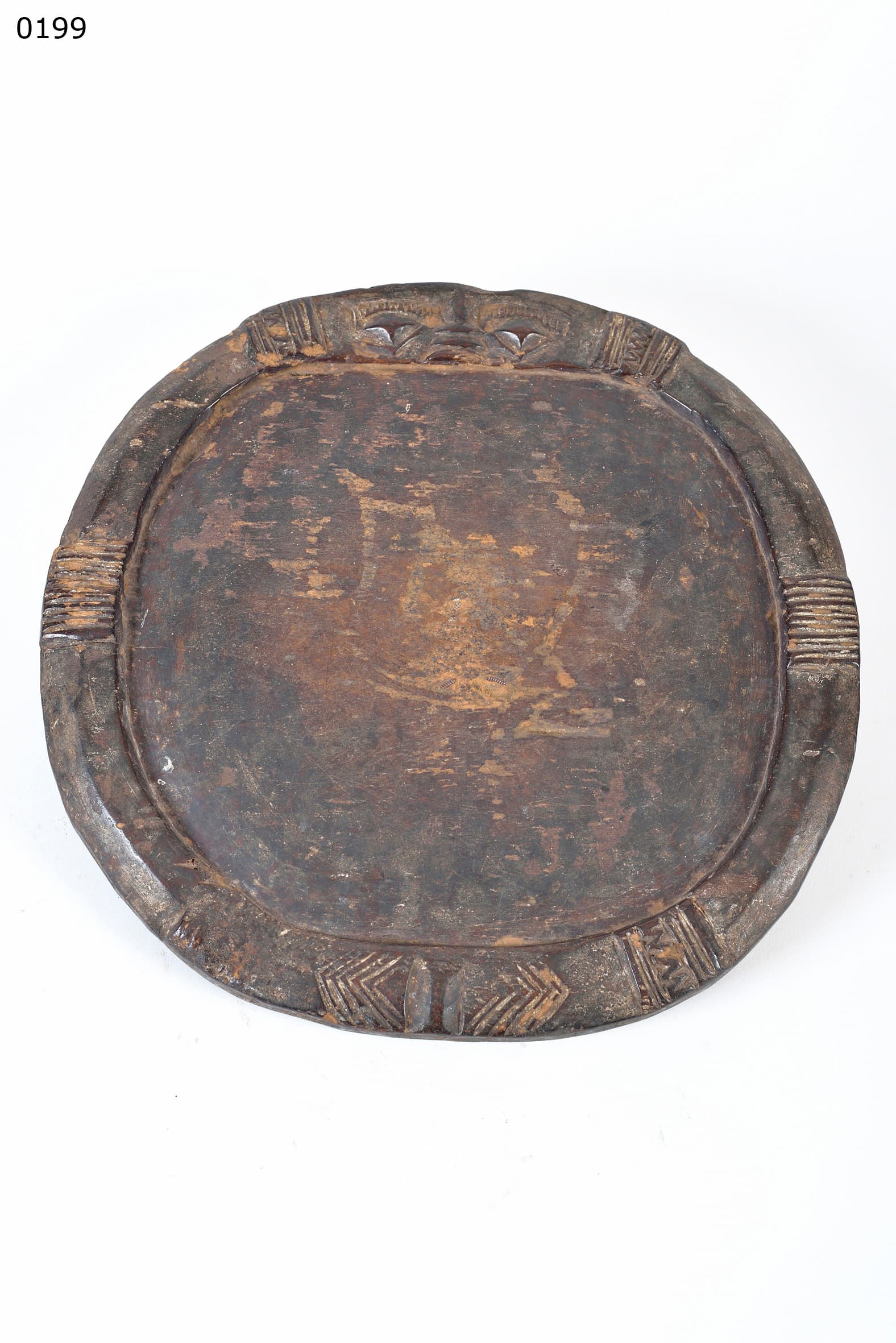
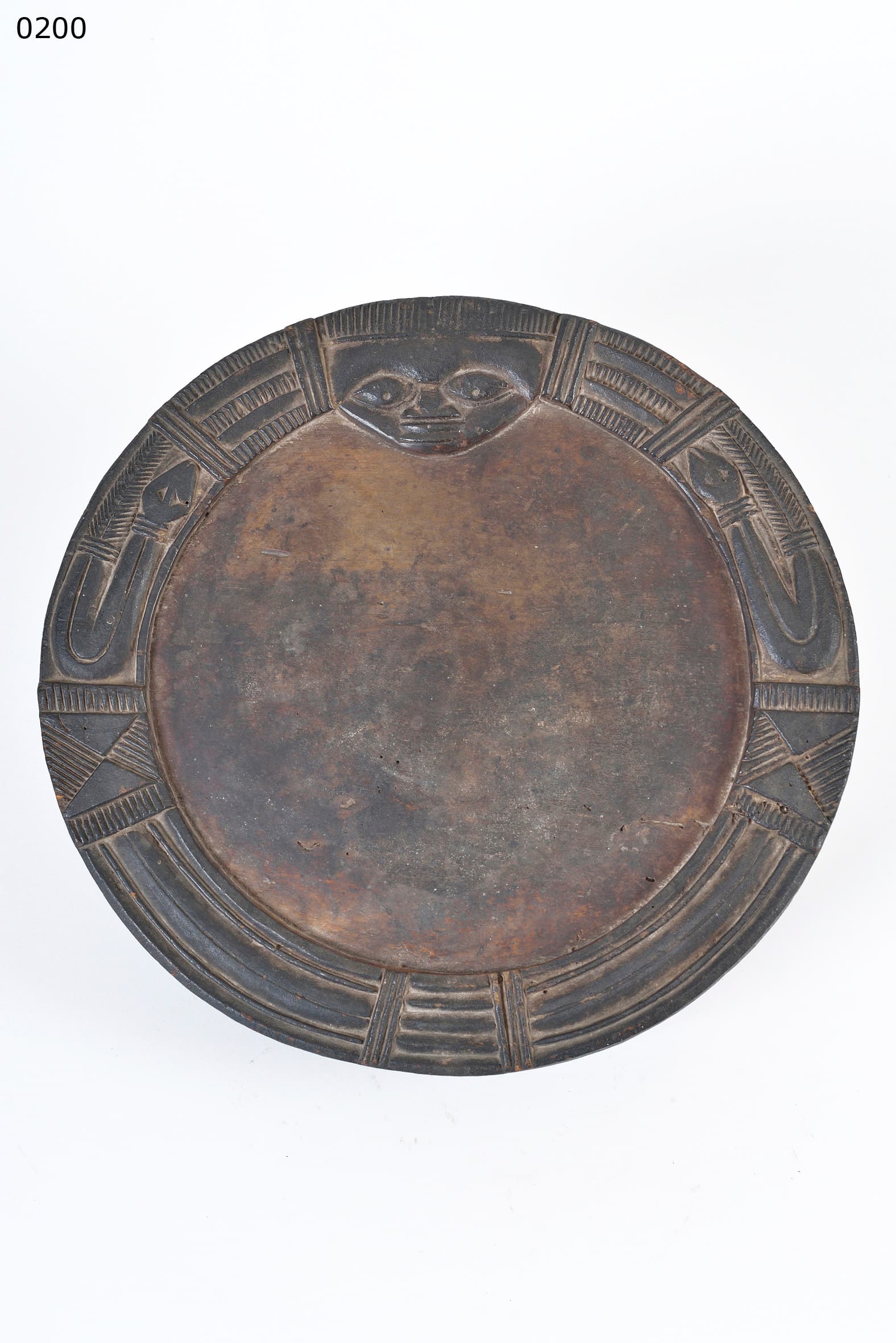
Ein hoch aufragender, mehrstöckiger Yoruba-Stab (1. Hälfte 20. Jh., 136 cm) aus Nigeria - ein zentraler Eisenschaft, durchsetzt mit vertikal gestapelten, geschnitzten anthropomorphen Holzfiguren, gekrönt von einem markanten schmiedeeisernen Vogelkopf, mit einer reichen, komplexen Patina, die tief oxidiertes Eisen mit rußgeschwärztem, organisch verkrustetem Holz kombiniert.
1. Multimediale Beherrschung und vertikale Hierarchie
Dieser Stab ist eine spektakuläre Verschmelzung von Schmiedekunst und Holzschnitzerei - eine Verschmelzung der heiligen Domäne der Ogun (Orisha des Eisens und des Krieges) mit komplexer figuraler Holzkunst.
- Hierarchischer Aufstieg: Die vertikale Stapelung der Holzfiguren schafft eine bewusste Hierarchie der spirituellen Macht - und lenkt den Blick nach oben, von der irdischen Basis über die menschlichen Bittsteller bis hin zum gebieterischen, eisernen Vogelkopf, der das spirituelle Reich durchdringt.
- Klassische Yoruba-Gesichter: Die Figuren sind im klassischen Yoruba-Stil geschnitzt - große mandelförmige Augen und gleichmütige, würdevolle Mienen.
2. Opa Osanyin und das Kommando des Kräutersammlers
Dieses monumentale Objekt steht im Zusammenhang mit dem Opa Osanyin (dem Stab des Gottes der Kräutermedizin) oder dem Osun Babalawo (dem Stab des Wahrsagers).
- Eisenvogel an der Spitze: Der Eisenvogel an der Spitze steht für die mystische Kontrolle des Babalawo über "unsere Mütter" (aje oder Hexen), die sich oft in nächtliche Vögel verwandeln.
- Tutelary Wooden Supplicants: Die geschnitzten Holzfiguren stellen Schutzgeister, helfende Ahnen oder dankbare Kunden dar. Wenn der Stab an einem Schrein fest im Boden verankert wird, wirkt er wie ein magischer Blitzableiter, der eine absolute Zone des Schutzes und der medizinischen Autorität schafft.
3. Komplexe Komposit-Patinierung
Die Datierung in die erste Hälfte des 20. Jahrhunderts wird durch die differenzierte, sehr authentische Alterung der Verbundwerkstoffe bestätigt.
- Stabiler Eisenrost: Die Eisenelemente weisen eine tiefe stabile dunkle Rostschicht auf, die sich erst im Laufe vieler Jahrzehnte bildet.
- Harzige Holzkruste: Die Holzfiguren haben zahllose Anwendungen von Palmöl, Schreinrauch und Opfertränken aufgesaugt - und dabei eine dunkle, harzige, leicht klebrige Kruste gebildet. Die physische Glättung auf den Gesichtern zeugt von Generationen ehrfürchtiger praktischer Handhabung durch Meisterwahrsager.
Zusammenfassung
Als überragendes Monument der Yoruba-Medizinmagie vereint dieser Kraftstab meisterhaft Eisenschmiedekunst und Holzskulptur zu einer einzigen, zusammenhängenden Theologie. Seine beeindruckenden Ausmaße, die komplexe Ikonographie und die intensive Patina machen ihn zu einem der wichtigsten Artefakte der Wahrsagekunst.
KI-unterstützt erstellt aus Sammlungsgutachten, Objektfotografie und eigener Recherche, redaktionell geprüft. Fehler sind möglich — Hinweise darauf sind uns willkommen. Zum Verfahren →