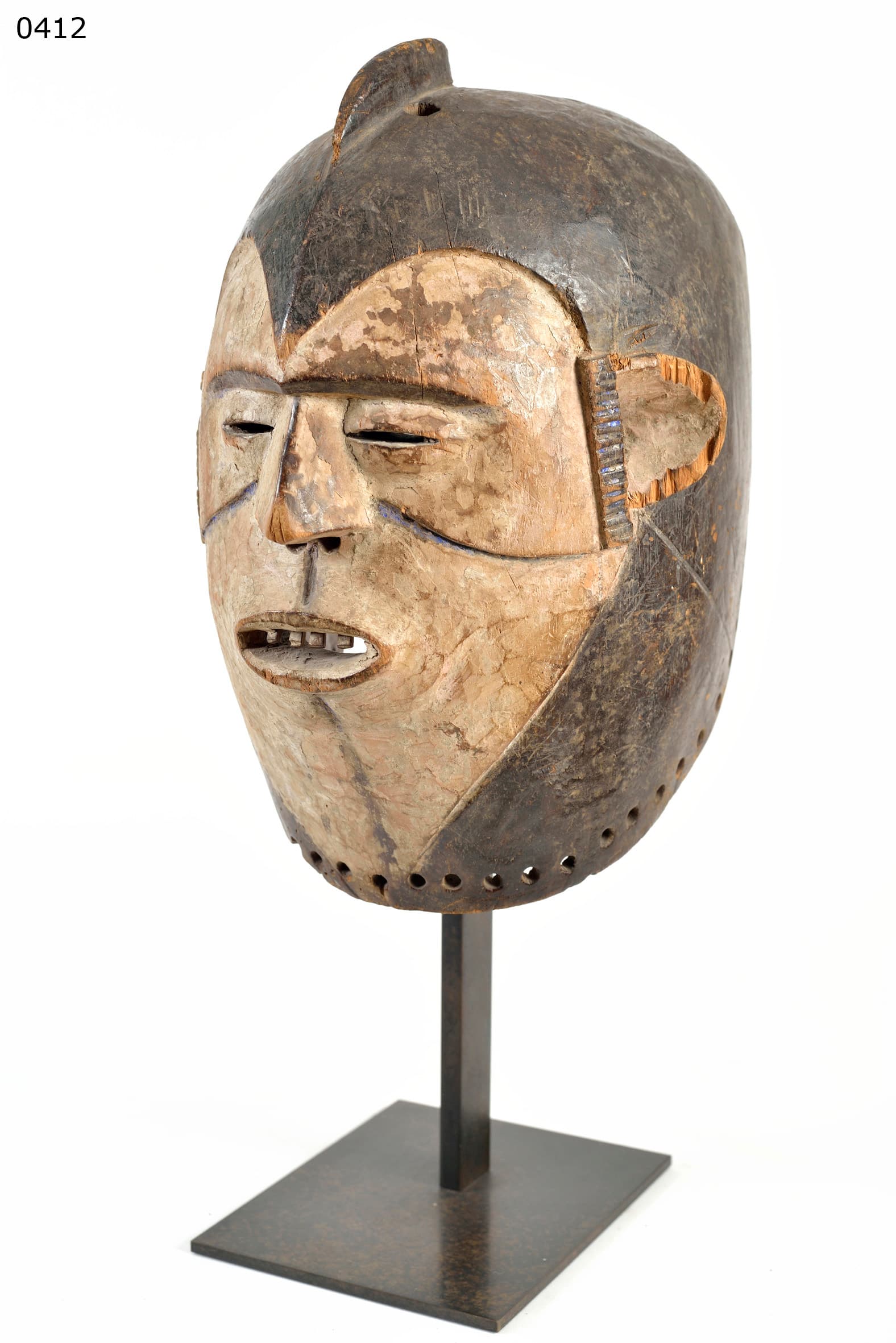
Eine auffällige kuppelförmige Idoma-Kopfmaske (1. Hälfte 20. Jh., 37 cm) aus Nigeria - geschnitzt aus hellem Holz mit einem sehr realistischen runden Gesicht, das mit weißem Kaolinpigment bedeckt ist, unterbrochen von dunklen geometrischen Skarifikationen, großen Augen und einem offenen Mund, der einzeln geschnitzte Zähne zeigt. Die glatte gewölbte Frisur ist dunkel gefärbt und steht in starkem Kontrast zu dem blassen Gesicht.
1. Idealisierter Realismus und die weiße Ästhetik
Die Schnitzerei der Idoma (Benue-Tal in Nigeria) ist bekannt für ihren sanften, naturalistischen Humanismus, der in starkem Kontrast zum aggressiven Kubismus ihrer Nachbarn steht.
- Meisterhafte Porträtkunst: Weiche Gesichtskonturen und akribische Details wie geschnitzte Zähne und präzise geometrische Gesichtstätowierungen sind Ausdruck eines idealisierten Porträts.
- Ahnenweiß: Die weiße Farbe (nzu Kaolin-Ton) ist in ganz Westafrika eine wichtige ästhetische und theologische Wahl - sie steht allgemein für das Reich der Ahnen, spirituelle Reinheit und Hellsichtigkeit.
2. Die Oglinye-Gesellschaft und Geistertrophäen
Masken in dieser kappenartigen Kuppelform wurden traditionell auf dem Kopf getragen (an einem Korb oder einem Netzkostüm befestigt) und nicht über dem Gesicht.
- Oglinye Society Lineage: Steht in engem Zusammenhang mit der Oglinye-Männergesellschaft - historisch verwurzelt in kriegerischen Fähigkeiten und der Kopfjagd, entwickelte sich später die Verwendung schön geschnitzter Holzköpfe als symbolische Trophäen.
- Tanz der befriedeten Ahnen: Während der energiegeladenen öffentlichen Tänze stellt die Maske einen befriedeten, schönen Ahnengeist dar, der hervorgeholt wird, um die Gemeinschaft zu segnen, eine erfolgreiche Ernte zu feiern oder die Beerdigung eines prominenten Ältesten zu ehren.
3. Pigmentverschleiß und Abnutzung durch Handhabung
Die Oberfläche weist authentische, altersgemäße Gebrauchsspuren aus der ersten Hälfte des 20. Jahrhunderts auf.
- Kaolin-Abrieb: Das weiße Kaolin hat sich auf natürliche Weise abgebaut und reibt an den hohen Punkten (Nase, Stirn, Kinn) ab, um das darunter liegende warme oxidierte Holz zu enthüllen - ein Hinweis auf jahrzehntelange Handhabung, Tanz und Lagerung.
- Verblichene dunkle Narbenbildung: Das dunkle Pigment, das für die Narbenbildung und die Frisur verwendet wurde, ist verblasst und hat sich mit der Holzmaserung verbunden - die glatte ölige Patina um den unteren Rand zeugt von häufiger Handhabung und Befestigung an zeremoniellen Tanzkostümen.
Zusammenfassung
Diese weißgesichtige Wappenmaske verkörpert die ruhige, naturalistische Schönheit der Idoma-Schnitzkunst und ist eine visuell beeindruckende Darstellung der Reinheit der Vorfahren. Die fein geschnitzten Zahndetails und die authentische Pigmentierung machen sie zu einem herausragenden Beispiel der Maskenkunst des Benue-Tals.
KI-unterstützt erstellt aus Sammlungsgutachten, Objektfotografie und eigener Recherche, redaktionell geprüft. Fehler sind möglich — Hinweise darauf sind uns willkommen. Zum Verfahren →