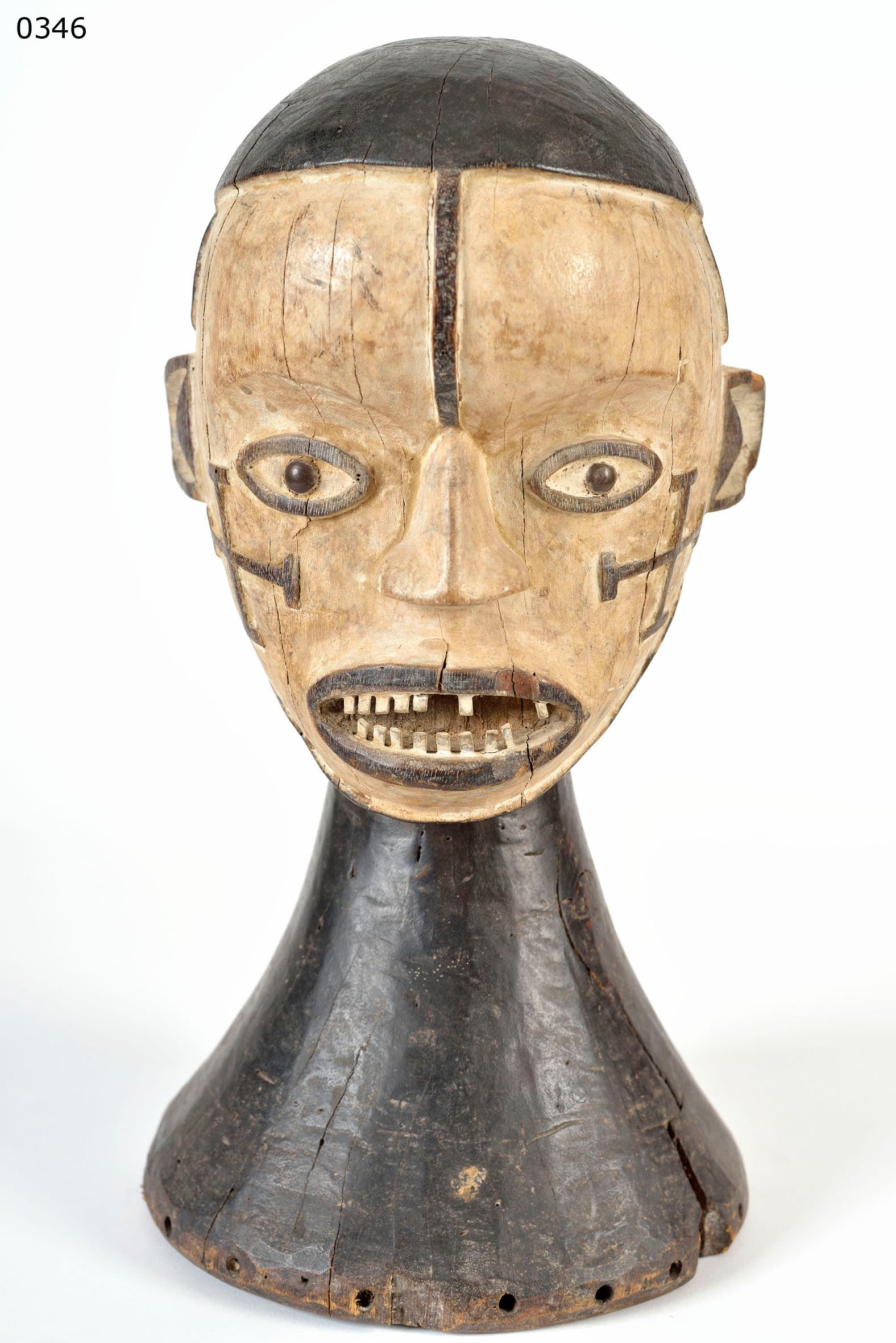
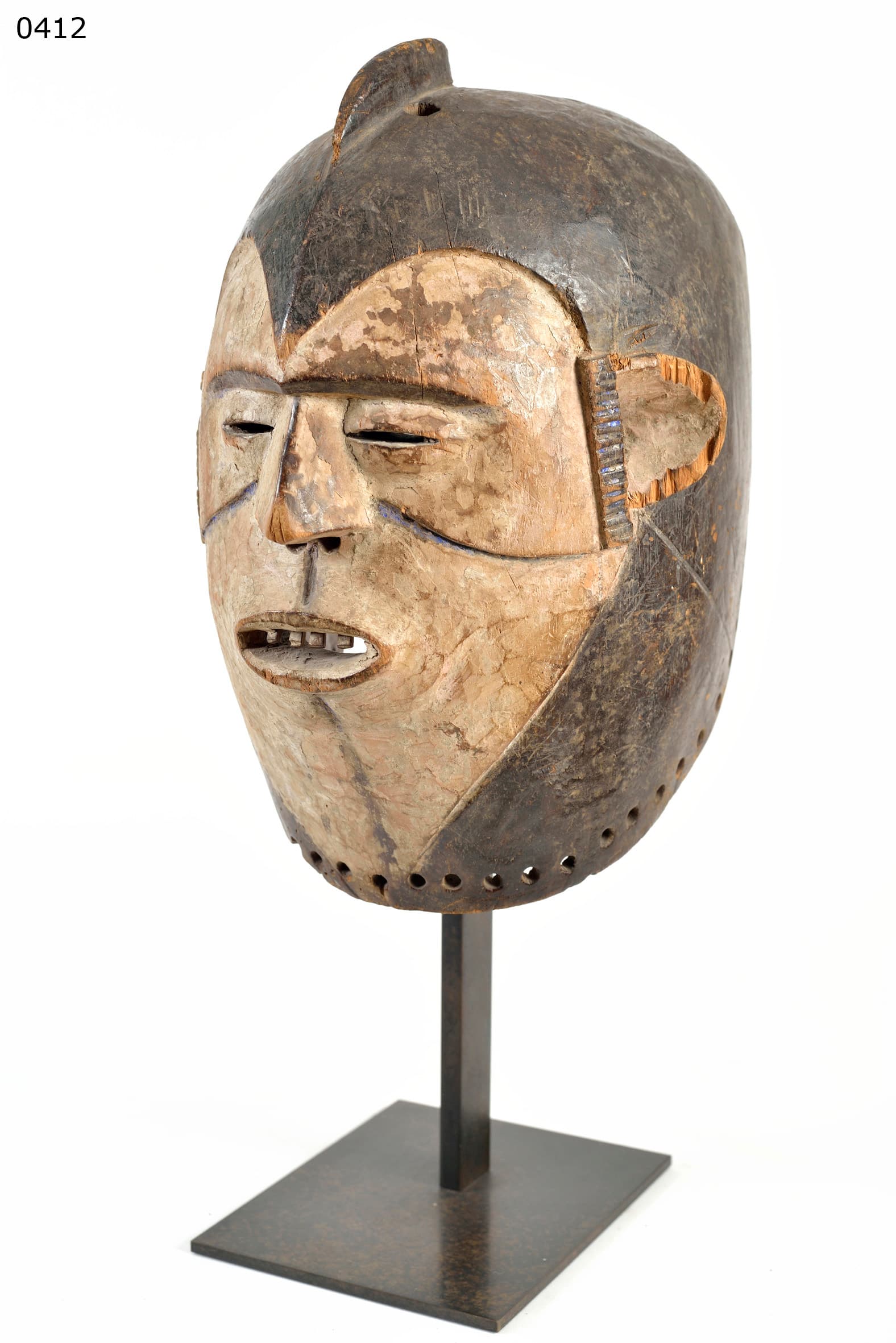
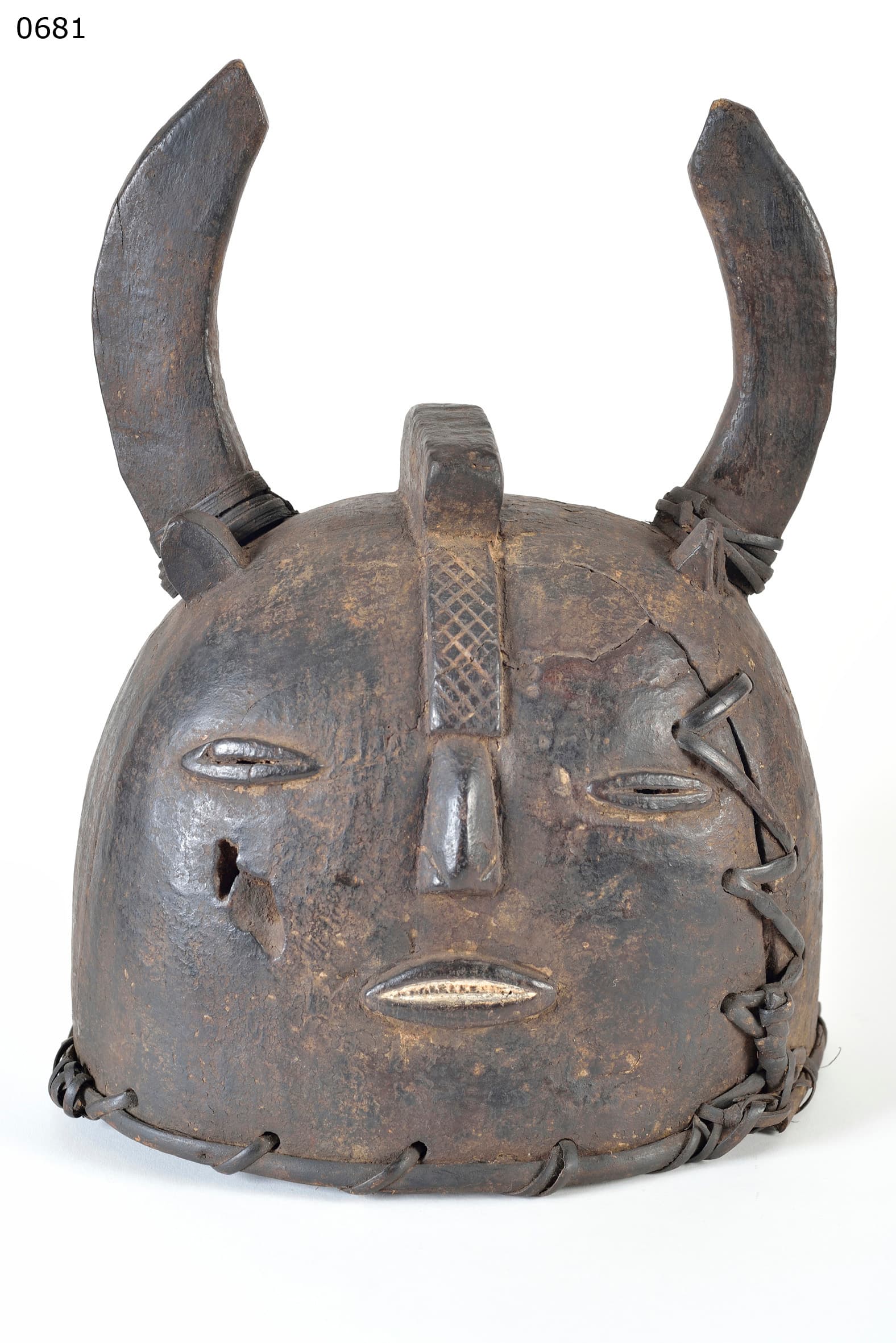
Diese auffällige, kuppelförmige Kopfbedeckung aus Holz stellt ein äußerst realistisches, idealisiertes menschliches Gesicht dar, das mit weißem Pigment überzogen ist und mit kräftigen, kontrastierenden schwarzen Skarifikationen versehen ist. Der Kopf wird von einer sorgfältig konstruierten, dichten Frisur aus geflochtenen Naturfasern gekrönt, und das Holz weist eine stark oxidierte, historische Patina auf.
1. Ästhetischer Stil und regionale Eigenheiten
Das Volk der Idoma aus dem Benue-Tal ist bekannt für seinen äußerst raffinierten, naturalistischen Schnitzstil, der sich stark von der Abstraktion seiner Nachbarn unterscheidet. Diese Oglinye- (oder Oglinya-) Maske verkörpert das Schönheitsideal der Idoma perfekt. Das Gesicht ist ruhig und ausgeglichen, mit zarten, schlitzförmigen Augen und einer markanten, symmetrischen Nase. Der starke Kontrast zwischen dem strahlend weißen Kaolin-Ton (der die Geisterwelt repräsentiert) und den tiefschwarzen, geometrischen Ritzungen (ichi) verleiht der Maske eine hypnotisierende, eindrucksvolle visuelle Präsenz. Der zusätzliche gewebte Faserkamm verleiht der Maske einen verblüffenden Realismus.
2. Rituelle Funktion und Geheimbund-Kontext
Die Gesellschaft der Oglinye war ursprünglich eine wilde Kriegervereinigung. In der Vergangenheit tanzten die Mitglieder mit den rituell präparierten Schädeln besiegter Feinde auf dem Kopf, um ihr kriegerisches Können zu demonstrieren. Nach dem kolonialen Verbot dieses Brauchs zu Beginn des 20. Jahrhunderts beauftragte die Gesellschaft Meisterschnitzer mit der Anfertigung dieser hölzernen Kopfbedeckungen als Ersatz. Die Maske wird bei Beerdigungen von Elitekriegern und bei jährlichen Festen getanzt, um die Tapferkeit der Vorfahren zu honoriern und die tödliche, schützende Kraft des Geschlechts physisch zu manifestieren.
3. Physische Patina und Altersnachweis
Die historische Herkunft dieser Maske, die in der Literatur ("Les arts de la BENUE") dokumentiert ist, gilt als gut belegt. Die physische Oberfläche ist vereinbar mit einem aktiven zeremoniellen Gebrauch zu Beginn des 20. Jahrhunderts. Der weiße Kaolin-Ton ist pudrig, verblasst und an den hohen Punkten der Nase und der Stirn abgerieben. Das darunter liegende Holz ist stark oxidiert, und das Haar aus geflochtenen Fasern ist stark ausgetrocknet und altersdunkel, was nahelegt, dass die Maske seit ihrer ursprünglichen rituellen Außerbetriebnahme weitgehend unverändert überlebt hat.
Zusammenfassung
Diese Idoma-Oglinye-Kopfbedeckung ist ein ausdrucksstarkes Beispiel für nigerianischen Naturalismus, der die historische Entwicklung der Kriegergesellschaft widerspiegelt. Die dokumentierte Herkunft, der auffällige Weiß-Schwarz-Kontrast und die Alterspatina sprechen für die hohe Qualität dieses Objekts.
KI-unterstützt erstellt aus Sammlungsgutachten, Objektfotografie und eigener Recherche, redaktionell geprüft. Fehler sind möglich — Hinweise darauf sind uns willkommen. Zum Verfahren →