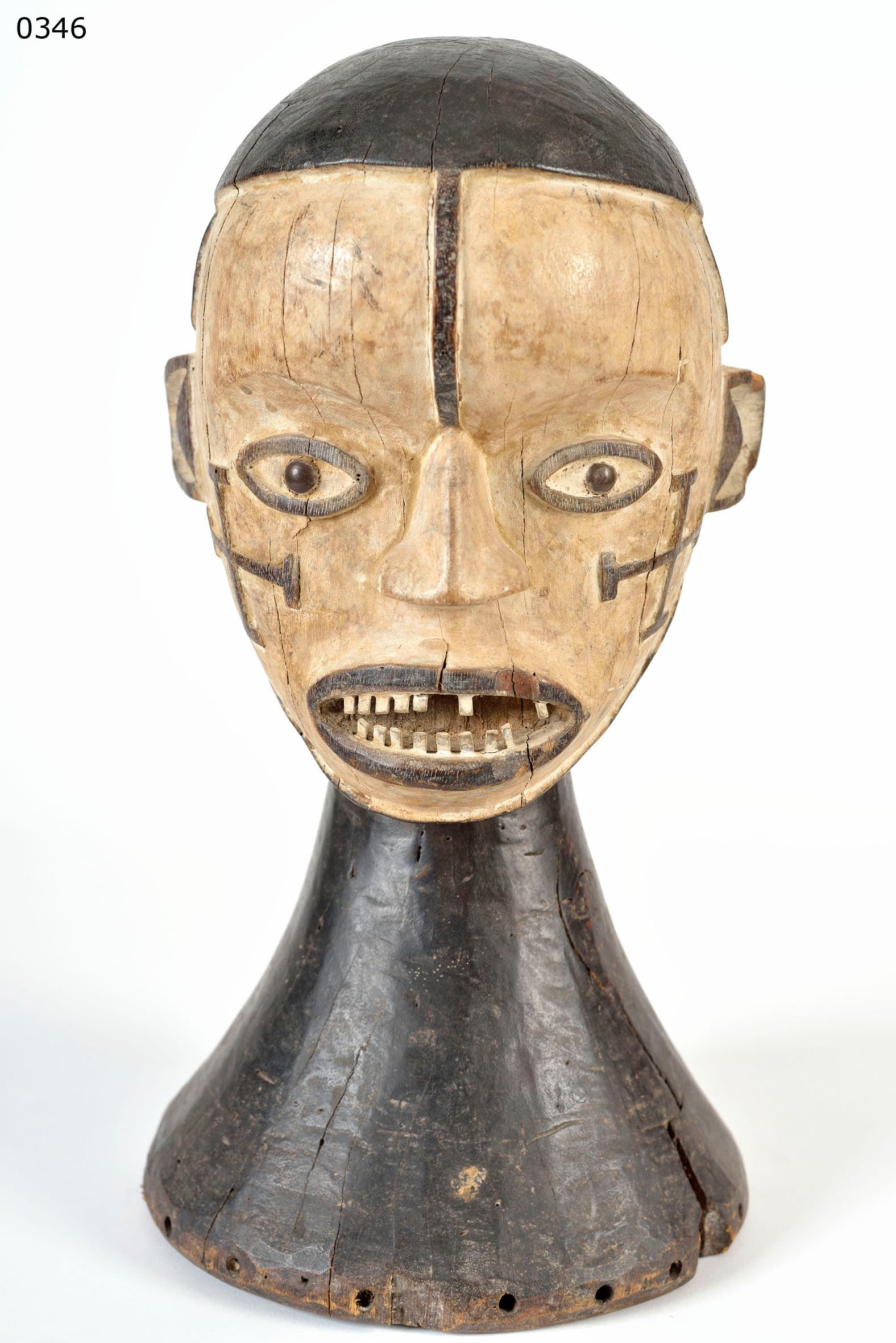
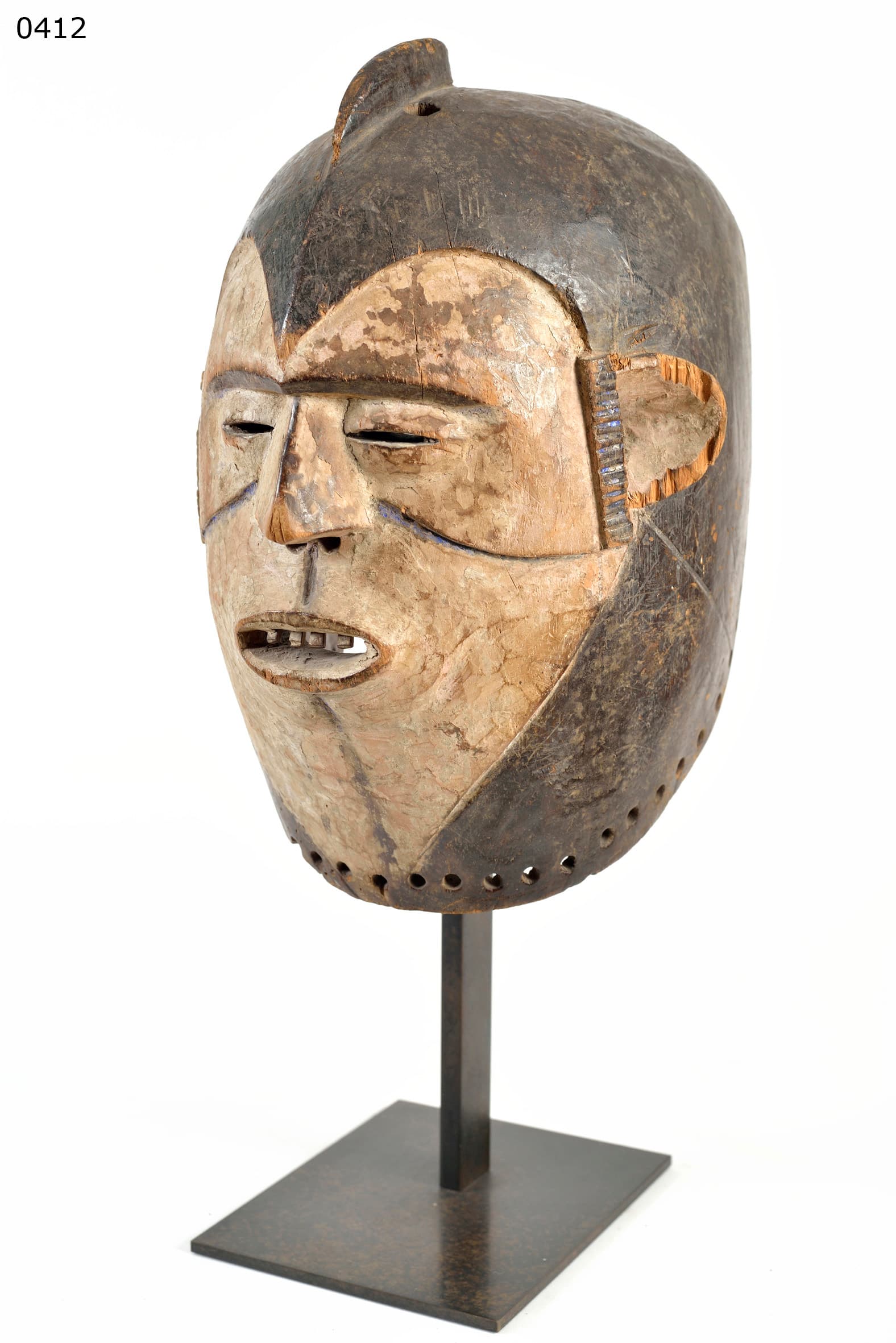
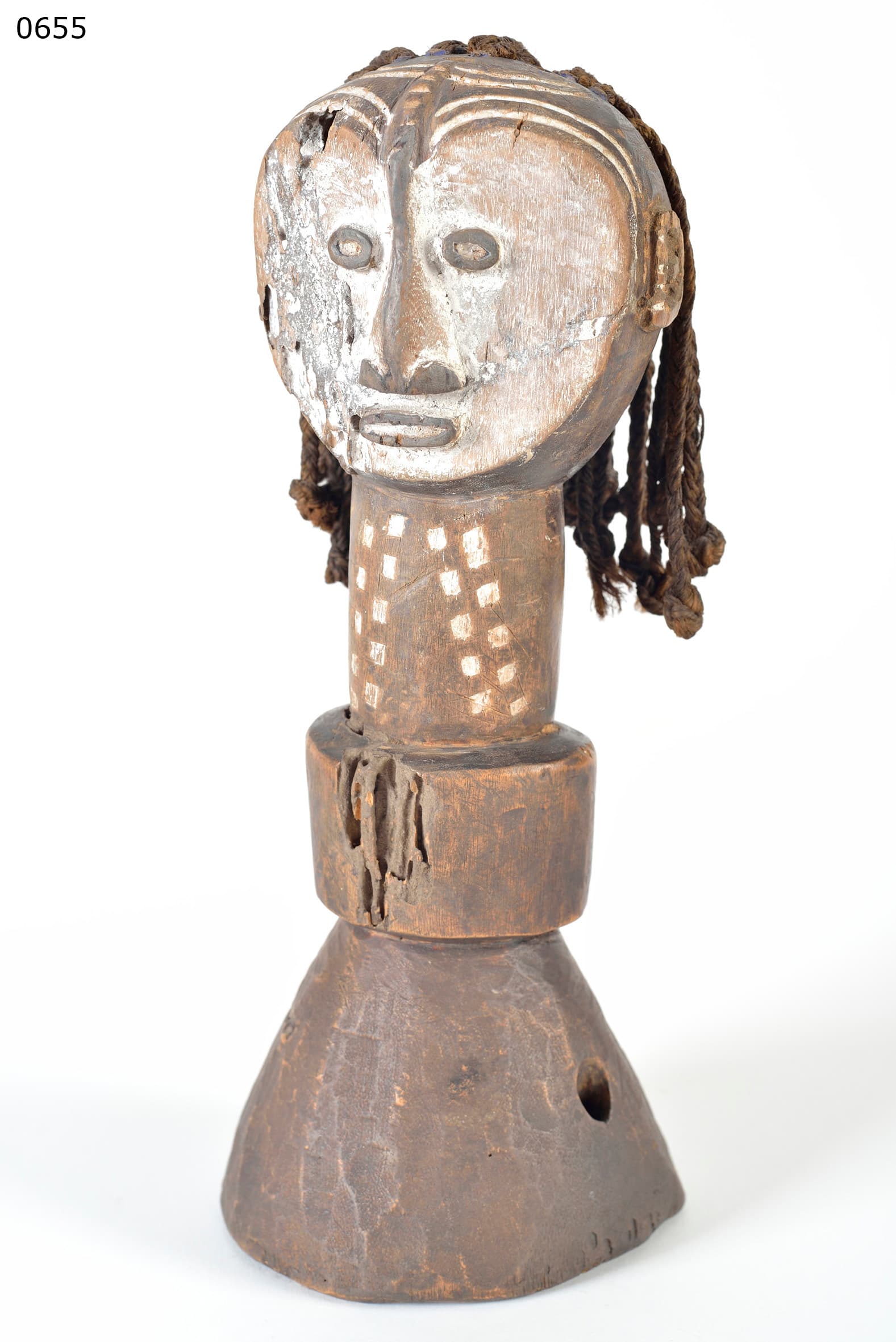
Diese dunkle, kuppelförmige Holzhelm-Maske stellt ein idealisiertes menschliches Gesicht mit glatten, geschwungenen Gesichtszügen, schmalen Schlitzaugen und einem markanten Mittelgrat dar, der von zwei massiven, dicken, nach oben gerichteten Hörnern flankiert wird. Das Holz ist stark verwittert und besitzt eine trockene, stark oxidierte Oberfläche mit starken Erosionen entlang der Basis und der Hörner.
1. Ästhetischer Stil und regionale Charakteristika
Das Idoma-Volk aus dem Benue-Tal ist bekannt dafür, dass es ruhige, zarte Natürlichkeit mit auffälligen, abstrakten Überstrukturen verbindet. Diese Maske bringt diese gegensätzlichen Kräfte auf ausgewogene Weise zum Ausdruck. Die untere Gesichtsebene ist ruhig, mit zarten, schlitzförmigen Augen und einer symmetrischen Nase, die die zivilisierte Ordnung der menschlichen Gemeinschaft darstellt. Diese Gelassenheit steht in Kontrast zu den massiven, dicken Hörnern, die aus dem Scheitel ragen, eine zoomorphe Ergänzung, die die ungezähmten Kräfte der natürlichen Welt darstellen soll.
2. Rituelle Funktion und Geheimbundkontext
Diese Helmmaske gehört wahrscheinlich zu den Oglinye- oder Alekwu-Gesellschaften, die für die Verehrung der Ahnen und die Durchsetzung des Dorfrechts zuständig sind. Bei den jährlichen landwirtschaftlichen Festen, bei Beerdigungen prominenter Männer und bei Gerichtsverfahren wird die Maske über dem gesamten Kopf getragen und verkörpert so die Anwesenheit der Geister der Vorfahren. Die massiven Hörner dienen dazu, bösartige Geister und Hexen geistig und körperlich aus dem Weg zu räumen, während das heitere Gesicht der Gemeinschaft versichert, dass die Ahnen mit wohlwollender Autorität über sie wachen.
3. Physische Patina und Altersindikatoren
Die extreme Austrocknung und Abnutzung des Holzes spricht für eine Datierung dieser Maske in das frühe 20. Jahrhundert. Das Holz hat seine innere Feuchtigkeit weitgehend verloren, was zu einer leichten, trockenen Matrix mit tiefen, natürlichen Altersrissen führt, die sich vertikal durch die Hörner und die zentrale Kuppel ziehen. Der Innenrand zeigt deutliche, geglättete Reibungsverschleißspuren und Nachdunkelungen durch den Gebrauch. Das Äußere entbehrt jeglicher moderner Oberflächenbehandlung und weist eine staubige und oxidierte Schreinpatina auf.
Zusammenfassung
Diese Idoma-Hornhelm-Maske zeigt eine bemerkenswerte nigerianische formale Ausgewogenheit, die menschliche Gelassenheit mit zoomorpher Kraft verbindet. Ihre ausgeprägte Architektur und ihre tief getrocknete Holzoberfläche machen sie zu einem charakteristischen Artefakt der Benue-Tal-Maskerade.
KI-unterstützt erstellt aus Sammlungsgutachten, Objektfotografie und eigener Recherche, redaktionell geprüft. Fehler sind möglich — Hinweise darauf sind uns willkommen. Zum Verfahren →