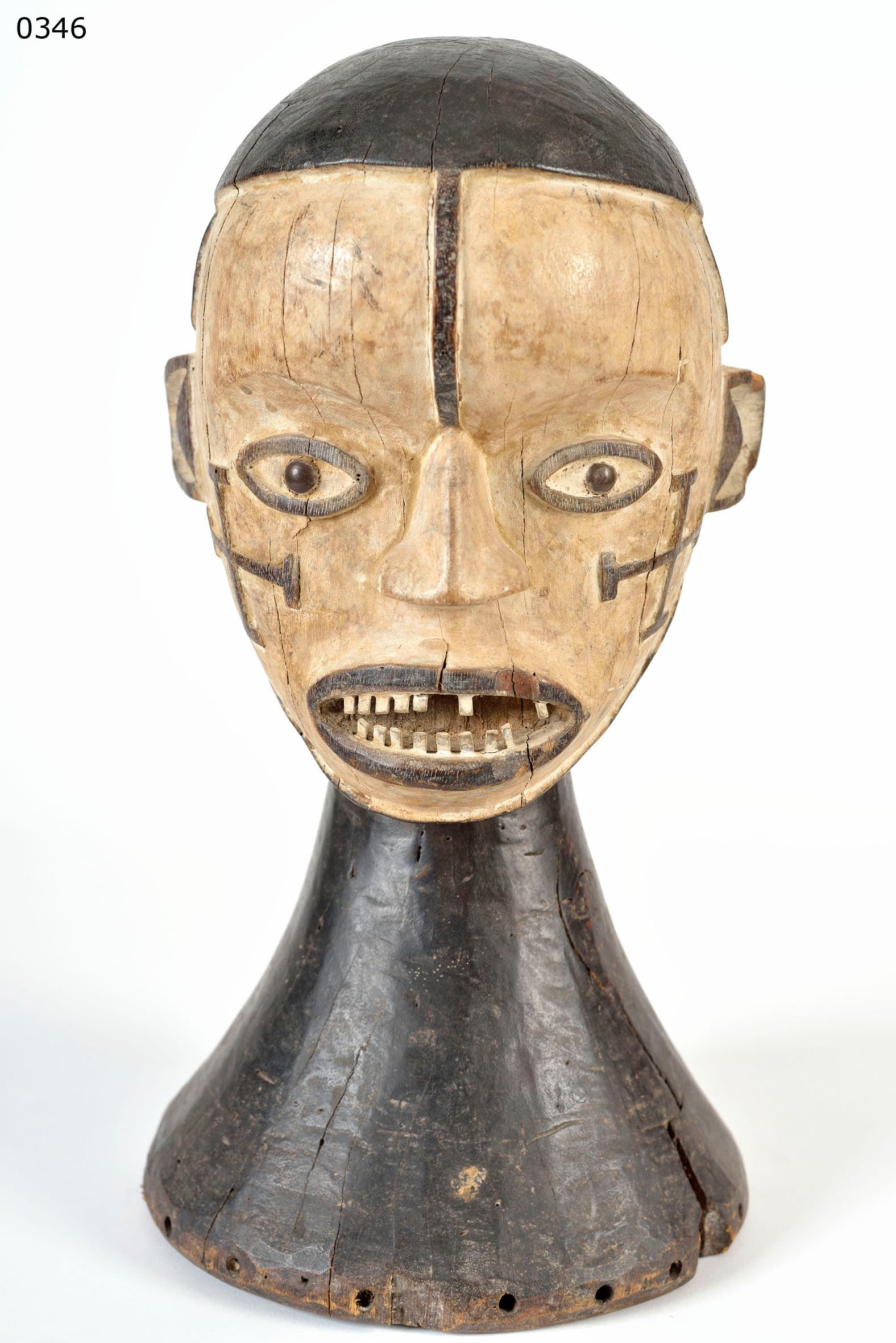
Eine auffällige Idoma-Gesichtsmaske aus Holz (1. Hälfte 20. Jh., 32 cm) aus Nigeria - ein ovales, weiß bemaltes Gesicht mit fein geschwungenen schwarzen Brauen, halb geschlossenen Augen und einem offenen Mund, der geschnitzte Zähne zeigt. Die helle Kaolin-Oberfläche wird durch dunkle Ritzskarifikationen auf den Wangen und Schläfen schön unterbrochen und von einer dunklen, glatten Frisur eingerahmt. Ausgestellt auf einem Metra-Sockel.
1. Der weißgesichtige Naturalismus im Benue-Tal
Die Idoma (südlich des Benue-Flusses) stehen in scharfem Kontrast zu den abstrakten kubistischen Stilen vieler nigerianischer Nachbarn.
- Feine idealisierte Form: Glatte Wangenkurven, eine sehr detaillierte Darstellung der Zähne und präzise geometrische Ritzungen zeugen von technischer Meisterschaft.
- Theologische Entscheidung für Nzu: Die Verwendung von weißem Kaolin (nzu) ist eine bewusste theologische Entscheidung, die in der Region allgemein verwendet wird, um spirituelle Reinheit, Hellsichtigkeit und das Reich der Ahnen zu symbolisieren.
2. Die Alekwu- und Oglinye-Gesellschaften
Masken in dieser zarten, idealisierten Form sind eng mit den Alekwu (Ahnenkult) und den Oglinye-Männergesellschaften verbunden.
- Gütig zurückkehrende Geister: Sie stellen wohlwollende Geister junger Frauen oder besänftigter Vorfahren dar, die aus der Geisterwelt zurückkehren, um an den landwirtschaftlichen Festen und Beerdigungen des Dorfes teilzunehmen.
- Friedensausstrahlendes Gegengewicht: Getragen von männlichen Tänzern in aufwendigen, farbenfrohen Kostümen - der heitere Ausdruck strahlt Frieden, soziale Harmonie und den Segen der Toten auf die Lebenden aus und bildet ein Gegengewicht zu den furchterregenden dunklen Masken aggressiver Buschgeister.
3. Verblassen der Pigmente und Abnutzung bei der Aufführung
Die Patina spricht für eine Entstehung im frühen 20. Jahrhundert.
- Hochpunkt-Kaolin-Verlust: Weißes Kaolin hat sich auf natürliche Weise abgebaut und an den Hochpunkten der Nase und der Wangen abgerieben, um das warme, oxidierte Holz darunter freizulegen - dunkles Pigment für Frisur und Skarifikation hat sich tief mit der Holzmaserung verbunden.
- Schweißpolierte Innenseite: Der innere Hohlraum und die peripheren Kanten, an denen ein Kostüm befestigt war, weisen eine dunkle, ölige, schweißpolierte Abnutzung auf – was auf eine aktive Nutzung im rituellen Tanz hindeutet.
Zusammenfassung
Diese weißgesichtige Maske verkörpert die ruhige, naturalistische Eleganz der Idoma-Schnitzkunst und ist eine klassische Darstellung der Reinheit der afrikanischen Vorfahren. Die zarten Skarifikationen und der gebrauchsbedingte Pigmentabbau machen sie zu einem charakteristischen ethnografischen Objekt.
KI-unterstützt erstellt aus Sammlungsgutachten, Objektfotografie und eigener Recherche, redaktionell geprüft. Fehler sind möglich — Hinweise darauf sind uns willkommen. Zum Verfahren →