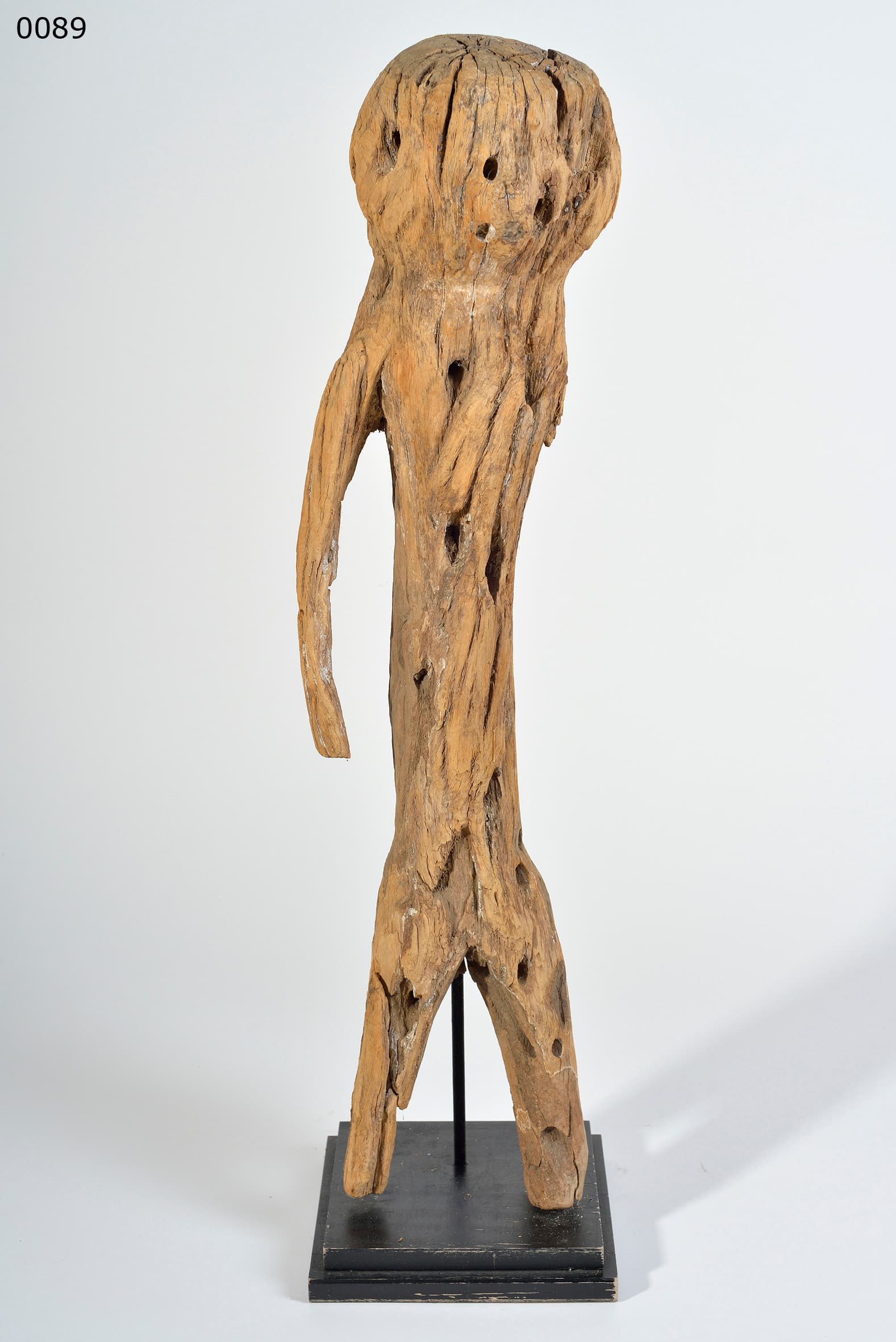
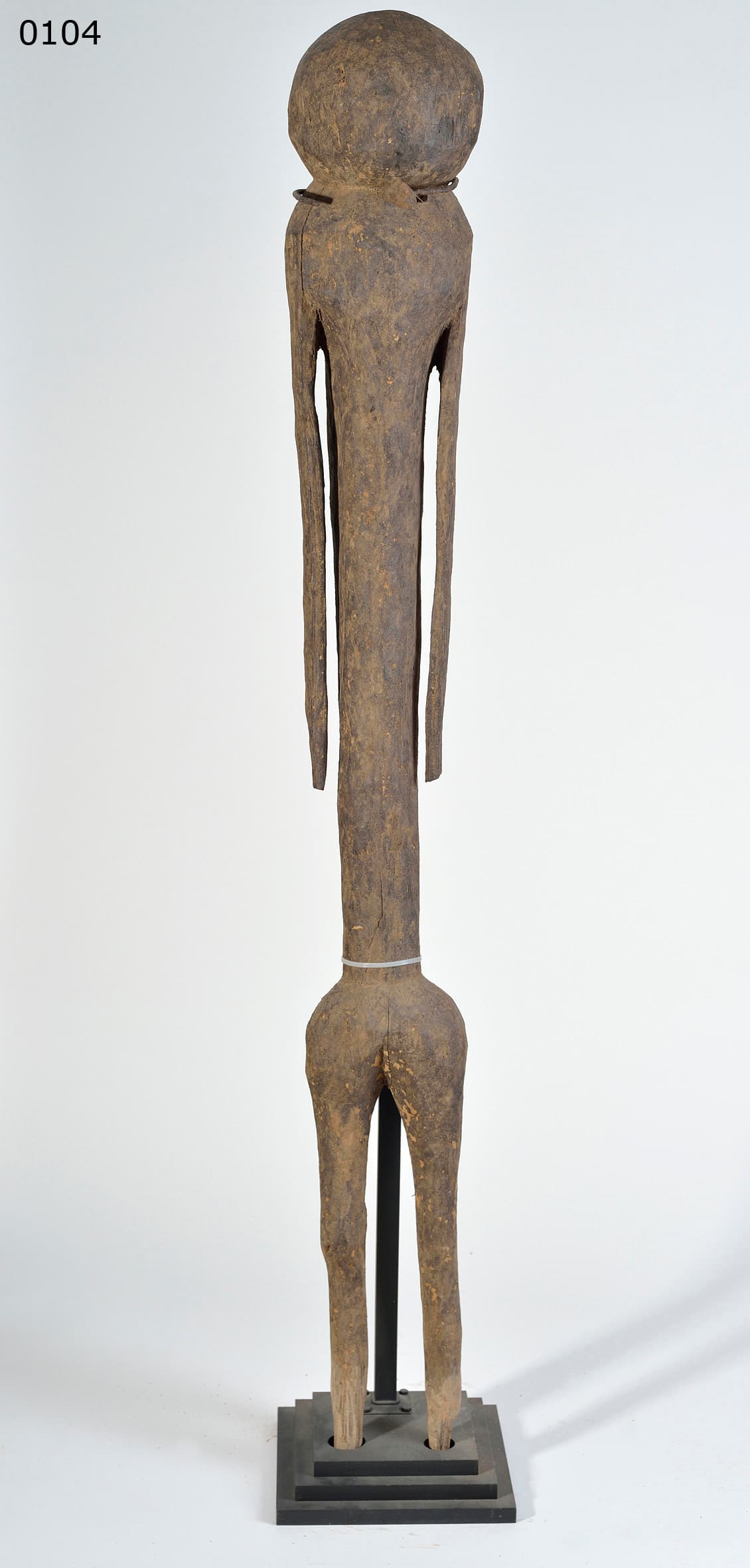
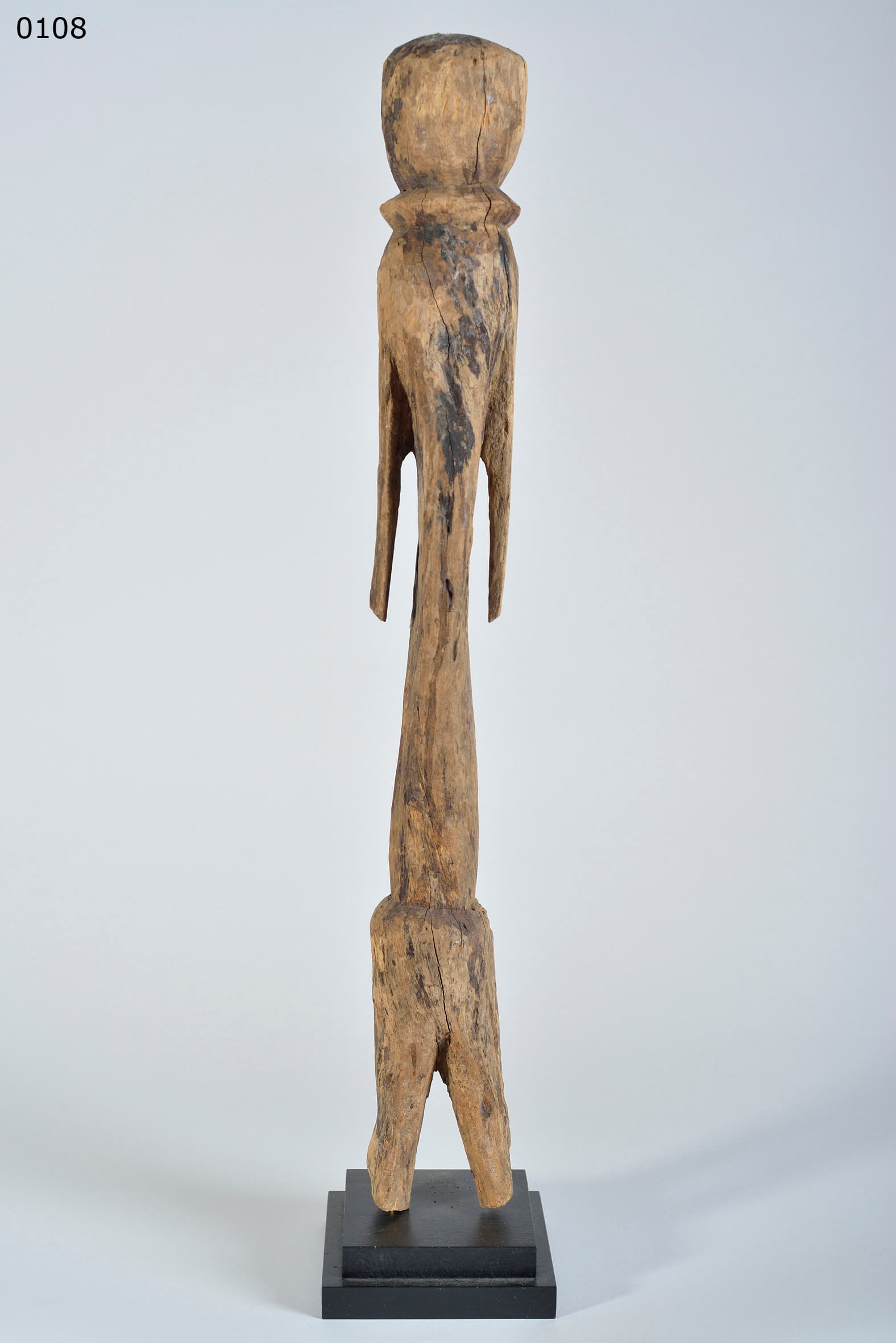
Eine stark abstrahierte Moba Tchitchiri (wohl 19. Jh., 72 cm) aus Togo - reduziert auf eine vertikale Stange mit einem runden, eigenschaftslosen Kopf, ohne Arme und zwei einfachen, pflockartigen Beinen, die durch einen zentralen Schlitz geteilt sind. Das Holz besitzt eine sehr trockene, dunkelbraune, stark erodierte Patina, die für ein hohes Alter spricht, mit starken Randverlusten.
1. Der Zenit des strukturellen Reduktionismus
Die Moba aus dem Norden Togos stellen die Tchitchiri her - eine Form der Statuen, die als ein ausgeprägtes Beispiel für Abstraktion in der globalen Kunstgeschichte gilt.
- Alle Merkmale werden abgelehnt: Der Bildhauer verzichtet auf alle erkennbaren menschlichen Merkmale - keine Augen, kein Mund, keine Hände, keine geometrischen Verzierungen.
- Essentielle strukturelle Primitive: Der Körper wird auf seine strukturelle Essenz reduziert - eine Kugel (Kopf), die auf einem Zylinder (Rumpf) ruht, der von zwei parallelen Linien (Beinen) getragen wird. Dieser radikale Minimalismus schafft eine eindringliche Darstellung der menschlichen Seele, die keine irdische Identität hat.
2. Der Tchitchiri Sakwa und die Anonymität der Vorfahren
Mit einer Größe von 72 cm wird diese Figur als Tchitchiri Sakwa klassifiziert - sie repräsentiert eher einen Stammesvorfahren als einen kürzlich verstorbenen Verwandten.
- Theologische Anonymität: Das absichtliche Fehlen von Gesichtszügen ist theologisch notwendig - der Vorfahre ist vor so langer Zeit gestorben, dass sich seine menschliche Identität in reine anonyme spirituelle Energie aufgelöst hat.
- Gepflanztes Familienheiligtum: Bei Familienheiligtümern physisch in die Erde getrieben - es dient den Lebenden als Kanal, um die alten Gründer um landwirtschaftliche Fruchtbarkeit, Regen und Schutz vor übernatürlichen Kräften zu bitten.
3. Verwitterung durch Erdaufstellung
Die Patina und die strukturelle Beschaffenheit legen eine Herkunft aus dem 19. Jahrhundert nahe.
- Tiefe Oxidation und Austrocknung: Das schwere, dichte Holz ist stark oxidiert und zeigt starke Austrocknung.
- Erosion der Pflockbeine: Ein wesentliches Merkmal ist die ungleichmäßige Erosion an den pflockartigen Beinen - ein Zustand, der darauf hindeutet, dass das Holz über längere Zeiträume direkt in der Erde eines Schreins stand, wodurch es Feuchtigkeit und Insektenaktivität ausgesetzt war.
Zusammenfassung
Diese Moba Tchitchiri, die dem 19. Jahrhundert zugeschrieben werden kann, zeigt eine eindringliche skulpturale Reduktion, die das anonyme Wesen des Vorfahrengeistes versinnbildlicht. Ihre ausgeprägte Erosion und ihr strenger Minimalismus machen sie zu einem repräsentativen Beispiel der traditionellen afrikanischen Abstraktion.
KI-unterstützt erstellt aus Sammlungsgutachten, Objektfotografie und eigener Recherche, redaktionell geprüft. Fehler sind möglich — Hinweise darauf sind uns willkommen. Zum Verfahren →