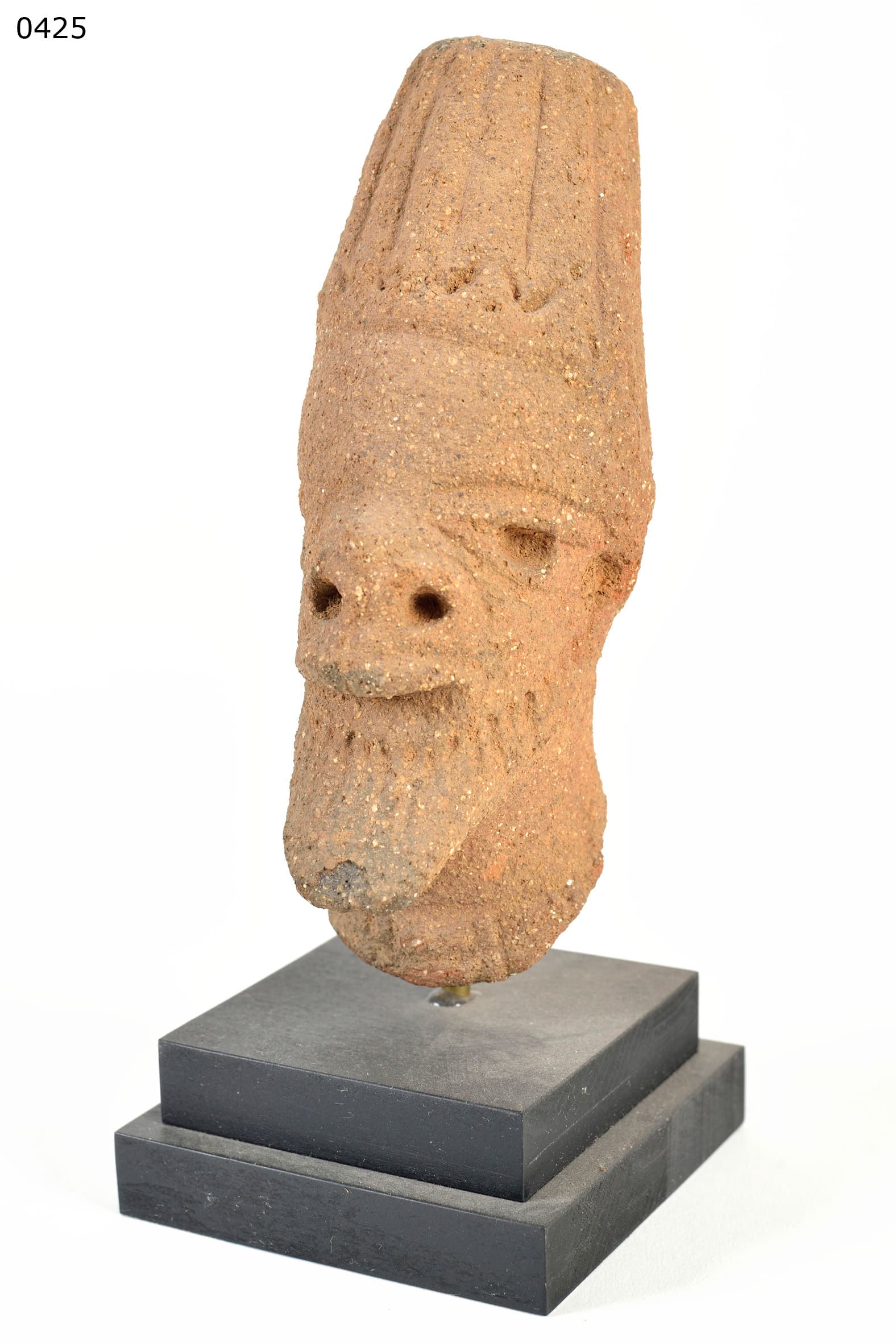
Ein antiker Terrakottakopf aus Yelwa / Sokoto (~2000 Jahre alt, 22 cm) aus Nigeria - konisch zulaufender Schädel, schwere überhängende Stirn, schmale geschlitzte Augen und ein stark hervorstehender Kiefer oder Bart, stark erodiert und ohne ursprünglichen Schlicker, verkrustet mit groben sandigen mineralischen Kalkablagerungen. Gepaart mit 0425.
1. Die Eisenzeittypologie von Yelwa / Sokoto
Die aus dem mittleren Niger-Tal im Nordwesten Nigerias stammenden Yelwa-Terrakotten stellen eine wichtige zeitgenössische Parallele zur berühmten Nok-Zivilisation (ca. 500 v. Chr. - 200 n. Chr.) dar.
- Schwerer als Nok: Während die Nok-Kunst durch durchbrochene dreieckige Augen gekennzeichnet ist, ist die Yelwa-/Sokoto-Ästhetik grundsätzlich schwerer und strenger - tiefe überhängende Brauenkämme werfen Schatten auf die nicht durchbrochenen schmalen Augenschlitze.
- Brutalistische konische Geometrie: Massive vorstehende Kiefer (oder stilisierte Bärte) und steil konische Köpfe schaffen eine intensive, fast brutalistische Geometrie - eine unnachgiebige, stille Schwerkraft, die für diesen archäologischen Korridor einzigartig ist.
2. Fragmentierung des Göttlichen
Wie fast alle nigerianischen Keramiken der Eisenzeit sind diese Köpfe Fragmente - ursprünglich abgebrochen von viel größeren, stark konstruierten Torso- und Körperelementen.
- Gottheiten, keine Porträts: Die extreme Stilisierung deutet auf Darstellungen von Gottheiten, vergöttlichten Vorfahren oder lokalisierten Geistern des Landes und des Wassers hin.
- Absichtliches Zerbrechen von Schreinen: Diese hoch aufragenden Figuren, die in riesigen landwirtschaftlichen Schreinen unter freiem Himmel aufgestellt waren, wurden von den frühen Eisenschmelzgemeinschaften verehrt, um Regenfälle und die Fruchtbarkeit der Ernte zu gewährleisten - wahrscheinlich wurden sie während der Zeremonien absichtlich zerbrochen, um ihre angesammelte spirituelle Kraft in die Erde zu entlassen.
3. 2.000 Jahre alte unterirdische Patinierung
Die Authentizität ist direkt in die geologische Degradierung eingeschrieben.
- Quarz-Grog-Temperierung: Der Ton wurde stark mit grobem Quarz-Grog temperiert, um zu verhindern, dass die dicke Keramik beim Brennen im Tagebau zerbricht.
- Kristalline Verkalkung: Mehr als 2.000 Jahre tiefes Vergraben in den sandigen, sauren Böden des Niger-Flussbeckens haben den ursprünglichen glatten Schlupf vollständig erodiert - die Oberflächen sind jetzt sehr brüchig und mit gehärteten kristallinen weißen Mineralverkalkungen und eingebetteter Erde verstopft.
Zusammenfassung
Zusammen mit 0425 ist dieser Terrakottakopf aus Yelwa ein zutiefst brutalistisches Monument der westafrikanischen Eisenzeit. Seine schwere, vorspringende Geometrie und die nachgewiesene 2.000 Jahre alte geologische Verkalkung machen ihn zu einem grundlegenden musealen Altertum der nigerianischen Geschichte.
KI-unterstützt erstellt aus Sammlungsgutachten, Objektfotografie und eigener Recherche, redaktionell geprüft. Fehler sind möglich — Hinweise darauf sind uns willkommen. Zum Verfahren →