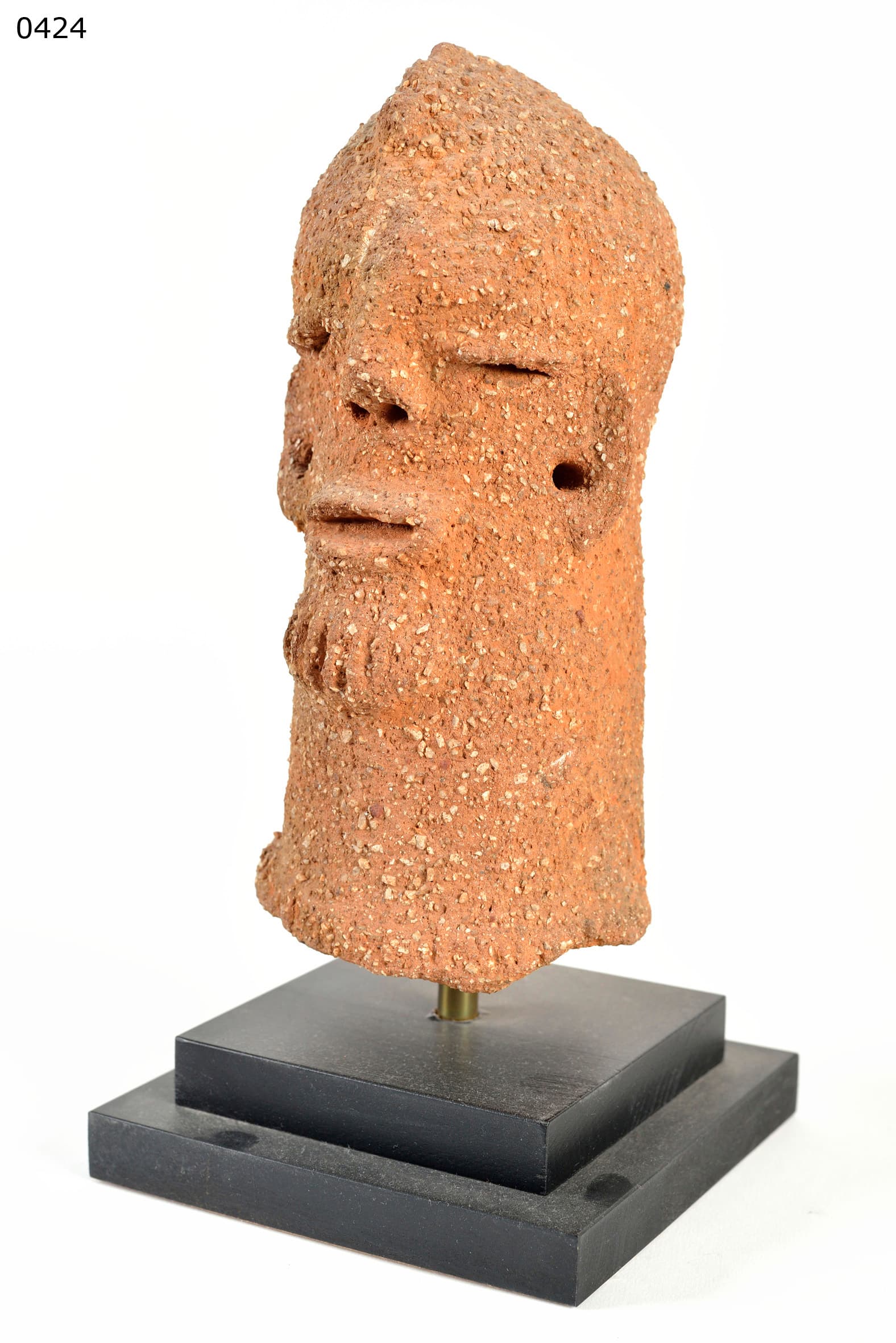
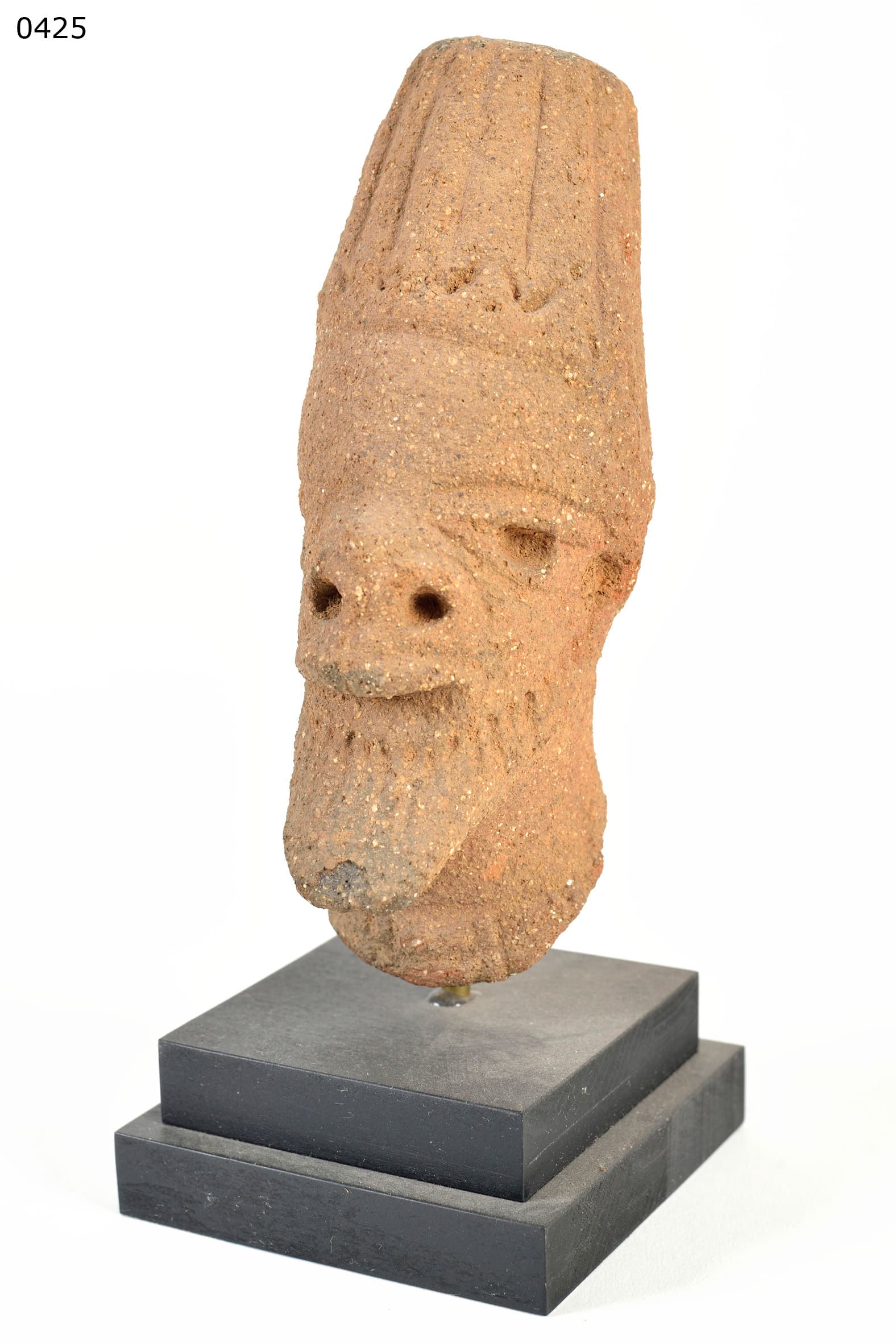
Dieser markante Terrakottakopf weist tief eingeschnittene vertikale Skarifikationslinien auf, die über die Wangen und die Stirn verlaufen, mit einer länglichen, vorspringenden Nase und charakteristischen durchbohrten Augen. Der Ton ist stark verwittert und hat einen satten, erdigen Rotton mit dichten archäologischen Verkrustungen.
1. Ästhetischer Stil und regionale Merkmale
Der Yelwa-Stil ist eng verwandt mit den Nok- und Sokoto-Kulturen des alten Nordnigeria, das im mittleren Niger-Tal liegt. Er ist sofort an den tief in den Ton geritzten, stark formalisierten Gesichtsskarifikationen zu erkennen. Diese parallelen vertikalen Linien dominieren das Gesicht und überschneiden sich mit den stilisierten, geometrischen Merkmalen der gepiercten Augen und der markanten Nase. Diese Betonung der dauerhaften Körpermodifikation spiegelt antike Normen für Schönheit, Stammeszugehörigkeit und körperliche Ausdauer wider.
2. Rituelle Funktion und Geheimbundkontext
Wie ihre Gegenstücke aus Nok und Sokoto sind auch die Terrakotten von Yelwa Grab- oder Schreinfiguren, die mit der Verehrung der Toten verbunden sind. Die aufwändigen Skarifikationen lassen vermuten, dass dieser Kopf eine bestimmte, hochrangige Person oder einen vergöttlichten Stammvater darstellt. In Nekropolen begraben oder in heiligen Hainen aufgestellt, fungierte die Figur als spirituelles Gefäß, das es den Lebenden ermöglichte, dem Verstorbenen Trankopfer und Gebete darzubringen und ihn im Gegenzug vor Krankheiten und Hungersnöten zu schützen.
3. Physische Patina und Altersnachweis
Die Oberfläche dieses Stücks weist Merkmale auf, die für ein hohes Alter sprechen. Der gebrannte Ton weist eine tiefgreifende, körnige Zersetzung auf, wobei die scharfen Kanten der ursprünglichen Einschnitte durch langjährigen unterirdischen Wasserfluss und Bodendruck aufgeweicht wurden. Mikroskopische Wurzelabdrücke und eine dichte, verkalkte Kruste aus rötlichem Lateritboden sind dauerhaft mit der Terrakotta verbunden und sprechen für eine archäologische Herkunft.
Zusammenfassung
Dieser Terrakottakopf ist ein eindrucksvolles Beispiel für die bildhauerische Sprache der Yelwa und ein repräsentatives Zeugnis des alten westafrikanischen Expressionismus. Seine kühnen Skarifikationsmuster und die tiefe archäologische Patina bieten einen Einblick in die sozialen und spirituellen Hierarchien der frühen urbanisierten Gesellschaften Nigerias.
KI-unterstützt erstellt aus Sammlungsgutachten, Objektfotografie und eigener Recherche, redaktionell geprüft. Fehler sind möglich — Hinweise darauf sind uns willkommen. Zum Verfahren →