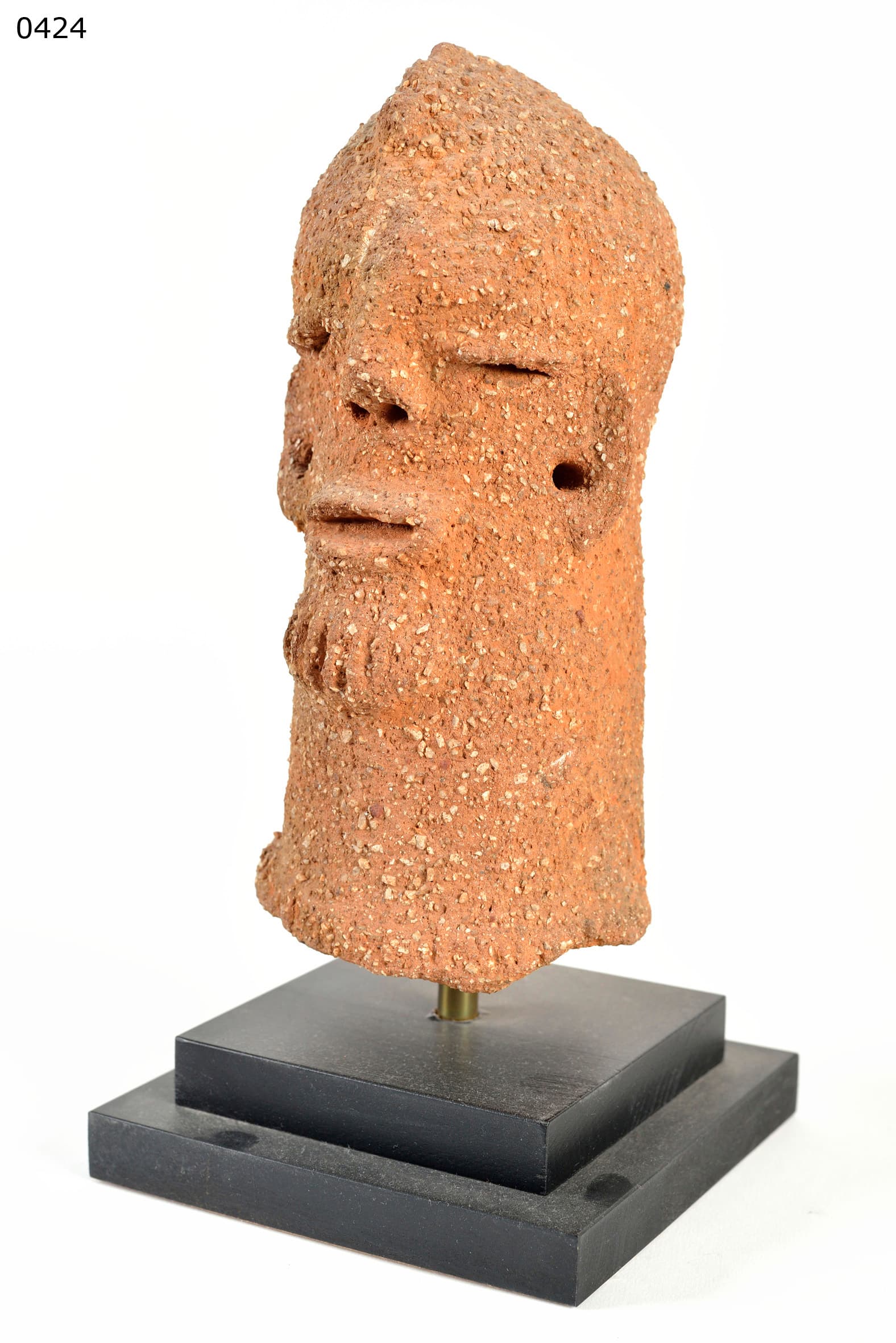
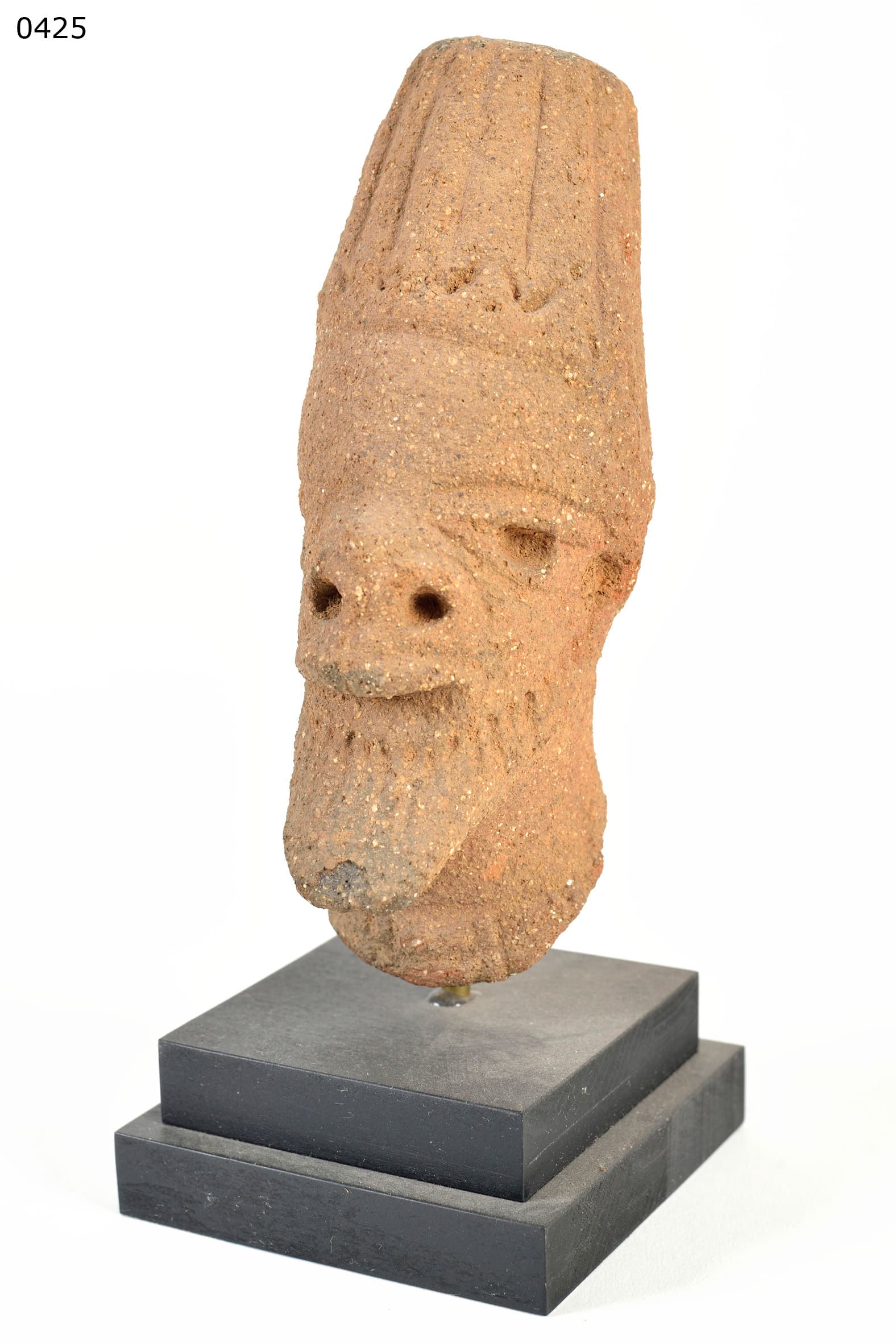
Eine antike, stark erodierte Terrakotta-Skulptur, die eine sitzende oder kniende Figur darstellt, die einen Gegenstand ergreift oder ihre Hände auf den Bauch stützt. Der gebrannte Ton weist eine grobe, poröse Textur mit erheblichen Oberflächenverlusten und archäologischen Verkrustungen auf.
1. Ästhetischer Stil und regionale Charakteristika
Yelwa (geografisch und stilistisch oft mit dem Sokoto- oder frühen Nok-Kulturkreis assoziiert) produzierte einige der ältesten erhaltenen Keramiken in Subsahara-Afrika. Diese Figur weist die für diese alten nigerianischen Flusstal-Zivilisationen typischen schweren Gesichtszüge, vereinfachten anatomischen Formen und groben, grob gebrannten Ton auf. Die raue, monumentale Stilisierung spiegelt eine Ästhetik wider, die von grundlegenden metallurgischen und keramischen Durchbrüchen in der Antike angetrieben wurde, als die figurative Keramikskulptur in der gesamten Region zu einer anerkannten Kulturform wurde.
2. Rituelle Funktion und Verwendung für Bestattungen
Terrakottafiguren aus dieser abgelegenen Periode wurden in erster Linie für Bestattungszwecke oder örtlich begrenzte Schreine geschaffen. Sie wurden in Grabhügeln oder irdenen Altären aufgestellt und dienten dem Gedenken an die Ahnen, dem Schutz der Gemeinschaft vor Krankheiten oder der Sicherung der landwirtschaftlichen Fruchtbarkeit. Da die Identität des jeweiligen Individuums im Laufe der Zeit verloren gegangen ist, steht die Figur als allgemeiner, dauerhafter spiritueller Anker, der noch lange nach dem Tod seiner Schöpfer weiterwirkte. Die sitzende/kniende Haltung ist in den alten nigerianischen Bildhauertraditionen selbst ikonografisch aufgeladen und signalisiert eher rituellen Empfang und betende Präsenz als aktive Darstellung.
3. Physische Patina und Altersnachweis
Die Beschaffenheit des Tons - stark entsteint, chemisch verändert und mit alten Erden imprägniert - spricht für seine schätzungsweise 3000 Jahre alte Herkunft. Der Verlust der feinen Schnitzereien und die verkalkten Mineralablagerungen auf der Oberfläche sind das direkte Ergebnis von Jahrtausenden, die in der rauen, schwankenden unterirdischen Umgebung der nigerianischen Erde verbracht wurden. Die Mineralisierung ist chemisch mit dem Keramikkörper verbunden, anstatt ihn zu überziehen - was für eine mehrere Jahrtausende währende Vergrabung spricht.
Zusammenfassung
Diese Yelwa-Terrakotta ist ein archaisches Überbleibsel der frühesten skulpturalen Traditionen Nigerias. Ihre tiefgreifende archäologische Verwitterung und ihr grundlegender ikonografischer Stil machen sie zu einem bedeutenden Zeugnis alter afrikanischer Geschichte.
KI-unterstützt erstellt aus Sammlungsgutachten, Objektfotografie und eigener Recherche, redaktionell geprüft. Fehler sind möglich — Hinweise darauf sind uns willkommen. Zum Verfahren →