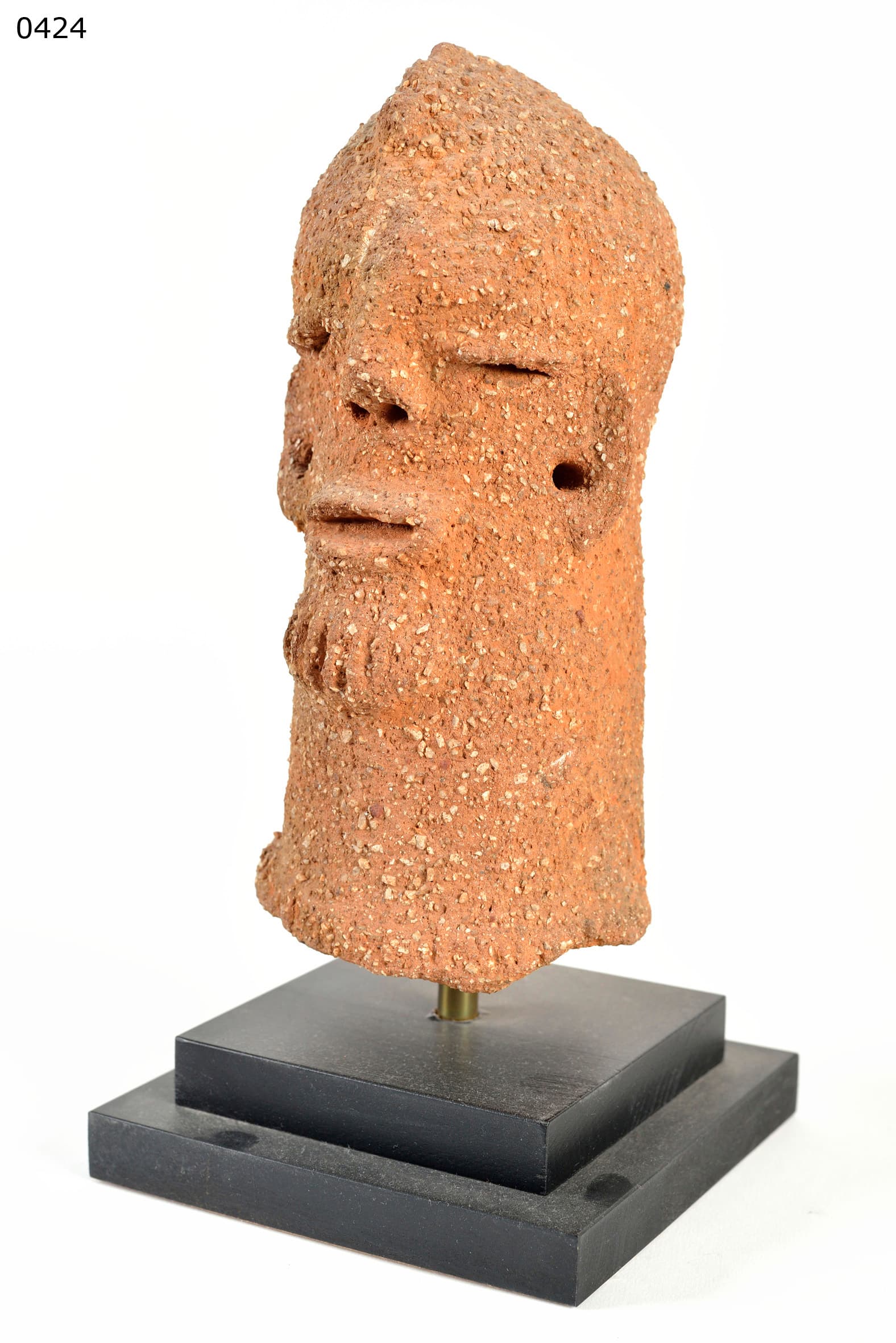
Ein antiker Yelwa / Sokoto-Terrakottakopf (~2000 Jahre alt, 19 cm) aus Nigeria - gepaart mit 0424 mit dem gleichen diagnostischen konischen Schädel, schweren überhängenden Augenbrauen, schmalen Augenschlitzen und hervorstehendem Kiefer oder Bart, stark erodiert und verkrustet mit groben sandigen mineralischen Kalkablagerungen.
1. Die Eisenzeittypologie von Yelwa / Sokoto
Die Jelwa-Terrakotten stellen eine wichtige zeitgenössische Parallele zur berühmten Nok-Zivilisation (ca. 500 v. Chr. - 200 n. Chr.) dar.
- Strenge Parallele zu Nok: Während die Nok-Kunst durch durchbohrte dreieckige Augen gekennzeichnet ist, ist die Ästhetik von Yelwa / Sokoto grundsätzlich schwerer und strenger - tiefe überhängende Brauenkämme überschatten die ungestochenen geschlitzten Augen.
- Brutalistische konische Geometrie: Massiv vorstehende Kiefer und steil konische Köpfe projizieren eine unnachgiebige, stille Schwere, die für diesen archäologischen Korridor einzigartig ist.
2. Fragmentierung des Göttlichen
Wie fast alle nigerianischen Keramiken der Eisenzeit sind diese Köpfe Fragmente, die von viel größeren Torsi abgebrochen wurden.
- Gottheiten, keine Porträts: Die extreme Stilisierung deutet auf Darstellungen von Gottheiten, vergöttlichten Vorfahren oder lokalisierten Geistern des Landes und des Wassers hin.
- Absichtliches Zerbrechen von Heiligtümern: Sie wurden von den frühen Eisenverhüttungsgemeinschaften in riesigen landwirtschaftlichen Heiligtümern unter freiem Himmel platziert - wahrscheinlich wurden sie bei Zeremonien absichtlich zerbrochen, um die angesammelte spirituelle Kraft in die Erde zu entlassen.
3. 2.000 Jahre alte unterirdische Patinierung
Die Authentizität ist direkt in die geologische Degradation eingeschrieben.
- Quarz-Grog-Temperierung: Stark temperiert mit grobem Quarz-Grog, um ein Zerspringen beim Brennen im Tagebau zu verhindern.
- Kristalline Mineralkruste: Mehr als 2.000 Jahre der Beerdigung in den sandigen sauren Böden des Niger-Flussbecken haben vollständig die ursprüngliche glatte Schlupf erodiert - Oberflächen sind sehr bröckelig und mit gehärteten kristallinen weißen Mineral Verkalkungen und eingebettete Erde erstickt.
Zusammenfassung
Als etwas kleineres, 19 cm langes Pendant zu 0424 unterstreicht dieser Terrakottakopf aus Yelwa die brutalistische Monumentalität des westafrikanischen Eisenzeitpaares. Seine schwere, vorspringende Geometrie und die nachgewiesene 2.000 Jahre alte geologische Verkalkung machen ihn zu einem grundlegenden musealen Altertum der nigerianischen Geschichte.
KI-unterstützt erstellt aus Sammlungsgutachten, Objektfotografie und eigener Recherche, redaktionell geprüft. Fehler sind möglich — Hinweise darauf sind uns willkommen. Zum Verfahren →