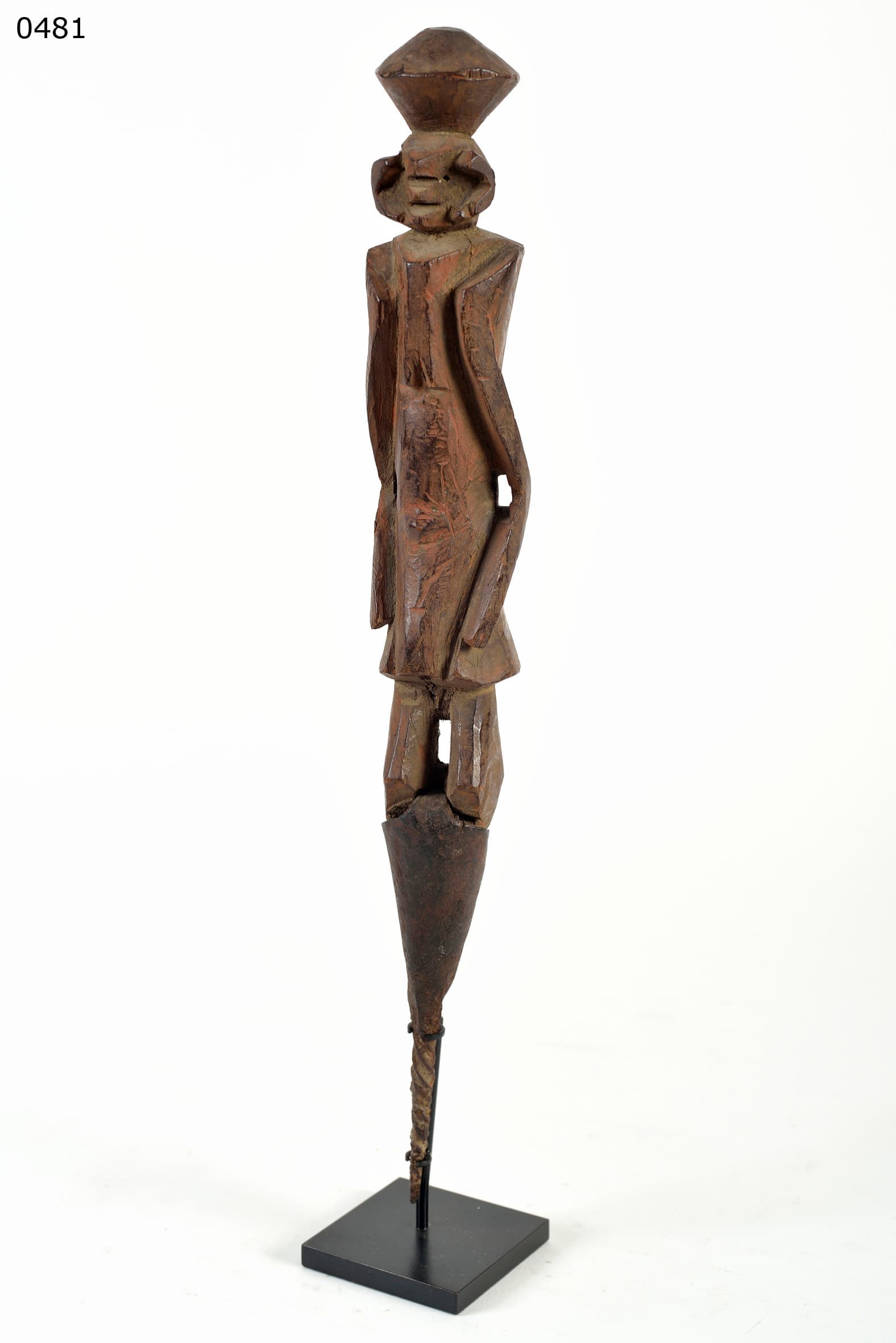
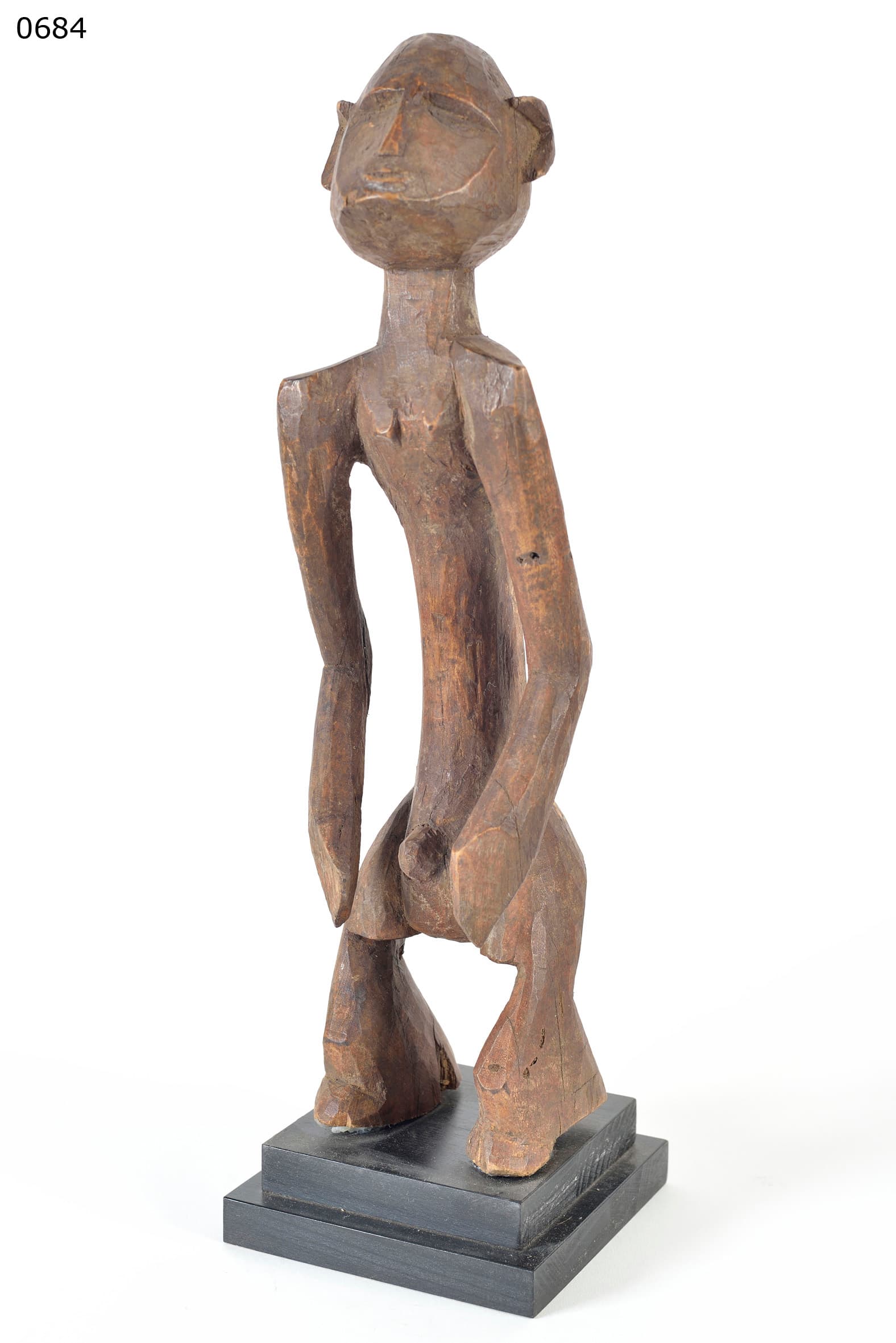
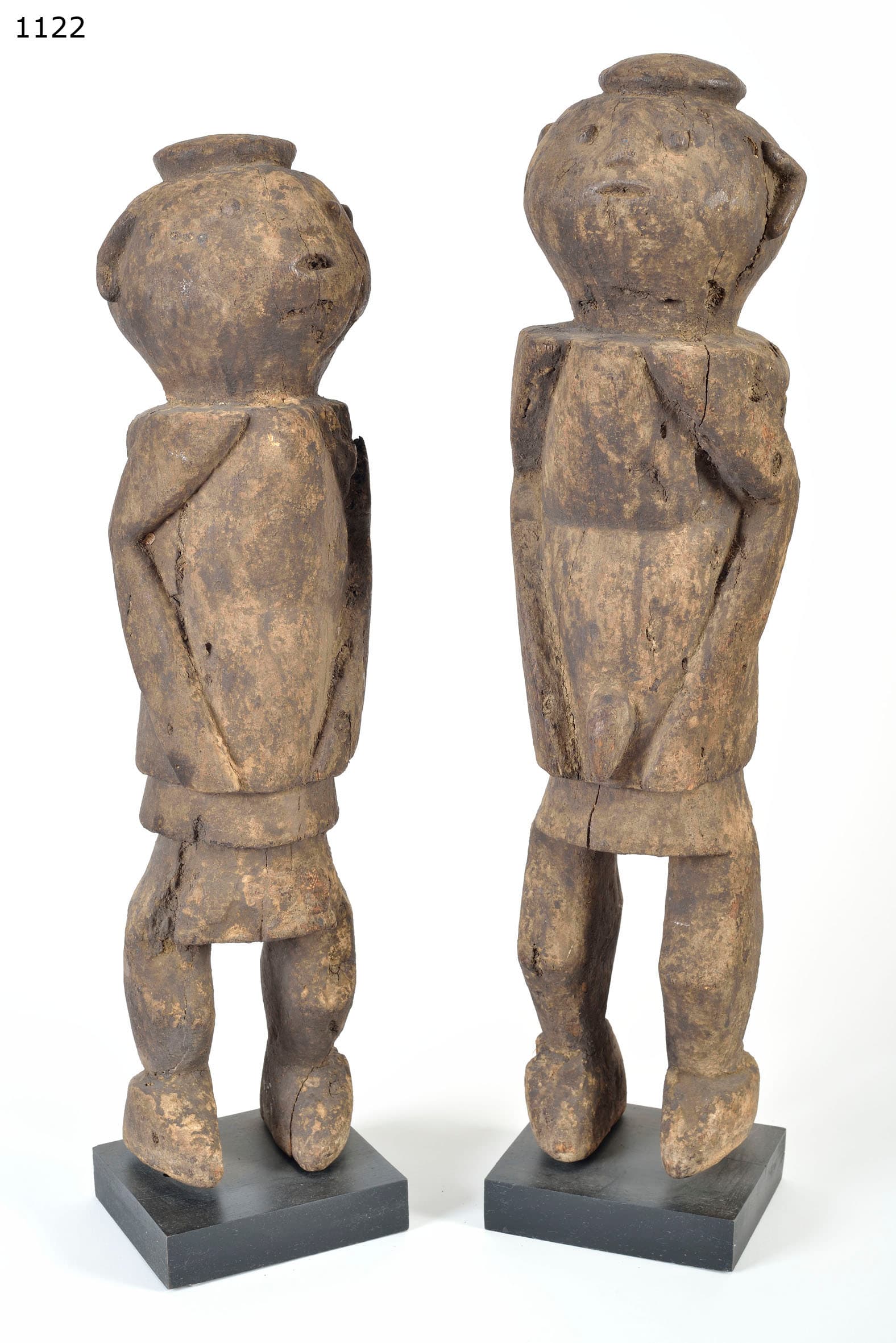
Eine monumentale männliche Chamba-Ahnenfigur (1. Hälfte 20. Jh., 88 cm) aus Nigeria - stark abstrahiert mit einem langgestreckten, säulenartigen Körper, einem markanten, volumetrisch geschwungenen Gesäß/Hüfte und einem stilisierten, helmartigen Kopf mit großen, runden Scheibenohren. Das Holz ist stark gealtert mit einer tief verwitterten, trockenen, geschwärzten Patina und deutlicher Erosion.
1. Volumetrischer Kubismus aus dem Benue-Tal
Das Chamba-Volk aus dem mittleren Benue-Tal schnitzt Statuen, die eine brillante, lokale Variante des afrikanischen Kubismus darstellen.
- Volumeninjektion im Vergleich zu den Mumuye-Stäben: Die Chamba-Kunst teilt zwar die Vertikalität ihrer Mumuye-Nachbarn im Stil der Stäbe, weist aber massive, anschwellende Volumina auf, die hier durch die tief geschnitzte Kurve der Hüften und des Gesäßes dominiert werden, die den hoch aufragenden zylindrischen Torso verankert.
- Minimalistische Silhouette: Der Kopf, der gänzlich ohne komplizierte Gesichtszüge auskommt, ist auf eine kahle halbkugelförmige Kuppel reduziert, die von markanten flachen, scheibenförmigen Ohren flankiert wird, wodurch eine unglaublich kraftvolle, minimalistische Silhouette entsteht.
2. Der Volumbi-Kult und die Wächterin der Ahnen
Figuren dieser schwindelerregenden Größe und intensiven Abstraktion werden mit den Ahnenkulten der Chamba Volumbi oder Tau in Verbindung gebracht.
- Gründungspatriarchen: Diese Statuen, die kein individuelles Porträt tragen, stellen Gründungspatriarchen oder mächtige Stammesoberhäupter dar - die großen Scheibenohren stehen für Allwissenheit und die Fähigkeit, die Gebete der Lebenden und die sich nähernden Schritte bösartiger Geister zu hören.
- Dauerhafte Stammeswächter: Sie wurden in begrenzten Stammesschreinen aufbewahrt und um landwirtschaftliche Fruchtbarkeit, Regen und Schutz vor Krankheiten gebeten - sie fungierten als unnachgiebige irdene Wächter.
3. Ausgeprägte elementare Austrocknung
Die Oberfläche zeigt Verwitterungsspuren, die auf eine Entstehung im frühen 20. Jahrhundert hindeuten.
- Benue-Tal-Verwitterung: Ungeschützt durch Küstenöle weist das schwere Holz eine tiefgreifende trockene Umweltaustrocknung auf - ein pulveriges, oxidiertes Holzkohlebraun, das durch jahrzehntelange Kornspaltung, Winderosion und atmosphärische Schwankungen tief strukturiert ist.
- Stumpfe Extremitäten: Die starke Abstumpfung der Hände und Füße spricht dafür, dass das Objekt über Generationen hinweg in einem halb exponierten Schrein im Benue-Tal stand.
Zusammenfassung
Mit einer Höhe von fast einem Meter zeigt diese Chamba-Ahnenfigur eine eindrucksvolle Ausprägung volumetrischer Abstraktion. Ihre ausgeprägte elementare Austrocknung und ihre kubistische Geometrie legen eine Zuordnung zu den bedeutenden Artefakten des nigerianischen Volumbi-Kults nahe.
KI-unterstützt erstellt aus Sammlungsgutachten, Objektfotografie und eigener Recherche, redaktionell geprüft. Fehler sind möglich — Hinweise darauf sind uns willkommen. Zum Verfahren →