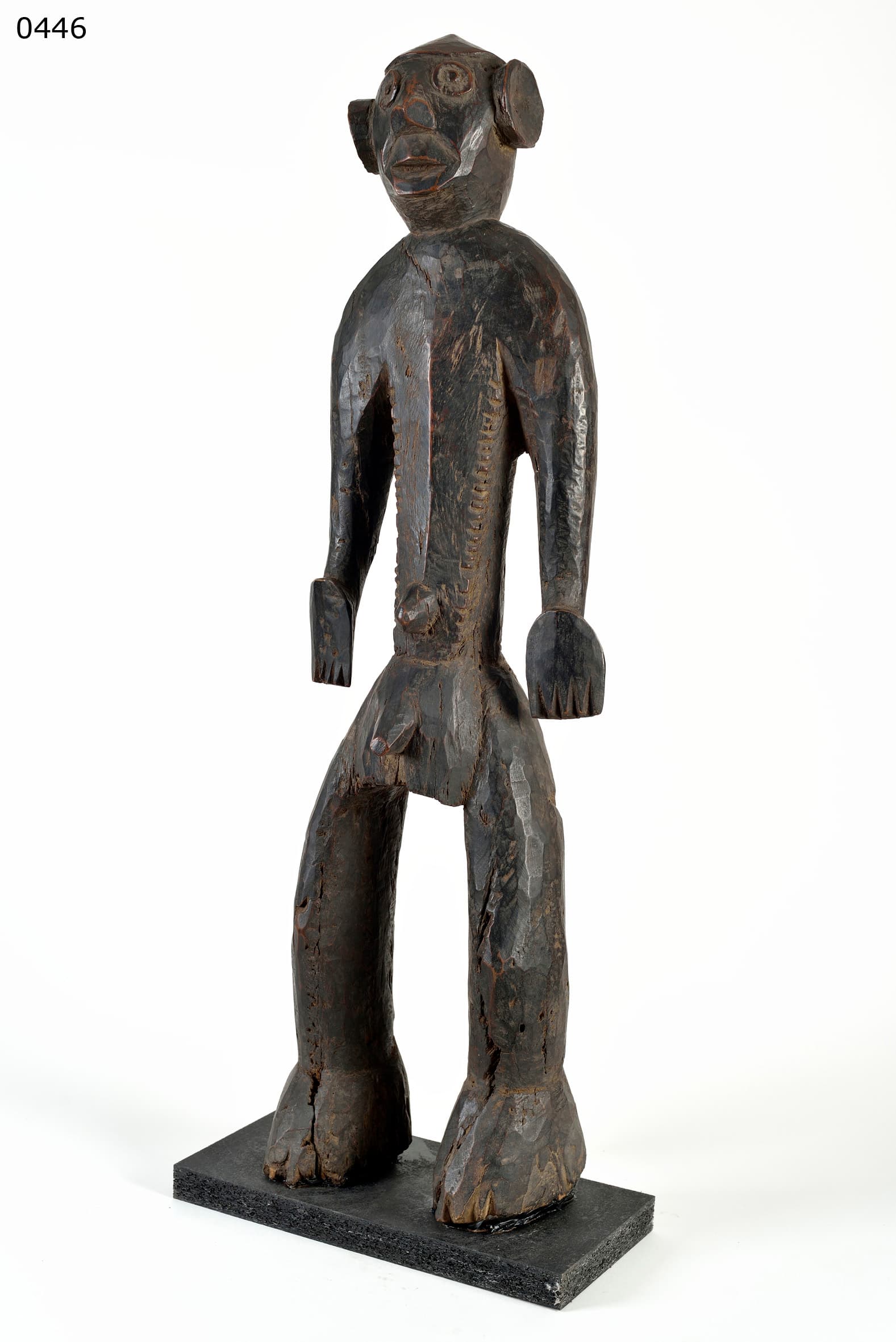
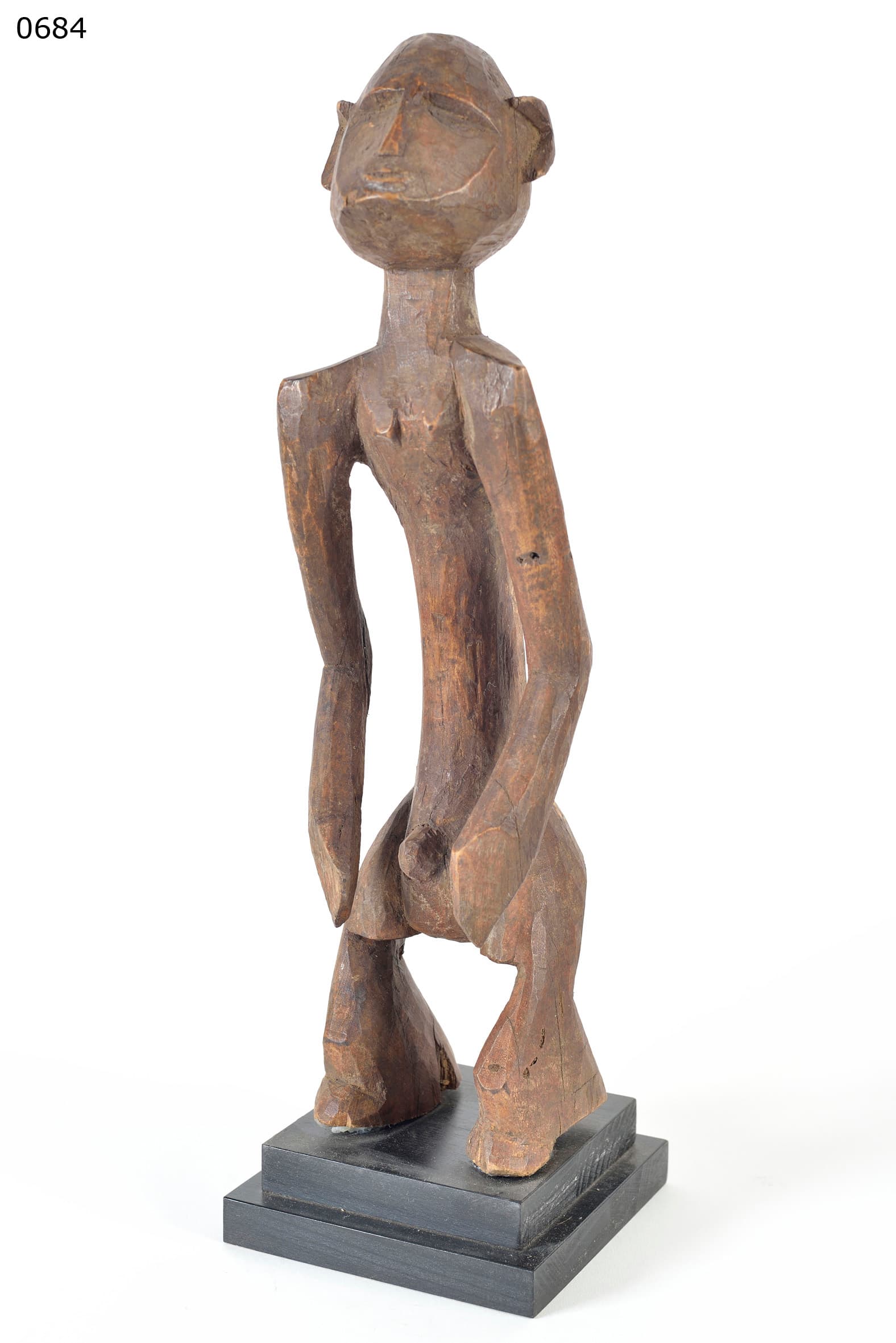
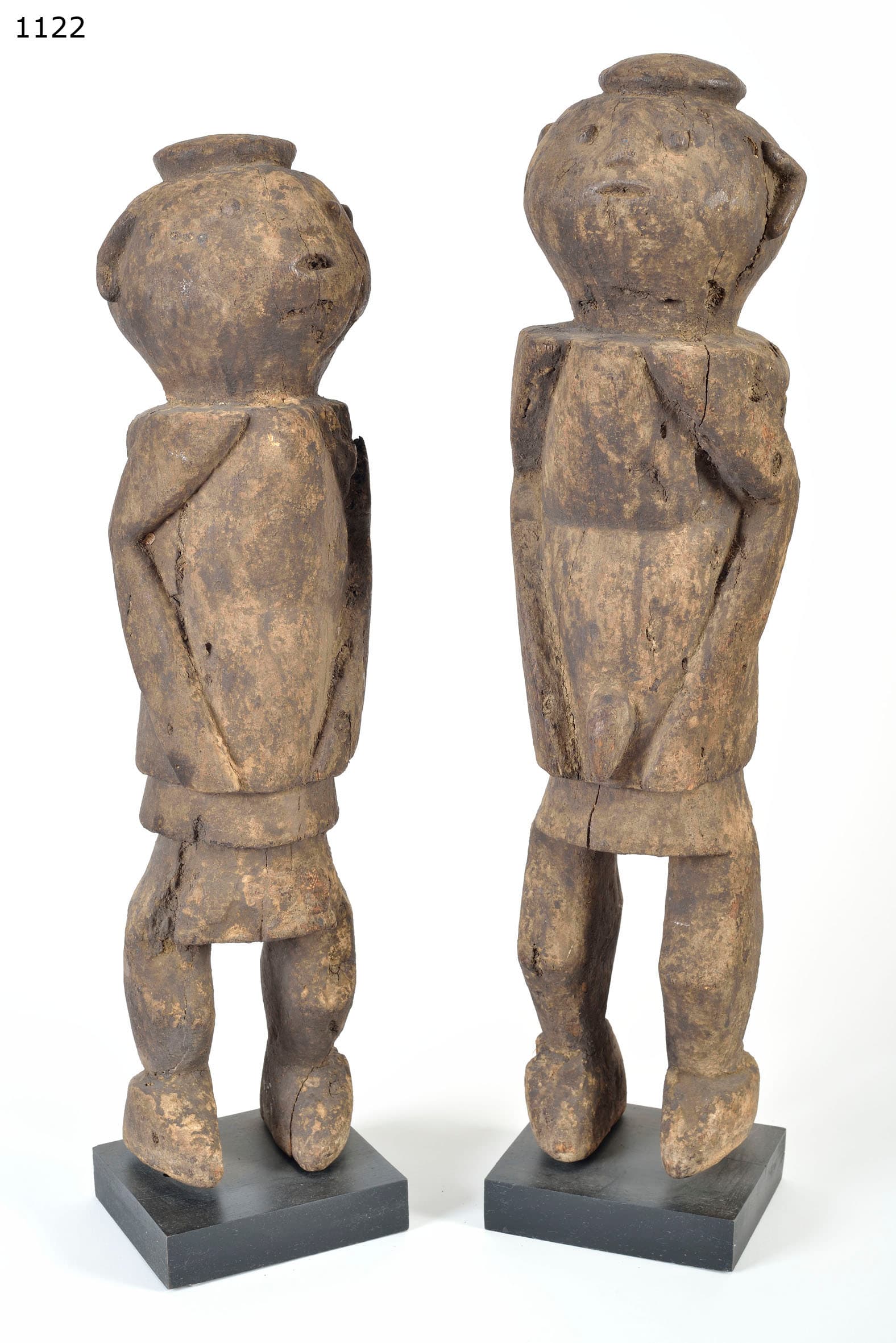
Eine stark abstrahierte stangenartige Chamba-Altar-Kraftfigur (1. Hälfte 20. Jh., 37 cm) aus Nigeria - minimalistischer konischer Kopf, ein länglicher zylindrischer Torso mit stilisierten Armen, die flach gegen den Körper geschnitzt sind und in einem geschmiedeten Eisendorn enden, der als Sockel dient. Das Holz ist stark ausgetrocknet, weist tiefe Längsrisse auf und hat eine pulverige, oxidierte braune Patina.
1. Benue River Valley Pole-Style Schnitzerei
Die Chamba aus dem mittleren Benue-Tal sind Meister der Abstraktion im "Pfahl-Stil" - starre geometrische Vertikalität anstelle von anatomischem Realismus.
- Beschränkung der Astdimensionen: Die Künstler beschränken die menschliche Form auf die ursprünglichen Dimensionen des Astes oder der Stange, indem sie den Kopf als strengen geometrischen Kegel darstellen und die Arme auf einfache parallele Grate reduzieren.
- Anonymes Gefäß der Ahnen: Der intensive Reduktionismus entfernt die individuelle menschliche Identität und verwandelt das Holz in ein reines, anonymes Gefäß für die Energie der Ahnen.
2. Irdene Anker und landwirtschaftliche Wächter
Das entscheidende Funktionsmerkmal ist der geschmiedete Eisensockel.
- Ogun-Materialladung: In der traditionellen nigerianischen Kosmologie ist Eisen ein hoch aufgeladenes magisches Material, das mit Ogun (Gott des Eisens) in Verbindung gebracht wird - der Dorn wurde so konstruiert, dass die Figur mit Kraft in die Erde getrieben werden konnte.
- Erdende Ahnenkraft: Wünschelrutengänger pflanzten diese Statuen an Feldrändern oder innerhalb von Siedlungen ein - indem sie physisch in den Boden eindrangen, erdeten die Eisennadeln schützende übernatürliche Energie direkt in der Erde, was eine reiche Ernte garantierte und bösartige Hexerei abwehrte.
3. Elementare Austrocknung und unterirdische Abnutzung
Der physische Zustand ist ein einwandfreies forensisches Zeugnis für die Nutzung des Schreins im Freien.
- Gebleichtes, sonnengebackenes Holz: Es wurde nie mit Palmöl poliert, sondern war harten Umwelteinflüssen ausgesetzt; tiefe, stabilisierte Austrocknungsrisse und eine pulverige, gebleichte, braune Oberfläche sind das unauslöschliche Ergebnis jahrzehntelangen Backens in der nigerianischen Sonne und des Aushaltens trockener saisonaler Winde.
- Eisenoxidation durch Bodenkontakt: Die starke Oxidation der Eisenspitze korreliert perfekt mit dem langfristigen Eintauchen in feuchten, sauren Boden während des frühen 20.
Zusammenfassung
Diese Chamba-Kraftfigur ist ein außergewöhnliches Beispiel für nigerianische Abstraktion im Stangenstil, bei der Holz und Eisen nahtlos ineinander übergehen. Die funktionale Eisenspitze und die starke Austrocknung der Elemente zeugen von ihrem Leben als aktiver, erdgebundener landwirtschaftlicher Wächter.
KI-unterstützt erstellt aus Sammlungsgutachten, Objektfotografie und eigener Recherche, redaktionell geprüft. Fehler sind möglich — Hinweise darauf sind uns willkommen. Zum Verfahren →