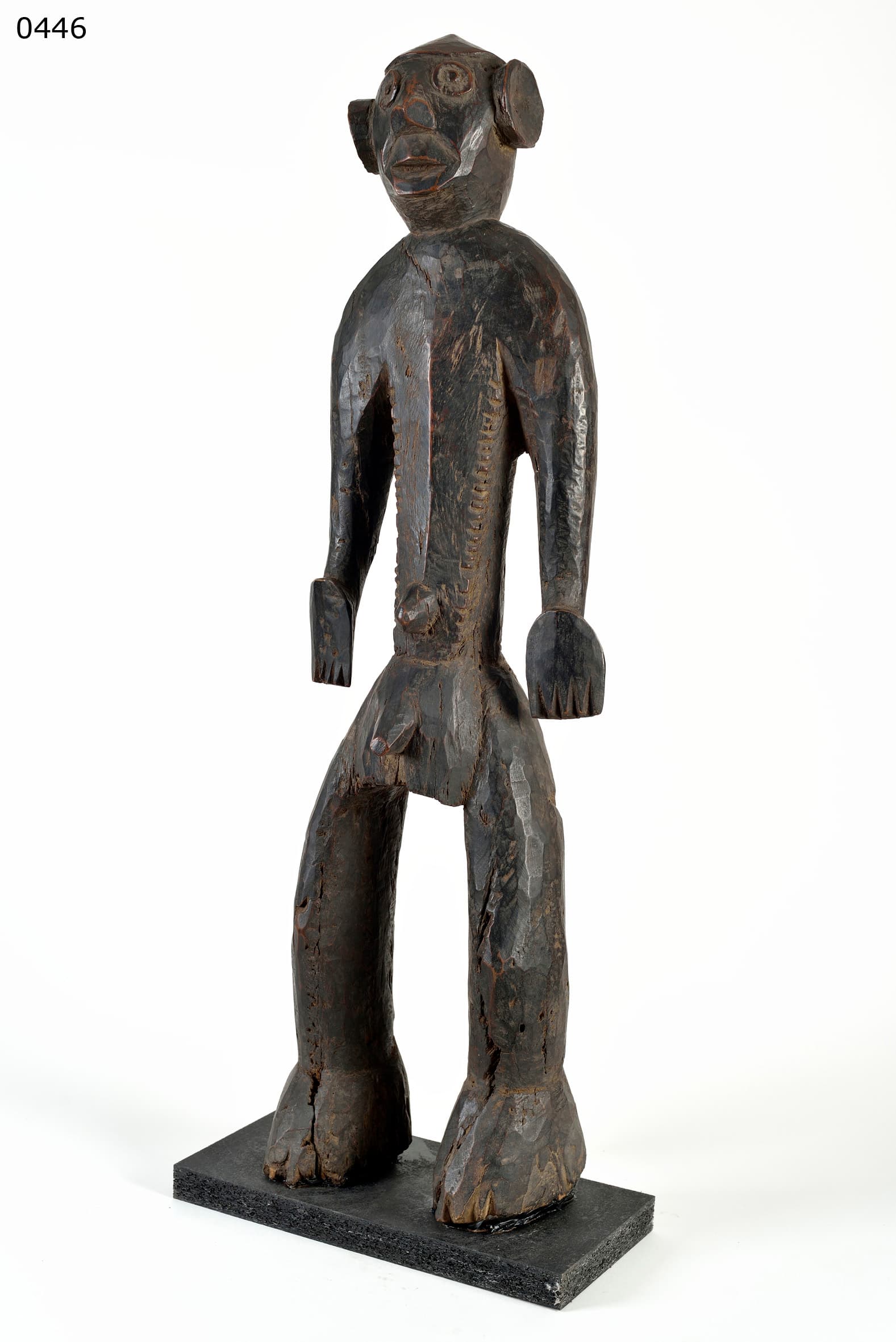
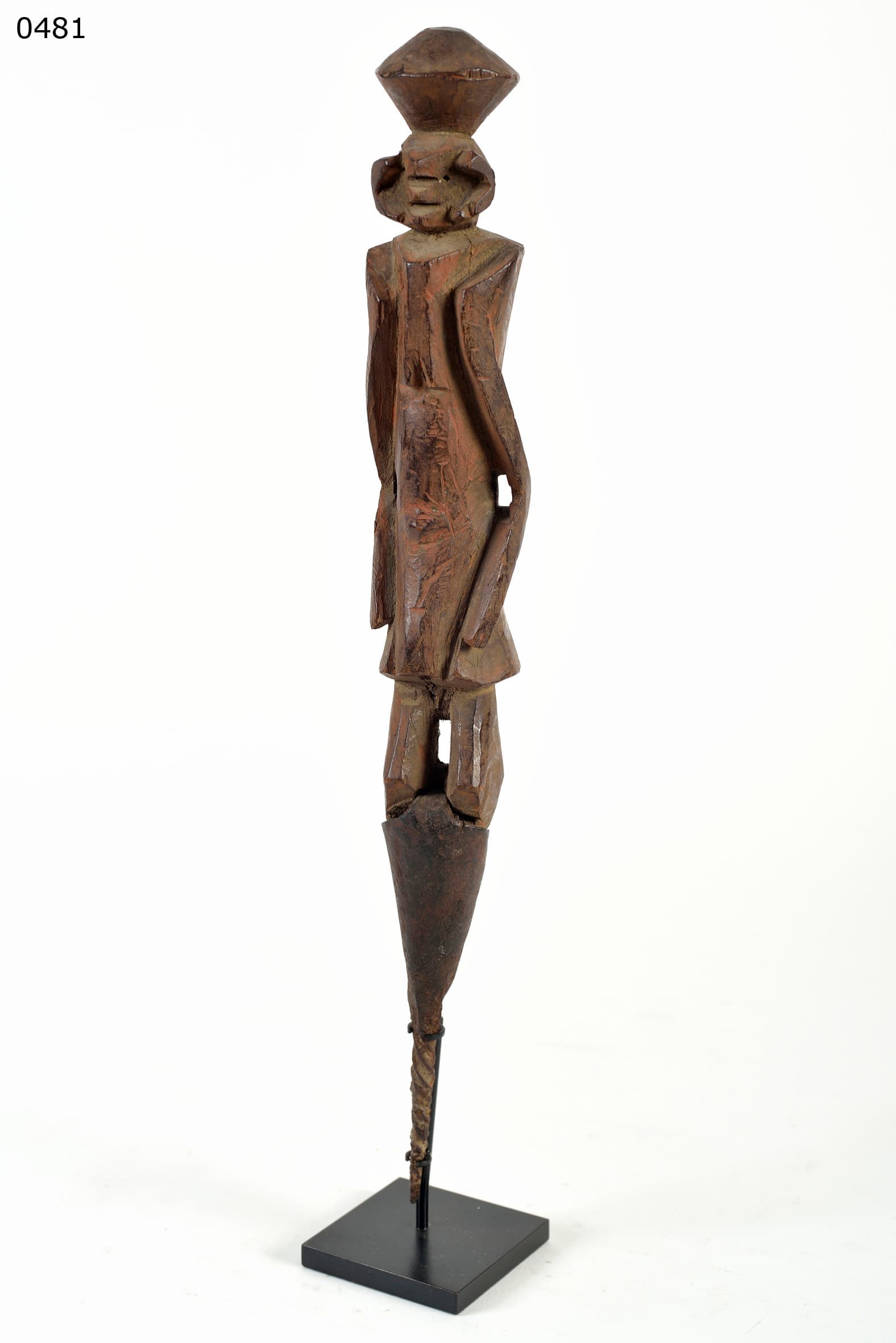
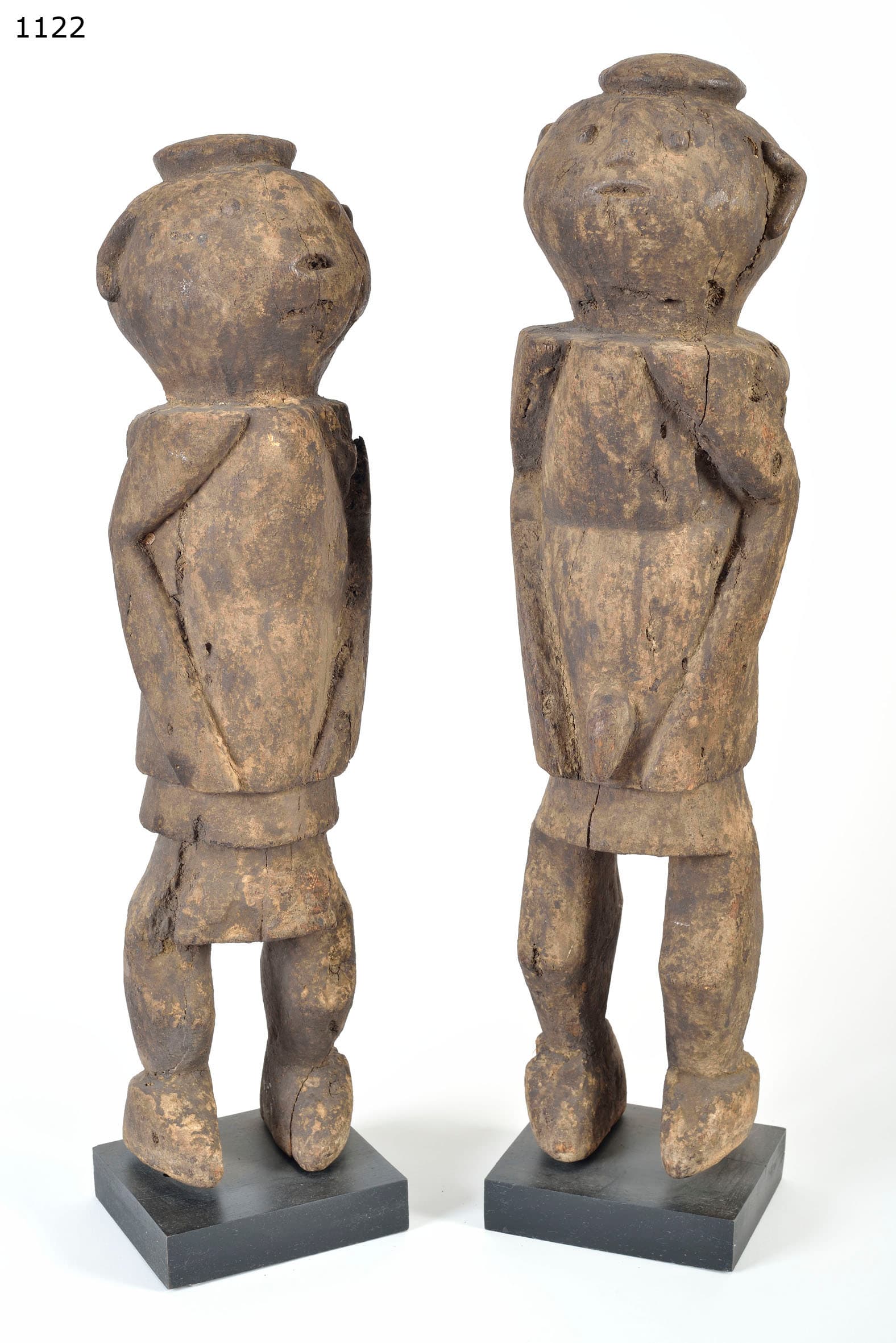
Diese stark abstrahierte Holzfigur zeichnet sich durch einen runden, gewölbten Kopf, einen schmalen, zylindrischen Rumpf und massive, geschwungene, bogenförmige Arme aus, die sich vom Körper lösen und nach unten zu den Hüften abwinkeln. Das trockene, stark gealterte Holz zeigt natürliche Austrocknung und eine krustige, erdbraune Patina.
1. Ästhetischer Stil und regionale Merkmale
Das Chamba-Volk aus dem Benue-Tal stellt einige der dynamischsten und volumetrischsten Abstraktionen in Nigeria her. Diese Figur ist ein perfektes Beispiel für ihre charakteristische Ästhetik: die radikale Ausbreitung der Arme, um einen massiven, offenen negativen Raum zu schaffen. Der Schnitzer hat die menschliche Architektur mit zoomorpher Symbolik verschmolzen; die gebogenen Arme erinnern stark an die geschwungenen Hörner der Buschkuh, einer Kreatur von immenser Macht in der Chamba-Kosmologie. So entsteht eine Silhouette, die gleichzeitig geerdet und von einer intensiven, kinetischen Spannung erfüllt ist.
2. Rituelle Funktion und Geheimbundkontext
Diese Statuen sind eng mit der Verehrung der Ahnen und den Vara- (oder Mangam-) Kulten des Benue-Tals verbunden. Diese Figuren werden in speziellen Dorfschreinen aufbewahrt und dienen als physische Verankerung für die Schutzgeister der Stammesgründer. Bei landwirtschaftlichen Festen werden sie hervorgeholt und geehrt, um die Fruchtbarkeit der Ernten und den erfolgreichen Übergang der Jungen ins Erwachsenenalter zu gewährleisten. Die Figuren werden rituell gewaschen und gesalbt, um sicherzustellen, dass die Ahnen wohlwollend und aktiv an den Dorfangelegenheiten beteiligt bleiben.
3. Physische Patina und Altersnachweis
Die Oberfläche dieser Schnitzerei ist ein hervorragendes Zeugnis für die authentische Aufstellung des Schreins. Das Holz ist stark oxidiert und völlig trocken, ohne moderne Wachse oder handelsübliche Polituren. Die Oberfläche ist durch die ursprünglichen Stichelspuren stark strukturiert, die jetzt aufgeweicht und mit einer brüchigen, verkrusteten Schicht aus altem Staub und verblichenen irdenen Pigmenten gefüllt sind. Der Sockel weist unregelmäßige, abgestumpfte Erosionsspuren auf, die vom jahrzehntelangen Stehen auf dem feuchten Boden eines traditionellen Heiligtums herrühren.
Zusammenfassung
Diese Chamba-Figur, eine phänomenale Ausführung der volumetrischen Schnitzerei des Benue-Tals, nutzt den extremen negativen Raum, um die kinetische Kraft der Vorfahren zu projizieren. Ihre geschwungene, zoomorphe Silhouette und die stark ausgetrocknete, authentische Patina machen sie zu einem sehr geschätzten nigerianischen Artefakt.
KI-unterstützt erstellt aus Sammlungsgutachten, Objektfotografie und eigener Recherche, redaktionell geprüft. Fehler sind möglich — Hinweise darauf sind uns willkommen. Zum Verfahren →