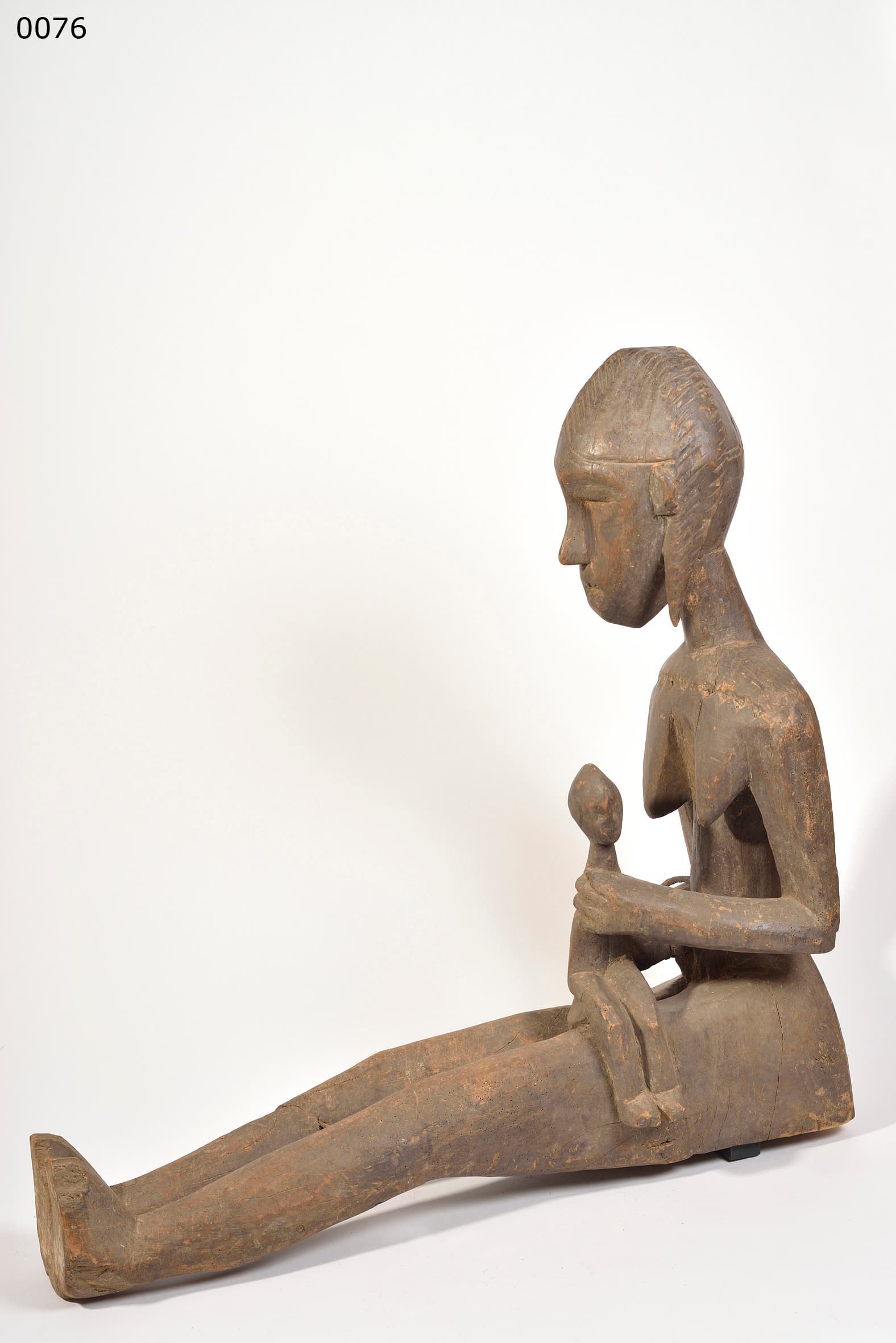
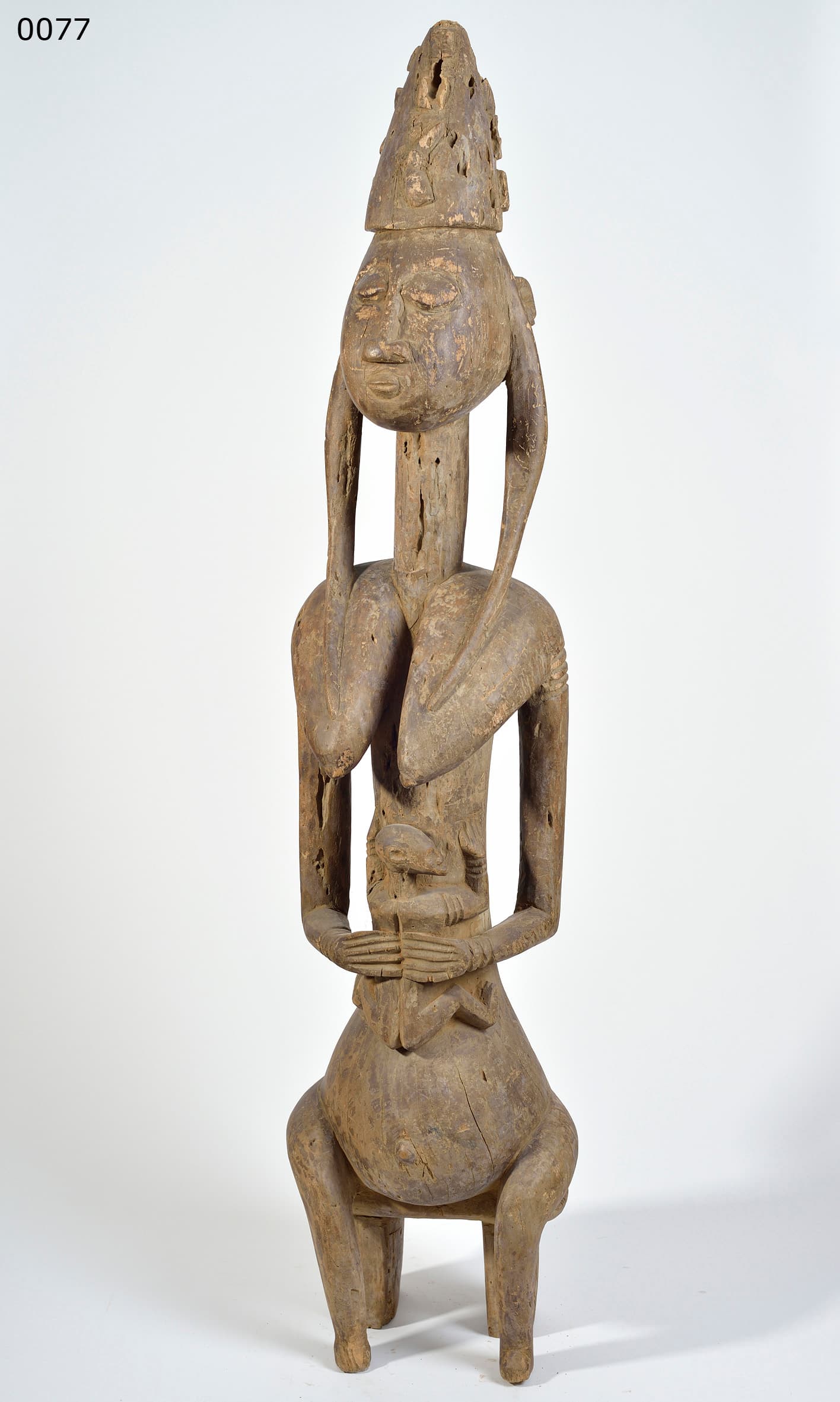
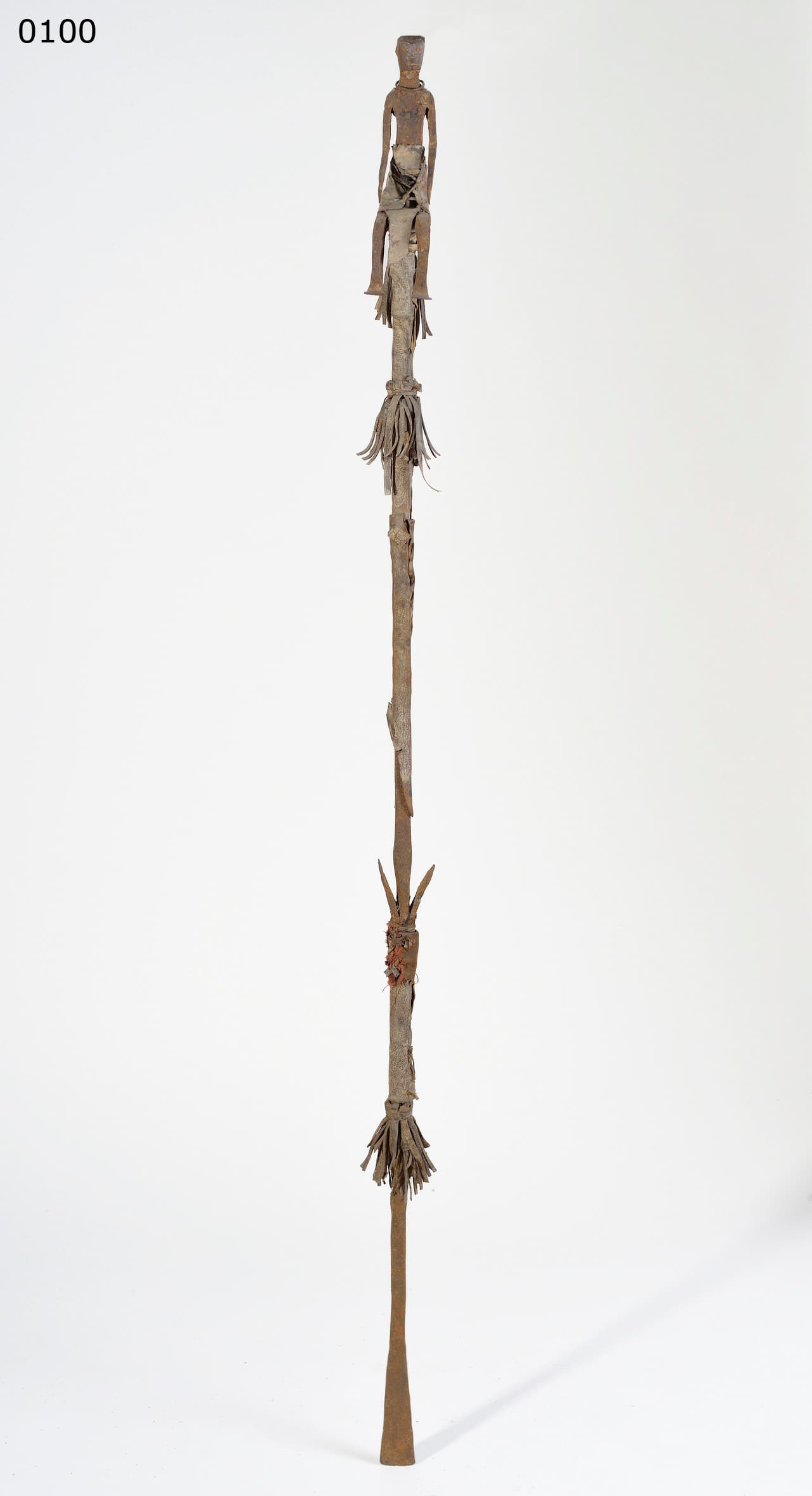
Diese hoch aufragende hölzerne Kopfmaske zeigt die elegante, stilisierte Form einer Pferdeantilope mit einer komplizierten durchbrochenen Mähne, länglichen vertikalen Hörnern und einem kleineren Antilopenkalb auf dem Rücken. Das Holz besitzt eine trockene, dunkle Patina mit natürlicher Verwitterung und kleinen Oberflächenabschürfungen entlang der hohen Punkte.
1. Ästhetischer Stil und regionale Merkmale
Dieses Stück ist ein klassisches Beispiel für den vertikalen Stil der Region Segou in Mali. Der Bamana-Schnitzer hat mit der durchbrochenen, zickzackförmigen Mähne der Antilope, die auch den Weg der Sonne und den Fluss des Wassers symbolisiert, eine außergewöhnliche Eleganz erreicht. Die Einbeziehung des Kitzes auf dem Rücken des Weibchens unterstreicht das Thema der menschlichen und landwirtschaftlichen Fortpflanzung, während die geschwungenen, langgestreckten Hörner den Blick nach oben lenken und die Erde mit dem Himmel verbinden.
2. Rituelle Funktion und religiöse Bedeutung
Der Chiwara (oder Ci Wara) ist ein mythisches Tier - halb Antilope, halb Mensch -, von dem man annimmt, dass es das Volk der Bamana in die Geheimnisse der Landwirtschaft eingeweiht hat. Diese Wappen werden von den Meisterbauern bei den Pflanz- und Erntezeremonien paarweise (männlich und weiblich) getragen. Die Tänzerinnen und Tänzer sind an einer Korbmütze befestigt und tragen ein Kostüm aus Raphiabast. Sie ahmen die Bewegungen der Antilope nach, die die Erde ankratzt, und sichern so rituell eine erfolgreiche Ernte und feiern die Verbindung von Sonne, Wasser und Erde.
3. Physische Patina und Altersnachweis
Das Holz weist eine stark oxidierte, trockene Patina auf, die für den echten Gebrauch im malischen Klima charakteristisch ist. Die Gebrauchsspuren an der Basis, wo es wiederholt an die Korbmütze der Tänzerin gebunden wurde, und die leichte Abrundung der komplizierten durchbrochenen Kanten weisen auf jahrelange dynamische Bewegung hin. Das Fehlen einer künstlichen modernen Politur lässt die echte, tief sitzende Oxidation der Holzmaserung durchscheinen, was die Herkunft aus dem frühen 20. Jahrhundert bestätigt.
Zusammenfassung
Dieses Chiwara ist ein erhabenes Beispiel für die bäuerliche Kunst der Bamana, das sich durch seine monumentalen Ausmaße und die filigrane durchbrochene Schnitzerei auszeichnet. Seine anmutigen, aufstrebenden Linien und sein authentischer ritueller Gebrauch machen ihn zu einem herausragenden Artefakt der sahelischen Kulturgeschichte.
KI-unterstützt erstellt aus Sammlungsgutachten, Objektfotografie und eigener Recherche, redaktionell geprüft. Fehler sind möglich — Hinweise darauf sind uns willkommen. Zum Verfahren →