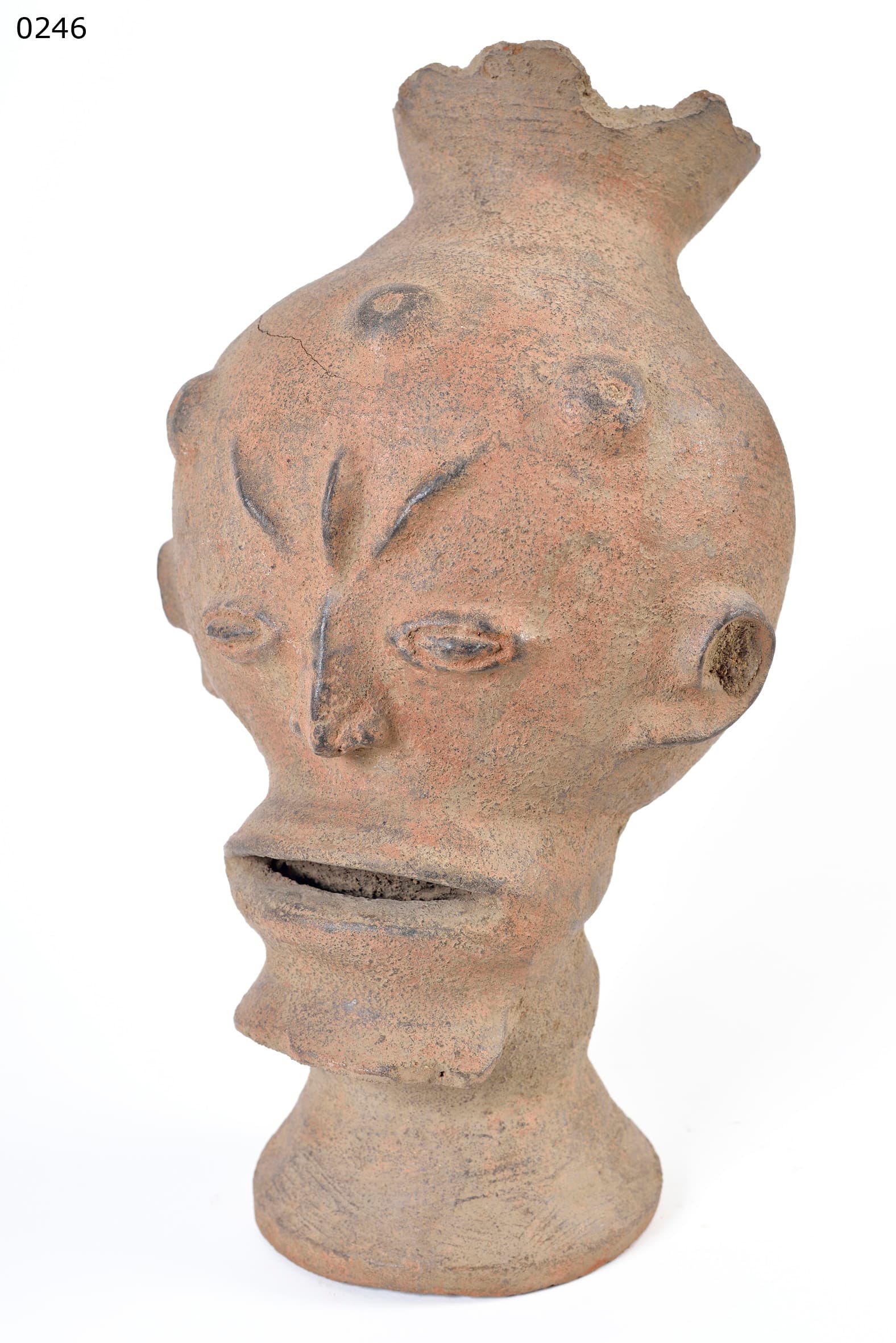
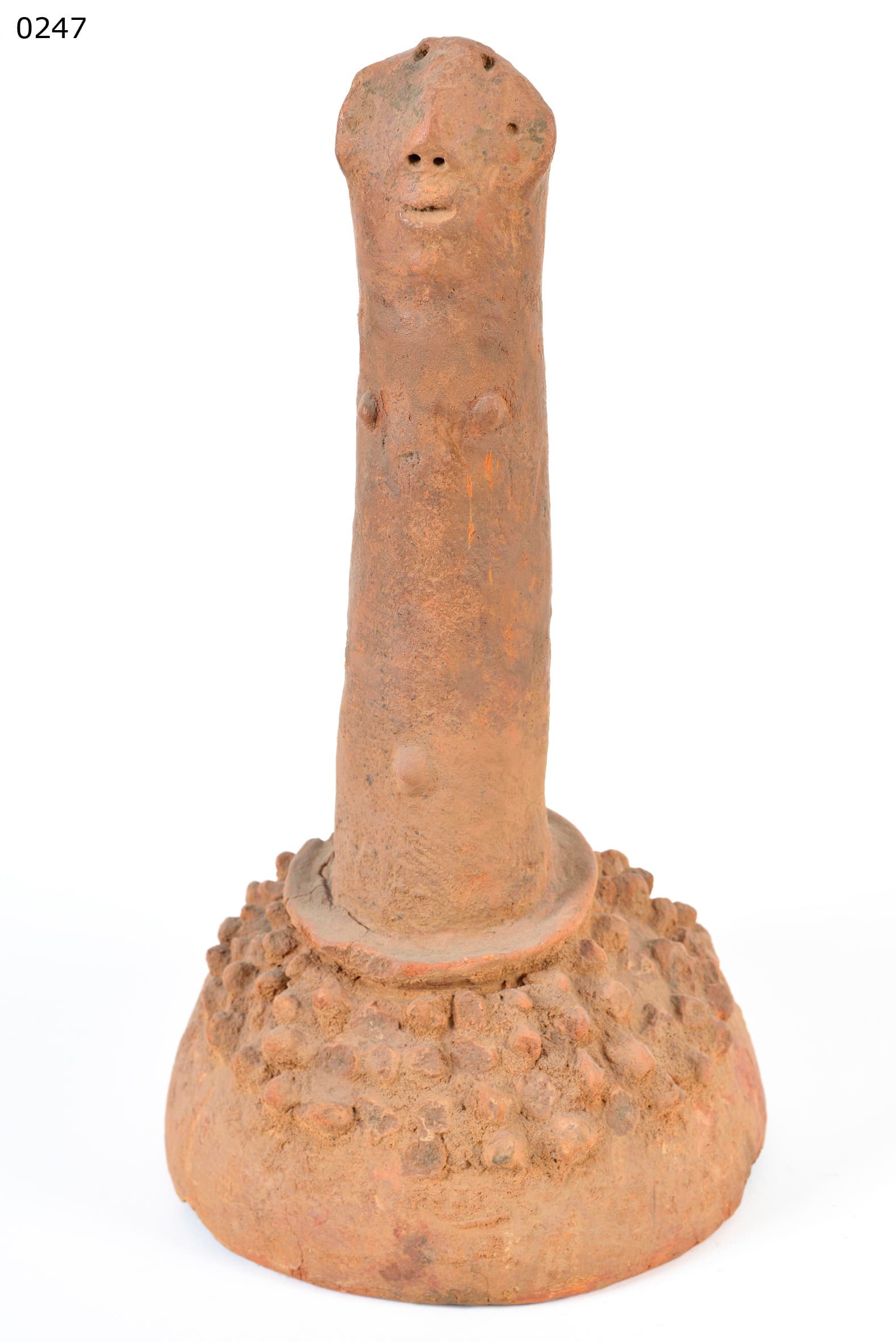
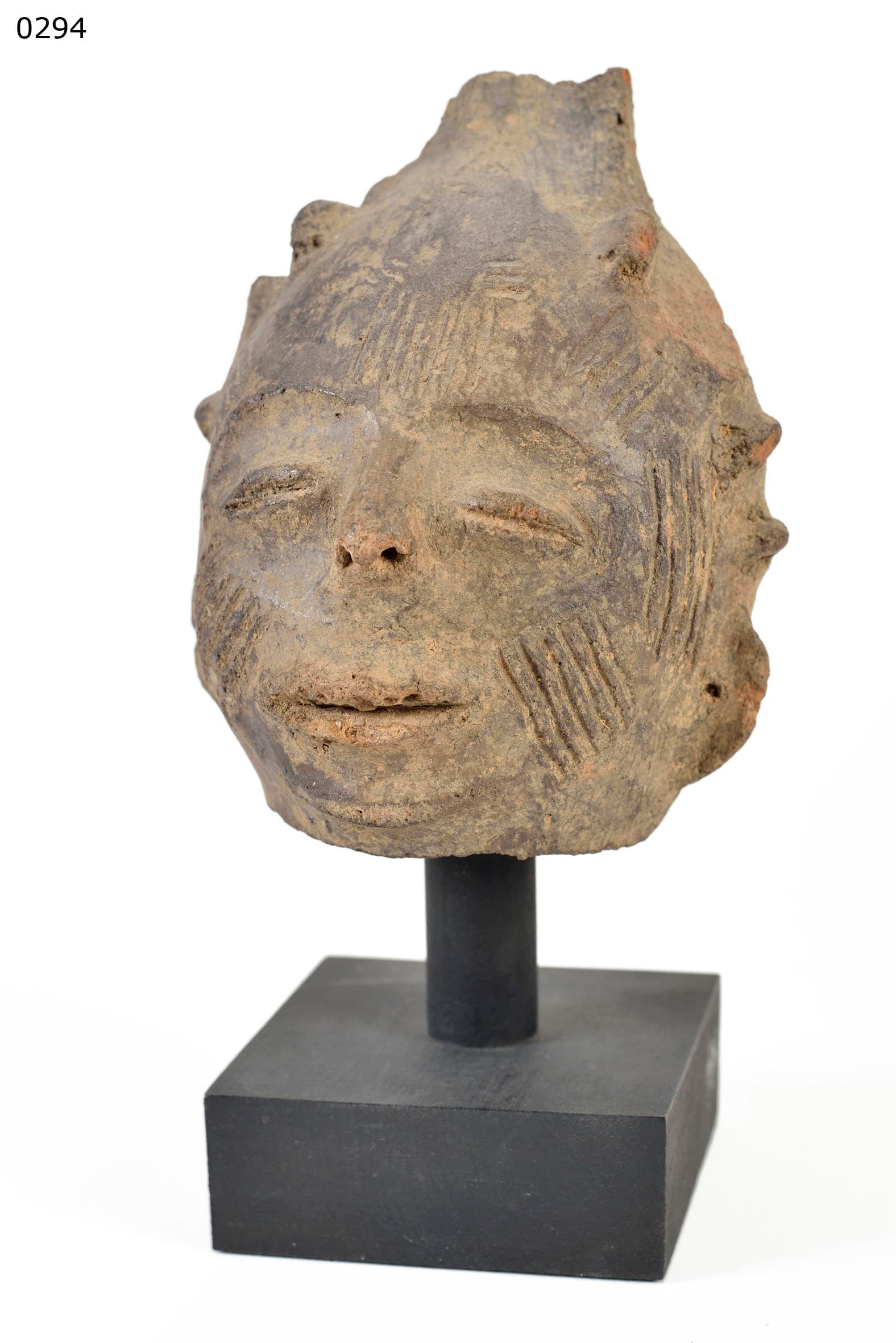
Diese fragmentierte Terrakottafigur aus gebranntem Ton besteht aus einem stark stilisierten, abgeflachten, scheibenförmigen Gesicht mit Kaffeebohnenaugen, das auf einem stark beringten Hals und einem Teil des Rumpfes sitzt. Der Ton ist erdig und rot und weist erhebliche archäologische Erosion und fehlende Gliedmaßen auf.
1. Ästhetischer Stil und regionale Charakteristika
Bei diesem Stück handelt es sich um eine klassische mma- oder nsodie-Terrakotta, die herausragende Begräbniskunst der Akan-Völker (einschließlich der Ashanti und Fante) in Ghana. Die extreme Abstraktion des Gesichts in eine flache Mondscheibe ist beabsichtigt, wobei ein idealisiertes spirituelles Porträt einem realistischen Abbild vorgezogen wird. Die tief eingeschnittenen Ringe um den Hals sind ein wichtiges kulturelles Motiv und stellen Fettrollen dar, die bei den Akan als Zeichen für Wohlstand, Schönheit und aristokratisches Wohlergehen gelten.
2. Rituelle Funktion und Geheimbundkontext
Diese Terrakotten wurden vom königlichen Hof unmittelbar nach dem Tod einer elitären Person in Auftrag gegeben. Die von spezialisierten Töpferinnen geschaffenen Figuren wurden nicht mit dem Leichnam begraben, sondern in einem heiligen Hain (asensie oder "Ort der Töpfe") außerhalb des Dorfes aufgestellt. Umgeben von Kochgefäßen und Trankopfern boten die Statuen eine irdische Ruhestätte für den Geist des Vorfahren und dienten als Mittelpunkt für die jährlichen Trauerrituale und das Ausschenken von Palmwein.
3. Physische Patina und Altershinweise
Die starke Zersplitterung und die Abnutzung der Oberfläche stehen im Einklang mit einer Datierung in das 12. bis 18. Jahrhundert. Da die Terrakotta in einem Waldschrein unter freiem Himmel den Witterungseinflüssen ausgesetzt war und anschließend unter der sich ansammelnden Erde begraben wurde, hat sie unter immensen Umweltbelastungen gelitten. Die Bruchstellen an den Armen und an der Taille sind alt und von der Zeit geglättet, und die Tonmatrix ist von unablösbaren, verkalkten Lehmanlagen durchdrungen.
Zusammenfassung
Diese Akan-Nsodie ist ein charakteristisches archäologisches Überbleibsel alter ghanaischer königlicher Begräbnisriten. Ihr stilisiertes Mondgesicht und die tiefgreifende Degradierung der Erde legen eine Verbindung zur jahrhundertelangen Ahnenverehrung in den heiligen Hainen nahe.
KI-unterstützt erstellt aus Sammlungsgutachten, Objektfotografie und eigener Recherche, redaktionell geprüft. Fehler sind möglich — Hinweise darauf sind uns willkommen. Zum Verfahren →