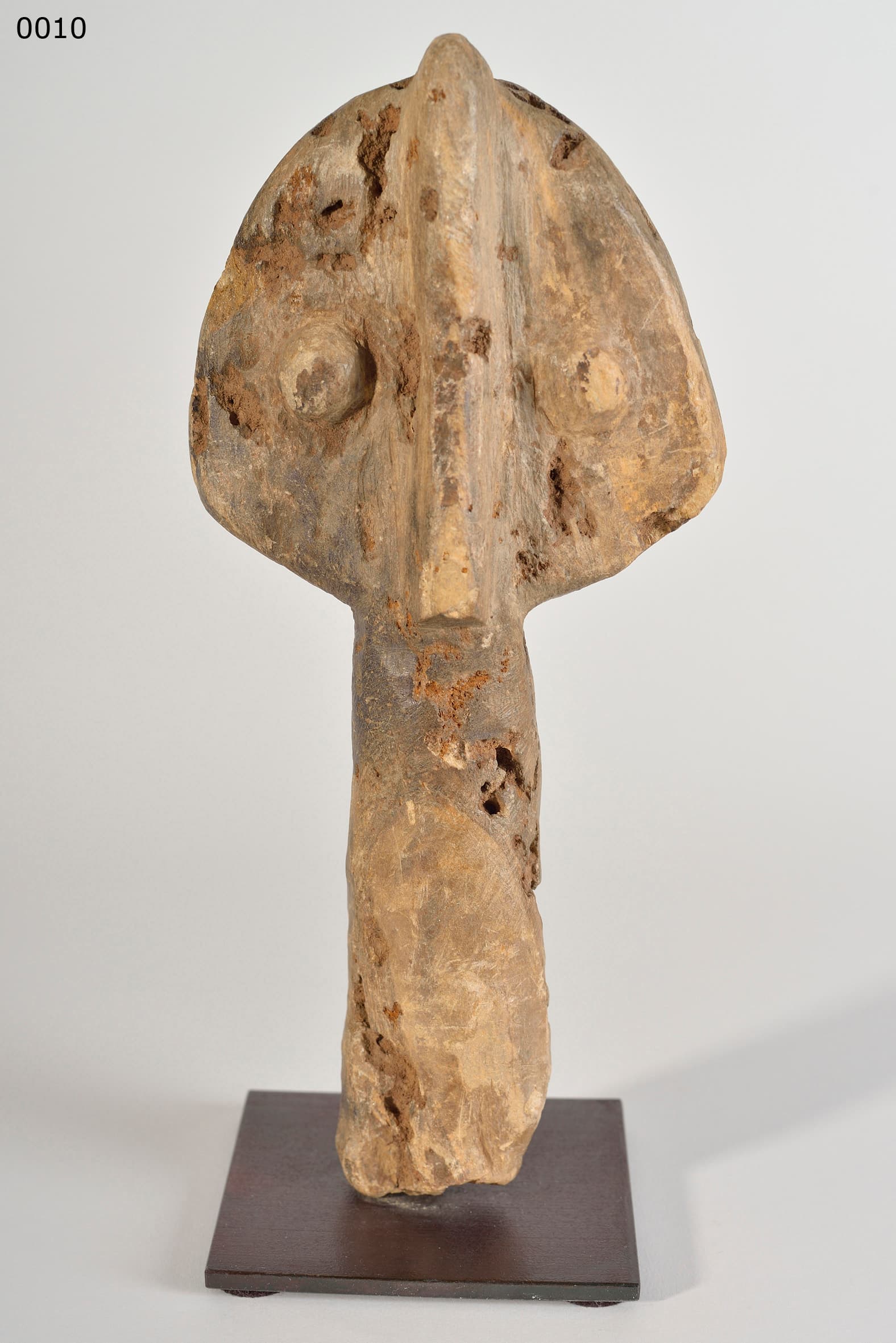
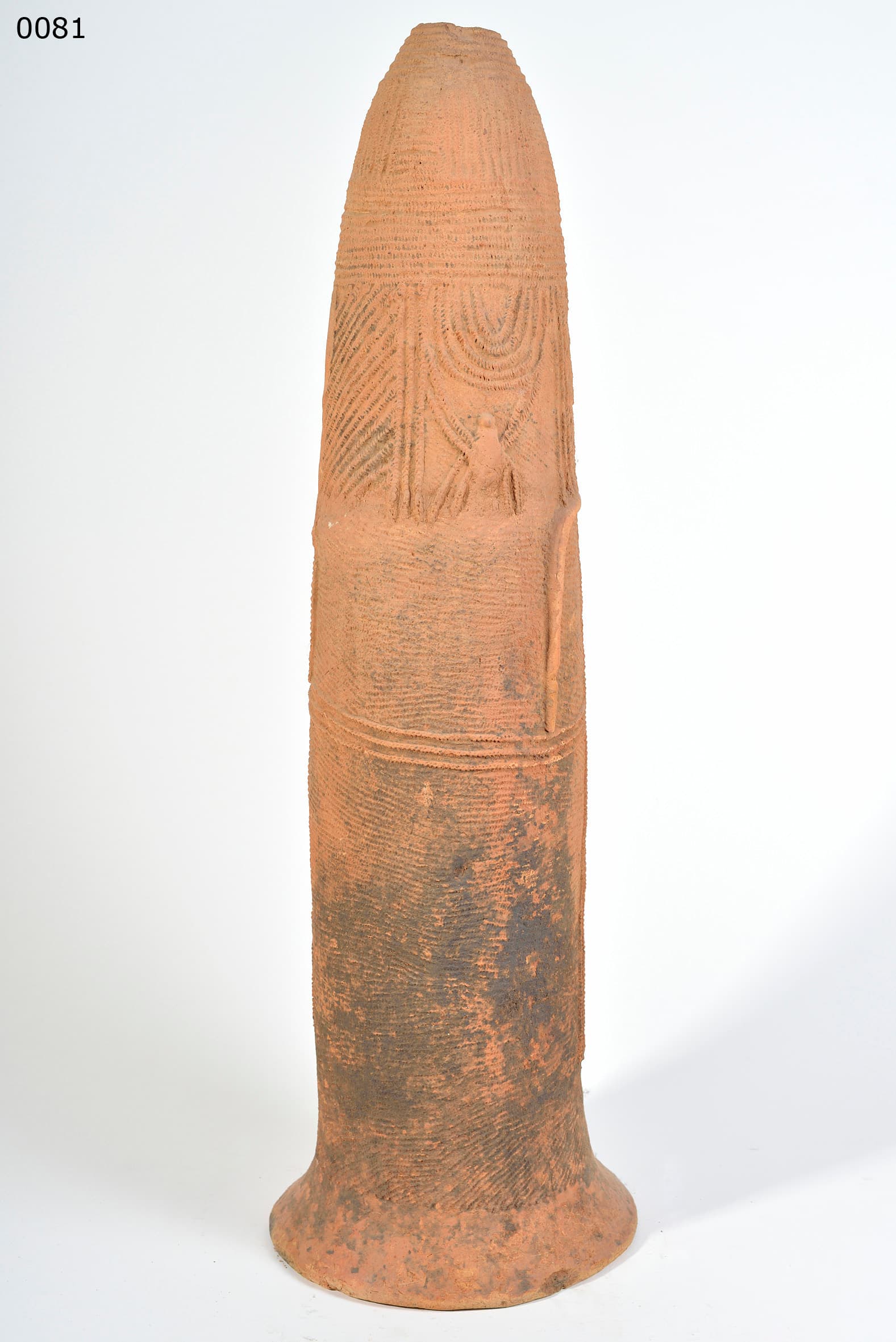
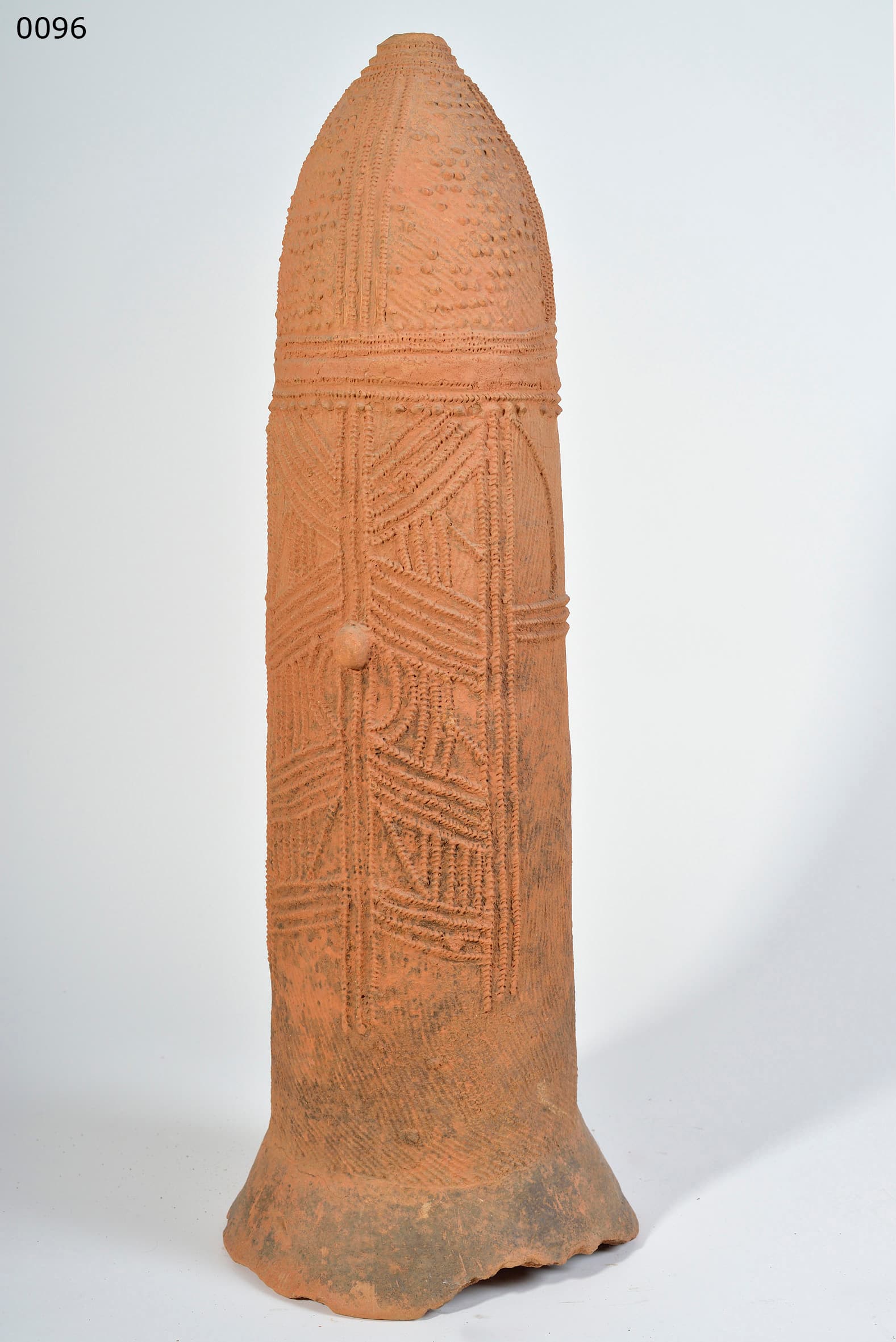
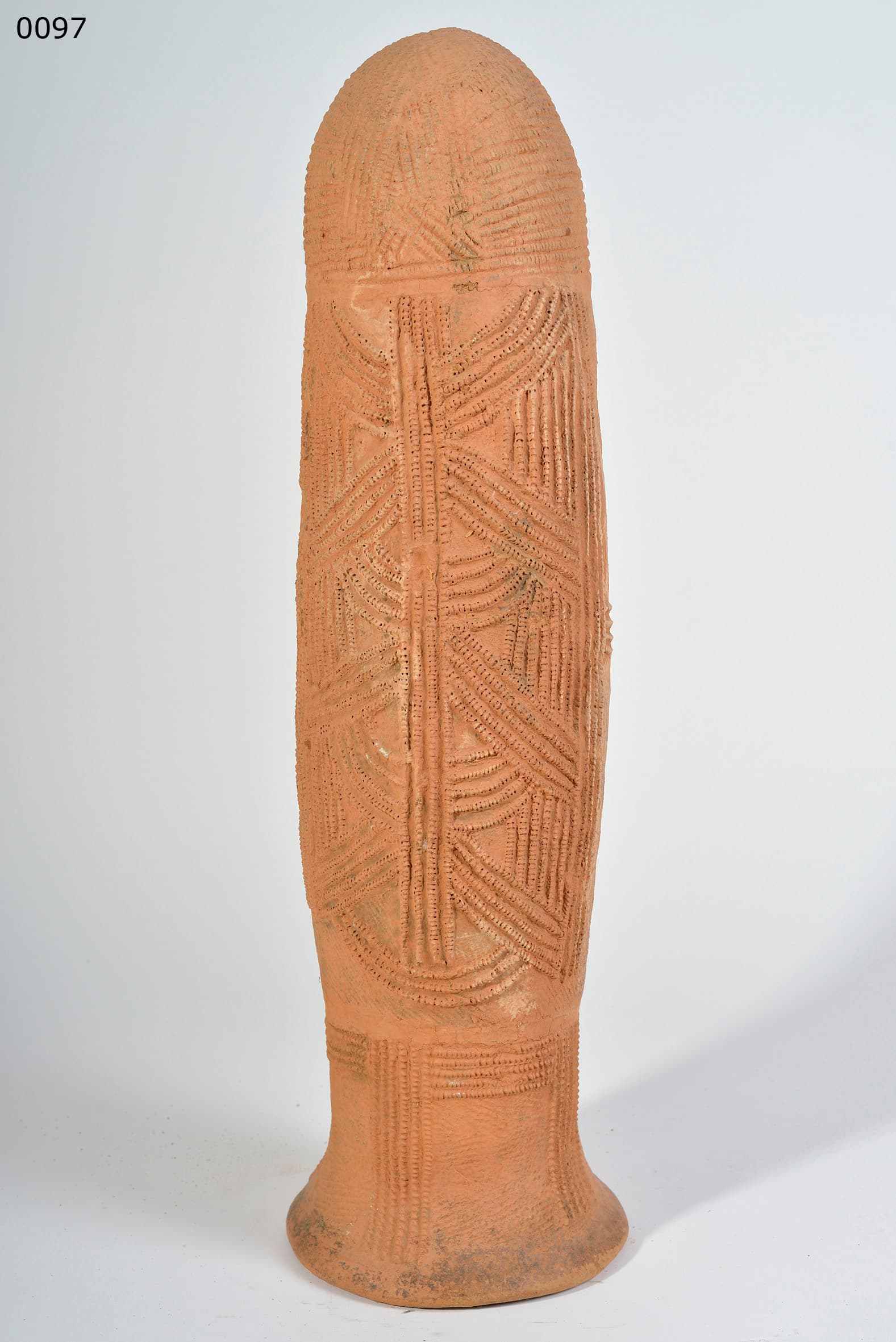
Diese aus einem dichten, graubraunen Stein gehauene, säulenartige Figur zeigt ein minimalistisches, stark stilisiertes Gesicht mit einem langen, vertikalen Nasenrücken, der zu einem horizontal geschlitzten Mund und tiefen, ausgehöhlten, runden Augen überleitet. Der Stein ist äußerst porös, verkrustet und archäologisch verwittert.
1. Ästhetischer Stil und regionale Charakteristika
Diese aus dem geheimnisvollen Bura-Asinda-System stammende Figur - einer alten Zivilisation im heutigen Niger-Tal - repräsentiert eine der ältesten und rätselhaftesten lithischen Traditionen Westafrikas. Der Stil ist streng minimalistisch und reduziert den menschlichen Kopf auf eine reine, architektonische Geometrie. Die phalliforme (phallische) Gesamtform der Säule ist beabsichtigt und dient als universelles prähistorisches Motiv, das die Erde mit dem Himmel verbindet und die absolute, generative menschliche Kraft symbolisiert.
2. Rituelle Funktion und religiöse Bedeutung
Diese Steinsäulen, die aus massiven, antiken Nekropolen ausgegraben wurden, dienten als Gedenkbilder und Grabmarkierungen für die Toten der Elite. Sie wurden über den Urnen oder direkt in den Boden eingelassen und dienten als irdischer Anker für die Seele. Das phallische Design war nicht nur biologisch, sondern stand für die Kontinuität des Stammbaums und gewährleistete, dass der verstorbene Vorfahre seinen Nachkommen weiterhin Leben, Fruchtbarkeit und landwirtschaftliche Erträge durch den Boden zuführen würde.
3. Physische Patina und Altersindikatoren
Der physische Zustand des Steins, der dem 3. bis 11. Jahrhundert zugeordnet wird, spricht für ein hohes archäologisches Alter. Die Oberfläche ist chemisch und durch Umwelteinflüsse stark angegriffen, so dass die einst glatte Schnitzerei tief löchrig und porös ist. Der Stein ist stark verkalkt, mit Mineralablagerungen und sahelischer Erde, die dauerhaft mit seiner Matrix verbunden sind, was einen antiken Ursprung nahelegt.
Zusammenfassung
Als Artefakt einer untergegangenen Zivilisation ist diese Grabfigur aus Bura-Stein ein monumentales Stück afrikanischer Altertümlichkeit. Ihre eindringlich abstrakten Züge und die tiefgreifende archäologische Verwitterung bieten eine seltene, greifbare Verbindung zum spirituellen Leben der frühesten urbanen Zentren Westafrikas.
KI-unterstützt erstellt aus Sammlungsgutachten, Objektfotografie und eigener Recherche, redaktionell geprüft. Fehler sind möglich — Hinweise darauf sind uns willkommen. Zum Verfahren →