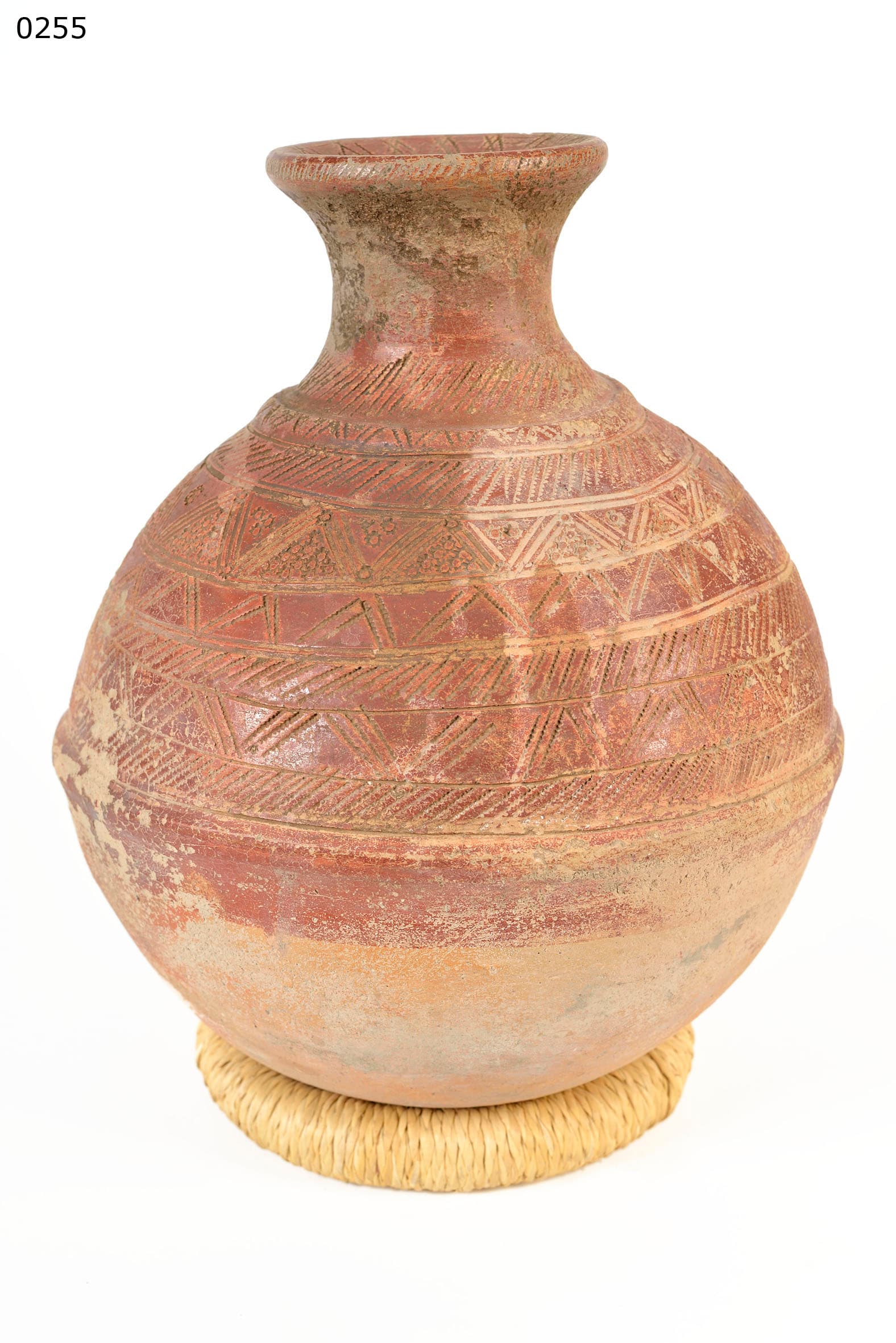
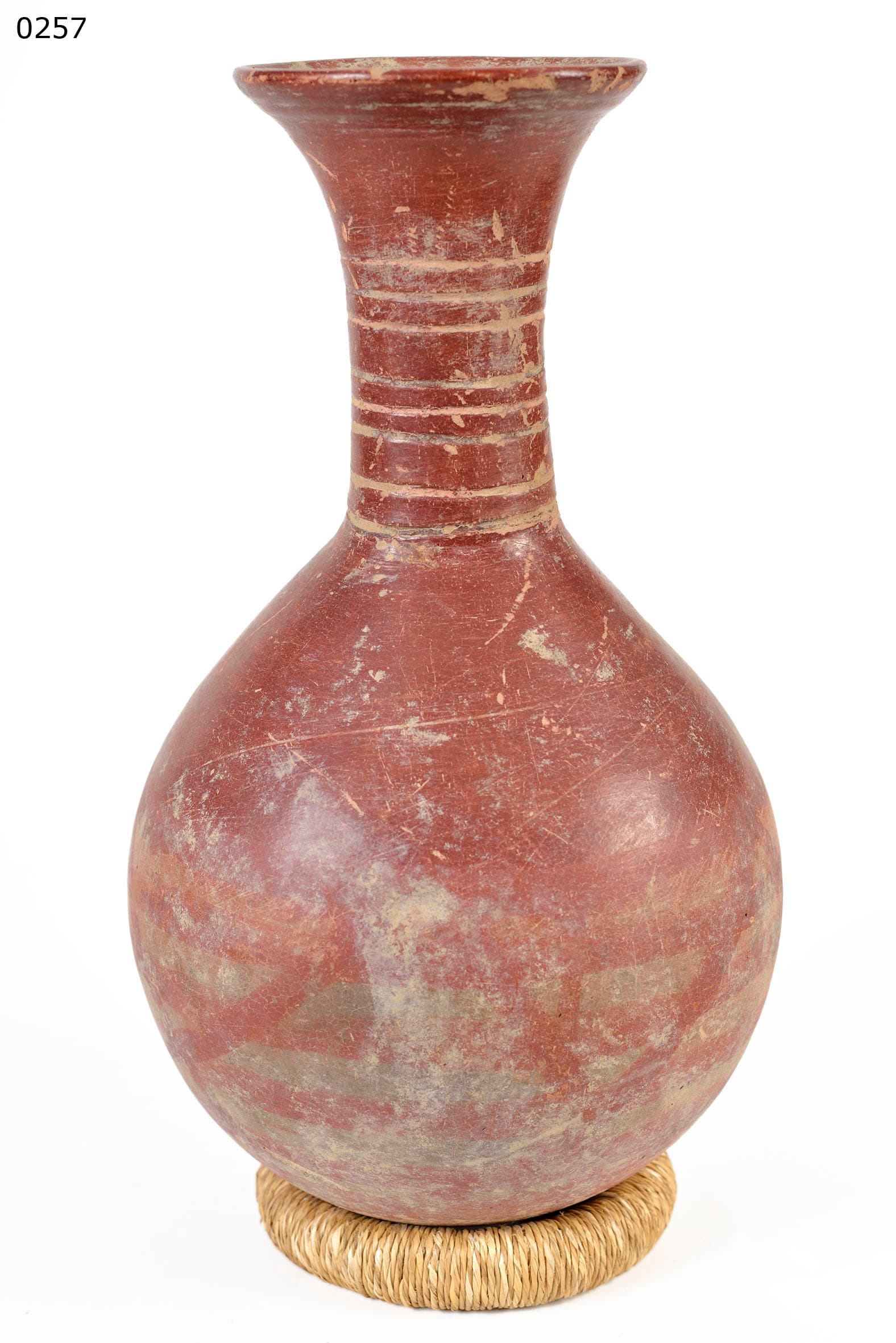
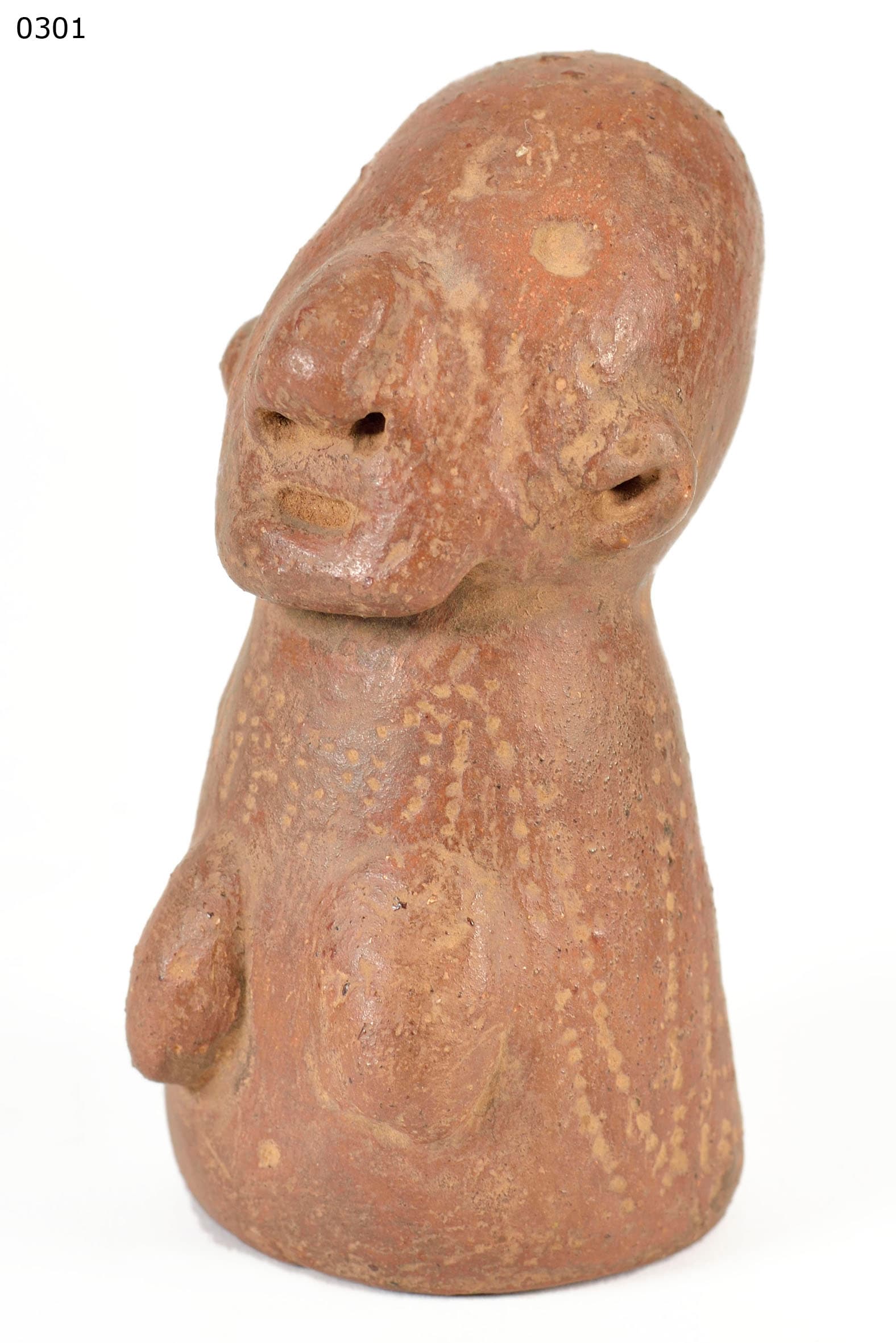
Diese Gruppe von Terrakotten aus Mali umfasst kugelförmige Töpfe, ein Altargefäß mit einem Kranz aufgesetzter Knöpfe, eine Doppelschüssel und ein Gefäß mit vier Grifflappen am Hals. Die gebrannten Tonformen weisen eine einheitliche, poröse Textur mit rötlich-braunen Schlickerresten und dicken kalkhaltigen Bodenverkrustungen auf.
1. Ästhetischer Stil und regionale Charakteristika
Die Gefäße werden der Region des Nigerdeltas in Mali zugeordnet und repräsentieren die funktionalen und rituellen Keramiktraditionen, die neben den figurativen Skulpturen aus Djenne bestanden. Die Ästhetik wird als stark symbolisch geprägt gedeutet; so gilt das Doppelgefäß (Nr. 574) als visuelle Manifestation des weit verbreiteten philosophischen Konzepts der Mande von Dualität und Zwillingsschaft. Das Altargefäß (Nr. 573) trägt einen einzelnen Kranz aufgesetzter Knöpfe über Bändern gekerbter Rippen, ein Dekorschema, das sich an Fußgefäßen der Region findet; das Gefäß Nr. 576 hat vier breite Grifflappen an der Schulter.
2. Rituelle Funktion und Geheimbundkontext
Es wird angenommen, dass es sich hierbei nicht um gewöhnliches Haushaltsgeschirr, sondern um spezialisierte Schreinobjekte handelte. Die Doppelgefäße wurden vermutlich von traditionellen Heilern (Nganga-Äquivalenten) verwendet, um gegensätzliche spirituelle Arzneimittel zu mischen oder um Zwillingsgöttern doppelte Trankopfer zu bringen. Was die Gefäße enthielten oder wozu sie dienten, ist nicht überliefert; die aufgesetzten Knöpfe und Grifflappen sind Schmuck und Griffe, kein Hinweis auf Krankheit.
3. Physische Patina und Altersindizien
Alle vier Gefäße weisen starke Verwitterungserscheinungen auf, die mit einer Bestattung in den Überschwemmungsgebieten des Niger vereinbar sind und eine stilistische Einordnung in das 12. bis 16. Jahrhundert stützen. Die niedrig gebrannte Terrakotta hat eine erhebliche Oberflächenveränderung und Mineralauslaugung erfahren. Die Anwendung der applizierten Knötchen und der zusammengefügten Tonabschnitte ist strukturell intakt, doch die Oberflächen sind mit unablösbarem, gehärtetem Lateritboden und kalzifizierten Salzblüten überzogen, was für eine längere unterirdische Lagerung spricht.
Zusammenfassung
Diese zusammenhängende Sammlung von Gefäßen aus dem Nigerdelta bietet einen Einblick in die rituelle Keramikpraxis des alten Mali. Ihre Formen - die Zwillingsschalen, das Knopfgefäß und das Gefäß mit Grifflappen - in Verbindung mit den tiefen Verkrustungen machen sie zu bedeutenden Beispielen ritueller Keramikkunst.
KI-unterstützt erstellt aus Sammlungsgutachten, Objektfotografie und eigener Recherche, redaktionell geprüft. Fehler sind möglich — Hinweise darauf sind uns willkommen. Zum Verfahren →