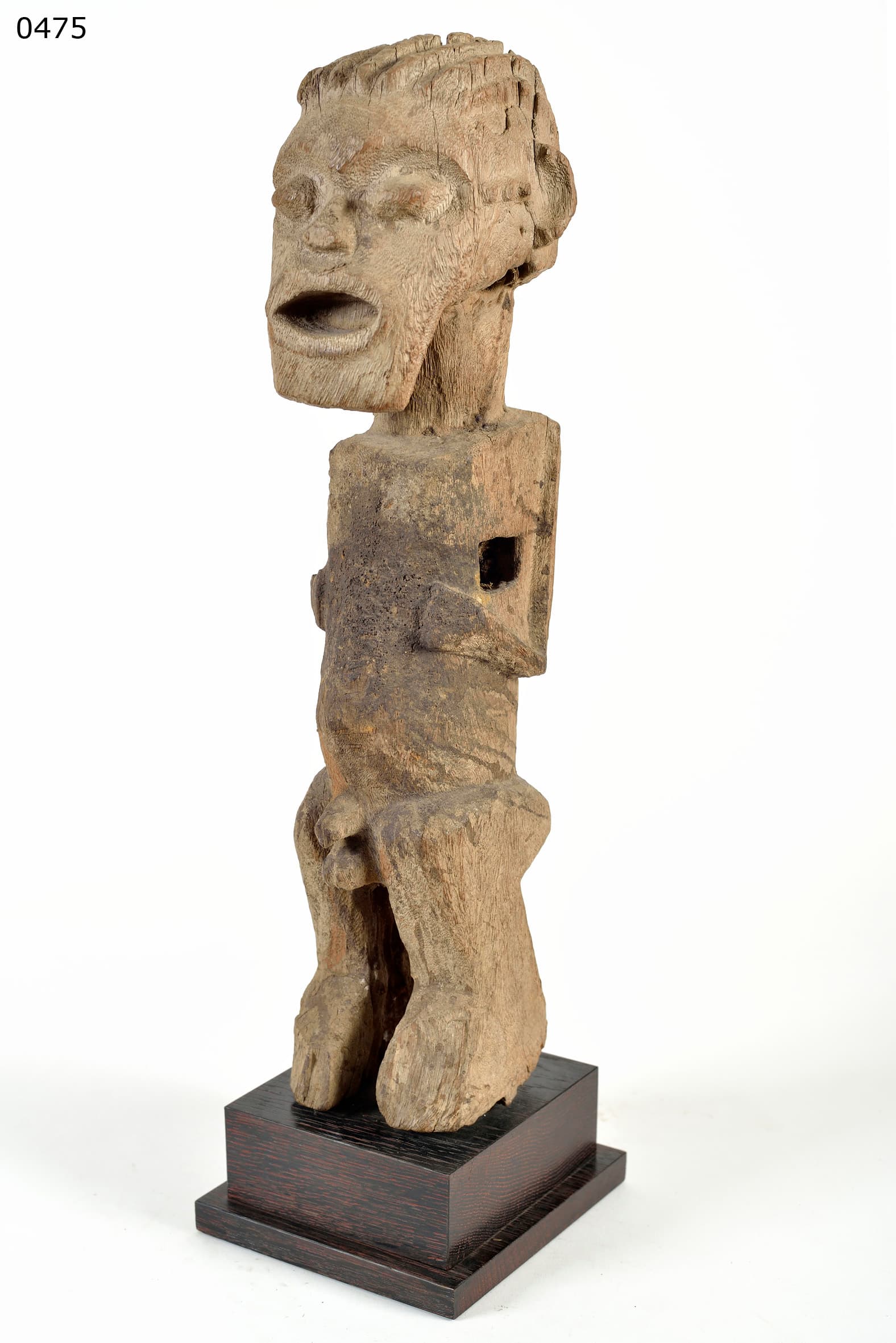
Diese archaische Holzfigur steht mit stark gebeugten Knien, hat einen großen, tief ausgehöhlten Nabel und einen stark verkrusteten Kopf, der mit Tierhaarbüscheln besetzt ist. Die gesamte Oberfläche ist mit einer dicken, dunklen Opferkruste bedeckt.
1. Ästhetischer Stil und regionale Eigenheiten
Keaka (oder Kaka)-Figuren aus der Cross-River-Region - im Grenzgebiet zwischen Nigeria und Kamerun - sind für ihren rohen, unverblümten Expressionismus bekannt. Charakteristisch für diese Figuren sind die kantige Haltung mit gebeugten Knien und die aggressive, fast proto-kubistische Abstraktion. Der Bildhauer hat auf eine raffinierte Glättung verzichtet und stattdessen schroffe, blockhafte Formen geschaffen, die Einschüchterung und eine unnachgiebige geistige Schwerkraft ausstrahlen.
2. Rituelle Funktion und Geheimbund-Kontext
Die tiefe Bauchhöhle, die für intensive Heil- und Schutzriten verwendet wurde, war ursprünglich mit magischen Substanzen gefüllt (ähnlich wie der Kongo-Bilongo). Diese Kraftfiguren wurden von traditionellen Wahrsagern bedient und regelmäßig mit Opfern gefüttert, um die Ahnengeister im Inneren zu aktivieren. Das Vorhandensein von Tierhaaren und aufgetragener Erde diente der physischen Verankerung des Geistes im Holz und sollte es ihm ermöglichen, bösartige Kräfte abzuwehren, Krankheiten zu heilen und das Überleben des Geschlechts zu sichern.
3. Physische Patina und Altersnachweis
Eine Datierung in das 19. Jahrhundert wird durch die tiefe, versteinerte Opferkruste aus Blut, Palmöl und Ruß nahegelegt, die die ursprünglichen Werkzeugspuren weitgehend verdeckt. Die erhaltenen Tierhaarbüschel sind fest in diese gehärtete Matrix eingebettet. Das Holz unter der Verkrustung ist stark degradiert, leicht und oxidiert, was auf Generationen aktiver ritueller Nutzung und anschließender historischer Alterung hindeutet.
Zusammenfassung
Diese Keaka-Figur gilt als ein eindrucksvolles Beispiel der Cross-River-Abstraktion und vermittelt eine starke rituelle Präsenz. Ihre ausgeprägte, verkrustete Patina und ihre aggressive, spannungsgeladene Körperhaltung machen sie zu einem bemerkenswerten Artefakt der kamerunischen Schutzmagie.
KI-unterstützt erstellt aus Sammlungsgutachten, Objektfotografie und eigener Recherche, redaktionell geprüft. Fehler sind möglich — Hinweise darauf sind uns willkommen. Zum Verfahren →