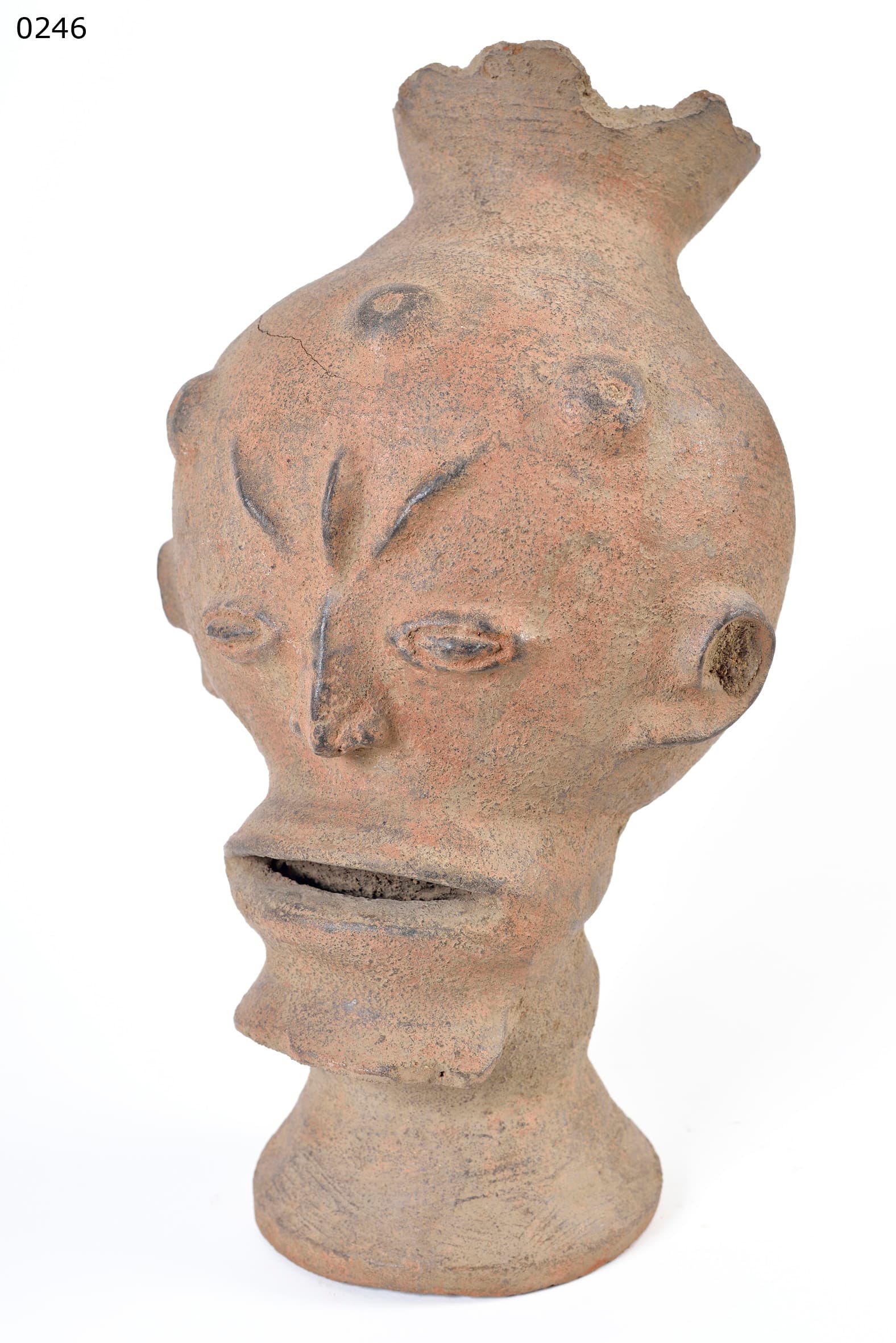
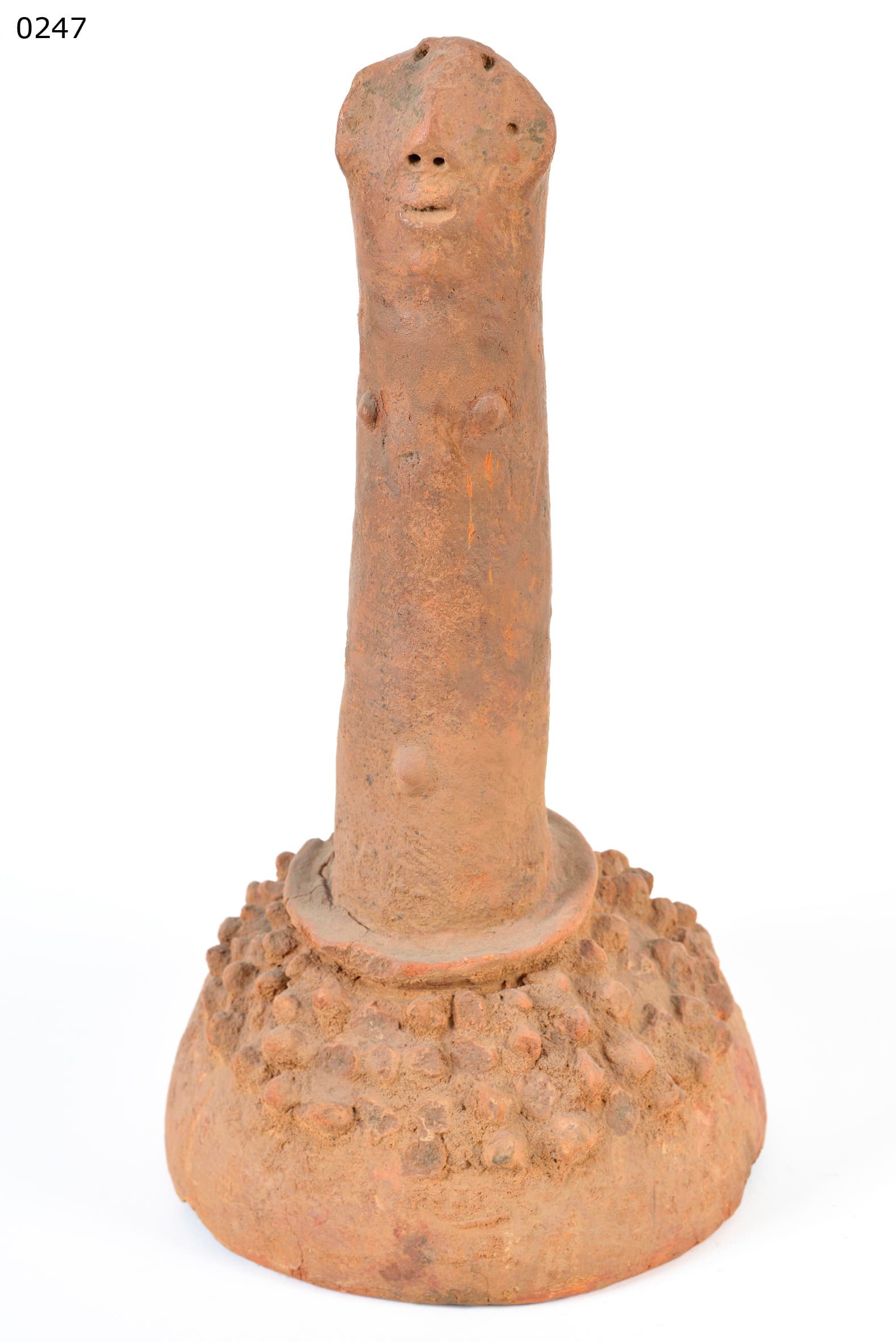
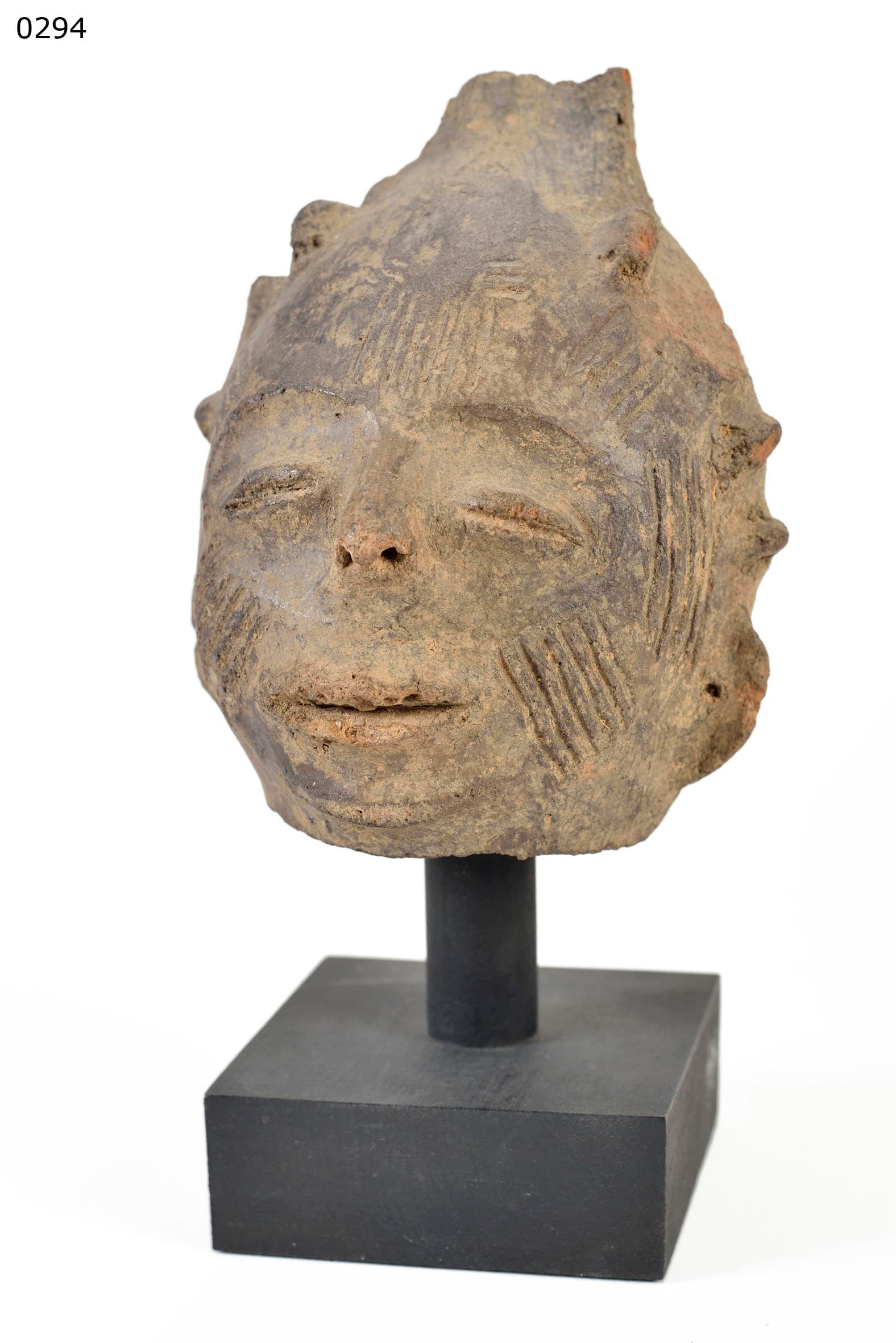
Diese Gruppe von drei Terrakottaköpfen aus gebranntem Ton zeigt die klassischen abgeflachten, mondförmigen Gesichtszüge der Akan, zarte Kaffeebohnenaugen und markante, dicke Halsringe. Die unterschiedlich großen Terrakottafiguren weisen alle erhebliche archäologische Abnutzungserscheinungen auf, wobei der poröse Ton verkalkte Schichten ghanaischer Erde enthält.
1. Ästhetischer Stil und regionale Merkmale
Diese mma- oder nsodie-Terrakotten sind der höchste Ausdruck der Grabkunst der Akan (Ashanti, Fante). Die Bildhauer haben das Gesicht absichtlich abgeflacht, um eher ein idealisiertes, spirituell ruhiges Porträt als ein realistisches Abbild zu schaffen. Die tief eingeschnittenen horizontalen Ringe um die Hälse sind ein charakteristisches kulturelles Motiv und symbolisieren Fettrollen, die die Akan visuell und spirituell mit aristokratischem Reichtum, körperlicher Schönheit und einem erfolgreichen, wohlgenährten Leben gleichsetzen.
2. Rituelle Funktion und Geheimbund-Kontext
Diese Bildnisse wurden von spezialisierten Kunsthandwerkerinnen nach dem Tod eines königlichen oder elitären Gemeindemitglieds angefertigt und in der Asensie (heiliger Hain von Töpfen) abseits der eigentlichen Begräbnisstätte aufgestellt. Sie boten dem Geist des Verstorbenen eine physische Behausung und dienten als Mittelpunkt für nachfolgende Gedenkrituale, das Ausgießen von Palmwein und die Darbringung von Gebeten, um sicherzustellen, dass die Ahnen weiterhin im Namen des lebenden königlichen Hofes Fürsprache einlegten.
3. Physische Patina und Altersnachweis
Die archäologische Echtheit dieser Köpfe wird durch ihre erhebliche Umweltschädigung bestätigt. Nachdem sie jahrhundertelang in Waldschreinen unter freiem Himmel gelegen haben, bevor sie von der Vegetation begraben wurden, ist der niedrig gebrannte Ton verglast und stark erodiert. Die Bruchstellen an den Hälsen sind uralt und von der Zeit aufgeweicht, mit nicht entfernbaren Mineralablagerungen und Wurzelspuren, die tief in den Tonporen gebunden sind.
Zusammenfassung
Diese drei Akan-Nsodie-Köpfe sind eindrucksvolle, einheitliche Zeugnisse der alten königlichen Bestattungspraktiken in Ghana. Ihre ätherische Mondabstraktion und die tiefgreifende Verwitterung des Tons machen sie zu großartigen archäologischen Zeugnissen der Ahnenverehrung.
KI-unterstützt erstellt aus Sammlungsgutachten, Objektfotografie und eigener Recherche, redaktionell geprüft. Fehler sind möglich — Hinweise darauf sind uns willkommen. Zum Verfahren →