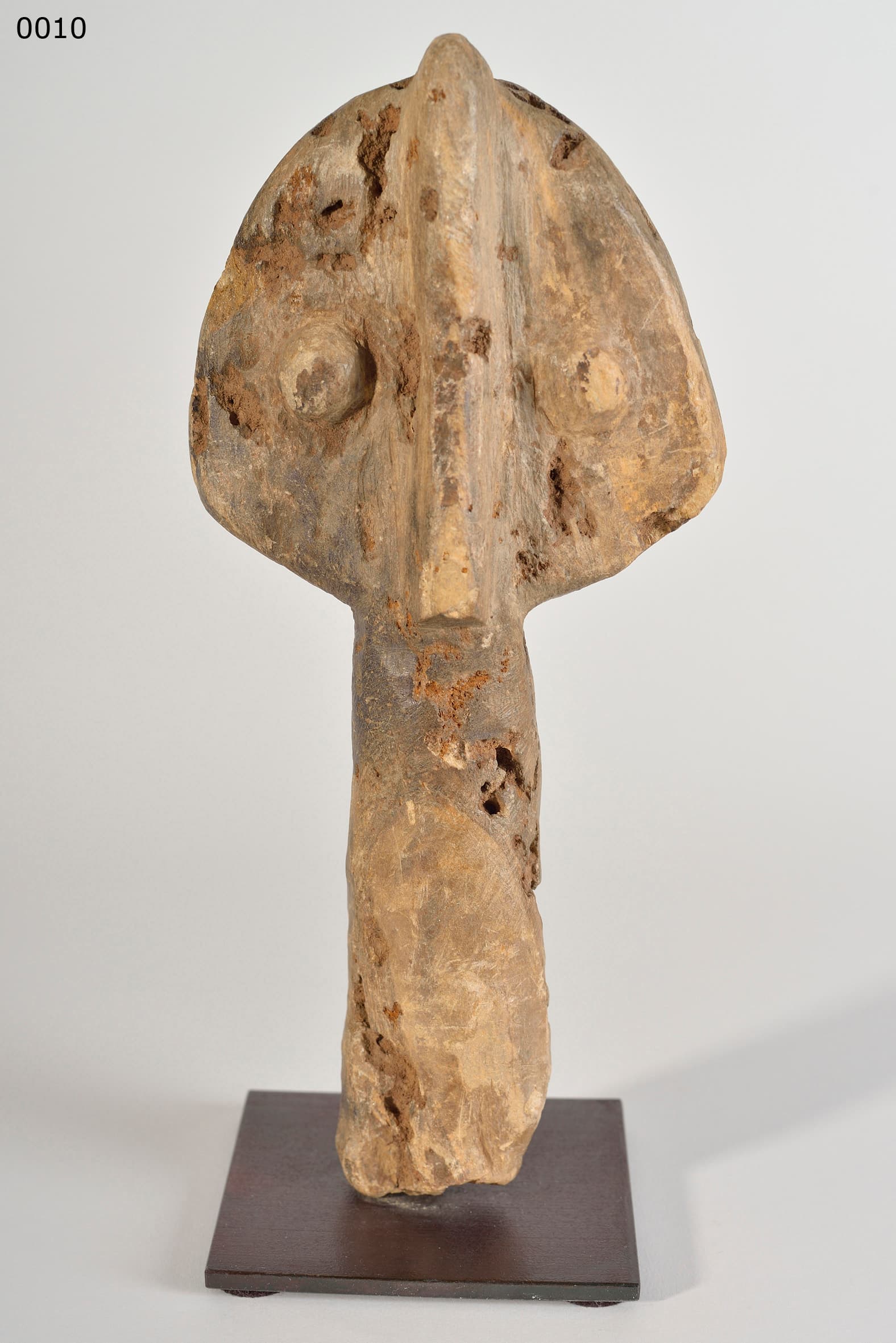
Diese archaische, phallusförmige Figur aus schwerem, gräulichem Stein zeigt ein längliches, stilisiertes menschliches Gesicht mit hochgezogenen, gewölbten Brauen, die in eine vertikale Nase übergehen. Die hochporöse Steinmatrix ist tief entkernt und vollständig mit kalzifizierten Mineralablagerungen bedeckt, die von Jahrtausenden der Bestattung herrühren.
1. Ästhetischer Stil und regionale Charakteristika
Diese aus dem rätselhaften Bura-Asinda-System stammende Figur - einer alten archäologischen Zivilisation im heutigen Niger-Tal - repräsentiert eine der ältesten und geheimnisvollsten lithischen Traditionen Westafrikas. Der Stil ist streng minimalistisch und reduziert den menschlichen Kopf auf eine reine, architektonische Geometrie. Die phalliforme (phallische) Gesamtform der Säule ist beabsichtigt und dient als universelles prähistorisches Motiv, das die Erde mit dem Himmel verbindet und die absolute, generative menschliche Kraft und ungebrochene Abstammung symbolisiert.
2. Rituelle Funktion und religiöse Bedeutung
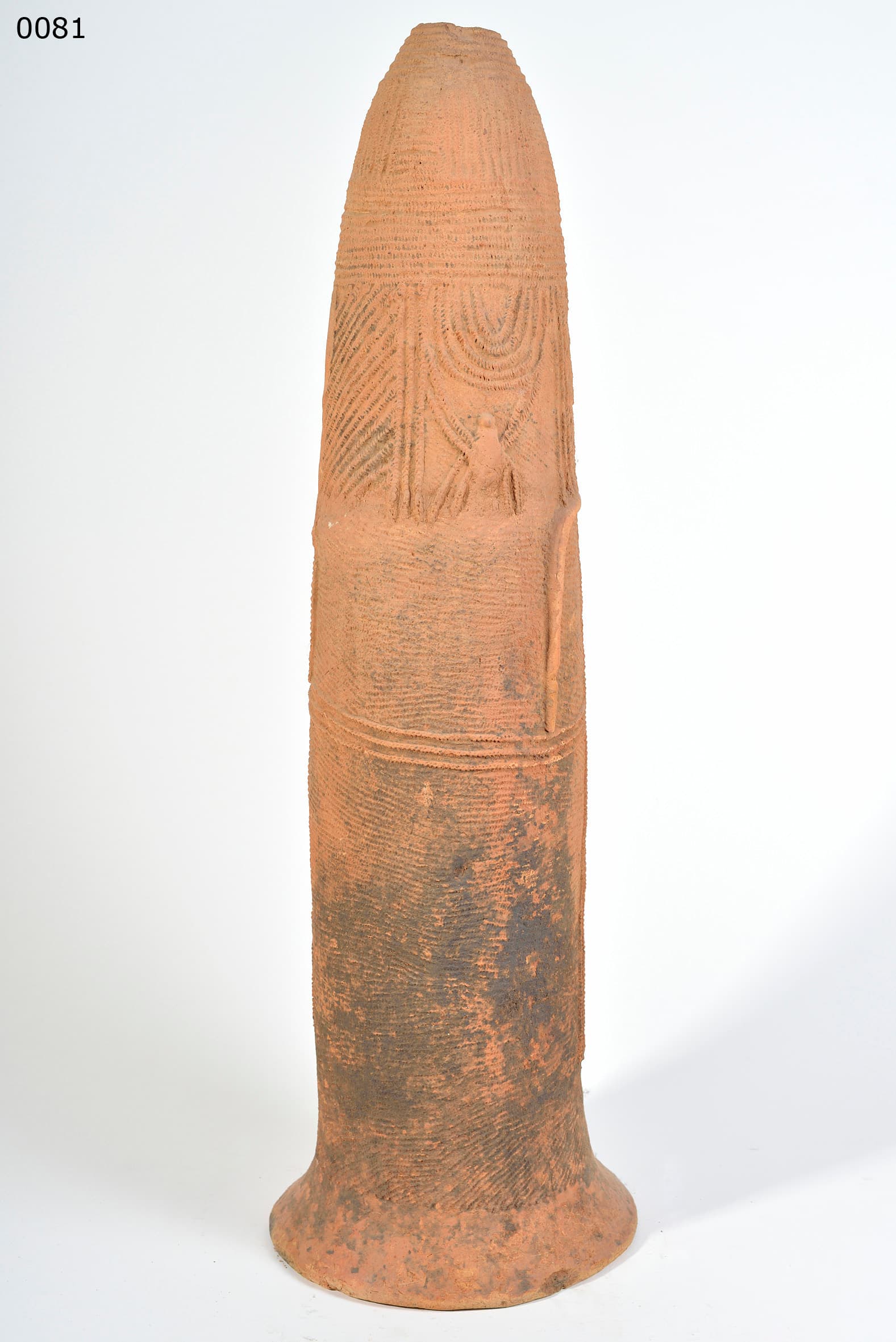
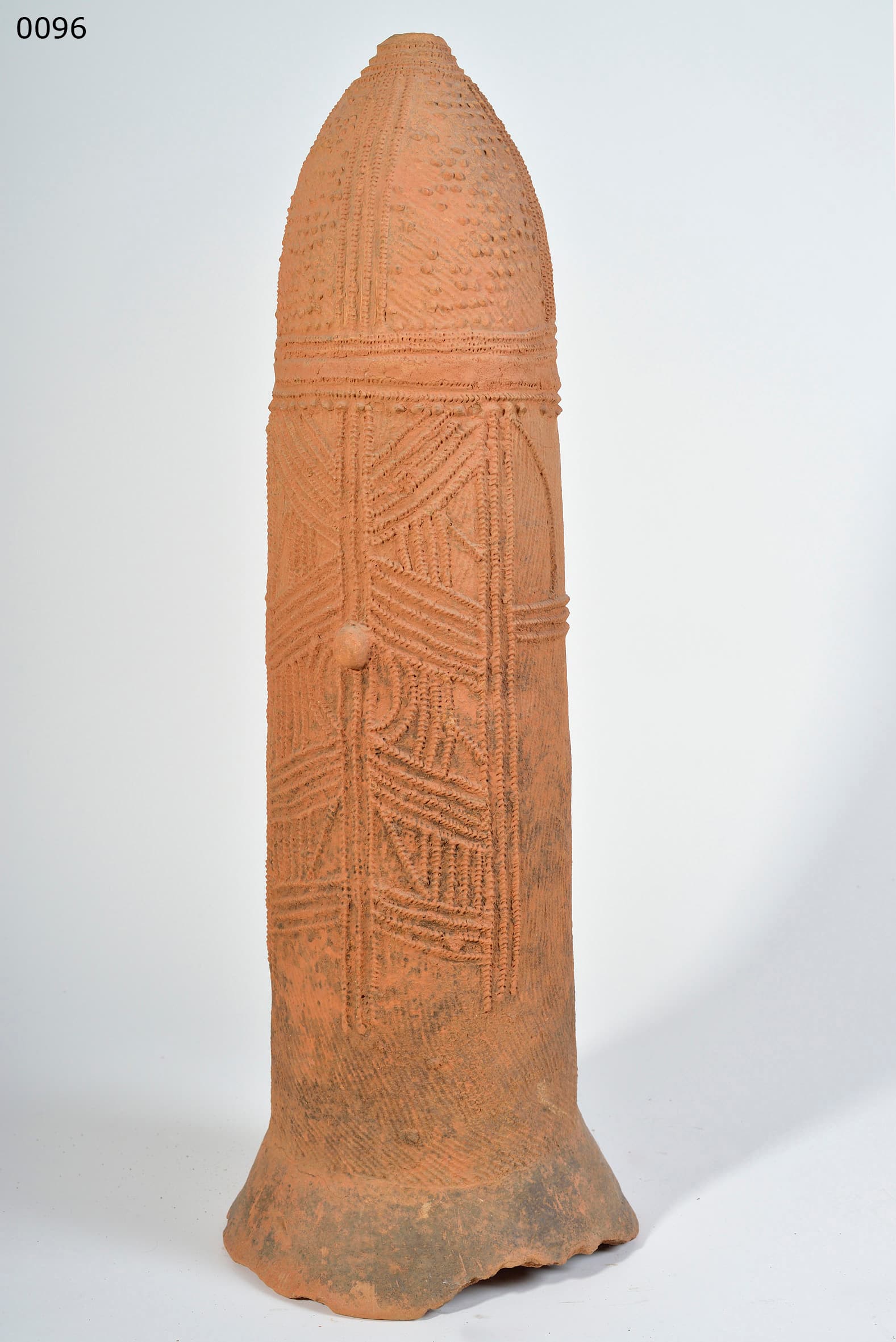
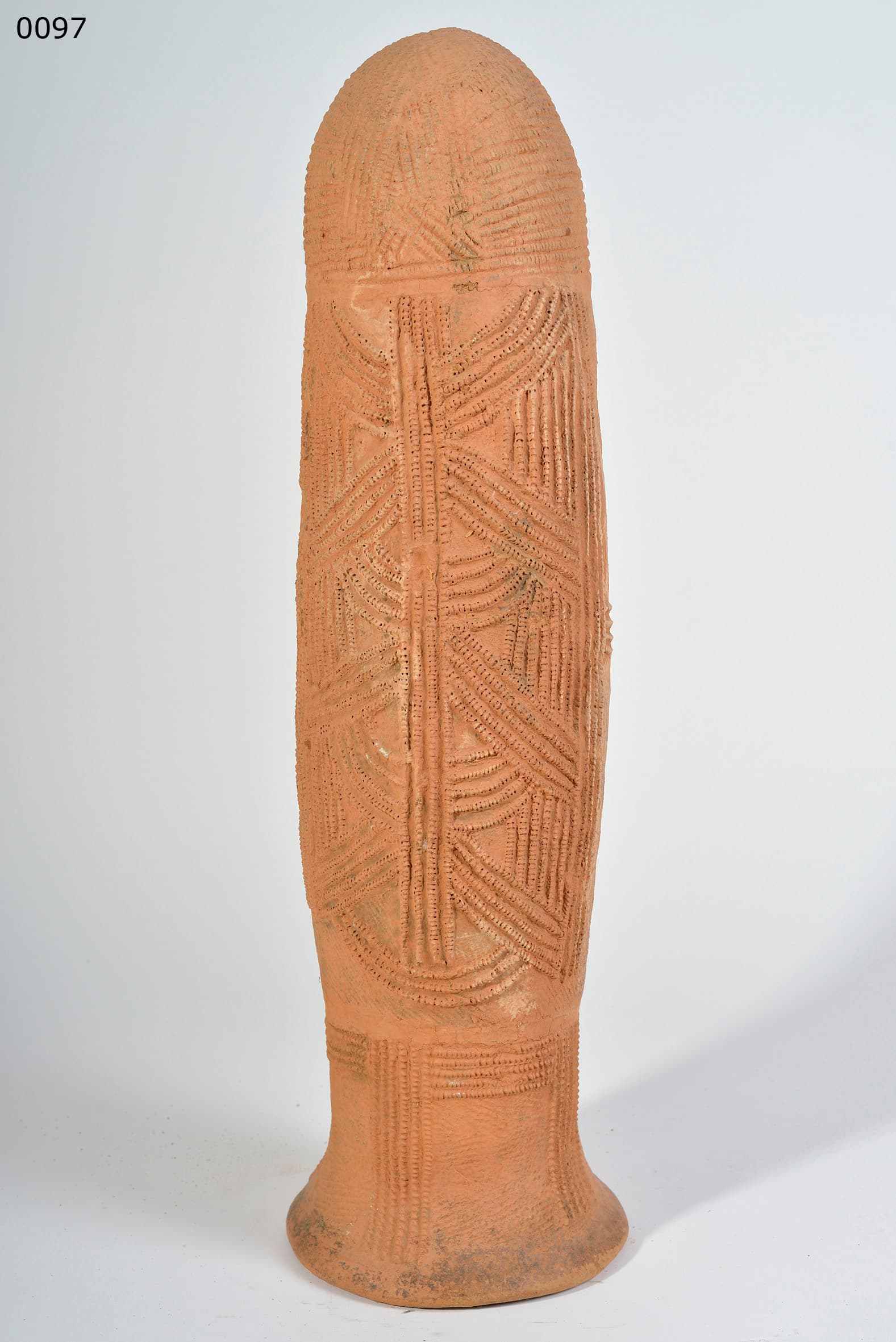
Diese Steinsäulen, die aus massiven, antiken Nekropolen ausgegraben wurden, dienten als Gedenkfiguren und dauerhafte Grabmarkierungen für die Toten der Elite. Sie wurden oft über kunstvoll verzierten Terrakotta-Urnen oder direkt in den Boden eingelassen und dienten als ewiger, irdischer Anker für die Seele. Das phallische Design war nicht nur biologisch, sondern repräsentierte auch die Kontinuität des Stammbaums, indem es sicherstellte, dass der verstorbene Vorfahre seinen lebenden Nachkommen weiterhin Leben, Fruchtbarkeit und landwirtschaftlichen Reichtum durch den Boden schenkte.
3. Physische Patina und Altersindikatoren
Der physische Zustand des Steins, der auf das 3. bis 11. Jahrhundert datiert wird, weist Merkmale eines hohen archäologischen Alters auf. Die Oberfläche ist chemisch und durch Umwelteinflüsse stark geschädigt, so dass die einst glatten Schnitzereien tief entstellt und rau sind. Der Stein ist stark verkalkt, mit Jahrtausenden von Mineralablagerungen, Salzblüten und sahelischer Erde, die dauerhaft mit seiner Matrix verbunden sind, was für einen antiken Ursprung und eine Herkunft aus tiefen stratigrafischen Schichten spricht.
Zusammenfassung
Als Artefakt einer untergegangenen Zivilisation ist diese Grabfigur aus Bura-Stein ein monumentales Stück afrikanischer Antike. Ihre eindringlich abstrakten Züge und ihre tiefgreifende geologische Verwitterung bieten eine seltene, greifbare Verbindung zum spirituellen Leben der frühesten urbanen Zentren Westafrikas.
KI-unterstützt erstellt aus Sammlungsgutachten, Objektfotografie und eigener Recherche, redaktionell geprüft. Fehler sind möglich — Hinweise darauf sind uns willkommen. Zum Verfahren →