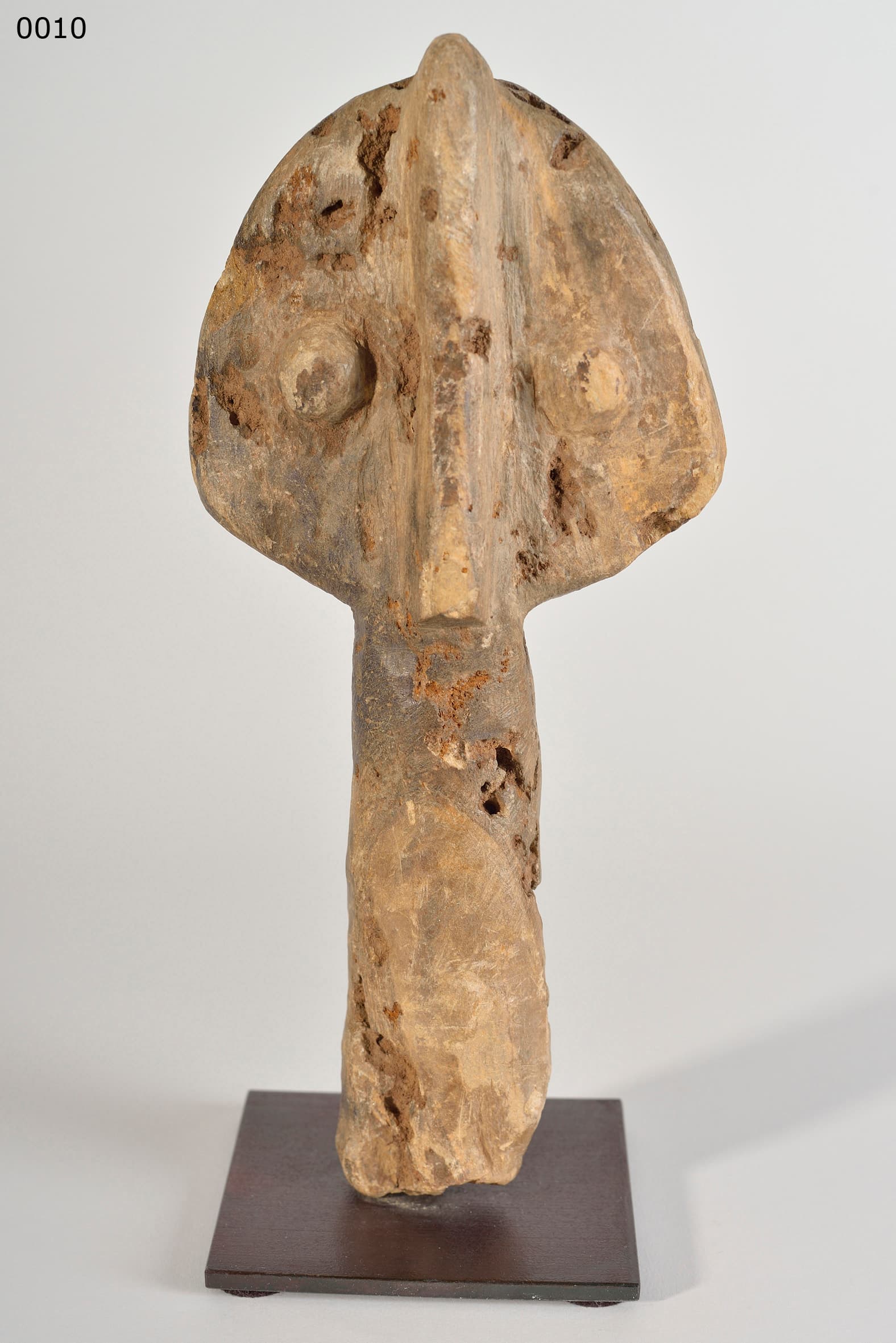
Diese antike Terrakottabüste zeigt ein stark abstrahiertes, abgeflachtes Gesicht mit einfachen, gekniffenen Zügen, aufgesetzten kreisförmigen Knötchen als Ohren und einem eingeschnittenen Band über der Stirn. Der rötliche Ton ist an der Basis stark fragmentiert und vollständig mit verkalkter Erde und Wurzelspuren verkrustet.
1. Ästhetischer Stil und regionale Merkmale
Dieser Terrakottakopf gehört zu dem geheimnisvollen archäologischen System von Bura-Asinda und repräsentiert eine der rätselhaftesten Keramiktraditionen Westafrikas. Im Gegensatz zum kunstvollen Naturalismus von Ife oder dem schweren Brutalismus von Sokoto weisen die Terrakotten von Bura eine charakteristische, abgeflachte Geometrie auf. Das Gesicht wird wie ein flaches Schild behandelt, wobei die Gesichtszüge durch einfaches Zwicken und das Auftragen kleiner Tonkügelchen entstehen. Das eingeschnittene Band auf der Stirn weist wahrscheinlich auf ein spezifisches Statusmerkmal oder eine Frisur dieser alten, verlorenen Zivilisation hin.
2. Rituelle Funktion und religiöse Bedeutung
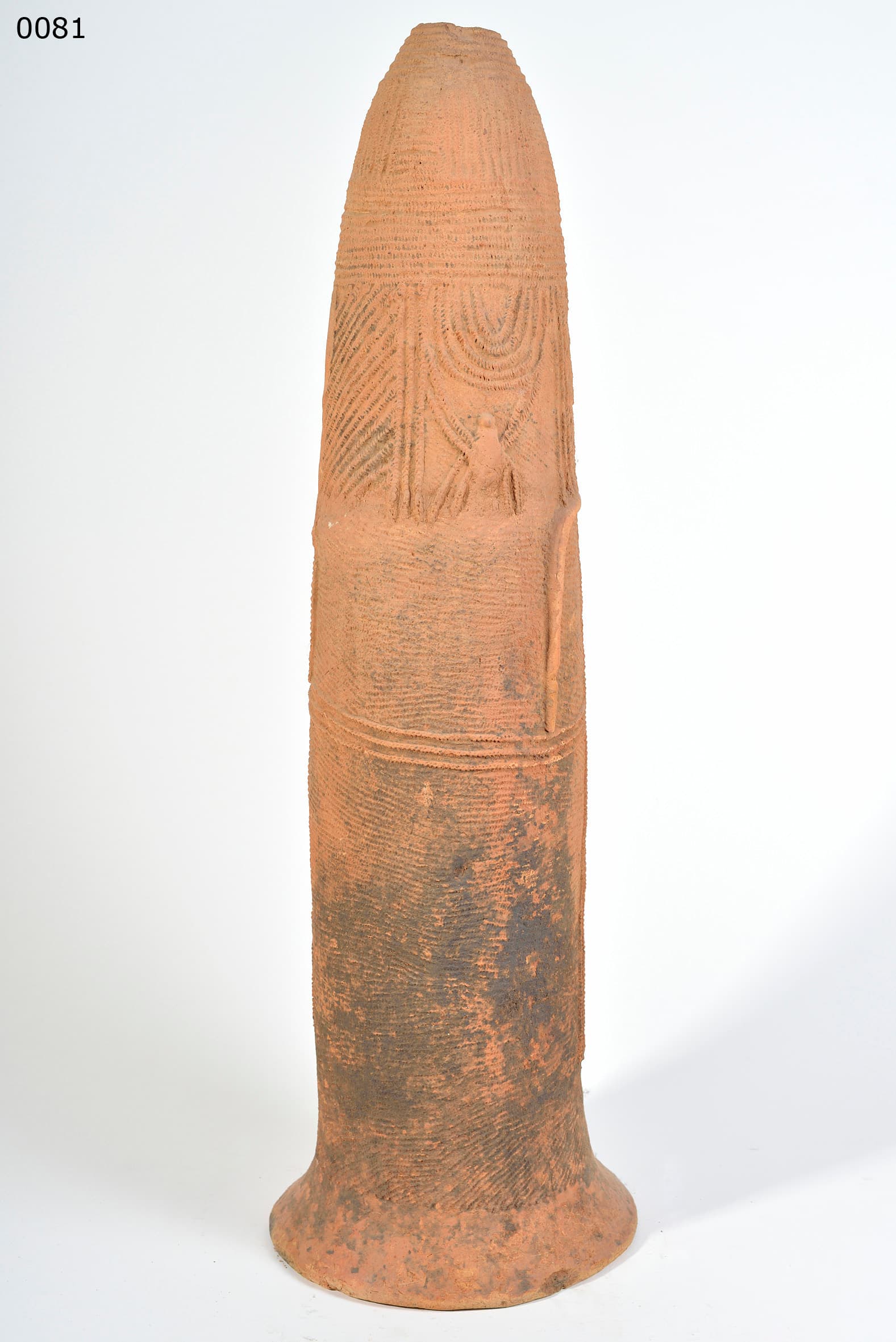
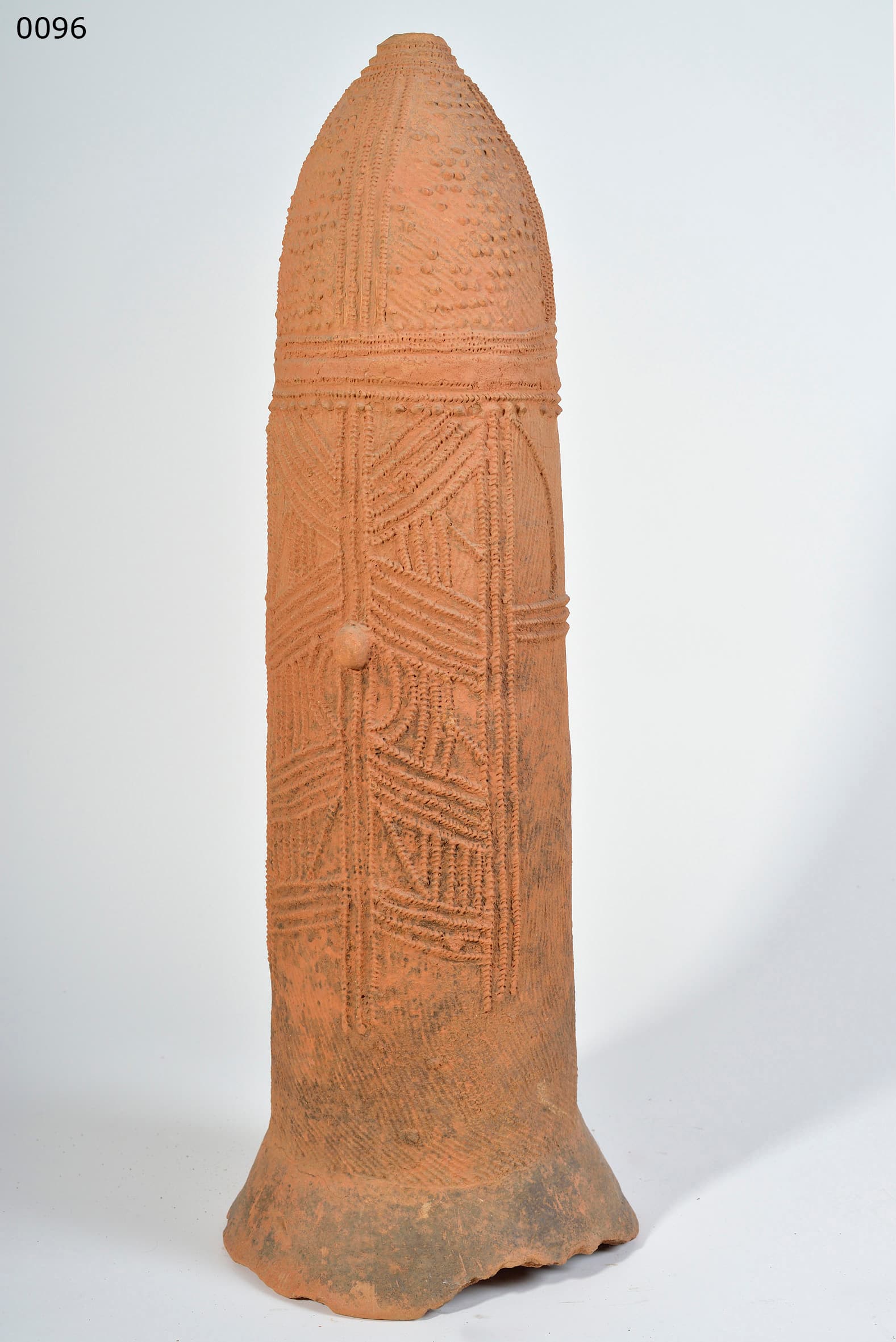
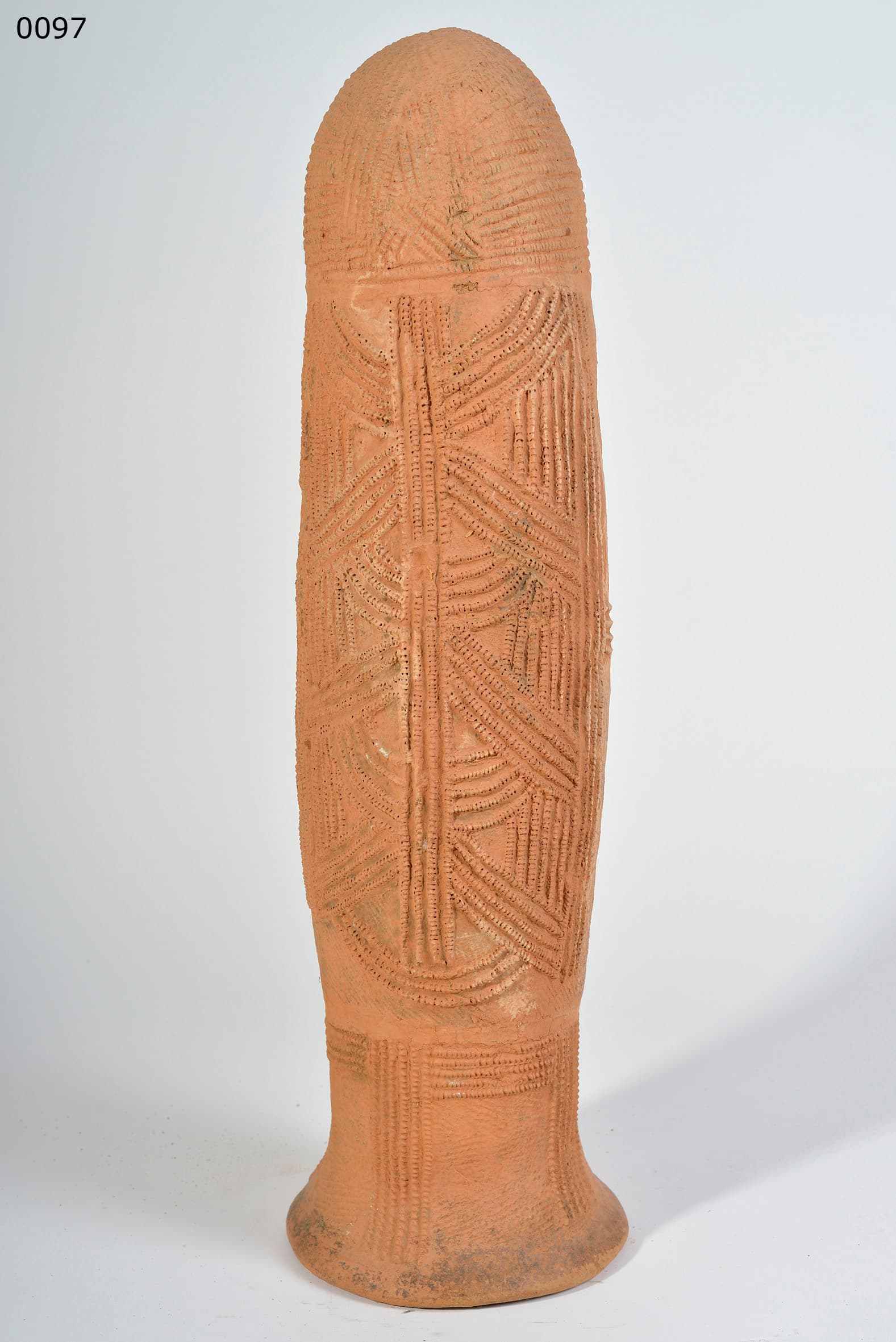
Diese Terrakottaköpfe, die in riesigen prähistorischen Nekropolen im Niger-Tal ausgegraben wurden, dienten ursprünglich als Deckel oder dekorative Aufbauten für massive, röhrenförmige Graburnen. Die Urnen enthielten die sterblichen Überreste von Eliteindividuen sowie Handelsperlen und Eisenwaffen. Der Kopf diente als dauerhaftes, idealisiertes Porträt des Verstorbenen, das über die Grabstätte wachte und einen irdischen Anker für den Geist des Ahnen darstellte, um die Nachkommen der Siedlung weiterhin zu segnen.
3. Physische Patina und Altersnachweis
Der physische Zustand dieser Terrakotta, die dem 3. bis 11. Jahrhundert zugeschrieben wird, spricht für ein hohes Alter. Der niedrig gebrannte Ton war extremen Umwelteinflüssen ausgesetzt, verglast und wurde hochporös. Die gesamte Oberfläche ist chemisch mit dicken, unbeweglichen Schichten aus verkalktem Lateritboden verbunden, und uralte Wurzelgeflechte haben versteinerte Abdrücke auf der Oberfläche hinterlassen. Der zerklüftete Bruch am Hals ist uralt, die Bruchkanten wurden durch den jahrhundertelangen Druck des Untergrunds völlig glatt.
Zusammenfassung
Dieser Gefäßkopf aus Bura-Terrakotta ist ein eindringlich schönes, minimalistisches Überbleibsel der frühen urbanen Zentren Westafrikas. Seine flache, geometrische Abstraktion und seine tiefgreifende, charakteristische archäologische Verkrustung machen ihn zu einem bedeutenden Zeugnis prähistorischer afrikanischer Geschichte.
KI-unterstützt erstellt aus Sammlungsgutachten, Objektfotografie und eigener Recherche, redaktionell geprüft. Fehler sind möglich — Hinweise darauf sind uns willkommen. Zum Verfahren →