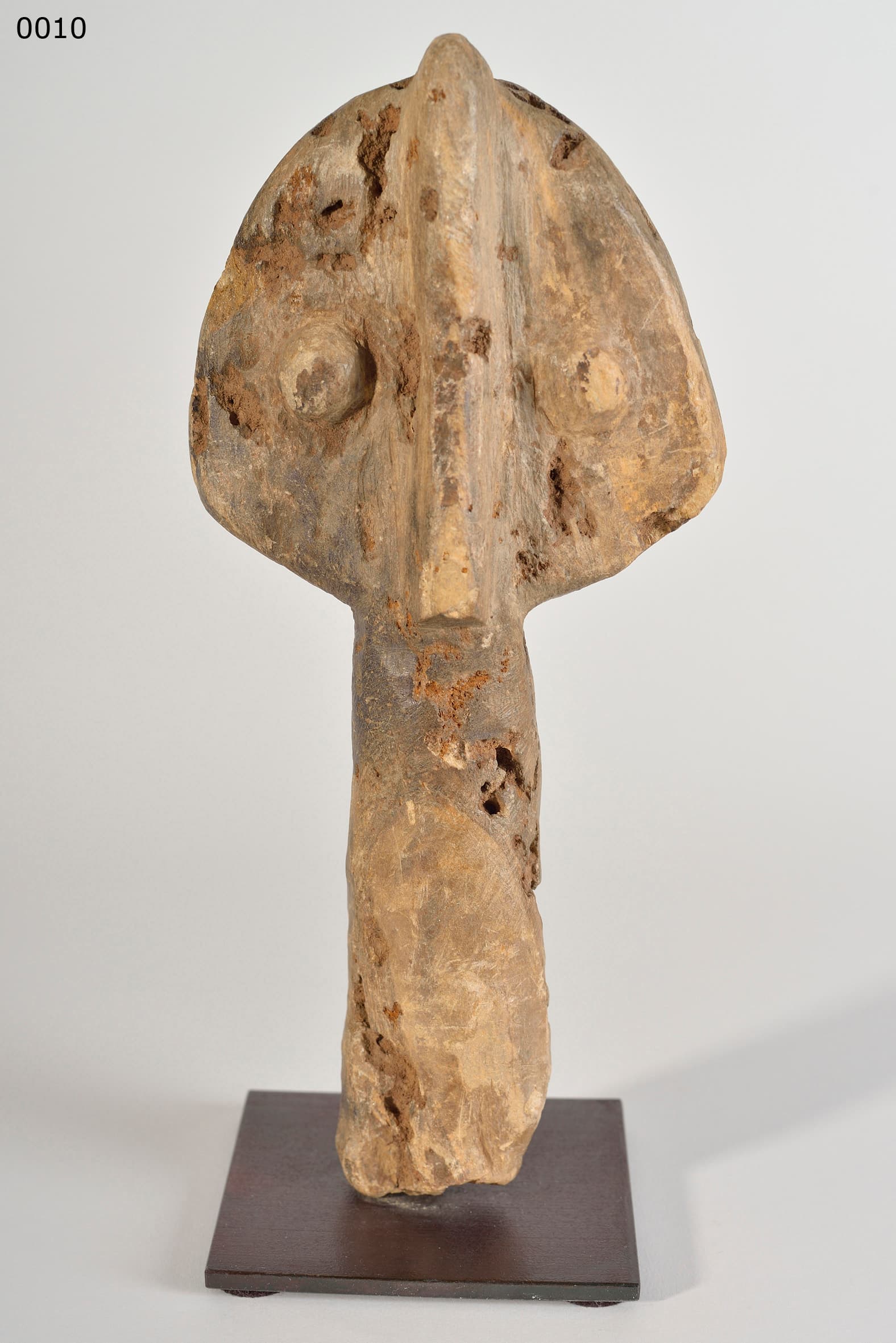
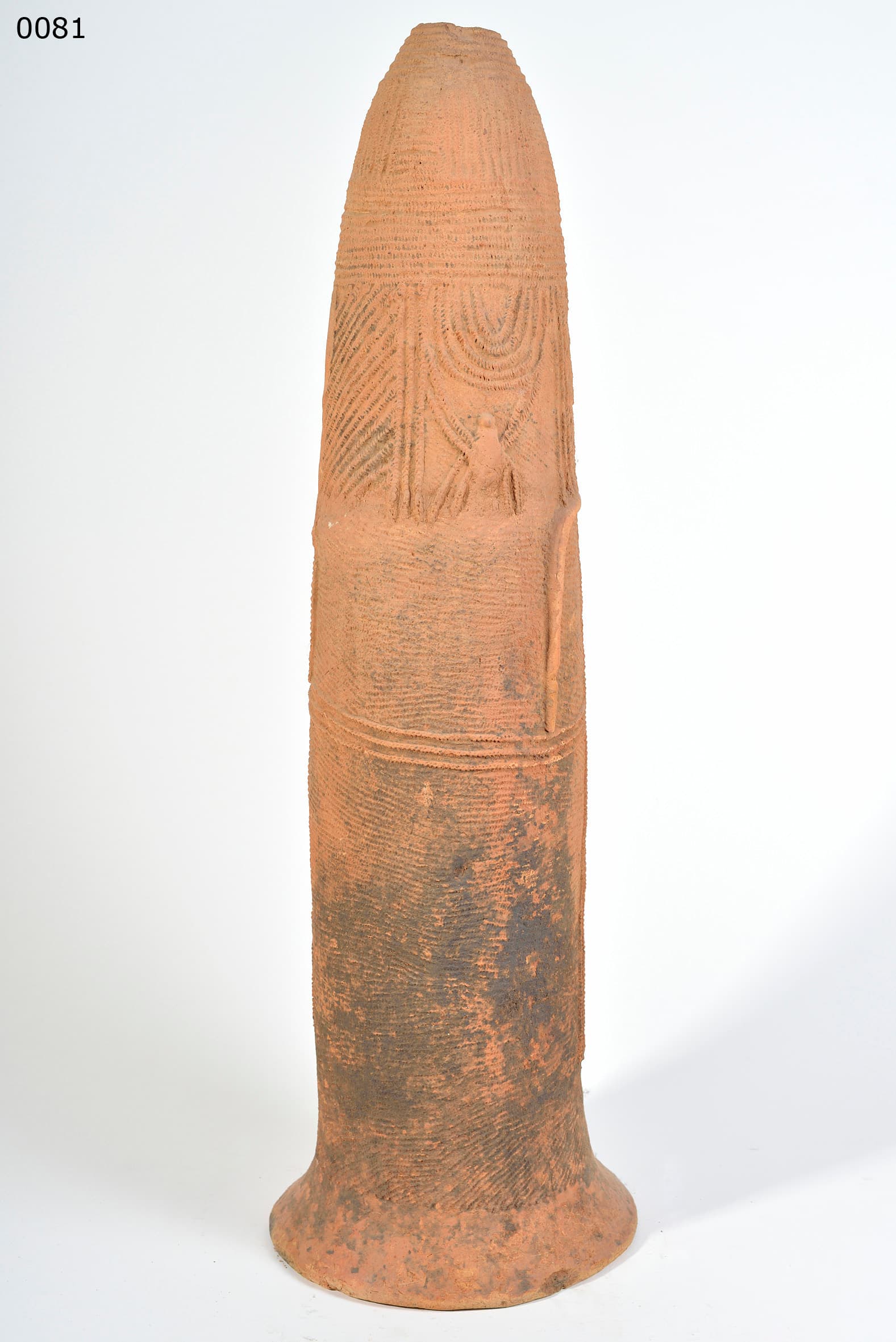
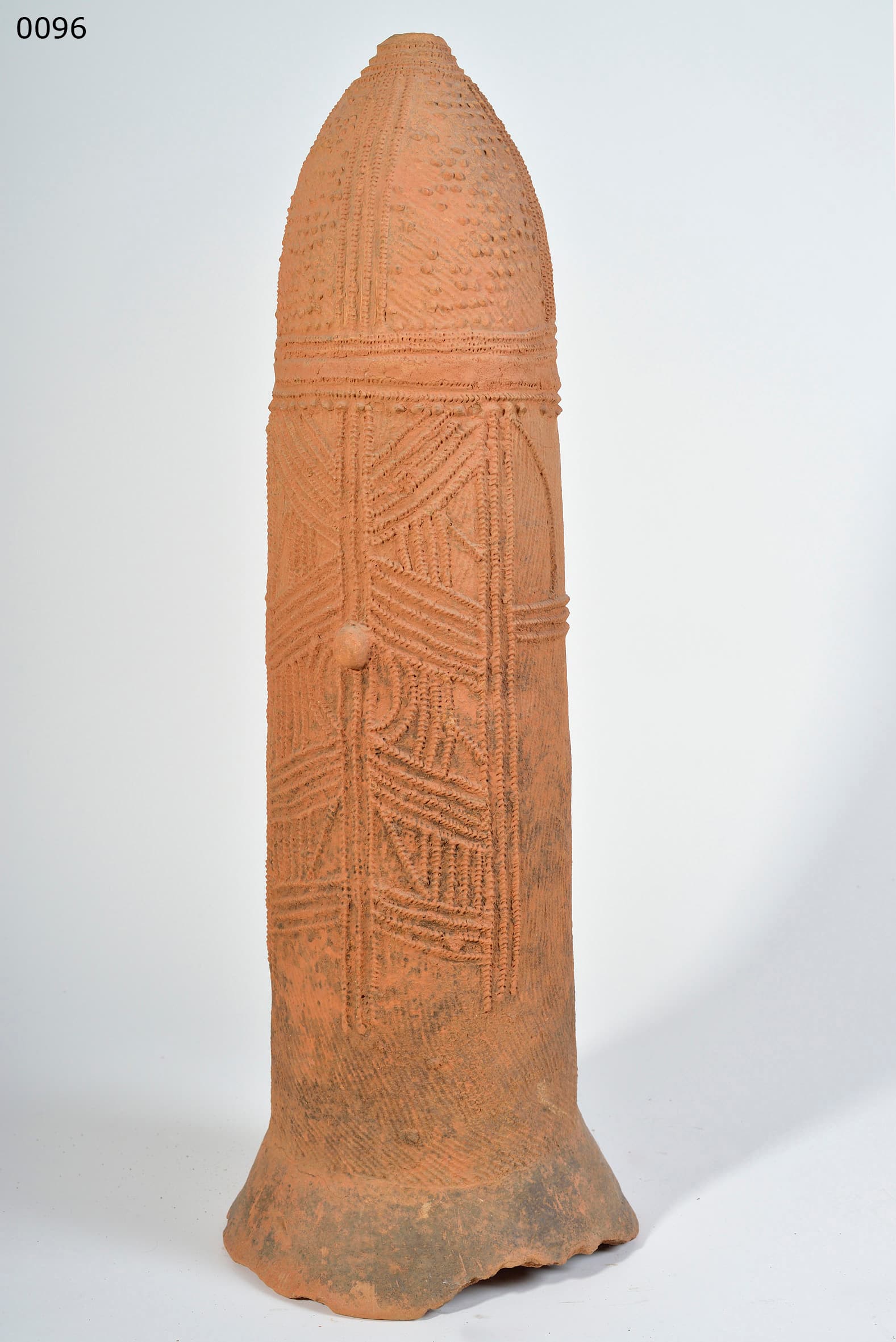
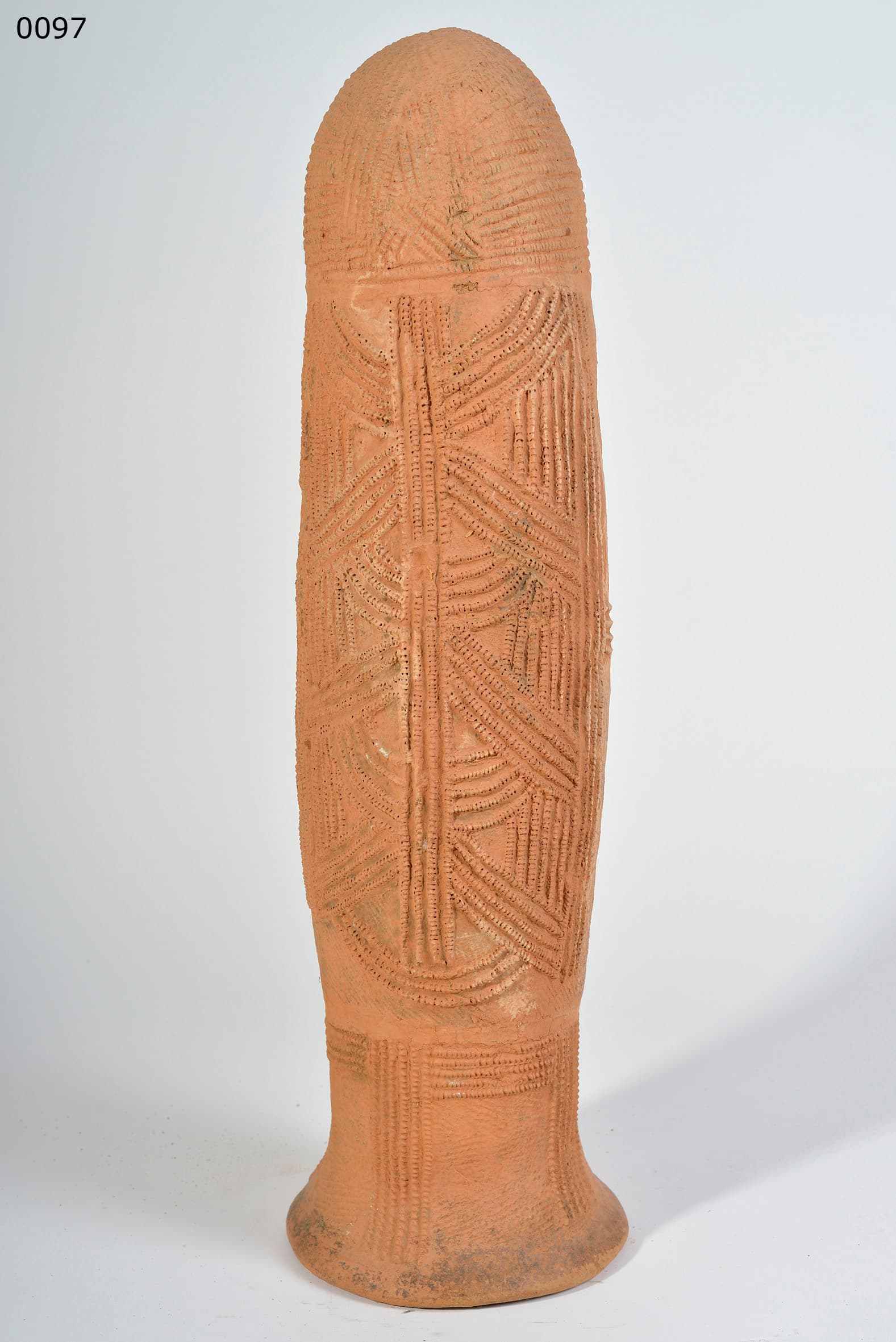
Diese drei monumentalen Steinskulpturen zeigen archaische, phallusförmige Silhouetten mit verkürzten, stark stilisierten menschlichen Gesichtern - von flachen Schilden mit vertikalen Nasengraten (Nr. 647) bis hin zu vollständig abgerundeten, erodierten Monolithen (Nr. 650). Das schwere, dichte Gestein ist in allen drei Fällen tief löchrig, porös und mit kalzifizierten Mineralablagerungen bedeckt.
1. Ästhetischer Stil und regionale Charakteristika
Diese hoch aufragenden Steinmonolithen verkörpern perfekt den extremen, kompromisslosen lithischen Minimalismus der Bura-Asinda-Zivilisation. Aufgrund der immensen Schwierigkeit, schweren, dichten Stein ohne moderne Metallwerkzeuge zu bearbeiten, reduzierten die antiken Bildhauer die menschliche Form auf ihre wesentlichste, strukturelle Geometrie. Die brillante Verschmelzung eines menschlichen Gesichtsporträts mit einer übergeordneten phallischen Silhouette schafft eine kraftvolle Dualität, die sowohl die spezifische Identität des Verstorbenen als auch die universelle, ungebrochene Zeugungskraft der menschlichen Abstammung symbolisiert.
2. Rituelle Funktion und religiöse Bedeutung
Diese Steinsäulen, die in massiven prähistorischen Nekropolen neben Terrakotta-Graburnen errichtet wurden, gelten als Symbole für die Beständigkeit der Elite. Während Terrakotta zerbrechen und Holz verrotten konnte, sorgte Stein dafür, dass der Geist des Ahnen dauerhaft in der Grabstätte verankert war. Die Nachfahren versammelten sich um diese hoch aufragenden Säulen und schütteten Trankopfer auf den Stein, um die tiefen Erdgeister zu "füttern" und um landwirtschaftliche Fruchtbarkeit, Regen und den Schutz der Siedlung zu erbitten.
3. Physische Patina und Altersnachweis
Die Datierung auf das 3. bis 11. Jahrhundert ist vereinbar mit der tiefgreifenden geologischen Erosion, die auf allen drei Figuren sichtbar ist. Die einst scharfen Schnitte, die die Nasen und Brauen andeuten, sind durch Wind, Regen und Reibung unter der Oberfläche über ein Jahrtausend hinweg völlig aufgeweicht, abgestumpft und abgerundet worden. Die porösen Steinmatrizen sind mit unentfernbaren, verkalkten Mineralien und gehärteter sahelischer Erde durchtränkt, ein fortgeschrittener Zustand der lithischen Degradation, der einen antiken archäologischen Ursprung nahelegt.
Zusammenfassung
Diese Gruppierung von Bura-Steingrabfiguren bildet einen monumentalen, physischen Anker in der prähistorischen spirituellen Landschaft des Nigra-Tals. Ihre nahtlose Verschmelzung von Ahnenporträts mit generativer, phallischer Geometrie und tiefgreifender geologischer Verwitterung macht sie zu bedeutenden historischen Relikten.
KI-unterstützt erstellt aus Sammlungsgutachten, Objektfotografie und eigener Recherche, redaktionell geprüft. Fehler sind möglich — Hinweise darauf sind uns willkommen. Zum Verfahren →