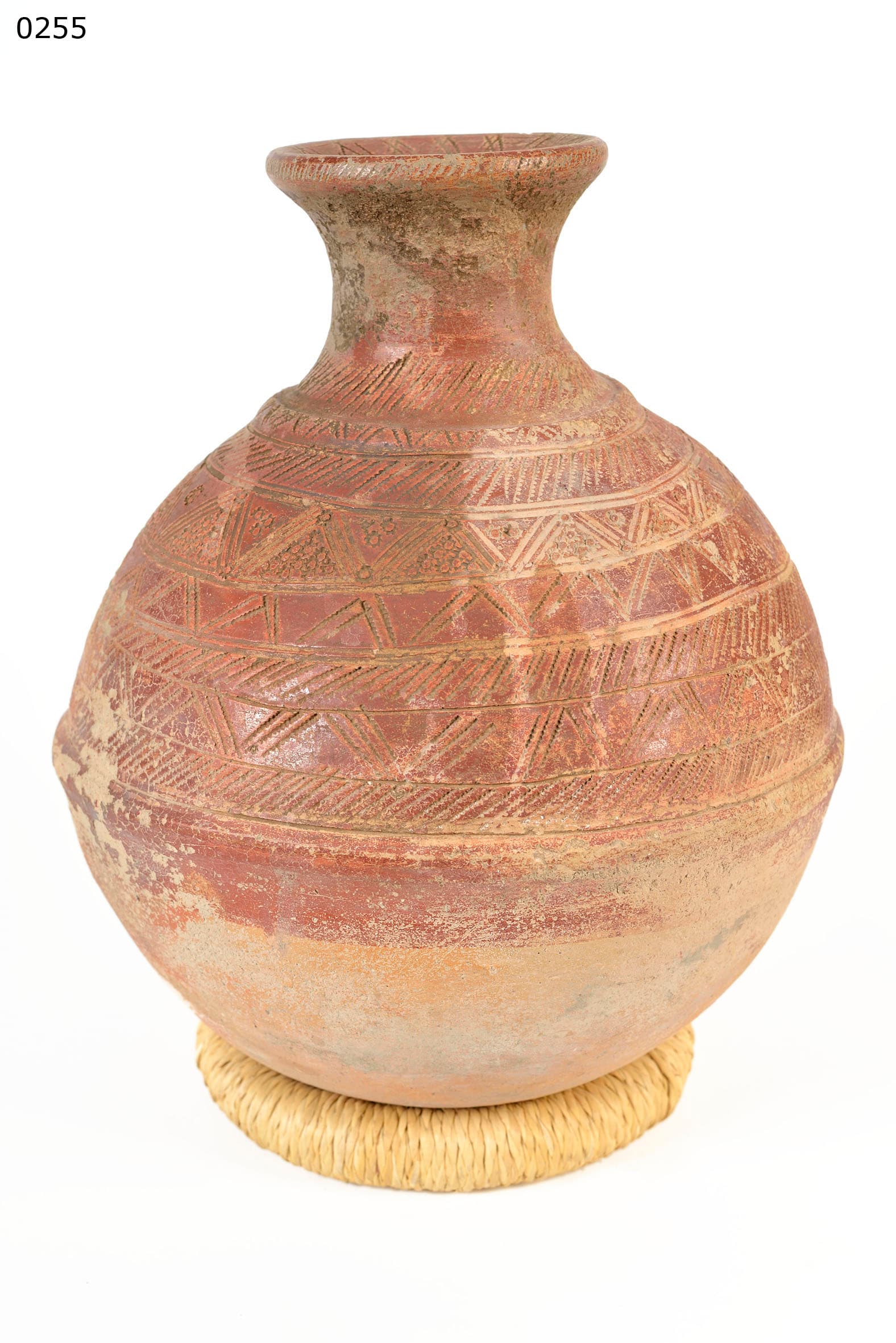
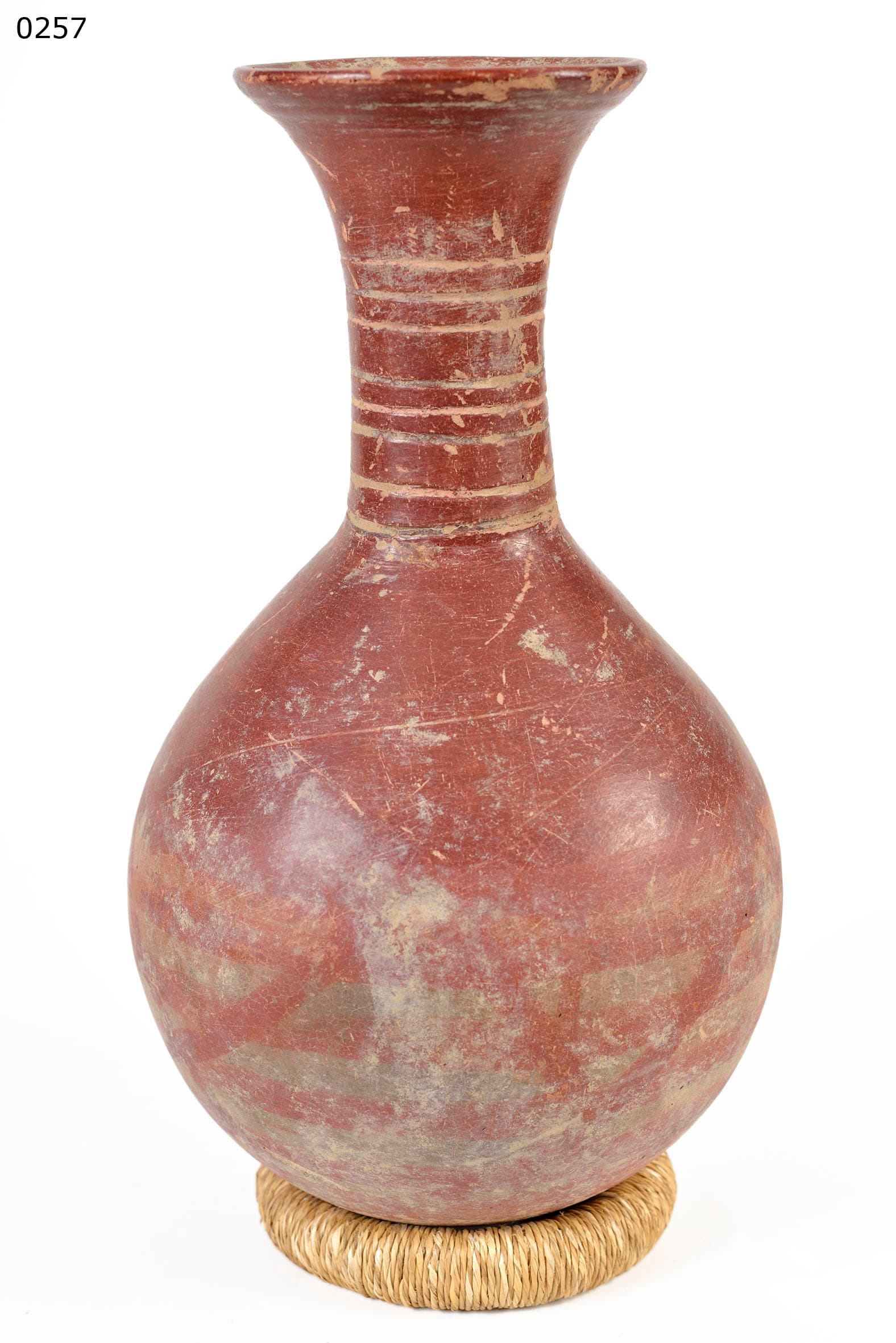
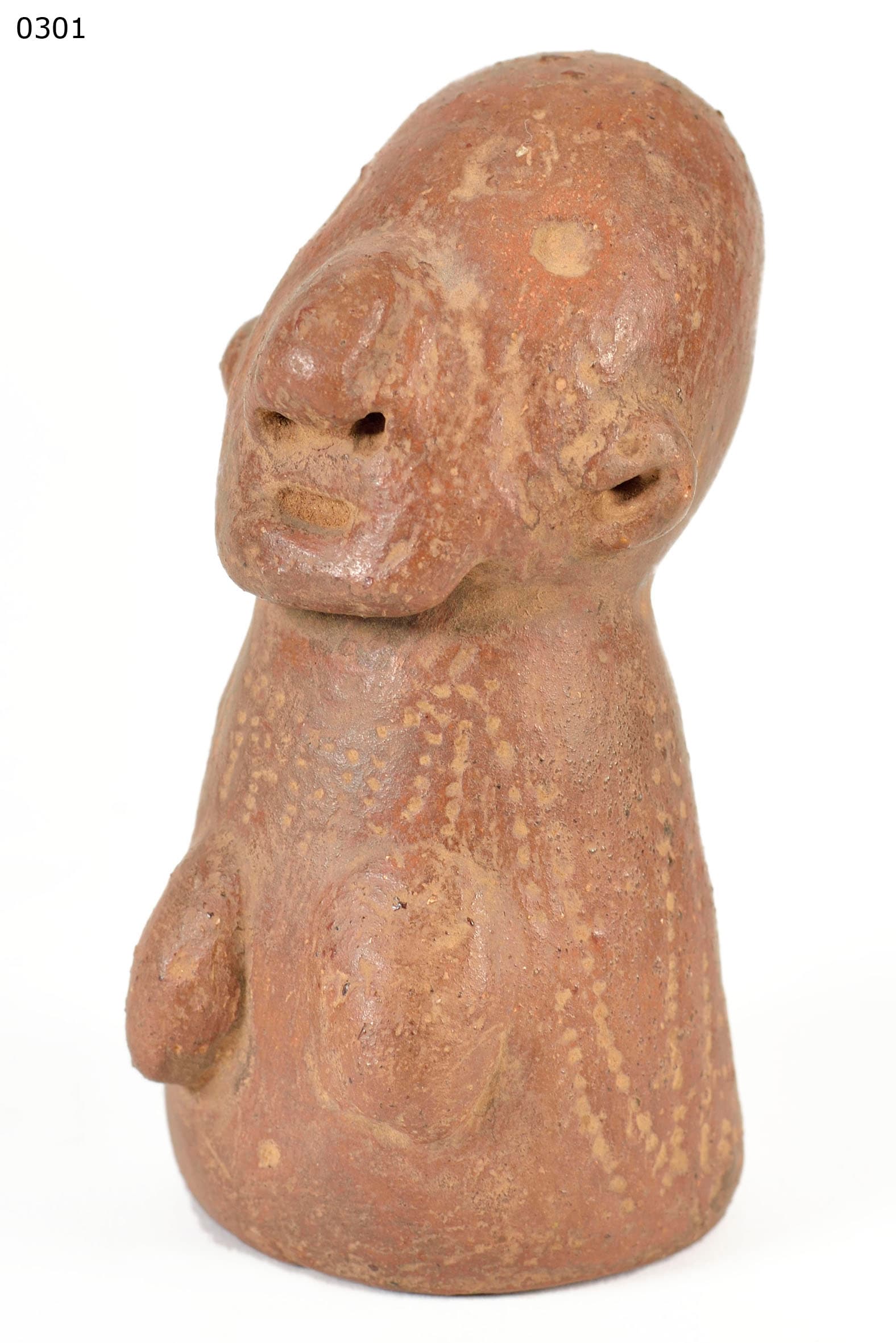
Ein hochkomplexer, U-förmiger antiker Bronzeguss, der zwei miteinander verbundene Köpfe auf einem stilisierten, durchbrochenen Körper darstellt, der vollständig mit erhabenen kugelförmigen Knötchen oder "Pockennarben" bedeckt ist Er trägt eine dicke, krustige, erdverkrustete archäologische Patina.
1. Ästhetischer Stil und regionale Charakteristika
Die alten Kulturen des Inland-Nigerdeltas haben einige der surrealsten und symbolträchtigsten Bronzen Afrikas hervorgebracht. Die häufige Verwendung von erhabenen Pusteln oder Pockennarben, die die Haut bedecken, ist ein diagnostisches Merkmal dieser Zivilisation, das von Archäologen weithin als Symptome schwerer Krankheiten wie Pocken, Lepra oder Furunkel interpretiert wird. In dieser viszeralen Bildsprache verschmelzen medizinische Realität und tiefe spirituelle Symbolik.
2. Rituelle Funktion und apotropäische Heilungsmagie
In diesem antiken Kontext wurde Krankheit nicht nur als körperliches Leiden betrachtet, sondern auch als tiefe spirituelle Krise oder als Zeichen göttlichen Eingreifens. Mit Krankheitszeichen versehene Figuren wurden in spezialisierten Heilungskulten verwendet. Als apotropäischer Talisman hatte dieses Paar wahrscheinlich eine sympathische Funktion: Durch die Darstellung der Krankheit in dauerhafter, unbestechlicher Bronze sollte das Amulett die Krankheit von der Gemeinschaft fernhalten oder den Träger vor Epidemien schützen. Die vereinigten Köpfe könnten auch auf die Ausbreitung der Ansteckung zwischen gepaarten Individuen hinweisen - eine visuelle Darstellung der sozialen Übertragung der Krankheit.
3. Physische Patina und Altersnachweis
Der Zustand dieser Bronze spricht für ein hohes Alter. Die Oberfläche ist von einer dicken, schweren Oxidationsschicht aus Malachit (grün) und Cuprit (rötlich-braun) bedeckt, die mit kalkhaltigen Tonablagerungen vermischt ist. Dieser Grad der metallurgischen Zersetzung ist vereinbar mit einem jahrhundertelangen Vergraben in den schwankenden Grundwasserspiegeln der malischen Überschwemmungsgebiete, was eine Datierung in das 12. bis 16. Jahrhundert nahelegt. Die Einbindung des Bodens in das Korrosionsprodukt gilt als chemisch irreversibel.
Zusammenfassung
Eine ausdrucksstarke Bronze aus dem Inland des Nigerdeltas, die sich der Ikonographie von Krankheiten bedient, um alte Heil- und Schutzmagie darzustellen. Ihr schwerer, komplexer Guss und die tiefgreifende archäologische Verkrustung stützen ihre Einordnung als bedeutende malische Antiquität.
KI-unterstützt erstellt aus Sammlungsgutachten, Objektfotografie und eigener Recherche, redaktionell geprüft. Fehler sind möglich — Hinweise darauf sind uns willkommen. Zum Verfahren →