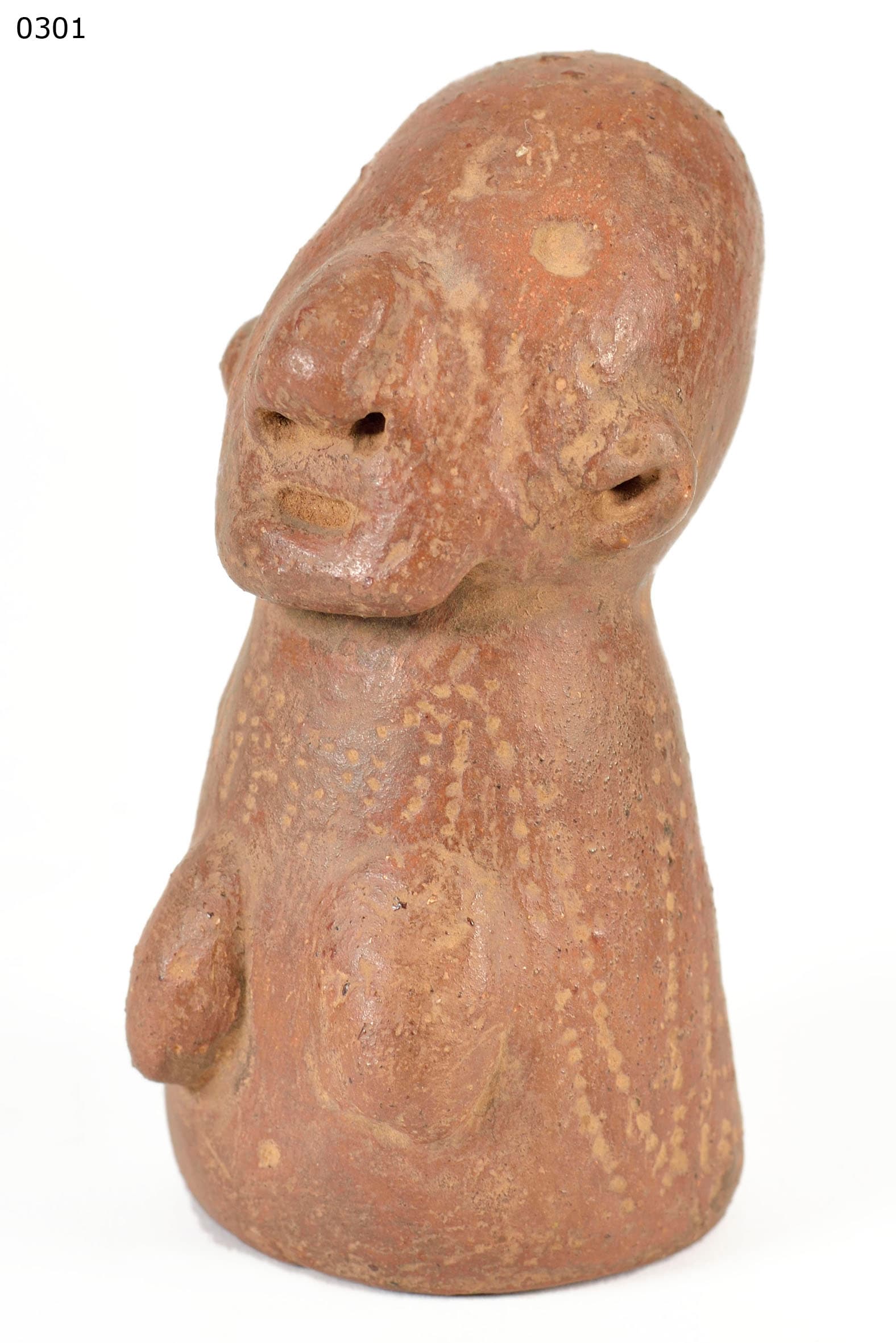
Diese antike Bronzefigur stellt eine sitzende oder kniende Frau mit einem stark verlängerten, prognathischen Kopf und tief hängenden Brüsten dar, die ihre Hände auf einen kleinen Mörser oder ein Gefäß stützt. Die Metalloberfläche ist stark abgebaut und weist eine dicke, erdige und oxidierte grün-braune archäologische Patina auf.
1. Ästhetischer Stil und regionale Charakteristika
Die Inland-Niger-Delta-Kultur (Djenné-Djenno) betonte in ihren Terrakotten und Bronzen häufig übertriebene mütterliche Züge. Die tief hängenden Brüste stehen für eine ältere Frau oder eine Ahnenmutter, die viele Kinder erfolgreich gestillt hat und als Symbol für lebensspendende Nahrung dient. Die Einbeziehung eines Mörsers oder Gefäßes unterstreicht die Rolle der Frau als Ernährerin und Garantin der häuslichen Stabilität innerhalb der mittelalterlichen Gemeinschaft. Die Mutterfiguren von Djenné betonen durchweg den gereiften Körper nach dem Kinderkriegen und nicht die jugendliche Idealisierung - die ikonografische Priorität ist die nachgewiesene reproduktive Leistung.
2. Rituelle Funktion und Votivdarstellung
Im Gegensatz zu späteren Prestigebronzen, die für die öffentliche Zurschaustellung bestimmt waren, wurden die stark stilisierten Figuren dieser Epoche in der Regel als Votivgaben geschaffen. Sie wurden rituell in Fundamentgräben, Stadtmauern oder kommunalen Erdschreinen deponiert, um lokale Geister zu besänftigen, die landwirtschaftliche Fruchtbarkeit zu sichern oder einer bedeutenden Gründerin des weiblichen Geschlechts zu gedenken. Die Geste des Haltens eines Gefäßes kann auch das Darbringen von Medizin oder Trankopfern an die Geisterwelt darstellen. Erdschreine wurden dauerhaft aufgestellt - sobald die Figur begraben war, blieb sie dauerhaft im Dienst.
3. Physische Patina und Altersnachweis
Das Überleben dieses empfindlichen Gusses ist angesichts seines Alters bemerkenswert. Die tiefgreifende chemische Zersetzung der Bronze, die zu einer dicken Kruste aus Malachit (Grünspan) und verkalkter Erde geführt hat, bestätigt die jahrhundertelange unterirdische Vergrabung in den malischen Überschwemmungsgebieten. Diese ungereinigte, archäologische Oberfläche passt perfekt zu der Datierung auf das 12. bis 16. Jahrhundert, was die absolute Antike des Stücks bestätigt. Die chemische Verflechtung der Korrosion mit dem Metallsubstrat kann durch künstliche Patinierung nicht reproduziert werden.
Zusammenfassung
Eine symbolträchtige Bronze aus dem Nigerdelta, die Themen der mütterlichen Versorgung mit antiken Votivgaben verbindet. Die ausgeprägte Abschwächung und die starke archäologische Patina machen sie zu einem bedeutenden Relikt des mittelalterlichen Mali.
KI-unterstützt erstellt aus Sammlungsgutachten, Objektfotografie und eigener Recherche, redaktionell geprüft. Fehler sind möglich — Hinweise darauf sind uns willkommen. Zum Verfahren →