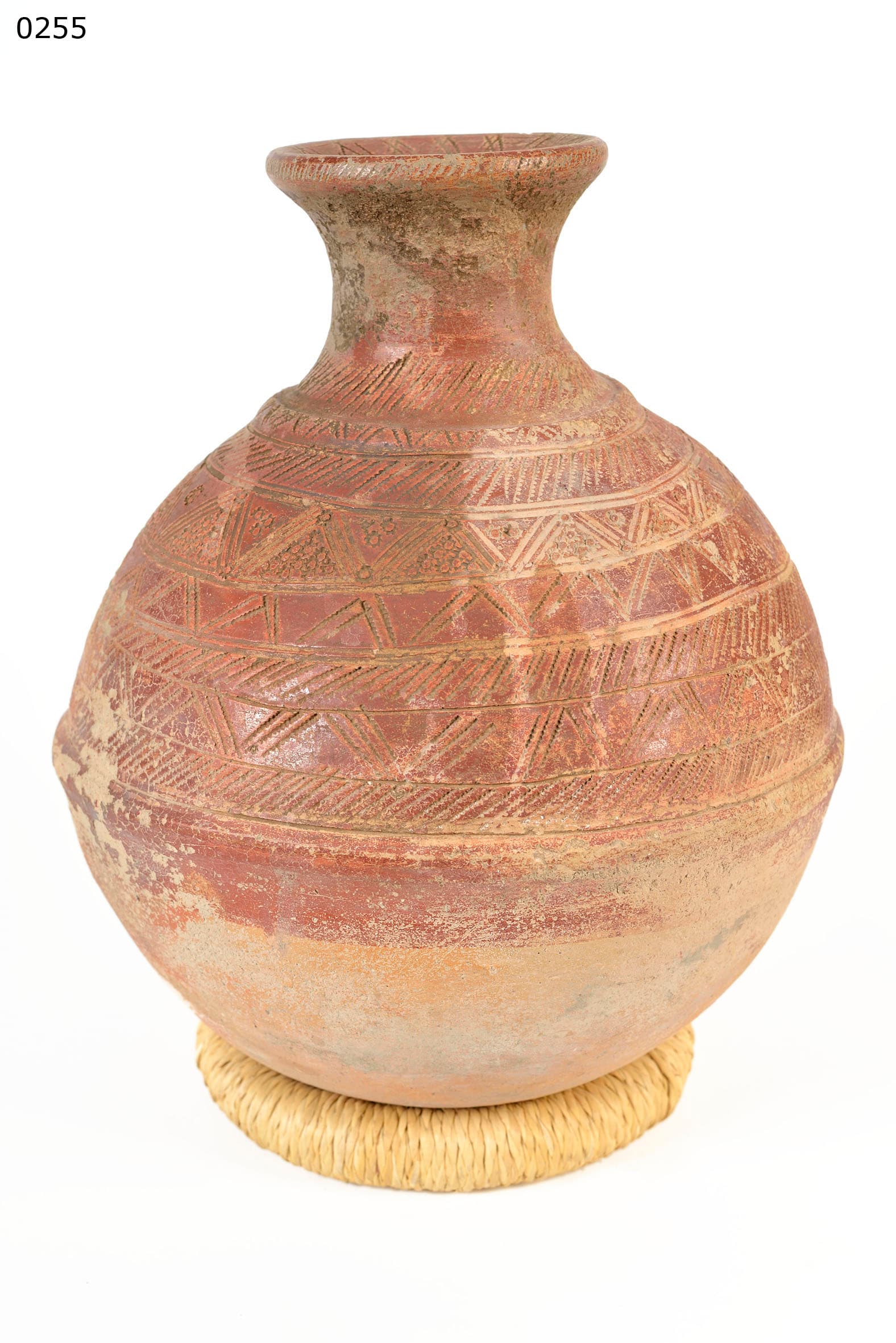
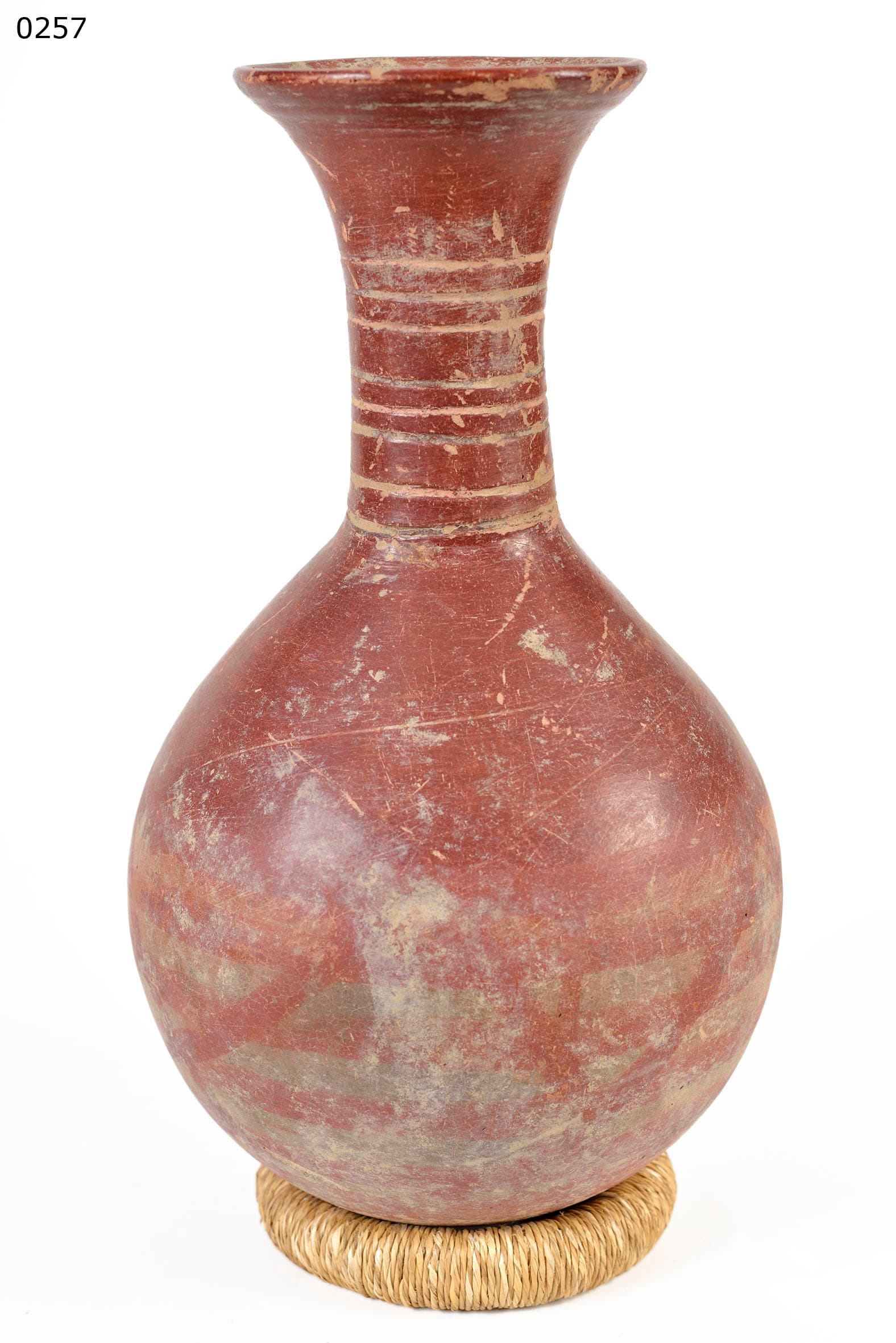
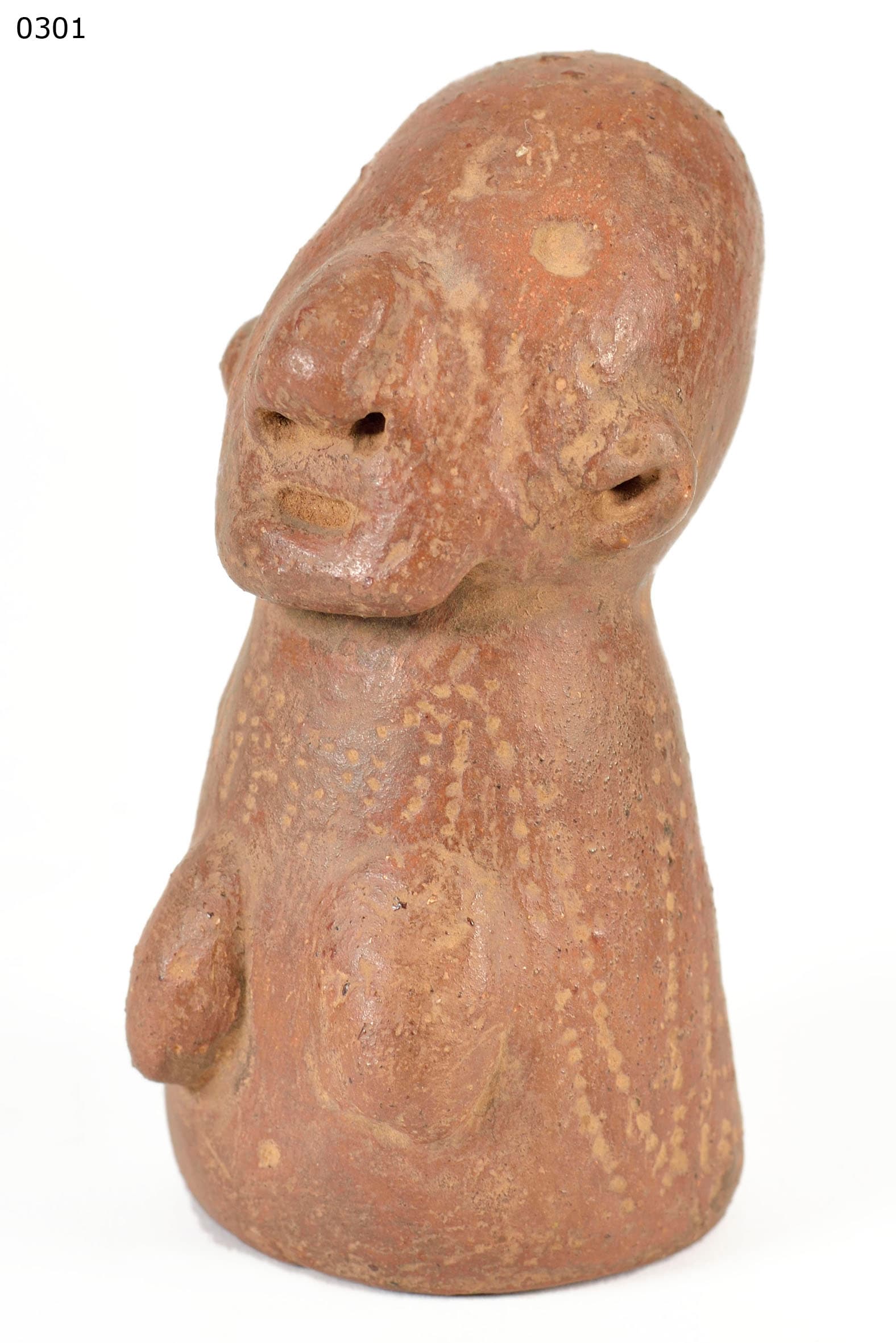
Diese beiden Bronzefiguren weisen eine starke Abschwächung auf; die eine stellt eine langgestreckte sitzende Figur dar, während die andere eine stehende Frau zeigt, die vollständig von einem großen, verzierten ovalen Rahmen oder einer schildartigen Armatur umschlossen ist. Beide weisen eine dichte, krustige, erdfarbene Patina auf.
1. Ästhetischer Stil und regionale Merkmale
Die Bronzen aus dem Inland des Nigerdeltas (Djenné) zeichnen sich durch ihre surreale, fast fließende Verlängerung der menschlichen Gestalt aus. Die von einem großen ovalen Rahmen umschlossene Figur stellt eine technisch anspruchsvolle Ausführung des Wachsausschmelzverfahrens dar. Dieser strukturelle Ring hat einen hohen Symbolgehalt - er kann eine kosmische Grenze, eine Aura des spirituellen Schutzes oder eine symbolische Gebärmutter darstellen, die den verehrten weiblichen Geist von bösartigen irdischen Kräften isoliert. Das Kompositionsschema der umrahmten Figur taucht an mehreren Fundorten in Djenné auf und gilt als charakteristisches ikonografisches Merkmal der Region.
2. Rituelle Funktion und persönliche Amulette
Angesichts ihrer geringen Größe (9 und 12 cm) handelt es sich bei diesen Objekten wahrscheinlich um persönliche Amulette oder spezielle Votivgaben. Die weiblichen Formen deuten darauf hin, dass sie in Fruchtbarkeitsriten oder Kulten zum Schutz der Mütter verwendet wurden. Es wird angenommen, dass sie von Eliten getragen oder unter Behausungen vergraben wurden und als dauerhafte Anker dienten, um den Segen der Ahnen zu erbitten und die Erdgeister des Niger zu besänftigen. Ihre Tragbarkeit oder ihre Ablage hatte jeweils unterschiedliche funktionale Auswirkungen - tragbare Amulette reisten mit ihren Besitzern, während vergrabene Opfergaben bestimmte Orte heiligten.
3. Physische Patina und Altersnachweis
Die tiefe, körnige Patina, die beide Figuren bedeckt, gilt als Indiz für eine langfristige Vergrabung in den korrosiven Böden des malischen Beckens. Die dicke Anhäufung von oxidiertem Kupfer (Grünspan) und gehärteter Erde hat die feinen Gesichtsdetails und die strukturierte Umrahmung verwischt, was eine zeitliche Einordnung ihrer archäologischen Herkunft in das 12. bis 16. Jahrhundert stützt. Die unterschiedliche Korrosion auf den Oberflächen der Figuren ist vereinbar mit der Annahme, dass sie über lange Zeiträume den schwankenden Bedingungen des Niger-Auengebiets ausgesetzt waren.
Zusammenfassung
Diese beiden Djenné-Bronzen verdeutlichen die für diese Kultur typische Abschwächung und die komplexe symbolische Gestaltung. Ihr anspruchsvolles Wachsausschmelzverfahren und ihre dichte Patina sprechen für eine Zuordnung zur historischen malischen Metallurgie.
KI-unterstützt erstellt aus Sammlungsgutachten, Objektfotografie und eigener Recherche, redaktionell geprüft. Fehler sind möglich — Hinweise darauf sind uns willkommen. Zum Verfahren →