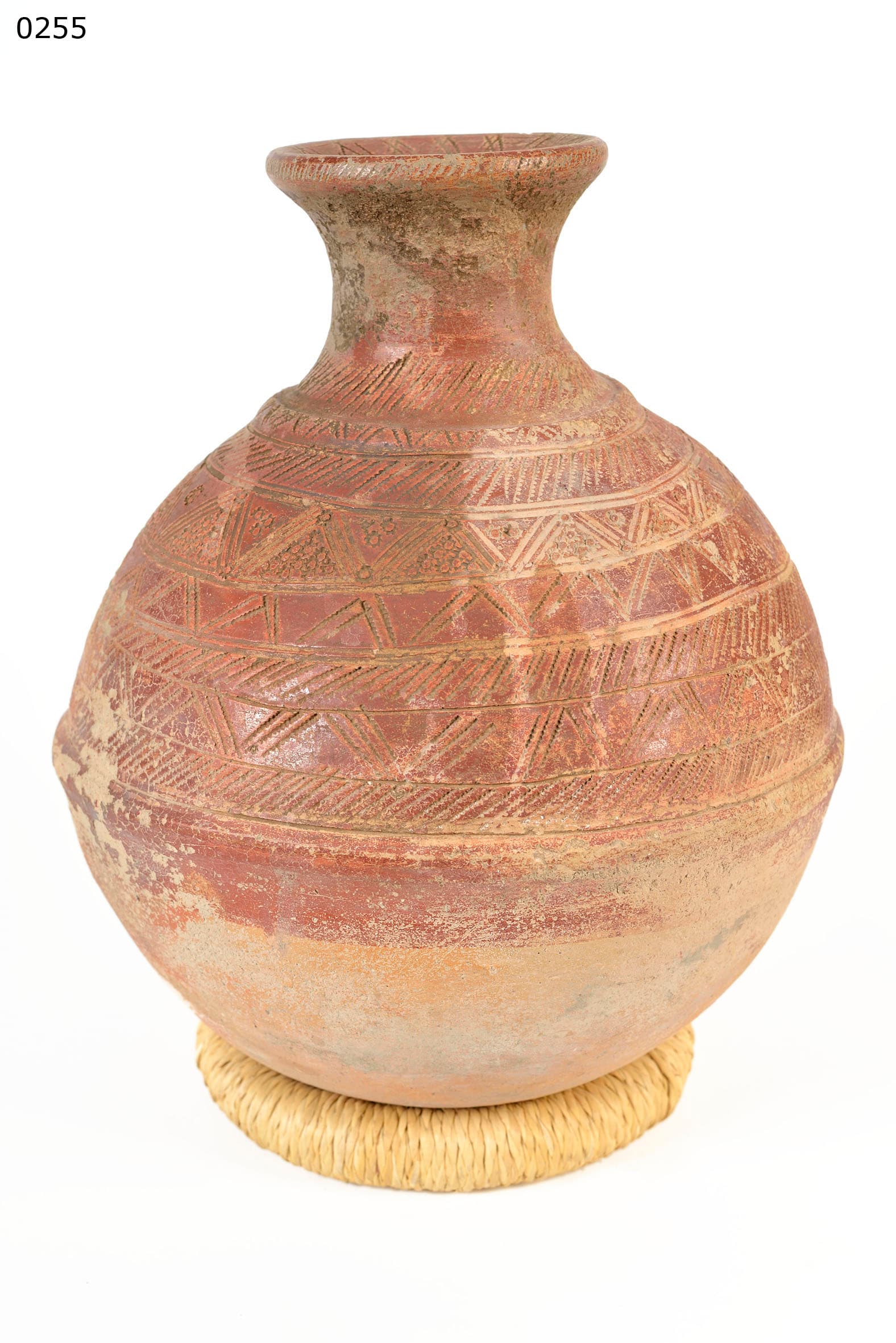
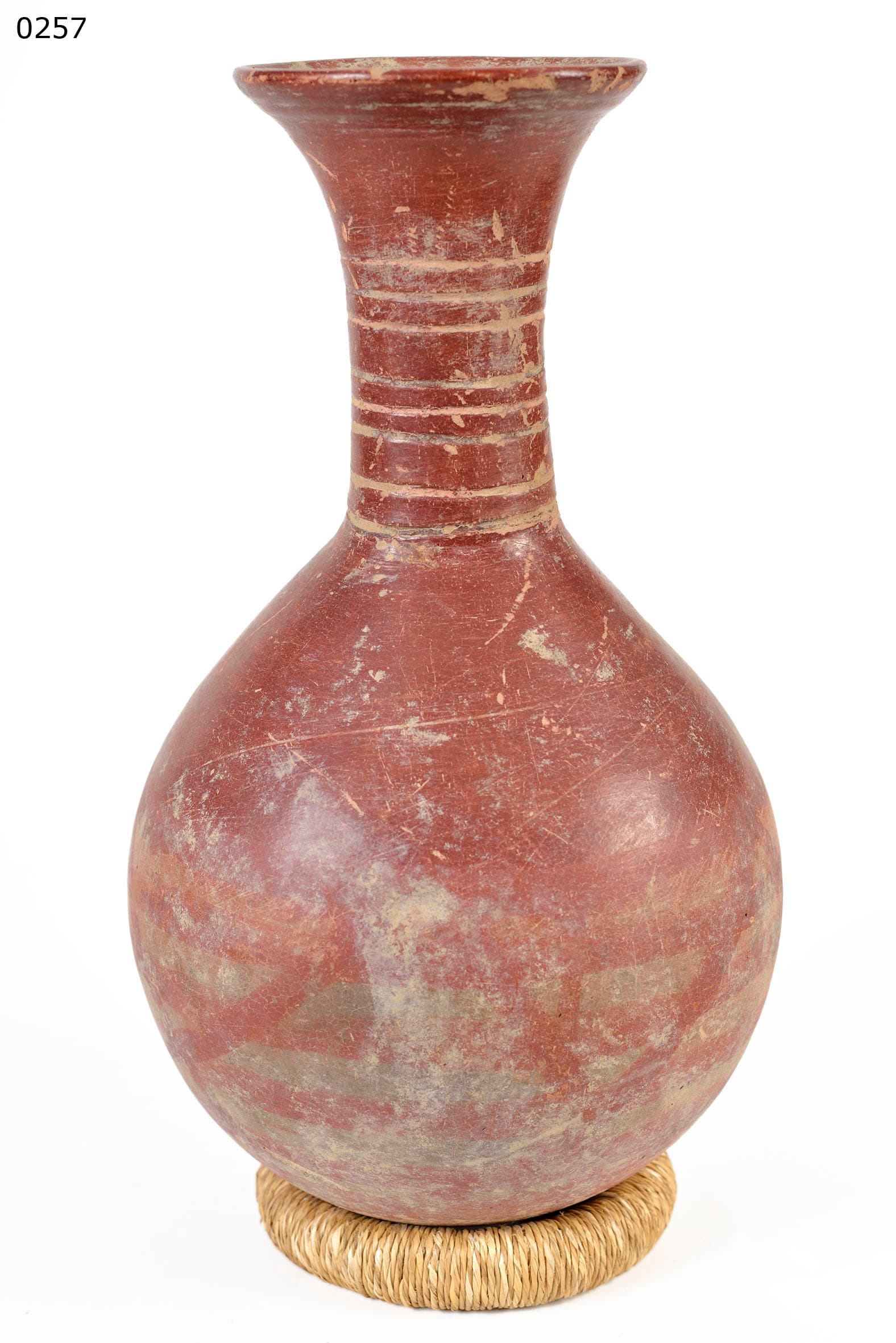
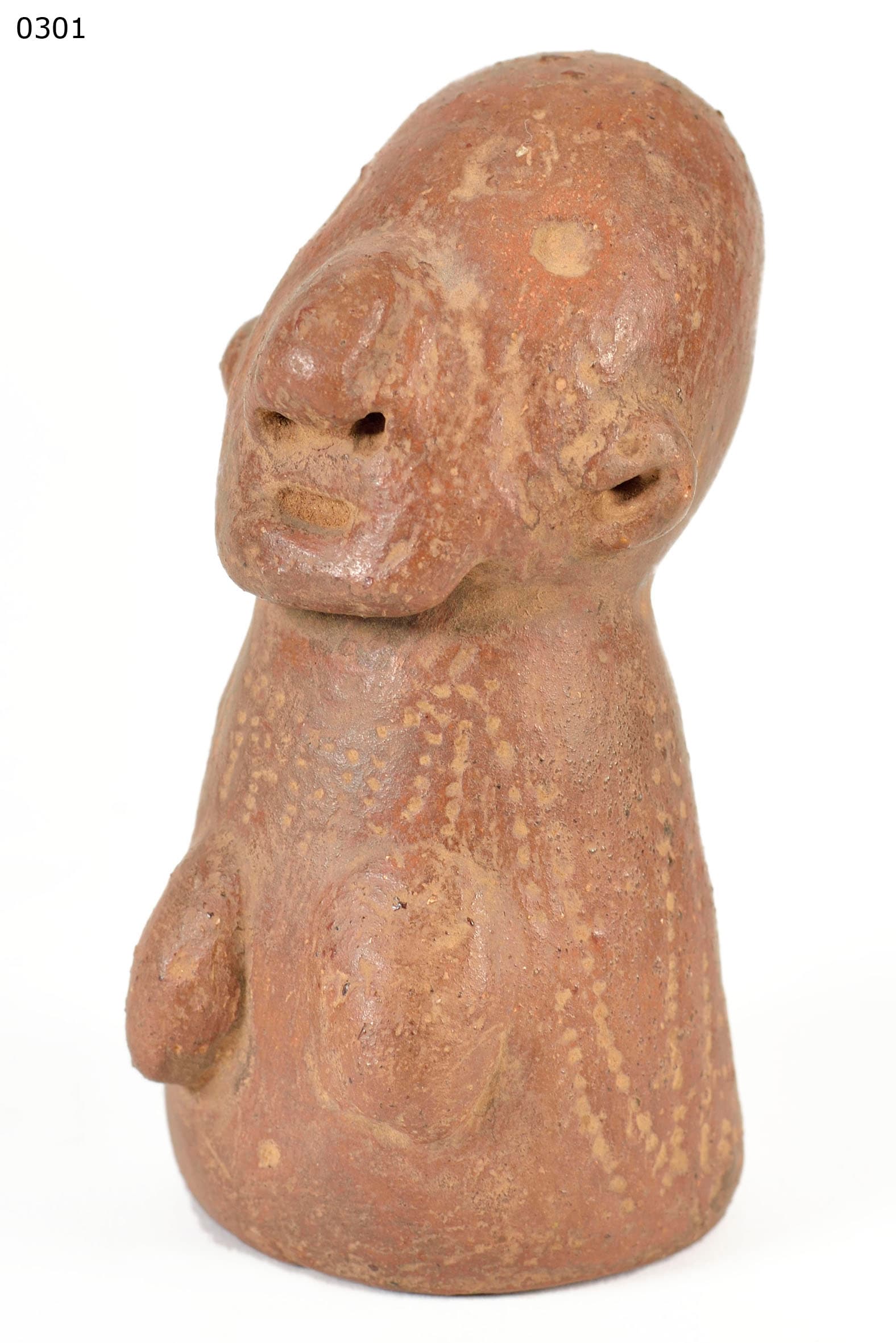
Drei winzige antike Bronzefragmente, die stark stilisierte Figuren darstellen: eine schwache stehende Figur, eine kniende Frau und eine explizite Figur mit einem stark übertriebenen, übergroßen Phallus, der sich nach oben erstreckt. Alle Fragmente tragen tiefgreifende, grün-braune archäologische Verkrustungen.
1. Ästhetischer Stil und regionale Charakteristika
Die Zivilisation des Nigerdeltas im Landesinneren (Djenné) produzierte häufig Votivobjekte mit sehr deutlichen sexuellen Merkmalen. Die Figur mit dem massiven, nach oben gerichteten Phallus ist eine rohe, wörtliche Beschwörung der Zeugungskraft und der landwirtschaftlichen Fruchtbarkeit. In einer Kultur, die stark von den jährlichen Überschwemmungen des Niger abhängig war, wurden extreme Darstellungen von Männlichkeit verwendet, um die Erde auf magische Weise zu befruchten und reiche Ernten zu sichern. Die explizite Ikonografie fügt sich in eine breitere Djenné-Ästhetik ein, die durchweg der operativen symbolischen Klarheit den Vorzug vor visuellem Euphemismus gibt.
2. Rituelle Funktion und Votiv-Cache
Mit einer Größe von nur wenigen Zentimetern pro Stück waren diese winzigen Abgüsse nicht für die öffentliche Zurschaustellung gedacht. Sie waren hochspezialisierte, intime Votivgaben, die in der Erde, an Stadtmauern oder in persönlichen Schreinen deponiert wurden. Die kniende weibliche Figur und die stehende Figur begleiteten die phallische Figur wahrscheinlich als Teil eines komplexen rituellen Caches und dienten gemeinsam dazu, anspruchsvolle lokale Gottheiten oder Ahnen zu besänftigen. Solche mehrfigurigen Hinterlegungen stellten eher eine komplette rituelle Miniaturszene dar als eine einzelne ikonografische Aussage.
3. Physische Patina und Altersnachweis
Die tiefe Malachit-(Grünspan-)Oxidation, der vollständige Verlust des metallischen Glanzes und der in den Ritzen dieser Miniaturen verhärtete, verkalkte Schmutz lassen sich unmöglich künstlich nachbilden. Diese schwerwiegenden chemischen Veränderungen bestätigen, dass sie viele Jahrhunderte lang in den korrosiven Böden von Mali vergraben waren, was ihre archäologische Herkunft aus dem 12. bis 16.
Zusammenfassung
Diese drei winzigen malischen Bronzen gewähren einen intimen Einblick in die Fruchtbarkeitsmagie und Votivpraktiken des antiken Inland-Niger-Deltas. Aufgrund ihrer extremen Miniaturisierung und der tiefgreifenden archäologischen Verwitterung sind sie als hochbedeutende Altertümer einzustufen.
KI-unterstützt erstellt aus Sammlungsgutachten, Objektfotografie und eigener Recherche, redaktionell geprüft. Fehler sind möglich — Hinweise darauf sind uns willkommen. Zum Verfahren →