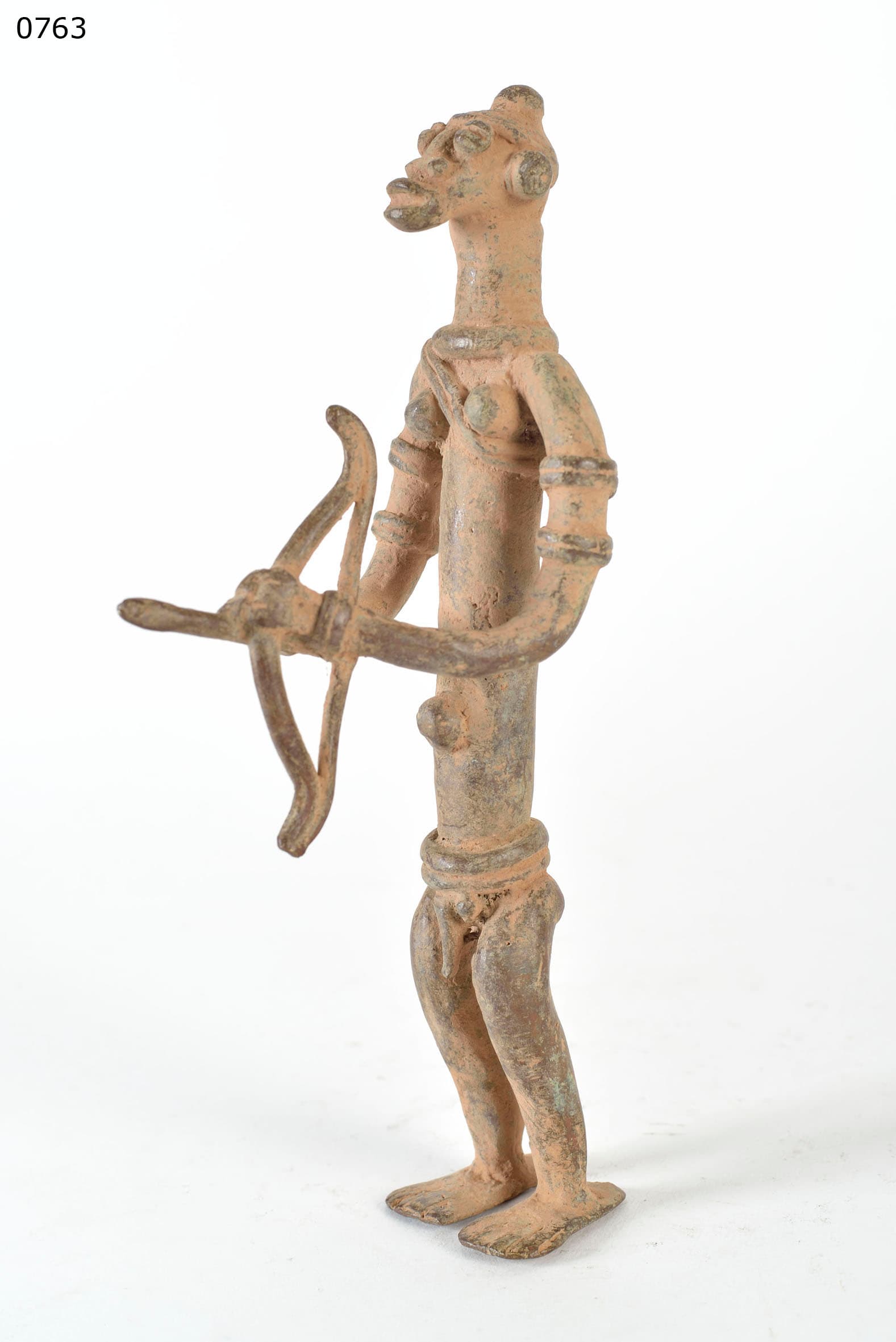
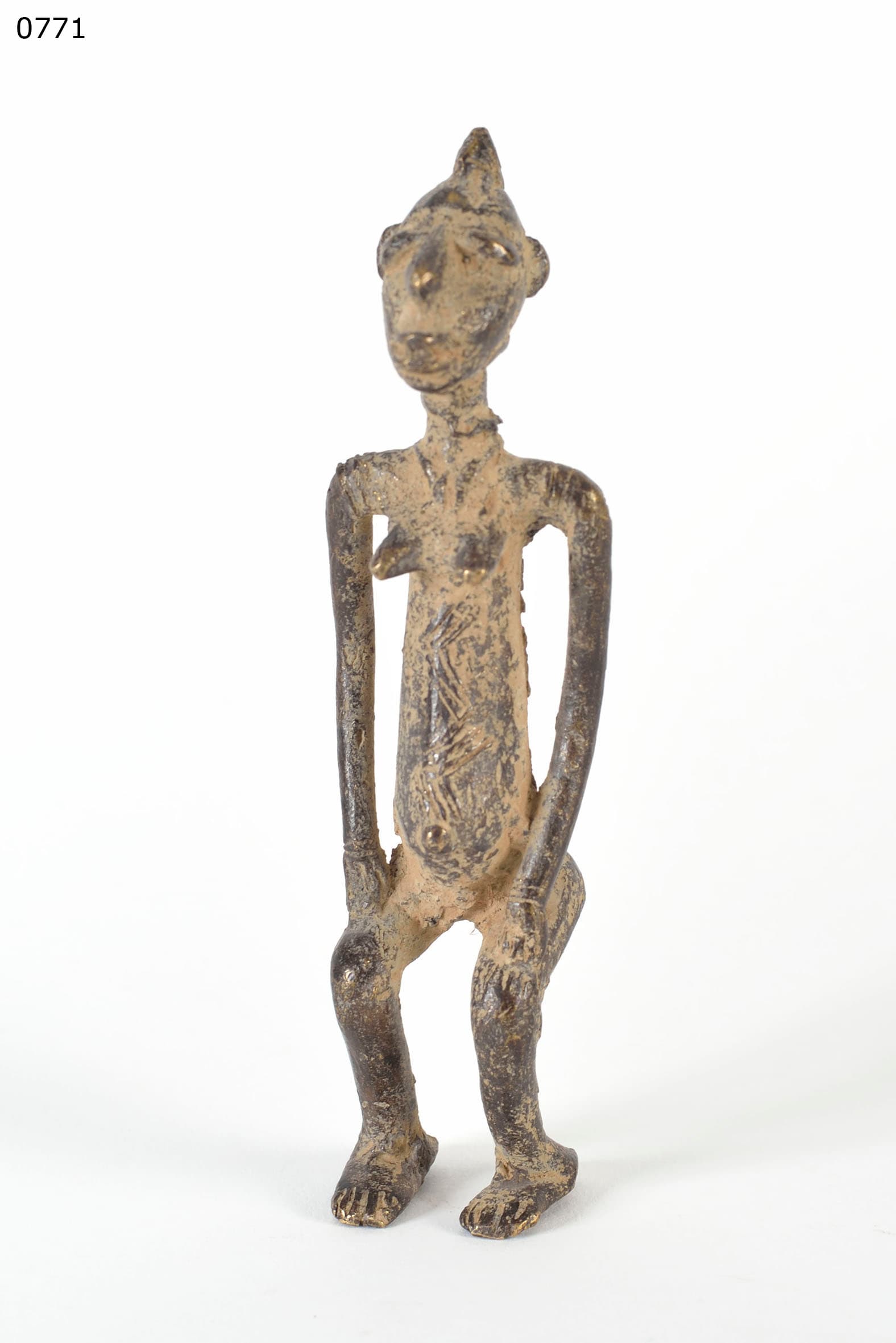
Dieses Stück ist einer von drei historischen zoomorphen Gan-Bronzegüssen und zeigt zwei stilisierte, langgestreckte Schlangenfiguren mit gewellten Körpern. Die Bronze weist eine tiefe, krustige, grün-braune archäologische Patina auf.
1. Ästhetischer Stil und regionale Merkmale
Das Volk der Gan verwendete in seinen alten Metallarbeiten ein sehr spezifisches und starkes Vokabular zoomorpher Symbole. Schlangen werden allgemein mit Unsterblichkeit, den Ahnen und der Überbrückung von Erde und Unterwelt assoziiert. Die wellenförmigen Körper dieser Schlangen betonen die fließende, transformative Natur des spirituellen Bereichs, den sie repräsentieren. Die Oberflächentextur dieser Figuren, die Schuppen nachahmt, unterstreicht das technische Können der Gan-Schmiede innerhalb des etablierten Gan-Zoomorphen-Korpus.
2. Rituelle Funktion und königliche Embleme
Diese komplexen Bronzetiere waren nicht nur Dekoration. Sie fungierten als wichtige Bestandteile königlicher oder hochrangiger Gemeinschaftsschreine. Insbesondere die Schlangenmotive wurden oft mit dem Königshaus von Gan in Verbindung gebracht und dienten als Schutzsymbole, die Feinde vor der mächtigen, verborgenen Kraft des Geschlechts warnten. Auf Altären deponiert, fungierten sie als ständige, örtlich begrenzte Fürsprecher, um die Forderungen der Naturgeister zu beschwichtigen.
3. Physische Patina und Altersnachweis
Das Überleben dieser komplexen Gussstücke ist bemerkenswert. Ihre Oberflächen sind vollständig von einer dicken, ungereinigten Oxidationsschicht aus Malachit (grün) und Cuprit (rötlich-braun) bedeckt, die mit verkalkten Tonablagerungen vermischt ist. Diese intensive chemische Zersetzung und die tiefe Vergrabungskruste sprechen für eine archäologische Herkunft, die mit einer Datierung in das 16. bis 19. Jahrhundert vereinbar ist.
Zusammenfassung
Diese Gan-Serpentinbronze bietet einen faszinierenden Einblick in die komplexen mythologischen und metallurgischen Traditionen des alten Burkina Faso. Ihr stark strukturierter Guss und die ausgeprägte archäologische Patinierung machen sie zu einem bemerkenswerten historischen Artefakt.
KI-unterstützt erstellt aus Sammlungsgutachten, Objektfotografie und eigener Recherche, redaktionell geprüft. Fehler sind möglich — Hinweise darauf sind uns willkommen. Zum Verfahren →