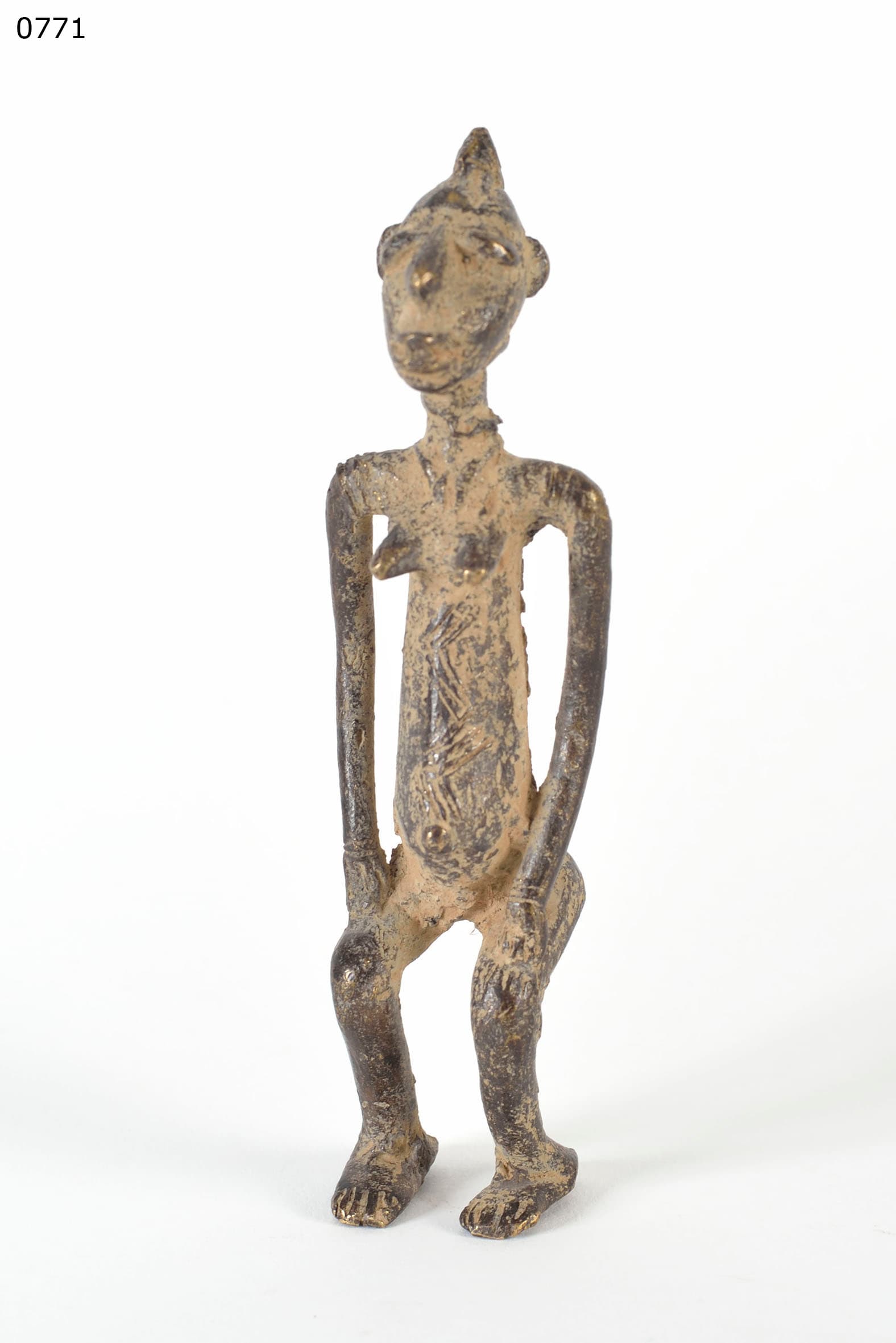
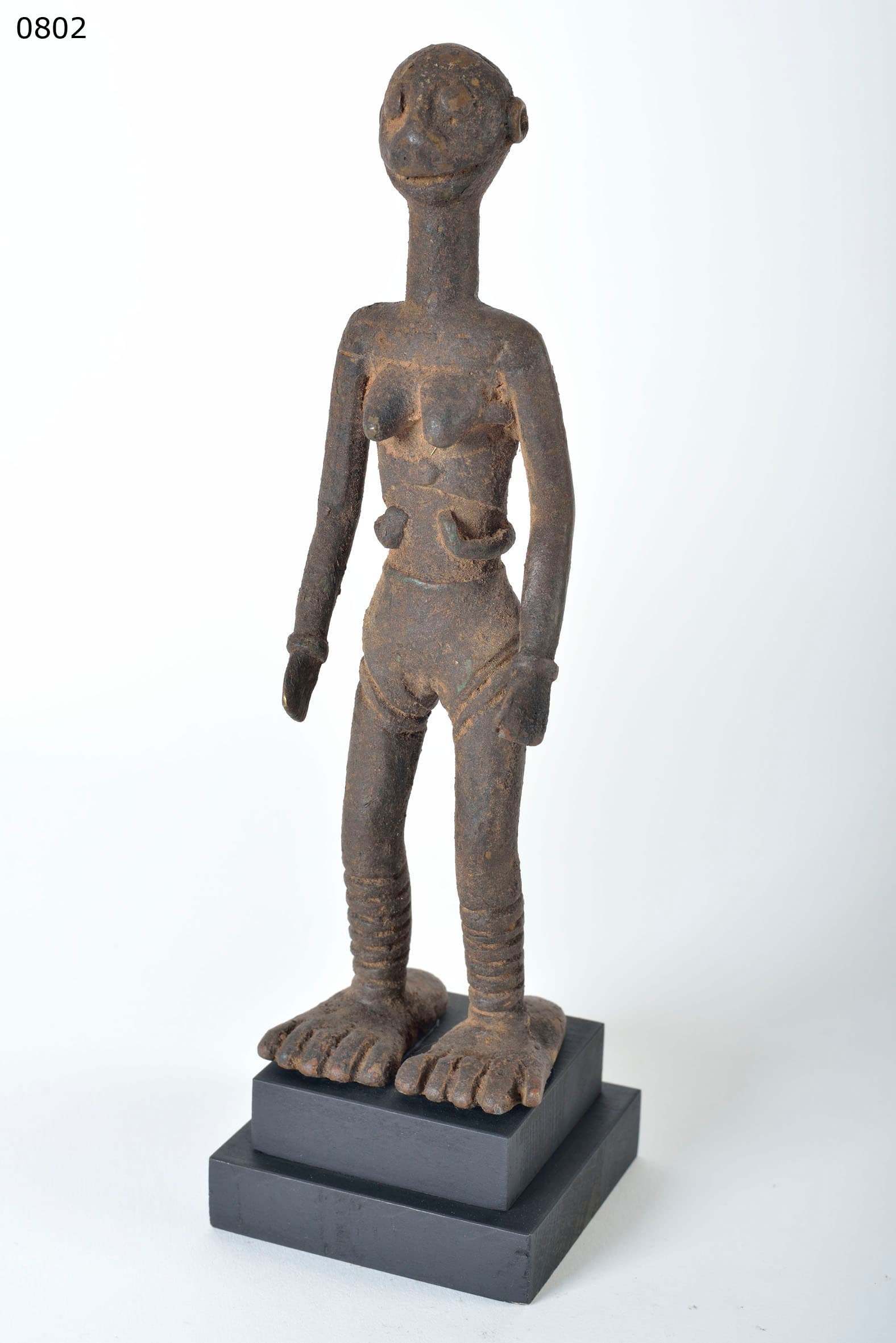
Eine stilisierte, langgestreckte, aufrecht stehende Bronzefigur, die in beiden Händen einen großen Bogen hält. Die Figur hat abstehende, scheibenförmige Ohren, einen verlängerten Hals und eine trockene, stark oxidierte, krustige grün-braune Patina.
1. Ästhetischer Stil und regionale Eigenheiten
Diese Figur zeigt die für die antike Gan-Bronze typische radikale Abstraktion. Die menschliche Form ist stark verkürzt, mit einem röhrenförmigen Rumpf und Gliedmaßen, die die geschwungene Form der Waffe, die sie hält, visuell widerspiegeln. Die markanten abstehenden Ohren, die vereinfachten Gesichtszüge und das Fehlen feiner muskulärer Details geben der symbolischen Identität den Vorrang vor anatomischer Genauigkeit und schaffen eine zeitlose, mythische Silhouette. Die Verlängerung und die scheibenförmigen Ohren gelten als charakteristische Gan-Formmarken, die den Korpus von den naturalistischeren Registern der benachbarten Akan- oder Mossi-Bronzen unterscheiden.
2. Rituelle Funktion und kriegerische Ideologie
Die Darstellung eines mit einem Bogen bewaffneten Kriegers ist eine klare Beschwörung der Verteidigung, der Jagdfähigkeit und der Erhaltung der historischen Gesellschaft. Diese Figur, die in einem königlichen oder gemeinschaftlichen Schrein aufbewahrt wurde, repräsentierte wahrscheinlich einen legendären Gründungsvorfahren, einen Helden der Linie oder eine bestimmte kriegerische Gottheit, die dazu diente, das Gan-Königreich auf magische Weise vor physischen und spirituellen Übergriffen zu schützen. Die Rolle der bewaffneten Figur war nicht gedenkend, sondern operativ - ihre Anwesenheit sollte Bedrohungen aktiv abwehren und nicht nur an vergangene Verteidiger erinnern.
3. Physische Patina und Altersmerkmale
Die ausgeprägte Korrosion der Bronze spricht für ein hohes Alter des Objekts. Die Oberfläche ist mit einer dicken, krustigen Schicht aus Cuprit und Malachit (Grünspan) überzogen, was auf ein langes Vergraben oder eine jahrzehntelange Aussetzung an die Umwelt hindeuten kann. Der Verlust von scharfen Gussdetails aufgrund dieser starken Verwitterung ist vereinbar mit Merkmalen historischer westafrikanischer Bronzen, die dem 16. bis 19. Jahrhundert zugeordnet werden. Das unterschiedliche Korrosionsmuster – am stärksten dort, wo sich Feuchtigkeit und Erde konzentrierten – legt eher eine lange natürliche Exposition als eine künstliche Patinierung nahe.
Zusammenfassung
Diese Gan-Kriegerfigur ist ein charakteristisches Beispiel für die stilisierte, martialische Abstraktion in der westafrikanischen Metallurgie. Ihre ausgeprägte Verwitterung und ihre ausdrucksstarke Haltung weisen sie als ein seltenes Zeugnis der Metallkunst aus Burkina Faso aus.
KI-unterstützt erstellt aus Sammlungsgutachten, Objektfotografie und eigener Recherche, redaktionell geprüft. Fehler sind möglich — Hinweise darauf sind uns willkommen. Zum Verfahren →