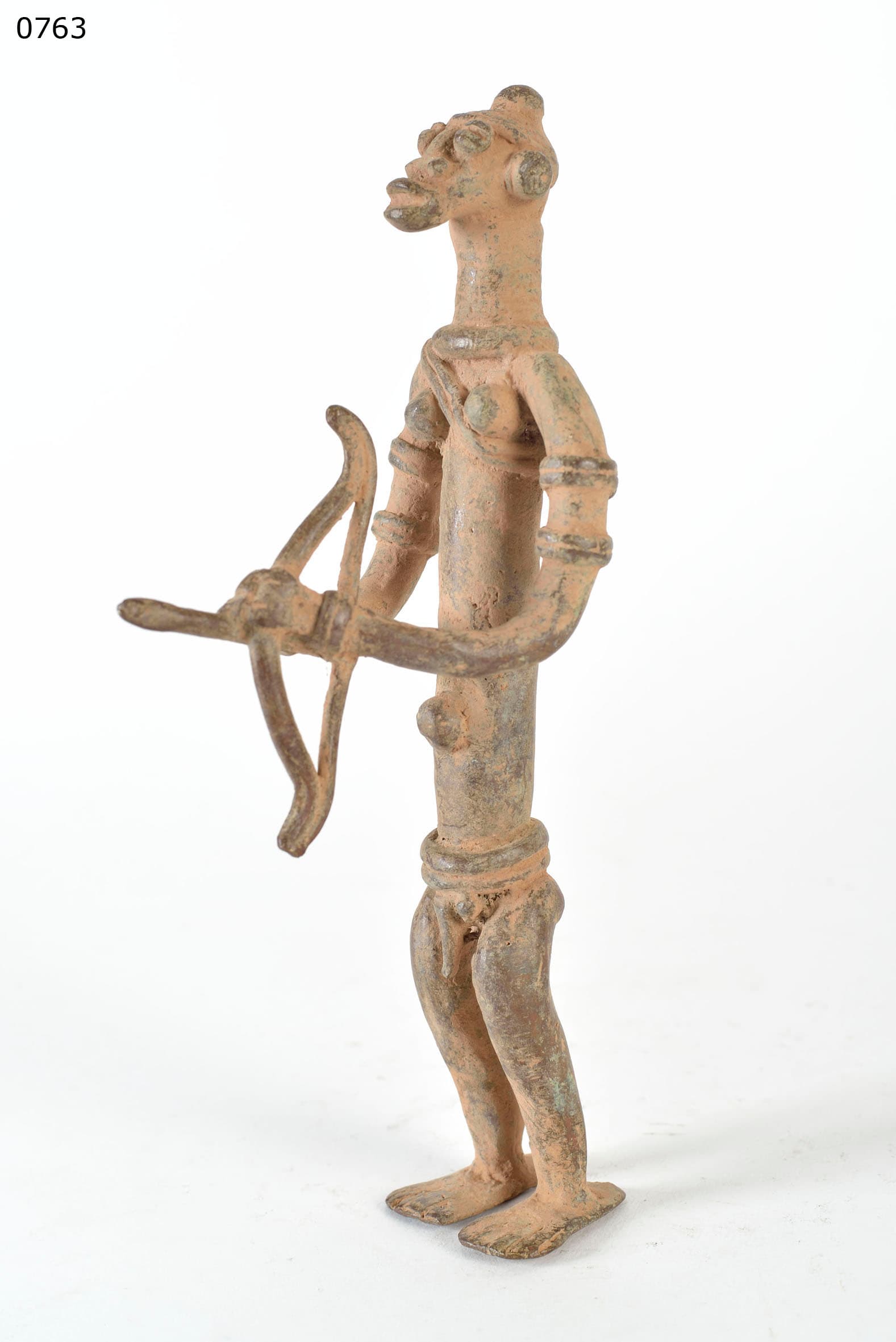
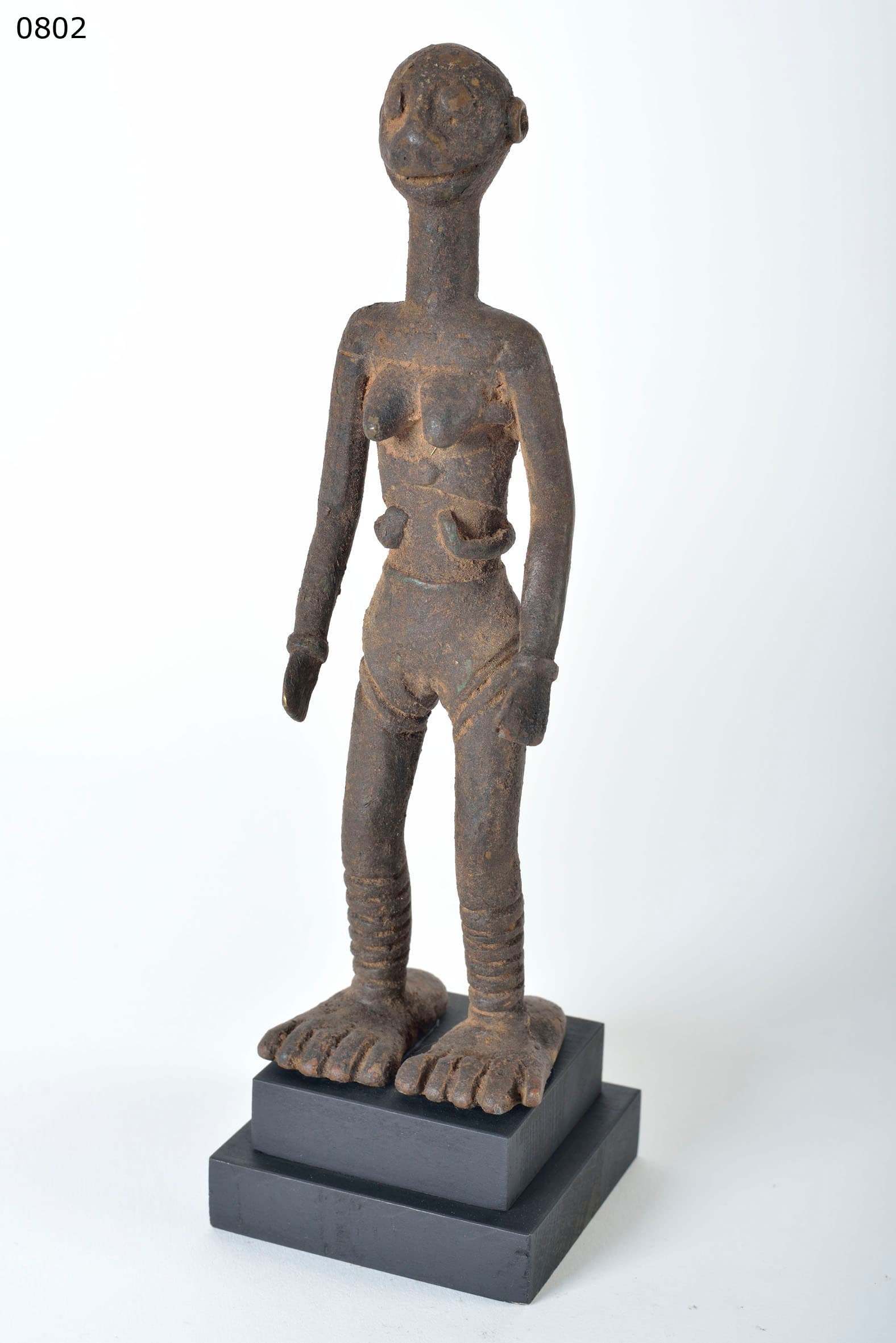
Eine kleine, stark abgeschwächte weibliche Bronzefigur, die mit leicht gebeugten Knien und in der Nähe der Hüften abgestützten Armen steht und von einem spitz zulaufenden, konischen Kopf gekrönt wird. Das Metall ist stark mit einer trockenen, verkrusteten, grünspan- und erdfarbenen Patina überzogen.
1. Ästhetischer Stil und regionale Merkmale
Die Gan sind berühmt dafür, dass sie in ihren Bronzegüssen die menschlichen Proportionen ins Surreale treiben. Diese Figur ist ein Paradebeispiel dafür. Sie zeichnet sich durch ihre extreme, drahtartige Schlankheit und den höchst ungewöhnlichen, scharf zugespitzten konischen Kopf aus. Es handelt sich nicht um ein Porträt, sondern um die formalisierte, mythologische Darstellung eines antiken Geistes, die von hochspezialisierten Schmiedepriestern gegossen wurde. Die Gan-Bronze geht in ihren formalen Signaturen über die benachbarten Traditionen hinaus - ihre Groteske ist selbst das regionale Markenzeichen.
2. Rituelle Funktion und schützende Verehrung
Aufgrund ihrer geringen Größe (13 cm) diente diese Figur wahrscheinlich in einem intimen, persönlichen Schutzkontext oder als Nebenfigur in einem größeren königlichen Schrein. Aus dauerhafter, unbestechlicher Bronze gegossen, sollte sie als ewiger, unerschütterlicher Wächter dienen, der die Gebete der Lebenden im Reich der Ahnen verankert und geistige Verunreinigungen abwehrt. Die Wahl von Bronze anstelle von Holz signalisiert ein langfristiges institutionelles Engagement - Bronzefiguren überdauern ihre Auftraggeber um Jahrhunderte, während Holzfiguren innerhalb von Jahrzehnten verrotten.
3. Physische Patina und Altersnachweis
Das hohe Alter dieses Stücks ist auf seiner Oberfläche zu erkennen. Die Bronze wurde chemisch stark zersetzt, was zu einer dicken, krustigen Oxidationsschicht aus Malachit (grün) und Cuprit (rot/braun) führte, die die feineren Gussdetails verdeckt. Diese starke archäologische Verwitterung steht im Einklang mit einer Datierung auf das 16. bis 19. Jahrhundert und deutet auf eine lange Vergrabung oder Exposition hin. Die Korrosion durchdringt das Metallsubstrat und überzieht nicht dessen Oberfläche, was eine nachträgliche chemische Patinierung ausschließt.
Zusammenfassung
Eine exquisite und surrealistische antike Gan-Bronze, die die einzigartige Vorliebe dieser Kultur für langgestreckte, mythologische Abstraktionen widerspiegelt. Ihre tiefe, stark oxidierte archäologische Patina macht sie zu einem höchst bedeutenden Überbleibsel der alten Metallurgiegeschichte Burkina Fasos.
KI-unterstützt erstellt aus Sammlungsgutachten, Objektfotografie und eigener Recherche, redaktionell geprüft. Fehler sind möglich — Hinweise darauf sind uns willkommen. Zum Verfahren →