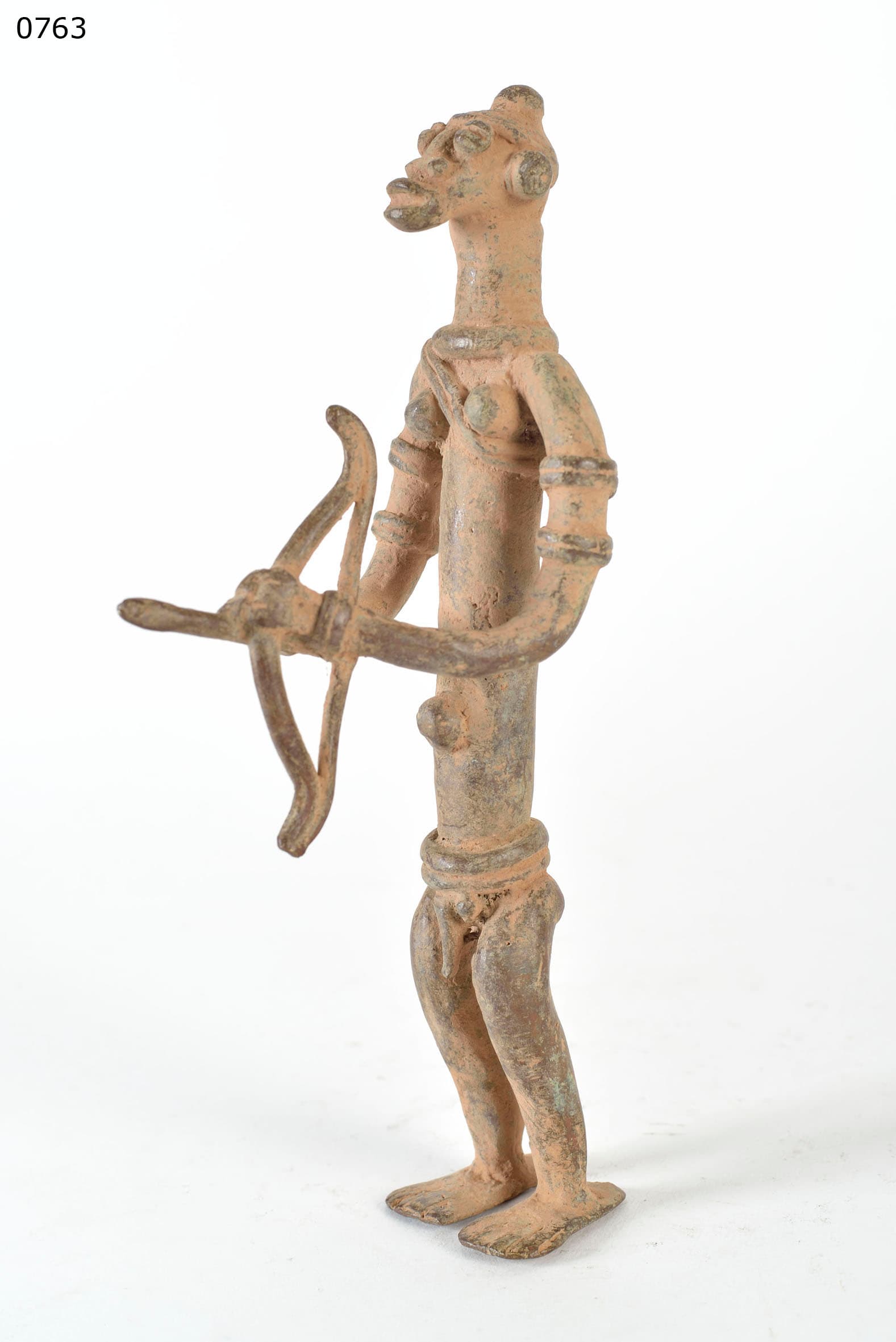
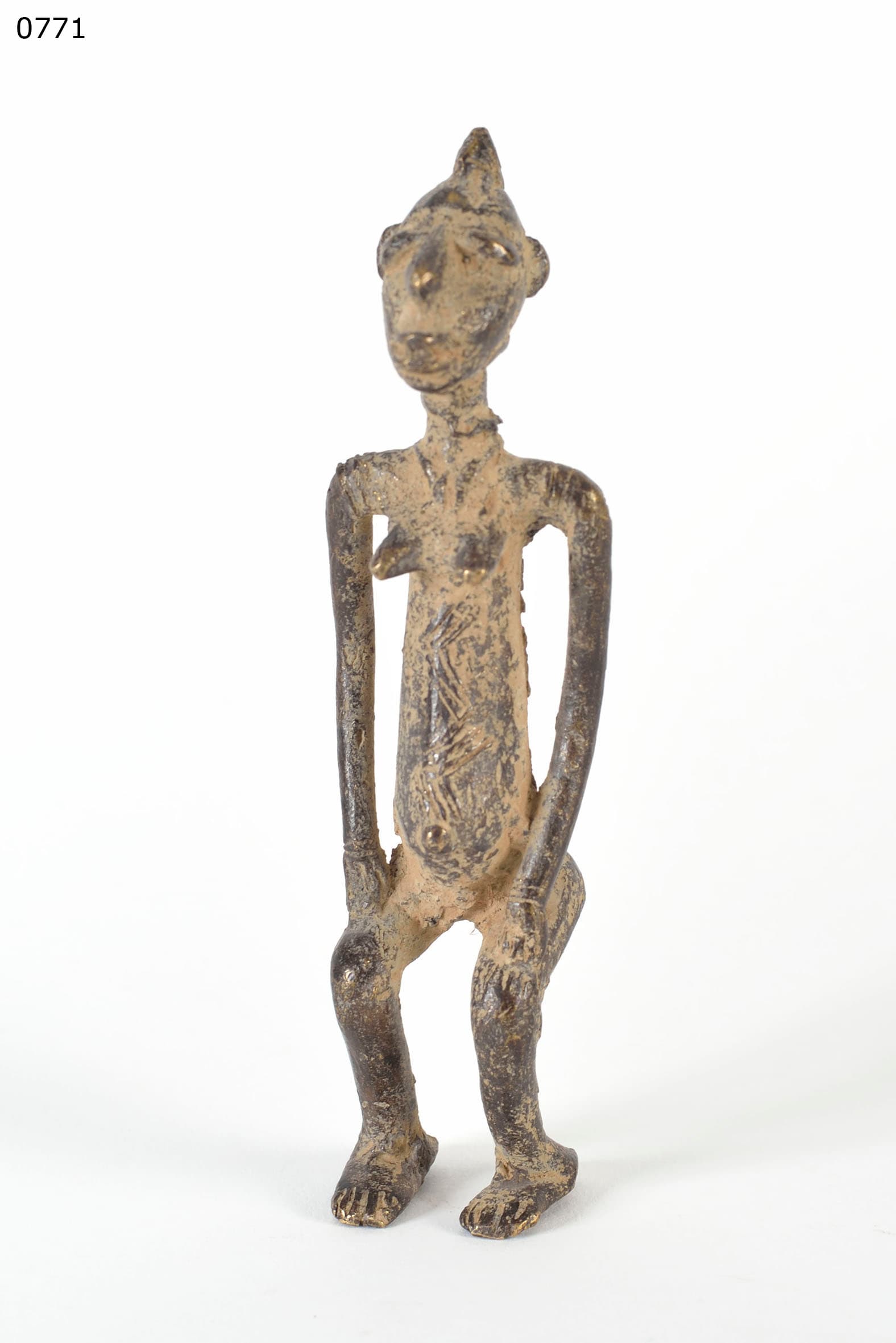
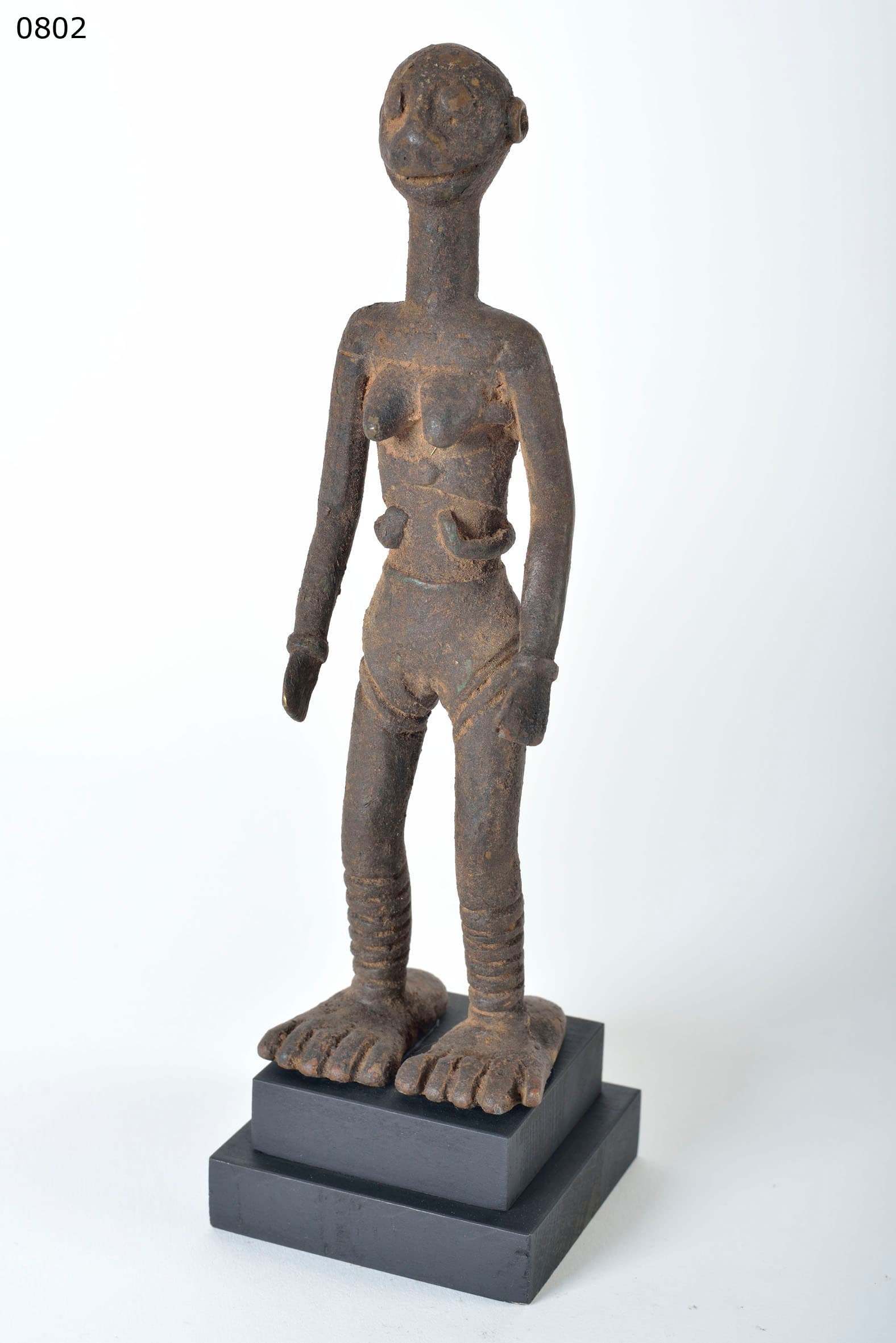
Bei diesem seltenen Paar handelt es sich um zwei stilisierte Bronzefiguren mit auffälligen, entenartigen, vorspringenden Mündern, die nebeneinander auf einer Miniaturbank sitzen. Das Metall weist erhebliche archäologische Alterungserscheinungen auf, die sich in einer trockenen, matten, grünspanhaltigen Patina und einer deutlichen Oberflächenerosion äußern.
1. Ästhetischer Stil und regionale Charakteristika
Das Volk der Gan in Burkina Faso ist bekannt für seine höchst charakteristischen, fast surrealen Bronzegüsse. Die übertriebenen, schnabelartigen Münder und hervorstehenden Augen dieser Figuren sind diagnostische Merkmale der alten Gan-Metallarbeiten, die die menschliche Darstellung in den Bereich des Mythologischen und Jenseitigen drängen. Im Gegensatz zu den eher naturalistischen Formen der Akan- oder Mossi-Bronze ist die Gan-Sprache von einer aggressiven Groteske geprägt, die den spirituellen Ernst durch eine visuelle Störung zum Ausdruck bringt.
2. Rituelle Funktion und ahnenhafte Dualität
Darstellungen von Paaren in der westafrikanischen Kunst stellen in der Regel Urväter oder bedeutende Ahnenpaare dar. Die physische Verbindung der beiden Figuren auf einer gemeinsamen Bank unterstreicht die Themen Einheit, Kontinuität der Abstammung und ausgewogene Geschlechterrollen im spirituellen Bereich. Wahrscheinlich wurden diese Figuren in einem königlichen oder häuptlinglichen Schrein aufbewahrt, um die gesellschaftliche Stabilität zu gewährleisten. Die dauerhafte Paaranordnung des Paares verkörperte die grundlegende Zusammenarbeit zwischen männlichen und weiblichen Vorfahren, die die lebende Gemeinschaft benötigte, um Generation für Generation wiederherzustellen.
3. Physische Patina und Altershinweise
Die trockene, stark oxidierte Oberfläche - dominiert von Malachitgrün und tiefem Lochfraß - deutet darauf hin, dass dieses Stück jahrhundertelang vergraben oder unter stark exponierten Bedingungen aufbewahrt wurde. Die Datierung auf das 16. bis 19. Jahrhundert ist mit der beobachteten starken metallurgischen Zersetzung vereinbar und stützt die Einordnung als historisches Altertum. Die Tiefe der Korrosion durchdringt das Metall, anstatt es zu überziehen, ein Muster, das sich in den eisenhaltigen lateritischen Böden im Südwesten Burkina Fasos über mehrere Jahrhunderte hinweg entwickeln kann.
Zusammenfassung
Diese seltene Gan-Bronze zeigt die surreale, langgestreckte Ästhetik, die für diese Kultur charakteristisch ist. Seine tiefe archäologische Patina und der komplexe, paarweise Guss machen es zu einem bedeutenden Zeugnis der alten westafrikanischen Kunst.
KI-unterstützt erstellt aus Sammlungsgutachten, Objektfotografie und eigener Recherche, redaktionell geprüft. Fehler sind möglich — Hinweise darauf sind uns willkommen. Zum Verfahren →