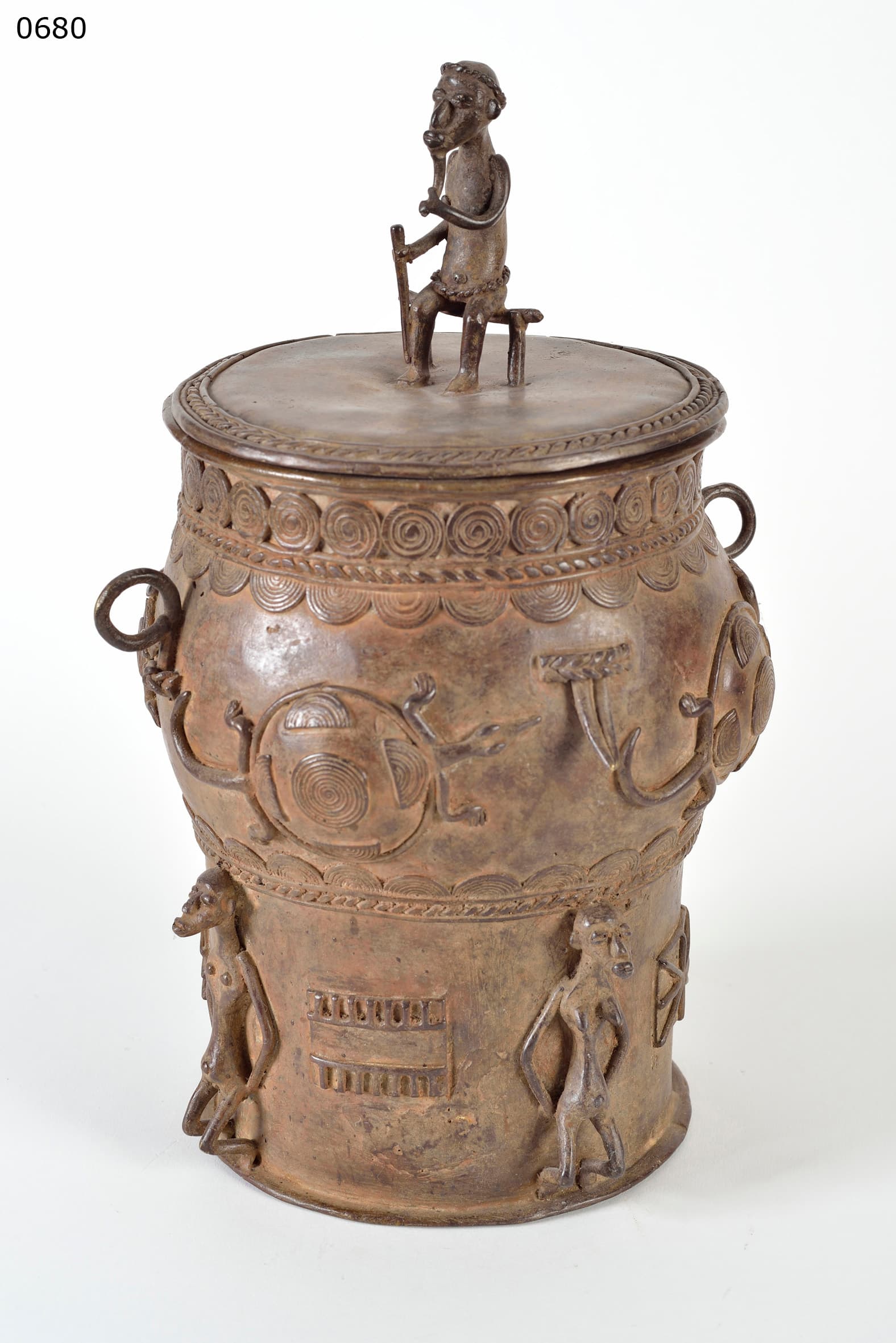
Zwei kleine, sorgfältig gegossene Messingfiguren, die männliche Musiker darstellen. Die eine Figur hält eine Flöte oder ein Horn an den Mund, während die andere eine große Trommel trägt. Beide weisen detaillierte Gesichtszüge und eine glatte, goldbraune, oxidierte Patina auf.
1. Ästhetischer Stil und regionale Eigenheiten
Diese beiden Figuren sind charakteristische Beispiele für den Messingguss mit verlorenem Wachs aus Akan (Asante), eine Tradition, die vor allem mit Goldgewichten (mrammuo) in Verbindung gebracht wird. Figuren dieser Komplexität und Größe (10 cm) gingen jedoch oft über den bloßen wirtschaftlichen Nutzen hinaus und dienten als Prestigeobjekte, sprichwörtliche Illustrationen oder königliche Ausstellungsstücke. Die feinen Details der Musikinstrumente und die ausgeprägten Körperhaltungen verdeutlichen das handwerkliche Geschick der Asante-Gießergilden. Der Übergang vom Goldgewicht zum Ausstellungsstück markiert eine wichtige Entwicklung innerhalb des Akan-Messingkorpus.
2. Rituelle Funktion und Hofmusik
Am stark strukturierten Hof der Asante waren Musiker unerlässlich, um die Anwesenheit des Königs (Asantehene) anzukündigen, Botschaften zu übermitteln und die Ahnen zu ehren. Diese Figuren stellen wahrscheinlich bestimmte Hofmusiker dar. Darüber hinaus könnte eine Figur, die ein Horn bläst, in der sprichwörtlichen Tradition der Akan das Sprichwort "Der Hornbläser bläst nicht für sich allein" symbolisieren, das die Verantwortung der Gemeinschaft und die Verstärkung der Stimme des Königs betont. Die sprichwörtliche Bedeutung steht parallel zu der dargestellten Tätigkeit, wodurch das Objekt gleichzeitig dekorativ und didaktisch ist.
3. Physische Patina und Altershinweise
Die Oberfläche dieser Figuren zeigt Spuren, die für ihr Alter und einen aktiven Gebrauch sprechen. Die hohen Punkte der Gesichter, die Instrumente und die Gliedmaßen sind durch jahrzehntelange Handhabung glatt gerieben und haben einen warmen, goldbraunen Farbton angenommen, wahrscheinlich weil sie beim Geschichtenerzählen oder bei finanziellen Transaktionen bewegt wurden. Die tieferen Vertiefungen weisen eine dunklere Oxidation und subtilen Grünspan auf, was eine Herkunft aus dem 19. Jahrhundert nahelegt.
Zusammenfassung
Ein detailliertes Paar Asante-Musikanten aus Messing, das die Tradition dieser Kultur im Miniaturguss und im sprichwörtlichen Geschichtenerzählen anschaulich illustriert. Ihre glatte, beriebene Patina legt eine Einordnung als Prestigeobjekte des 19. Jahrhunderts nahe.
KI-unterstützt erstellt aus Sammlungsgutachten, Objektfotografie und eigener Recherche, redaktionell geprüft. Fehler sind möglich — Hinweise darauf sind uns willkommen. Zum Verfahren →

Zeremonienstab eines offiziellen Redners
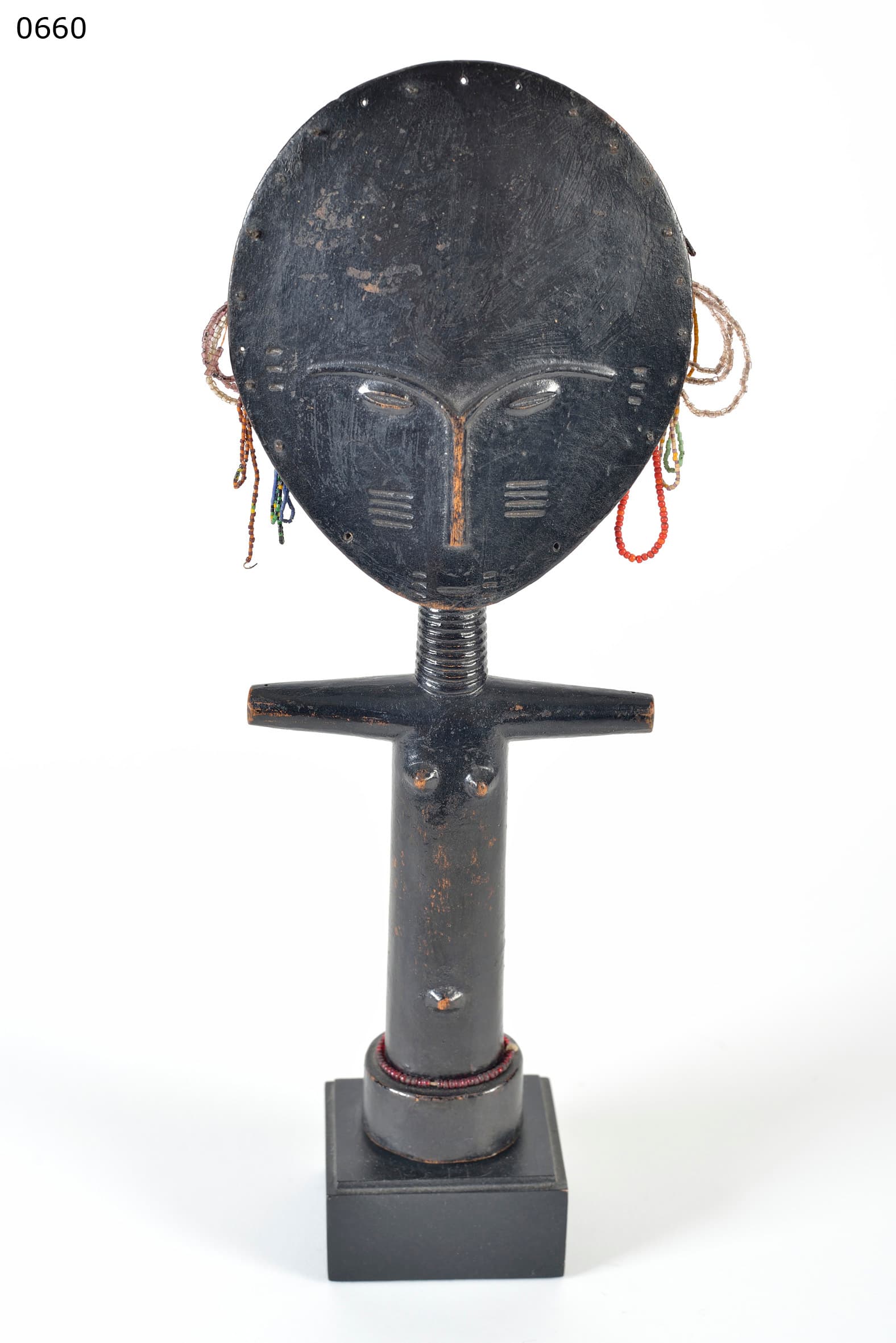
Akua-ba Fruchtbarkeitspuppe (Asante-Scheibenkopfvariante)

Fruchtbarkeitspuppe (AKUABA)