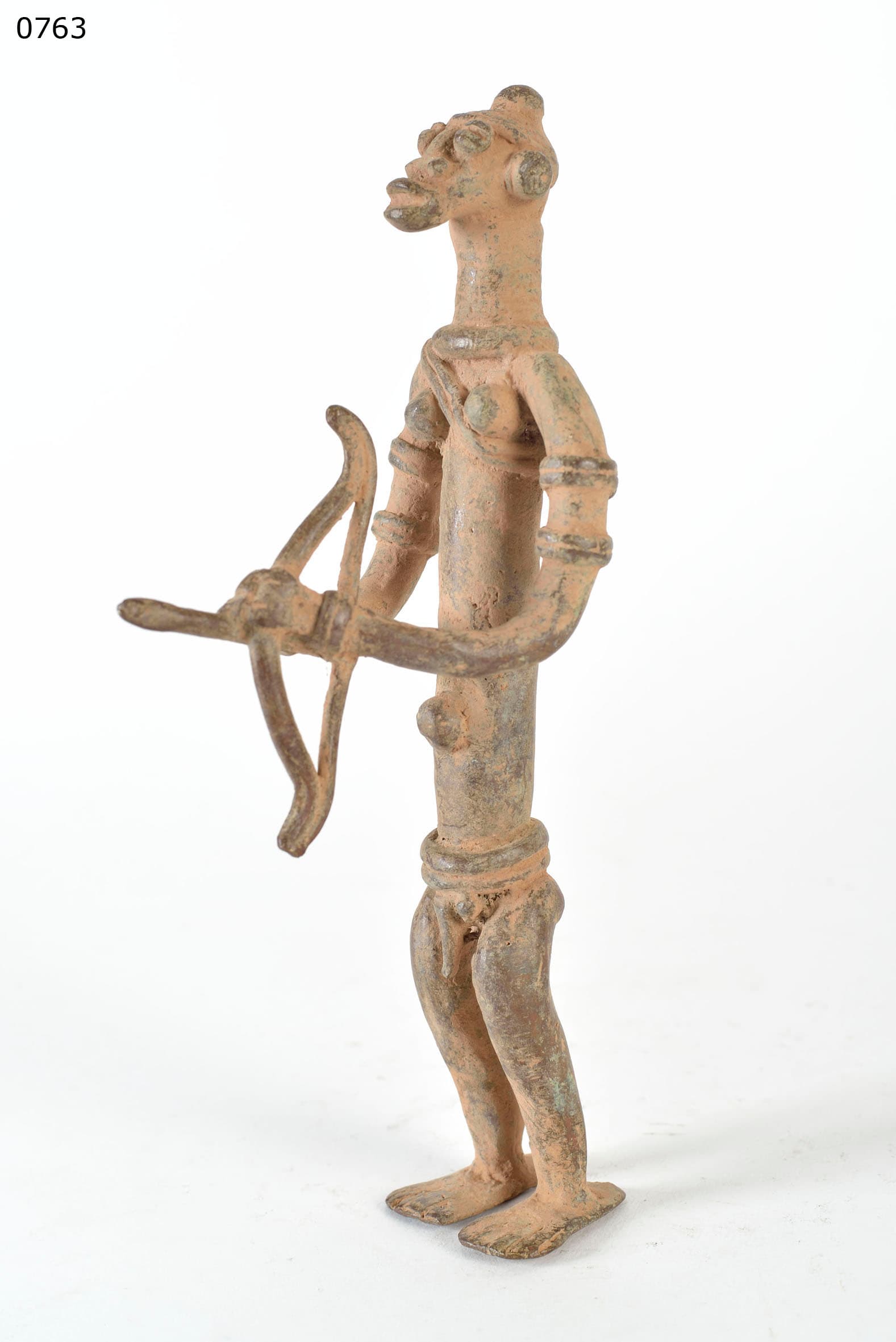
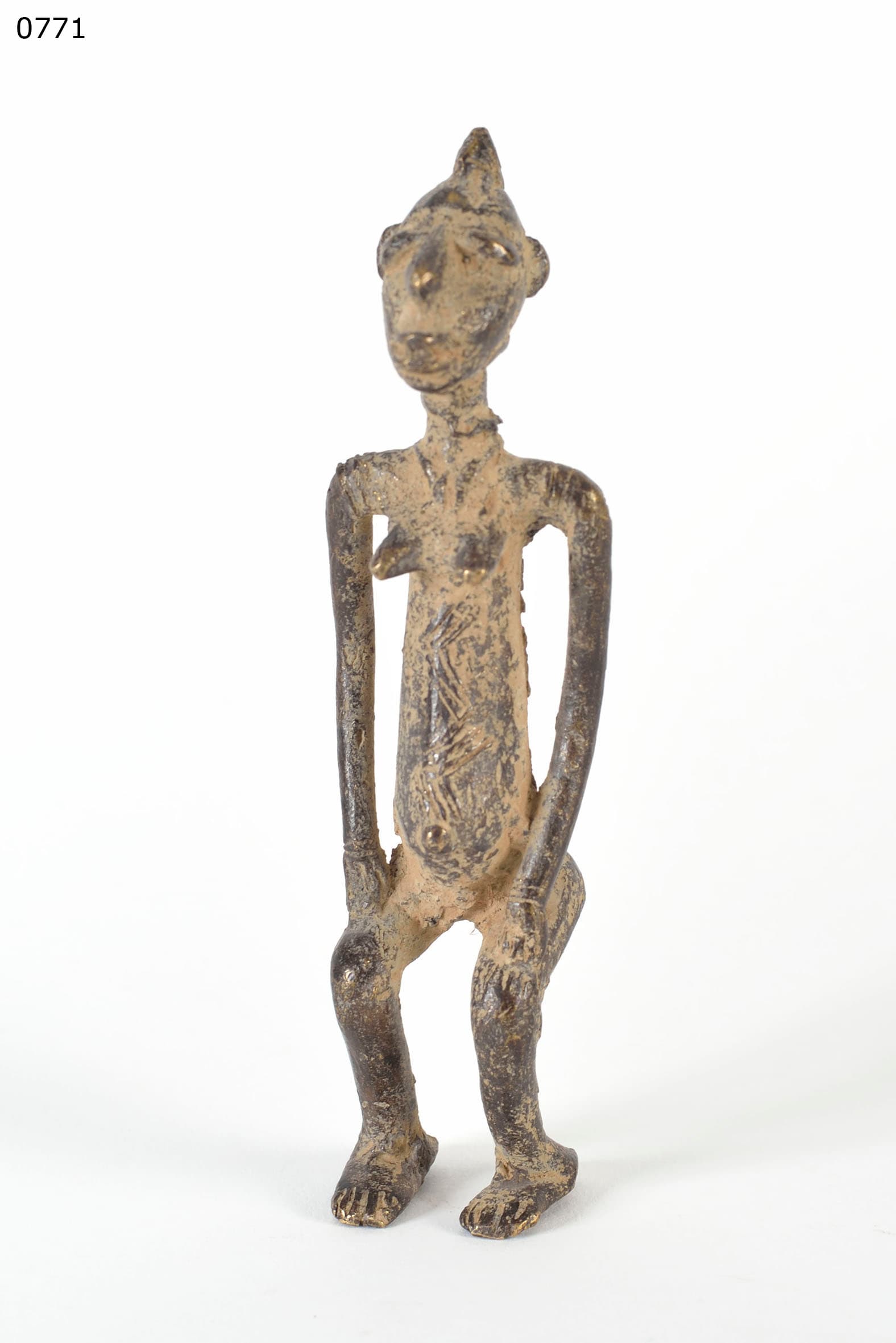
Einer von zwei Anhängern aus antiker Gan-Bronze. Dieses Stück ist eine große, durchbrochene Scheibe mit einem zentralen zoomorphen Gesicht, umgeben von konzentrischen Ringen und einem strahlenförmigen äußeren Rand. Sie weist eine tiefe, krustige, erdfarbene und grünliche Patina auf.
1. Ästhetischer Stil und regionale Merkmale
Dieser Anhänger zeigt das vielfältige und komplexe symbolische Vokabular der alten Gan-Metallurgie. Die große Scheibe mit ihrem strahlenförmigen, sonnenähnlichen Rand und der zentralen, tiefliegenden Fläche stellt wahrscheinlich eine große kosmologische Gottheit oder einen idealisierten, alles sehenden Vorfahren dar. Der strahlenförmige Rand in Kombination mit der zentralen Fläche ergibt eher ein vielschichtiges kosmologisches Diagramm als ein bloßes Ornament - hochrangige Gan-Anhänger kodieren durchweg ganze kosmologische Strukturen in tragbarer Form.
2. Rituelle Funktion und hochrangige Regalien
In Anbetracht seines massiven Gusses und der komplexen durchbrochenen Gestaltung war dieser Anhänger kein Alltagsgegenstand. Es handelte sich um eine hochrangige Insignie, die ausschließlich von Gan-Königen, Hohepriestern oder erfolgreichen Wahrsagern getragen wurde. Das Vorhandensein schwerer Aufhängeschlaufen bestätigt, dass dieser Anhänger dazu bestimmt war, an prominenter Stelle getragen oder aufgehängt zu werden. Es diente gleichzeitig als Abzeichen höchster Autorität und als mächtiges, lokal begrenztes Schutzamulett gegen spirituelle Angriffe. Die amulettischen und politischen Funktionen waren nicht trennbar, sondern vereinigt.
3. Physische Patina und Altersnachweis
Das hohe Alter dieses Stücks ist physikalisch nicht zu leugnen. Die Bronze hat eine tiefgreifende chemische Zersetzung erfahren, die zu einer dicken, krustigen Schicht aus Malachit (Grünspan) und gehärteten Erdablagerungen geführt hat, die die ursprüngliche Metalloberfläche vollständig verdeckt. Diese starke, ungereinigte archäologische Verwitterung bestätigt, dass die Bronze jahrhundertelang in der Erde vergraben oder in antiken Heiligtümern ausgestellt war, was ihre Herkunft aus dem 16. bis 19.
Zusammenfassung
Ein prächtiges Beispiel für den antiken Gan-Bronzeguss, das die Meisterschaft dieser Kultur in der durchbrochenen Gestaltung und der zoomorphen Symbolik demonstriert. Seine massive, ungereinigte archäologische Patina sichert seinen Status als erstklassiges antikes Stück aus Burkina Faso.
KI-unterstützt erstellt aus Sammlungsgutachten, Objektfotografie und eigener Recherche, redaktionell geprüft. Fehler sind möglich — Hinweise darauf sind uns willkommen. Zum Verfahren →