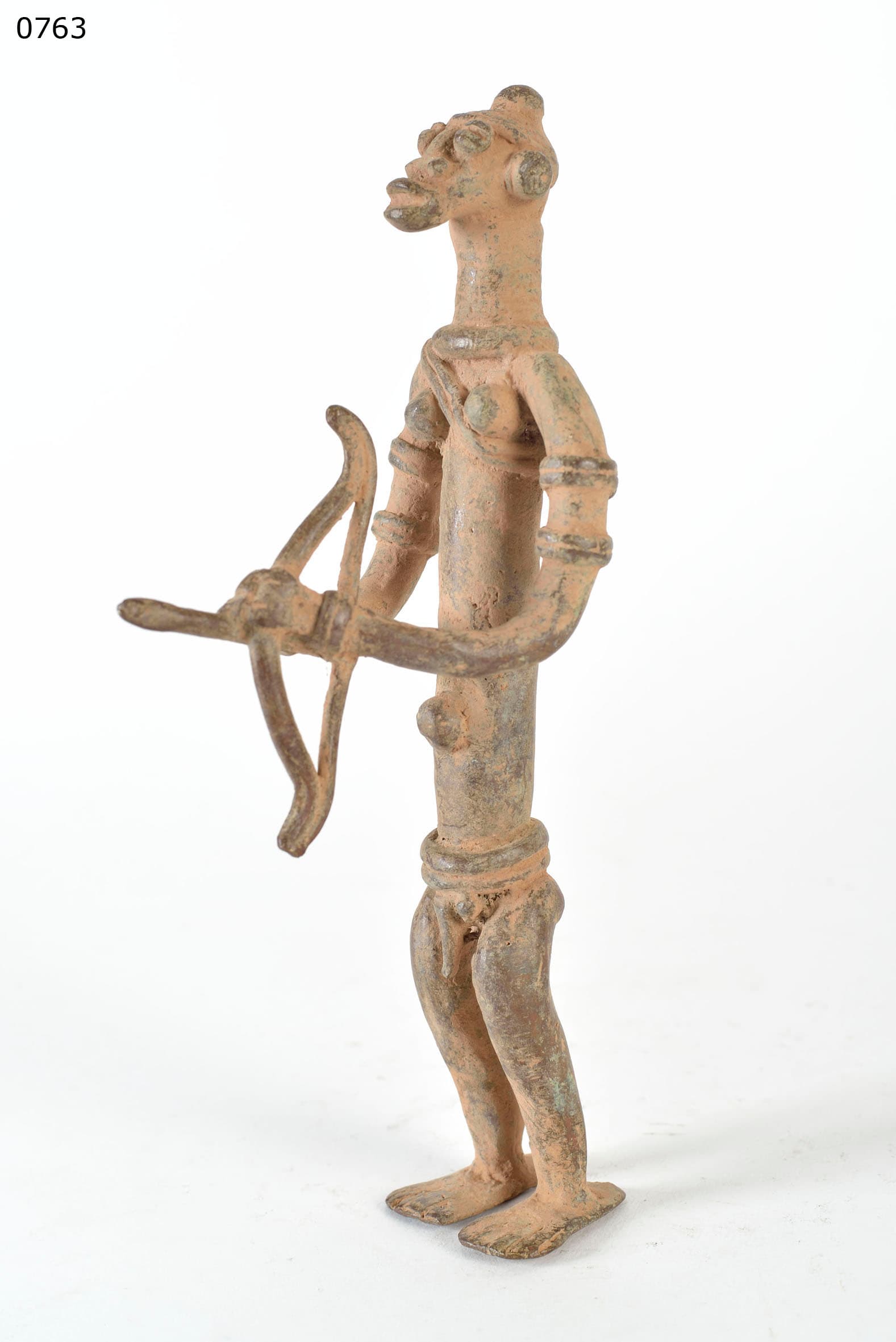
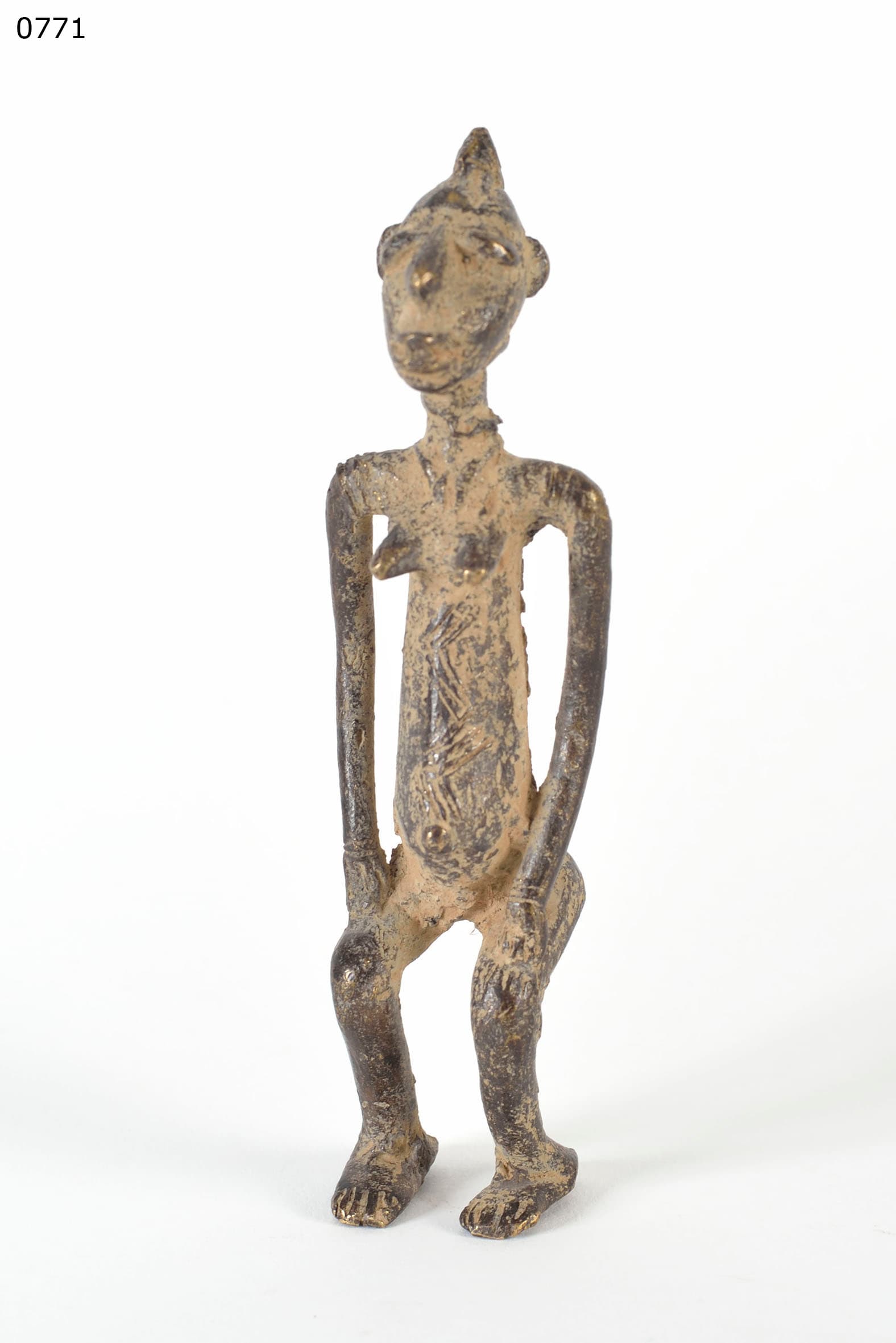
Eine von drei antiken Schlangenfiguren aus Gan-Bronze. Dieses Stück zeigt mehrere Köpfe, die sich von einem einzigen Schwanz verzweigen - eine besonders auffällige Variante, die wahrscheinlich eine mächtige, facettenreiche Gottheit oder die allwissende Natur der Geisterwelt darstellt. Sie weist eine tiefe, krustige, grün-braune archäologische Patina auf.
1. Ästhetischer Stil und regionale Merkmale
In der alten Gan-Kultur ist die Schlange vielleicht das stärkste und am häufigsten verwendete zoomorphe Symbol. Die hier gezeigte mehrköpfige Variante ist außergewöhnlich - sie erhebt die Standard-Ikonographie der Schlange zu einer Darstellung der vielschichtigen Göttlichkeit. Mehrköpfige Bronzeschlangen tauchen im westafrikanischen Korpus nur spärlich auf, signalisieren aber durchweg eine komplexe, vielstimmige spirituelle Identität und nicht nur einen einzelnen diskreten Geist.
2. Rituelle Funktion und königliche Einrichtung
Große Bronzeschlangen waren Eliteobjekte, die häufig als königliche Embleme verwendet wurden, manchmal direkt auf die Oberfläche von Prestigegefäßen oder Stäben gegossen oder einzeln in königlichen Schreinen aufgestellt wurden. Sie dienten der magischen Bewachung des königlichen Geländes, der Warnung vor bösartigen Kräften und der Sicherung der Gunst der mächtigen schlangenartigen Erdgeister. Die mehrköpfige Konfiguration vervielfachte den schützenden Blick in mehrere Richtungen gleichzeitig.
3. Physische Patina und Altersnachweis
Das Überleben dieses komplexen Gusses ist bemerkenswert. Die Oberfläche ist vollständig von einer dicken, ungereinigten Oxidationsschicht aus Malachit (grün) und Cuprit (rötlich-braun) bedeckt, die mit verkalkten Tonablagerungen vermischt ist. Diese intensive chemische Zersetzung und die ausgeprägte Kruste sprechen für eine archäologische Herkunft des Gusses, die sich in das 16. bis 19. Jahrhundert einordnen lässt.
Zusammenfassung
Eine seltene mehrköpfige Gan-Bronze aus Serpentin, die die komplexe Mythologie der Kultur anschaulich verkörpert. Ihre schwere, ungereinigte archäologische Patina stützt die Zuschreibung als historisches Artefakt.
KI-unterstützt erstellt aus Sammlungsgutachten, Objektfotografie und eigener Recherche, redaktionell geprüft. Fehler sind möglich — Hinweise darauf sind uns willkommen. Zum Verfahren →