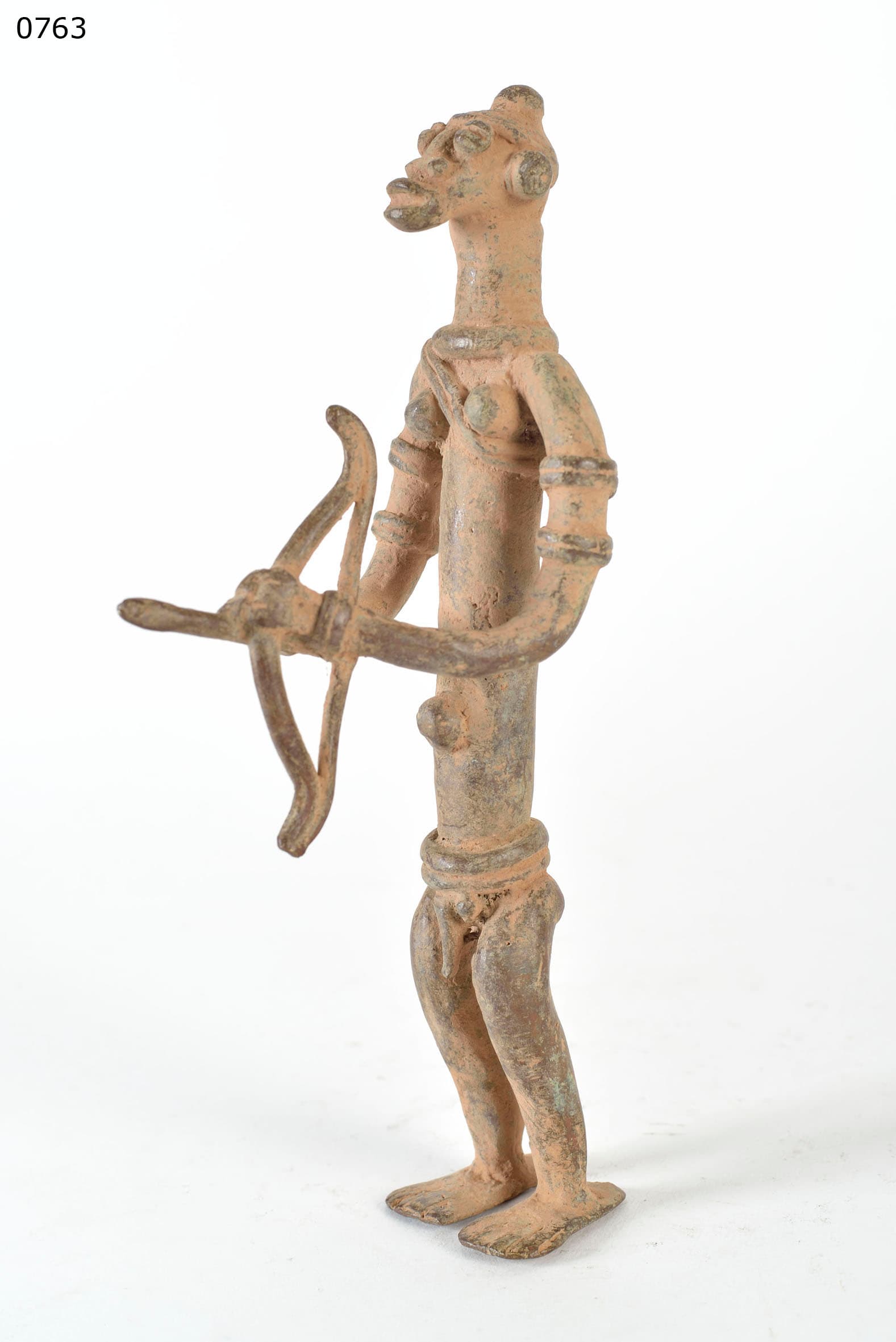
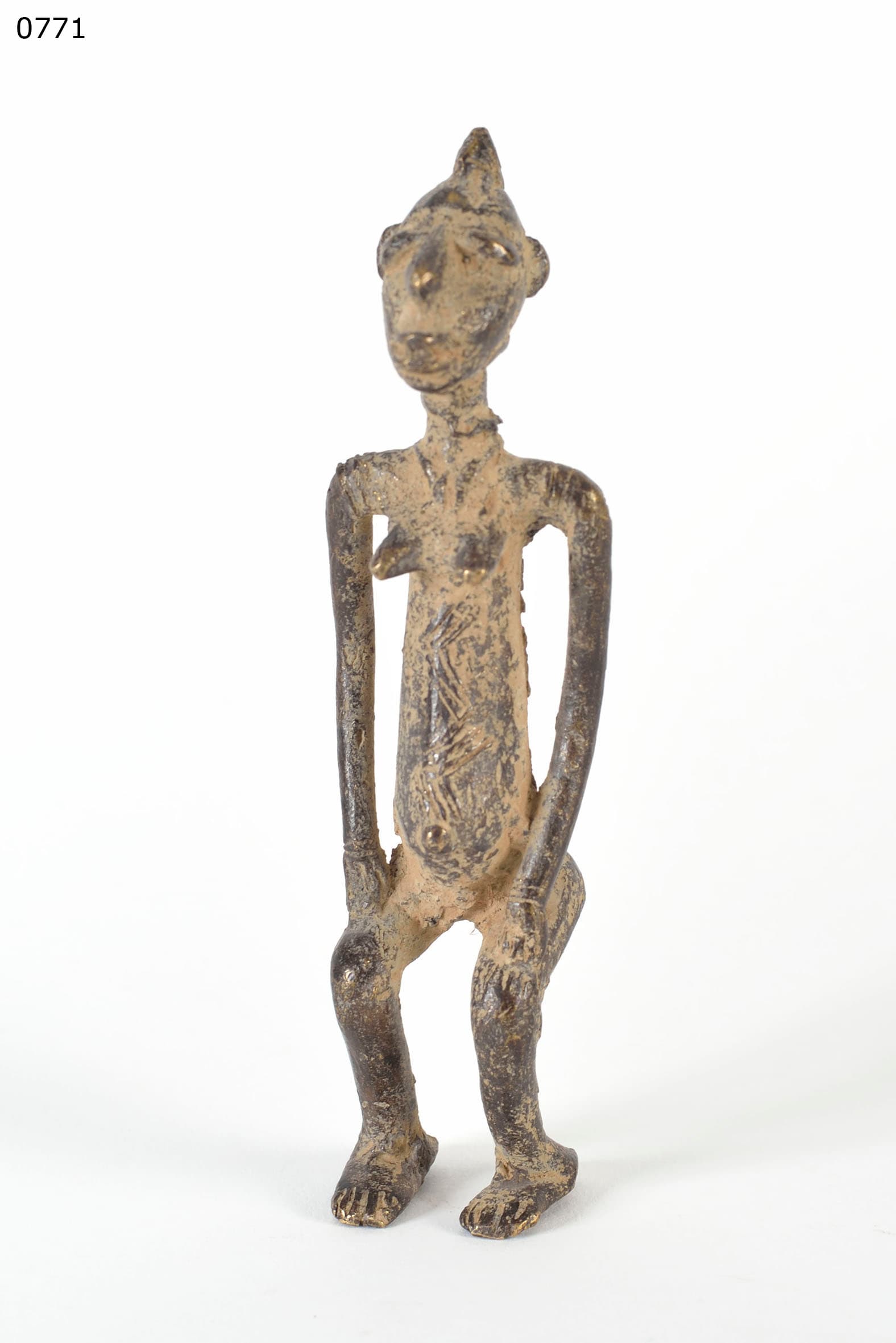
Eine von zwei hochkomplexen, antiken durchbrochenen Gan-Bronzen. Dieses Stück ist eine kunstvolle, symmetrische Konstruktion aus gewundenen, schlangenartigen Schlingen, die von zwei kleinen menschlichen Figuren gekrönt und von nach außen gerichteten Schnauzen flankiert werden. Es ist stark oxidiert.
1. Ästhetischer Stil und regionale Merkmale
Dieses Objekt gilt als ein bedeutendes Beispiel der Gan-Bronzegusstradition. Die technische Komplexität, dieses große, symmetrische, durchbrochene Muster mit sich mehrfach kreuzenden Windungen, schlangenartigen Schlingen und zarten menschlichen Figuren im Wachsausschmelzverfahren herzustellen, zeugt von hohem handwerklichen Geschick. Es kann als eine komplexe, abstrakte visuelle Darstellung der Gan-Kosmologie und spirituellen Architektur verstanden werden. Die Kombination aus menschlichen Figuren, die auf schlangenartigen Windungen thronen, verdeutlicht die hierarchische Beziehung zwischen der Menschheit und den Geistern der Vorfahren.
2. Rituelle Funktion als Altarinstallation
Objekte dieser Größe, dieses Gewichts und dieser Komplexität werden in der ethnographischen Literatur den höheren Rängen der Gan-Gesellschaft zugeordnet. Dies war wahrscheinlich eine zentrale Installation auf einem großen königlichen oder kommunalen Altar. Die ineinander verschlungenen Schlangen dienten im rituellen Kontext als Reservoir spiritueller Kraft, das die Gebete der Gemeinschaft bündeln und spirituelle Bedrohungen abwehren sollte.
3. Physische Patina und Altersnachweis
Die visuelle Wirkung dieser Bronze wird durch ihren ausgeprägten Alterungsprozess unterstrichen. Die Oberfläche ist dick mit einer krustigen, stark strukturierten Schicht aus Malachit, Cuprit und verkalkter Erde überzogen. Diese tiefgreifende chemische Veränderung, die die feineren Details der ursprünglichen Wachsfäden verdeckt, spricht dafür, dass dieses Objekt über einen langen Zeitraum entweder in der Erde vergraben oder auf Schreinen im Freien ausgestellt war, was eine Datierung in das 16. bis 19. nahelegt.
Zusammenfassung
Diese Gan-Altarbronze ist ein bemerkenswertes Zeugnis der komplexen, abstrakten Metallurgie. Ihre anspruchsvolle Konstruktion im Wachsausschmelzverfahren und ihre tiefe, ungereinigte Patina machen sie zu einem bedeutenden historischen Stück aus Burkina Faso.
KI-unterstützt erstellt aus Sammlungsgutachten, Objektfotografie und eigener Recherche, redaktionell geprüft. Fehler sind möglich — Hinweise darauf sind uns willkommen. Zum Verfahren →