Ein kleiner, sehr detaillierter antiker Bronzeanhänger, der drei identische, stark stilisierte Senufo-Figuren darstellt, die Schulter an Schulter stehen und sich in kreisförmigen Ringen an den Händen halten. Das Metall ist stark oxidiert und weist eine tiefe, krustige und grün-braune archäologische Patina auf.
1. Ästhetischer Stil und regionale Charakteristika
Diese filigrane Miniatur gilt als ein bemerkenswertes Beispiel des Senufo-Wachsausschmelzverfahrens. Die Darstellung von drei identischen Figuren, die in harmonischem, ununterbrochenem Einklang stehen, ist eine kraftvolle visuelle Metapher. In der Senufo-Kosmologie, insbesondere in den Gesellschaften der Poro (Männer) und Sandogo (Frauen), betonen mehrere Figuren das Band der Gemeinschaft, die kollektive Stärke der Ahnen und die einheitliche Front, die zur Aufrechterhaltung der kosmischen und gesellschaftlichen Harmonie erforderlich ist. Die dreifache Figurenkomposition entspricht der ikonografischen Vorliebe der Senufo für triadische Strukturen.
2. Rituelle Funktion und Sandogo-Verwendung
Aufgrund seiner geringen Größe (6 cm) dürfte dieser komplexe Guss als Prestigeamulett getragen oder von einem Sandogo-Wahrsager verwendet worden sein. Die komplizierten Details - die Figuren sind durch kreisförmige Armaturen miteinander verbunden - deuten darauf hin, dass es sich um ein hochgeschätztes Insignienstück handelt. Es diente vermutlich dazu, den Träger und die Gemeinschaft an die einheitliche Überwachung und den Schutz durch die Geister des Gründerstamms zu erinnern.
3. Physische Patina und Altersnachweis
Die Oberfläche dieser zarten Bronze stützt eine Datierung in das 19. Jahrhundert. Sie weist nicht die polierte Oberfläche späterer Handelsstücke auf. Stattdessen ist sie mit einer dicken, matten und stark strukturierten Oxidationskruste aus Malachit und Cuprit überzogen. Die tiefen Ablagerungen von Grünspan und Erde in den komplexen Vertiefungen zwischen den drei Figuren deuten auf eine jahrzehntelange ungereinigte, rituelle und umweltbedingte Exposition hin.
Zusammenfassung
Eine ausdrucksstarke Miniatur-Senufo-Bronze, die die vervielfältigte menschliche Form nutzt, um eine Botschaft der Einheit der Ahnen zu vermitteln. Der komplexe, vernetzte Guss und die tiefgreifende, krustige Oxidation legen eine Einordnung als bedeutendes Amulett aus dem 19. Jahrhundert nahe.
KI-unterstützt erstellt aus Sammlungsgutachten, Objektfotografie und eigener Recherche, redaktionell geprüft. Fehler sind möglich — Hinweise darauf sind uns willkommen. Zum Verfahren →
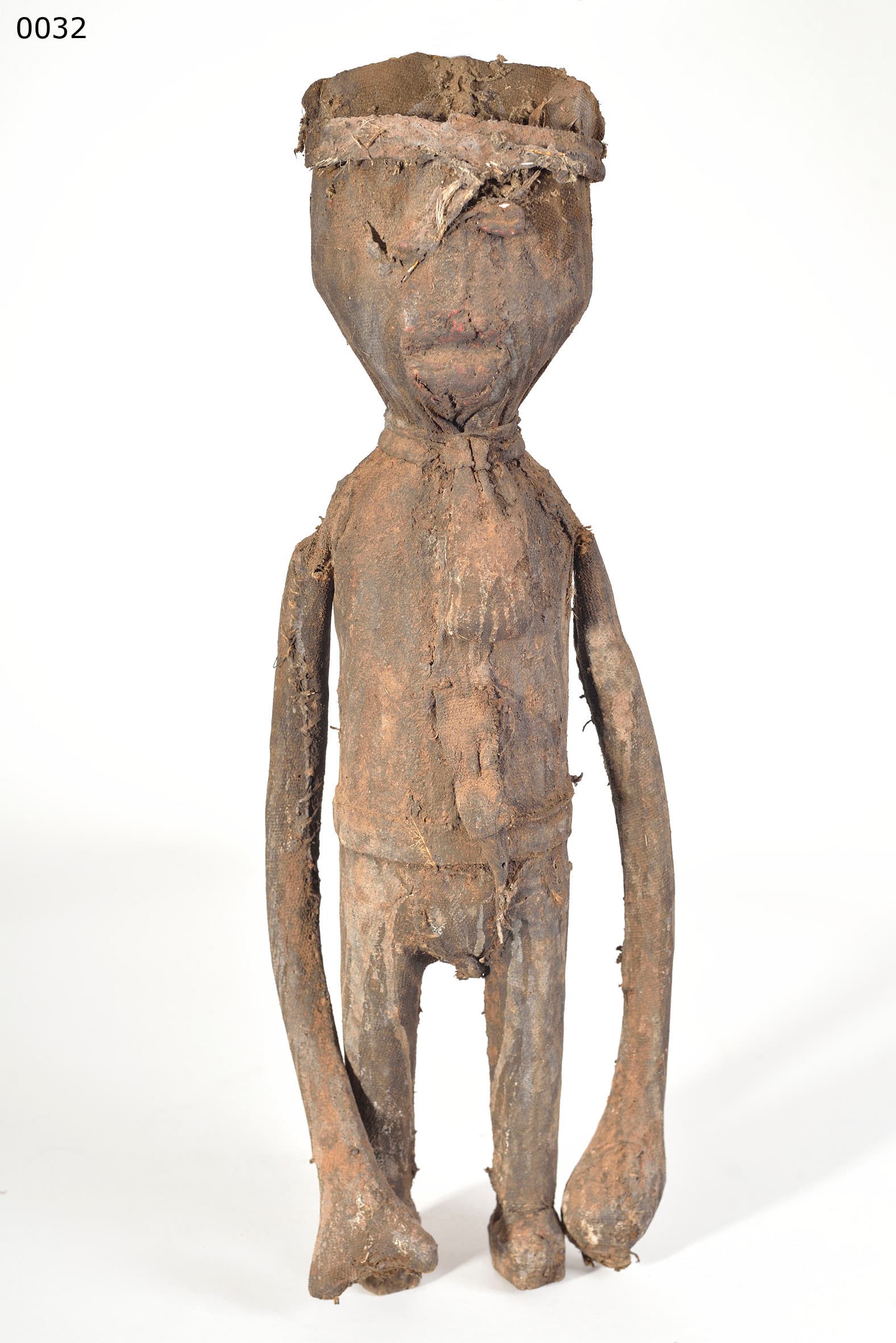
Kraftfigur (genannt KAFIGELEDJO)
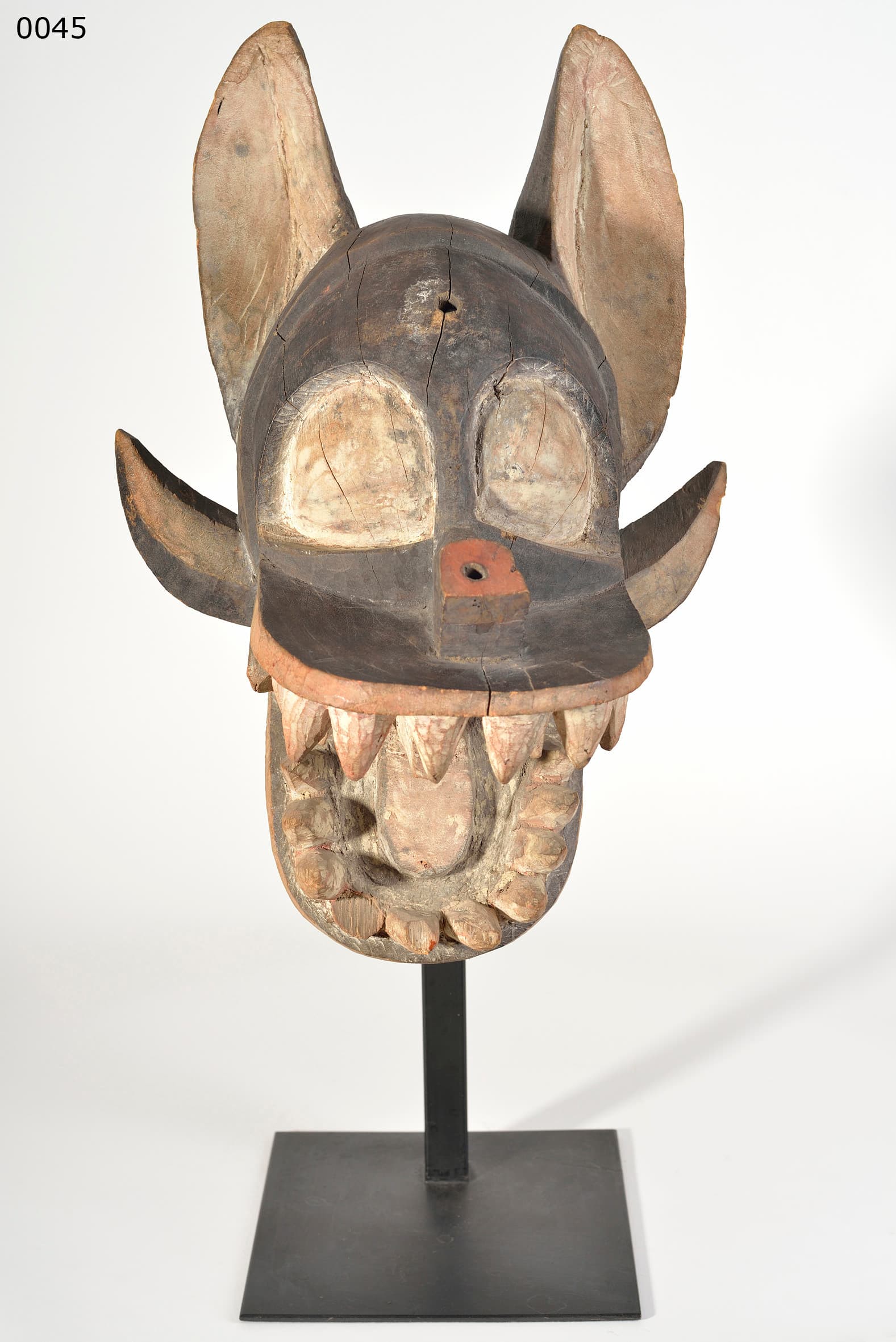
Aufsatzmaske
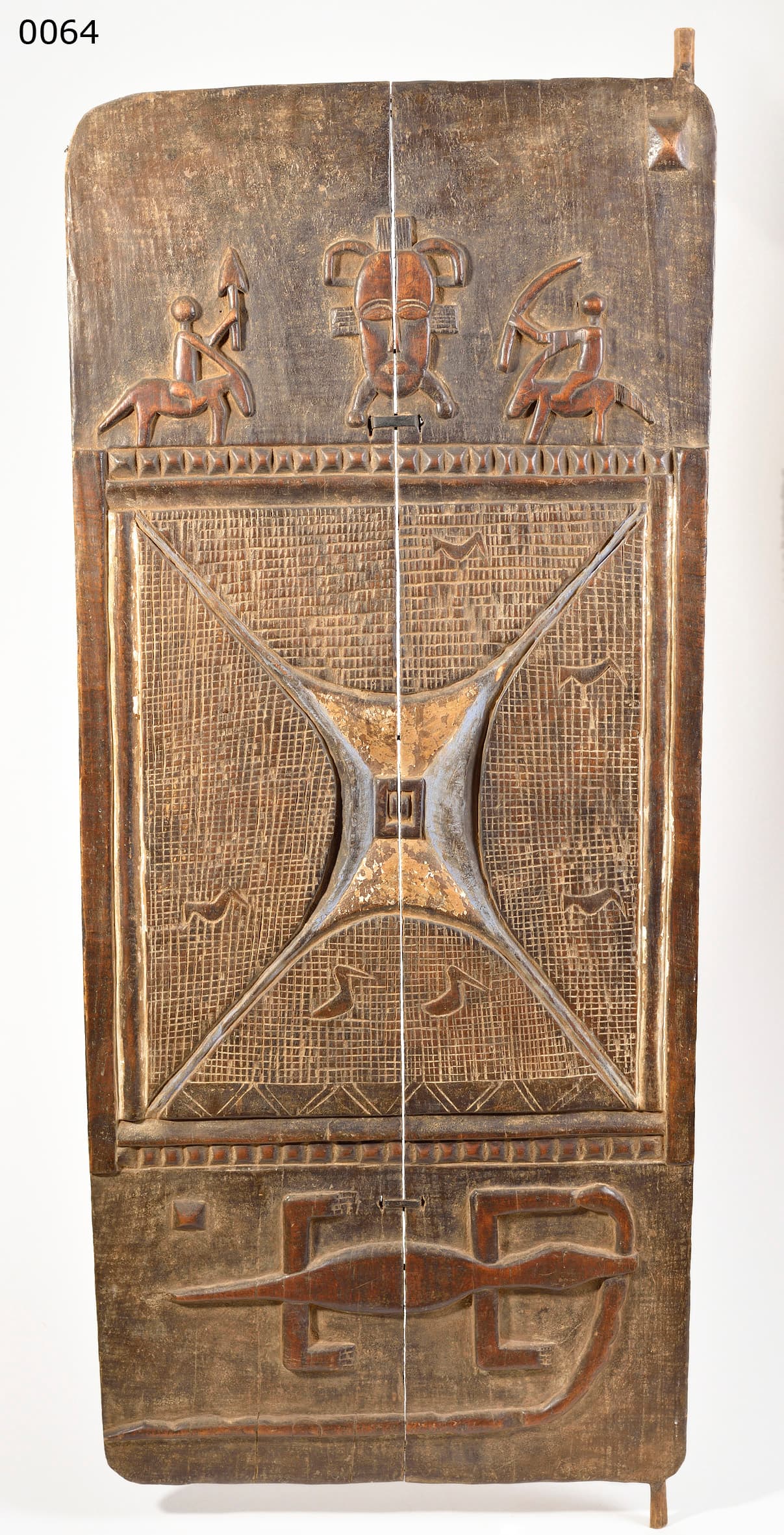
Tür
