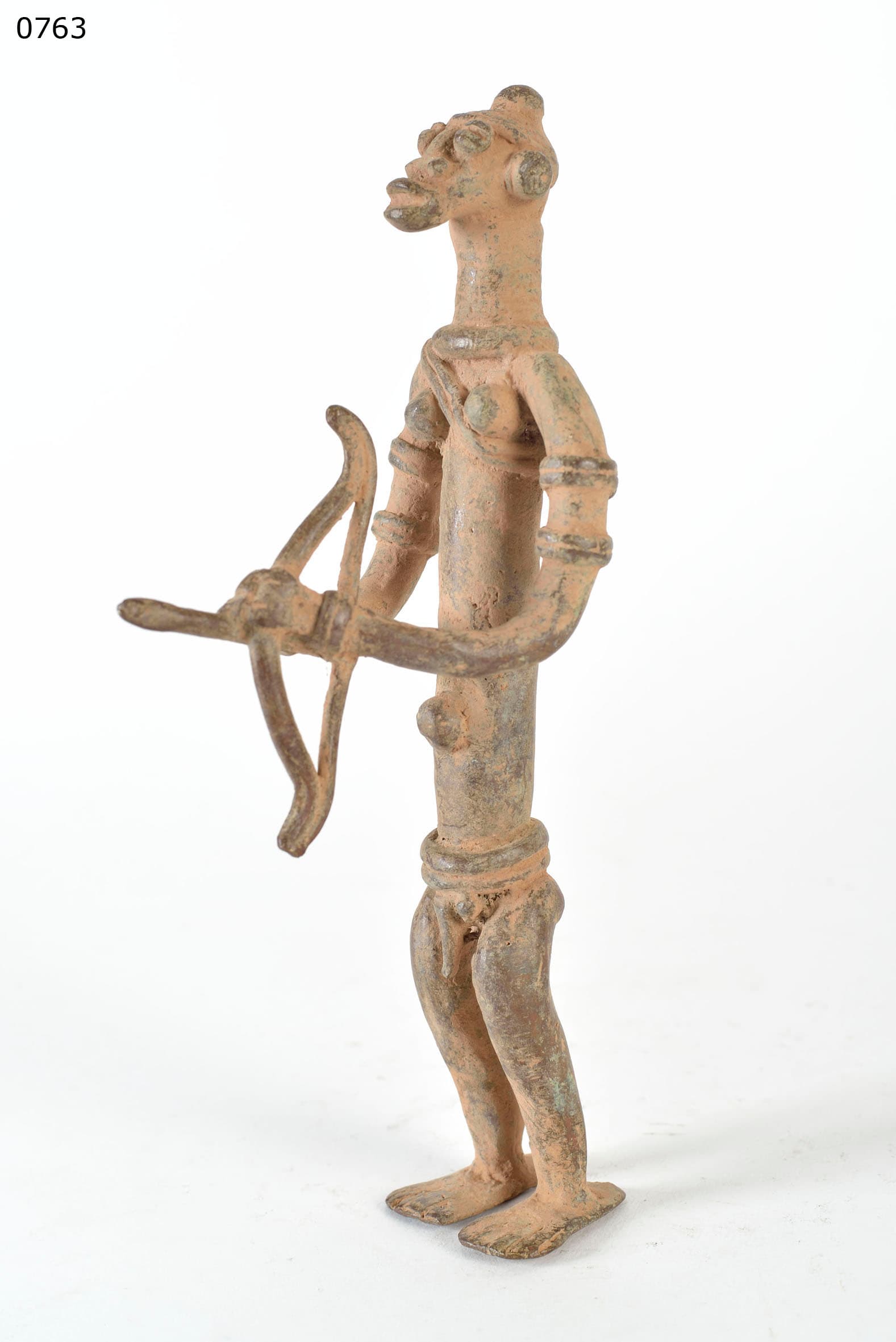
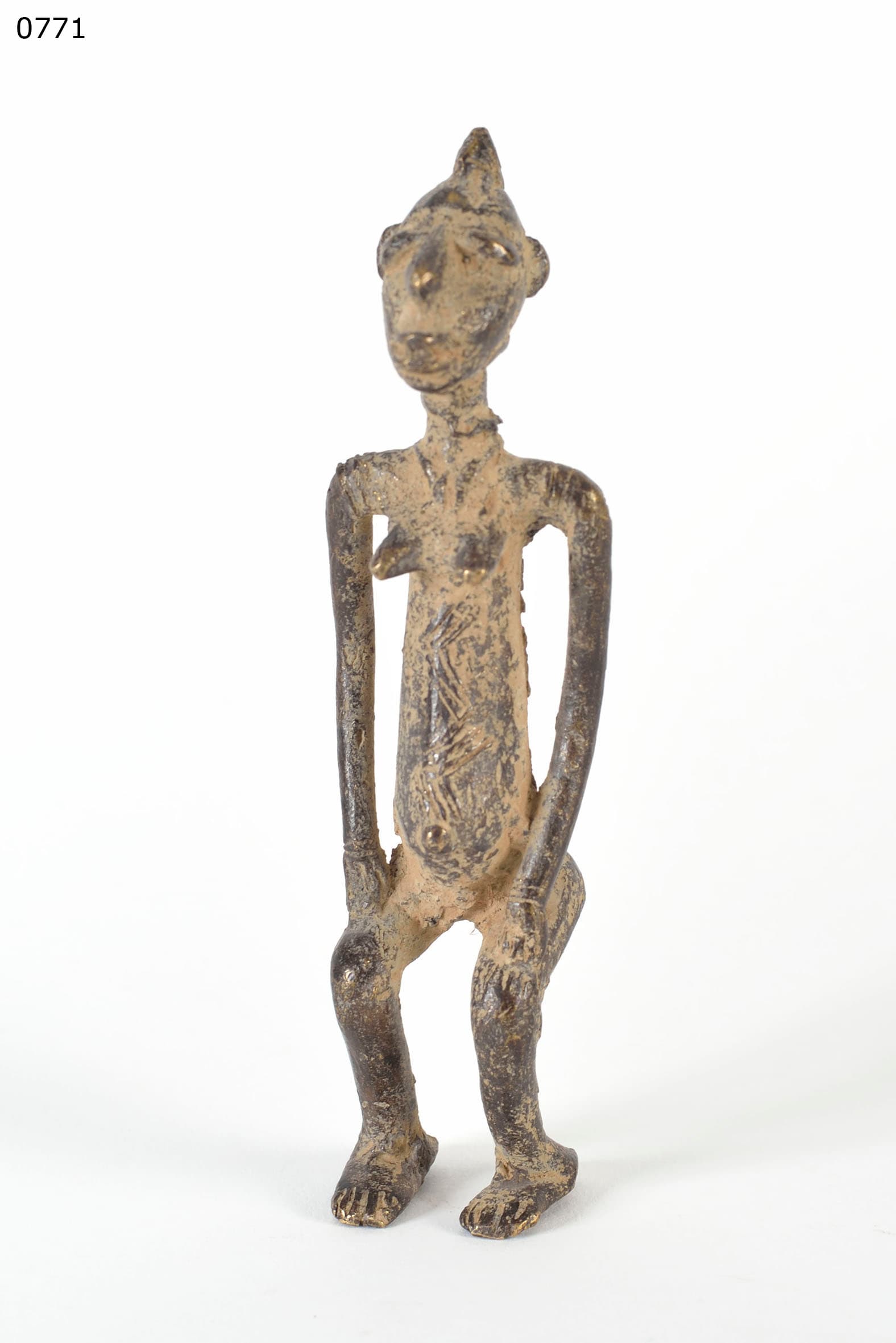
Eine sehr langgestreckte, stilisierte weibliche Bronzefigur, die mit vom Körper abgetrennten Armen steht, mit großen, spitzen Brüsten und einem auffallend großen, gerundeten Bauch, der auf eine Schwangerschaft hindeutet. Die Figur hat einen langen, beringten Hals und eine stark oxidierte, krustige grün-braune Patina.
1. Ästhetischer Stil und regionale Eigenheiten
Diese antike Gan-Bronze veranschaulicht perfekt die radikale Einstellung der Kultur zu menschlichen Proportionen. Die extreme, drahtartige Abschwächung der Gliedmaßen und der unmöglich lange, beringte Hals heben jeden Naturalismus auf und schaffen eine schlanke, fast aerodynamische, mythologische Silhouette. Im Mittelpunkt der Schnitzerei stehen die spitzen Brüste und der geschwollene, schwangere Unterleib, die das komplexe Konzept der Weiblichkeit auf seine absolute, lebensspendende und generative Essenz reduzieren. Die Gan-Sprache treibt die Abschwächung konsequent über den Punkt der menschlichen Plausibilität hinaus und signalisiert, dass die Figur eher ein mythologisches als ein biografisches Subjekt darstellt.
2. Rituelle Funktion und königliche Verehrung
Da Bronze im alten Burkina Faso ein sehr begrenztes, prestigeträchtiges Material war, war diese Figur kein gewöhnliches Amulett. Sie war wahrscheinlich ein zentraler Bestandteil eines königlichen oder elitären Gemeinschaftsschreins. Sie stellt die idealisierte Gründungsmatriarchin oder eine mächtige Fruchtbarkeitsgöttin dar. Mit der Verehrung dieser schwangeren Figur wollte das Volk der Gan nicht nur die erfolgreiche Fortpflanzung seiner Frauen, sondern auch die anhaltende landwirtschaftliche Fruchtbarkeit des Landes selbst sicherstellen. Die Ikonographie der Schwangerschaft verbindet die Belange der menschlichen und landwirtschaftlichen Fortpflanzung in einem einzigen rituellen Programm.
3. Physische Patina und Altersnachweis
Die Oberfläche dieser zarten, länglichen Bronze spricht für ihr hohes Alter. Sie ist vollständig von einer dicken, krustigen Oxidationsschicht aus Malachit (grün) und Cuprit (rötlich-braun) überzogen. Diese tiefgreifende chemische Zersetzung, die die feineren Details des Gusses verdeckt und den ursprünglichen Metallglanz vollständig ersetzt, tritt typischerweise nach jahrhundertelanger Vergrabung oder Umwelteinwirkung auf und legt eine archäologische Herkunft des Stücks aus dem 16. bis 19. Jahrhundert nahe.
Zusammenfassung
Eine ausdrucksstarke antike Gan-Mutterschaftsfigur, die durch ihre extreme, surreale Dehnung die vitale Kraft der Fruchtbarkeit physisch manifestiert. Der raffinierte Guss und die tiefe, ungereinigte archäologische Patina machen sie zu einem bedeutenden Zeugnis des burkinischen Altertums.
KI-unterstützt erstellt aus Sammlungsgutachten, Objektfotografie und eigener Recherche, redaktionell geprüft. Fehler sind möglich — Hinweise darauf sind uns willkommen. Zum Verfahren →