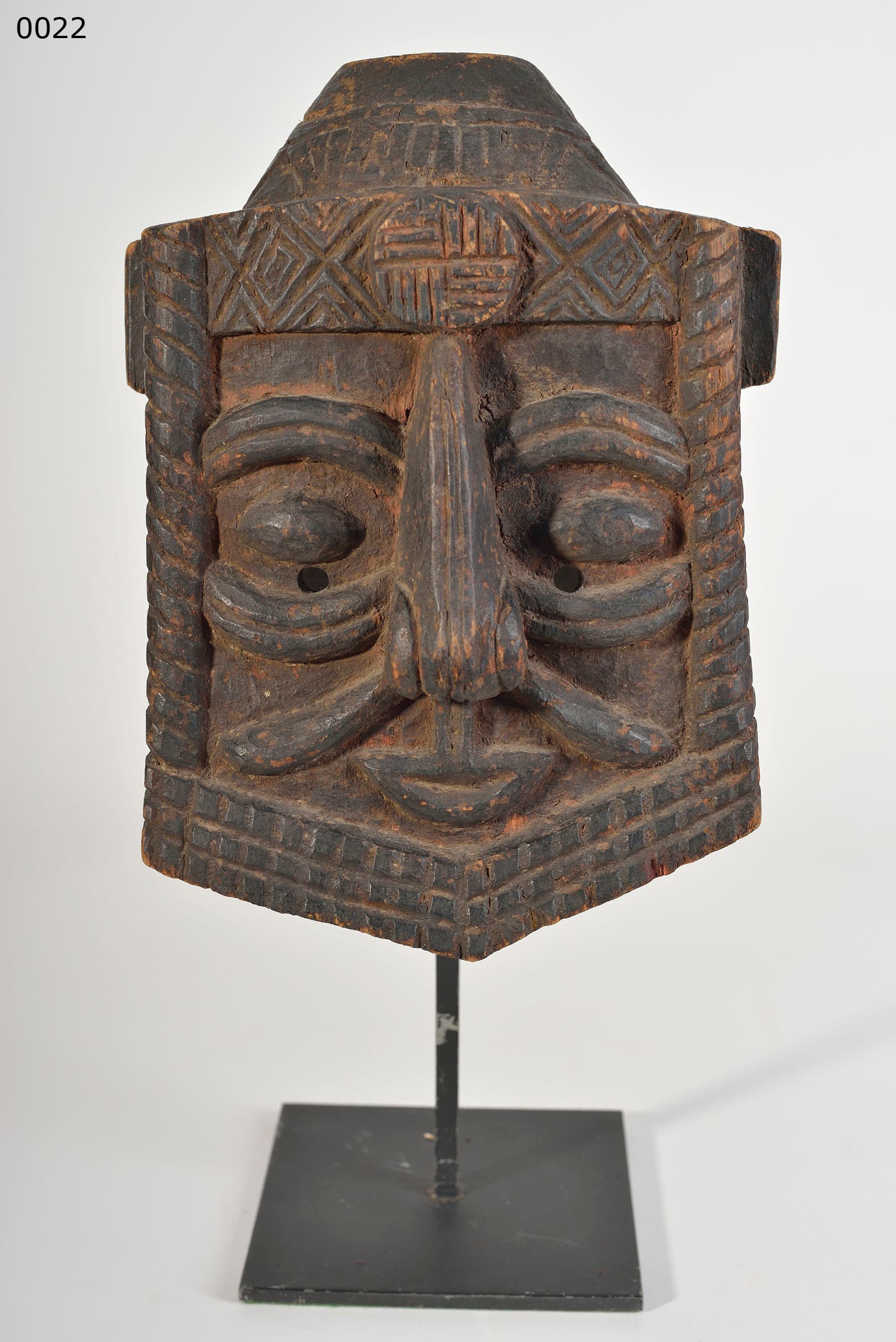
Dieses hölzerne Gefäß in Form eines menschlichen Kopfes ist mit geometrischen Mustern auf der Stirn und im Nacken verziert, die eine aristokratische Skarifikation imitieren. Die reiche, glänzende dunkelbraune Patina hebt das tiefe Relief der Schnitzerei hervor.
1. Ästhetischer Stil und regionale Eigenheiten
Das Kuba-Königreich ist bekannt für seine hochentwickelte Hofkunst, in der persönliche Prestigeobjekte wie dieser kephalomorphe (kopfförmige) Becher den Status der Titelinhaber widerspiegeln. Das Gefäß hat den gleichen gelassenen, distanzierten Gesichtsausdruck und die präzisen Abgrenzungen der Haarlinie wie die königlichen ndop-Statuen. Die komplizierten Flechtmuster (bekannt als bwoom oder imbol) sind nicht nur dekorativ, sondern dienen als visuelles Vokabular, das den hohen Rang, die Abstammung und die Einweihung des Besitzers innerhalb der anspruchsvollen sozialen Hierarchie der Kuba anzeigt. Die Kuba-Tradition zeichnet sich dadurch aus, dass sie hochkarätige höfische Ikonografie auf Gebrauchsgegenstände verteilt und nicht nur für Schrein-Skulpturen reserviert.
2. Rituelle Funktion und Palmwein-Gastfreundschaft
In der Kuba-Gesellschaft wurden kunstvoll geschnitzte Becher bei wichtigen gesellschaftlichen Zusammenkünften und Initiationszeremonien für den Genuss von Palmwein (maluvu) verwendet. Das Teilen von Wein aus einem solch prestigeträchtigen, anthropomorphen Gefäß war ein hochgradig ritualisierter Akt der Diplomatie und der männlichen Bindung unter den Bangende und anderen Elitegruppen. Der Akt des Trinkens aus dem Kopf" des Gefäßes überträgt symbolisch die Weisheit und Lebenskraft der Ahnen, die mit dem geschnitzten Bildnis verbunden sind, auf den Konsumenten. Das Gefäß diente also sowohl als Werkzeug als auch als rituelle Technologie - seine Ikonographie leistete neben seiner praktischen Funktion auch soziale Arbeit.
3. Physische Patina und Altersnachweis
Die tiefe, glasartige Patina des Holzes ist das Ergebnis jahrzehntelanger Handhabung, Salbung mit Palmöl und Verwendung in zeremoniellen Kontexten. Die leichten Abnutzungen und die aufgeweichten Kanten der geometrischen Einschnitte sprechen für ein hohes Alter und einen Status als Erbstück, das über Generationen weitergegeben wurde. Die tiefgreifende Oxidation der Oberfläche und die Abnutzung durch die Handhabung gelten als wesentliche Indikatoren, die eine Datierung in das 19. Jahrhundert und eine lange traditionelle Nutzung stützen.
Zusammenfassung
Dieses Kuba-Gefäß, das dem 19. Jahrhundert zugeschrieben wird und eine feine Synthese aus geometrischer Präzision und Porträtdarstellung zeigt, gilt als bemerkenswertes Beispiel der kongolesischen Hofkunst. Seine reichhaltige Patina und die aristokratischen Motive machen es zu einem herausragenden Zeugnis der funktionalen Bildhauerei.
KI-unterstützt erstellt aus Sammlungsgutachten, Objektfotografie und eigener Recherche, redaktionell geprüft. Fehler sind möglich — Hinweise darauf sind uns willkommen. Zum Verfahren →