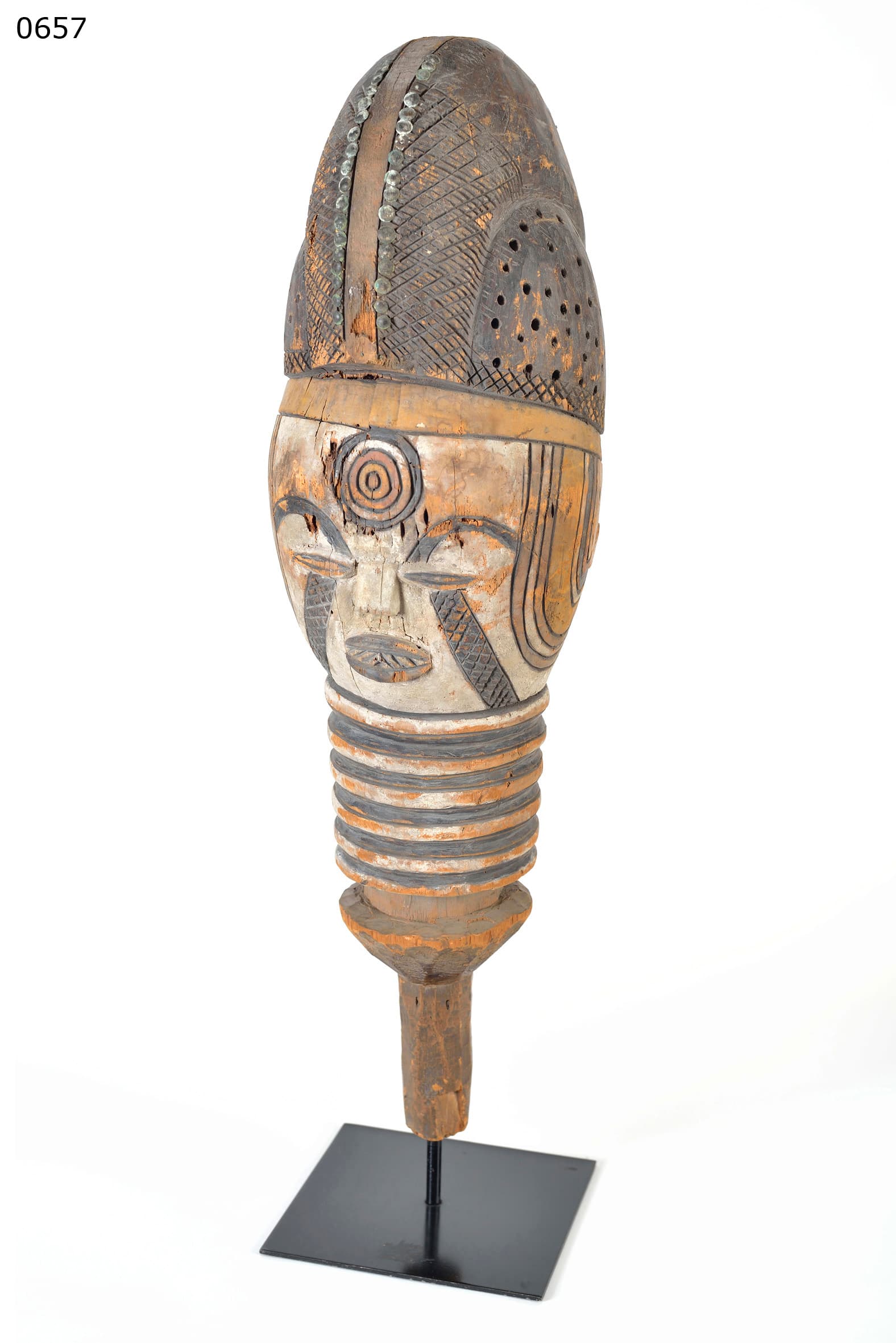
Diese beiden Holzfiguren stehen starr auf einem gemeinsamen Sockel und sind vollständig mit dichten, konzentrischen Kreisen und linearen Ritzmustern auf ihren Oberkörpern und Gesichtern bedeckt. Das dunkle, dicht eingeritzte Holz zeigt tiefe zeremonielle Abnutzung und eine aggressiv strukturierte Oberfläche.
1. Ästhetischer Stil und regionale Merkmale
Das Volk der Kuyu (geografisch in der Republik Kongo angesiedelt, hier jedoch in der Tabelle als DR Kongo bezeichnet) ist bekannt für seine geradezu obsessive Anwendung von Oberflächentexturen, und dieses Paar gilt als ein charakteristisches Beispiel für diese Eigenschaft. Jeder Zentimeter ihrer Körper und übergroßen, abgeflachten Köpfe ist von tief eingekerbten Ritzspuren (mabina) umgeben. Dies ist nicht nur dekorativ, sondern eine bildhauerische Sprache, die die hölzerne Oberfläche in eine Landkarte der sozialen Identität verwandelt und die menschliche Form in einen abstrakten, rhythmischen Zylinder aus reinem Muster verwandelt.
2. Rituelle Funktion und die Kebe-Kebe-Gesellschaft
Kuyu-Statuen sind untrennbar mit dem Geheimbund Kebe-Kebe (oder Kieb-Kieb) verbunden, der den mythischen Schlangenschöpfer Ebongo und den Panther verehrt. Die Kuyu sind vor allem für ihre farbenfrohen Keulenköpfe (Marotten) bekannt, stellten aber auch diese seltenen, ganzkörperlichen Altarfiguren her, die das ursprüngliche Gründerpaar darstellen. Sie wurden in abgelegenen Schreinen aufgestellt und dienten als irdische Anker für die Geister der Vorfahren, die die Fruchtbarkeit des Stammbaums und die Autorität der Dorfvorsteher, die die Gesellschaft kontrollierten, sicherstellten.
3. Physische Patina und Altershinweise
Die dunkle, verkrustete Patina in den tiefen Rillen der Skarifikation deutet darauf hin, dass sie jahrelang Trankopfer erhalten hat und in einer dunklen, rußgefüllten Schreinumgebung aufbewahrt wurde. Die leichte Erosion an der gemeinsamen Basis und die Aufweichung der äußersten geschnitzten Grate sprechen für ein hohes Alter und eine Handhabung, die mit einer Datierung in das frühe 20. Jahrhundert vereinbar sind. Die Erhaltung des Paares als ununterbrochene, gepaarte Einheit ist von hohem ethnographischem Wert.
Zusammenfassung
Dieses Kuyu-Paar mit seinen tief eingemeißelten, rhythmischen Skarifikationen ist ein bemerkenswertes Beispiel für den hypertexturierten skulpturalen Stil der Region. Ihre dichte, mit Trankopfer verkrustete Patina und die seltene paarweise Zusammenstellung machen sie zu einem eindringlichen Ausdruck der Kebe-Kebe-Ahnenverehrung.
KI-unterstützt erstellt aus Sammlungsgutachten, Objektfotografie und eigener Recherche, redaktionell geprüft. Fehler sind möglich — Hinweise darauf sind uns willkommen. Zum Verfahren →