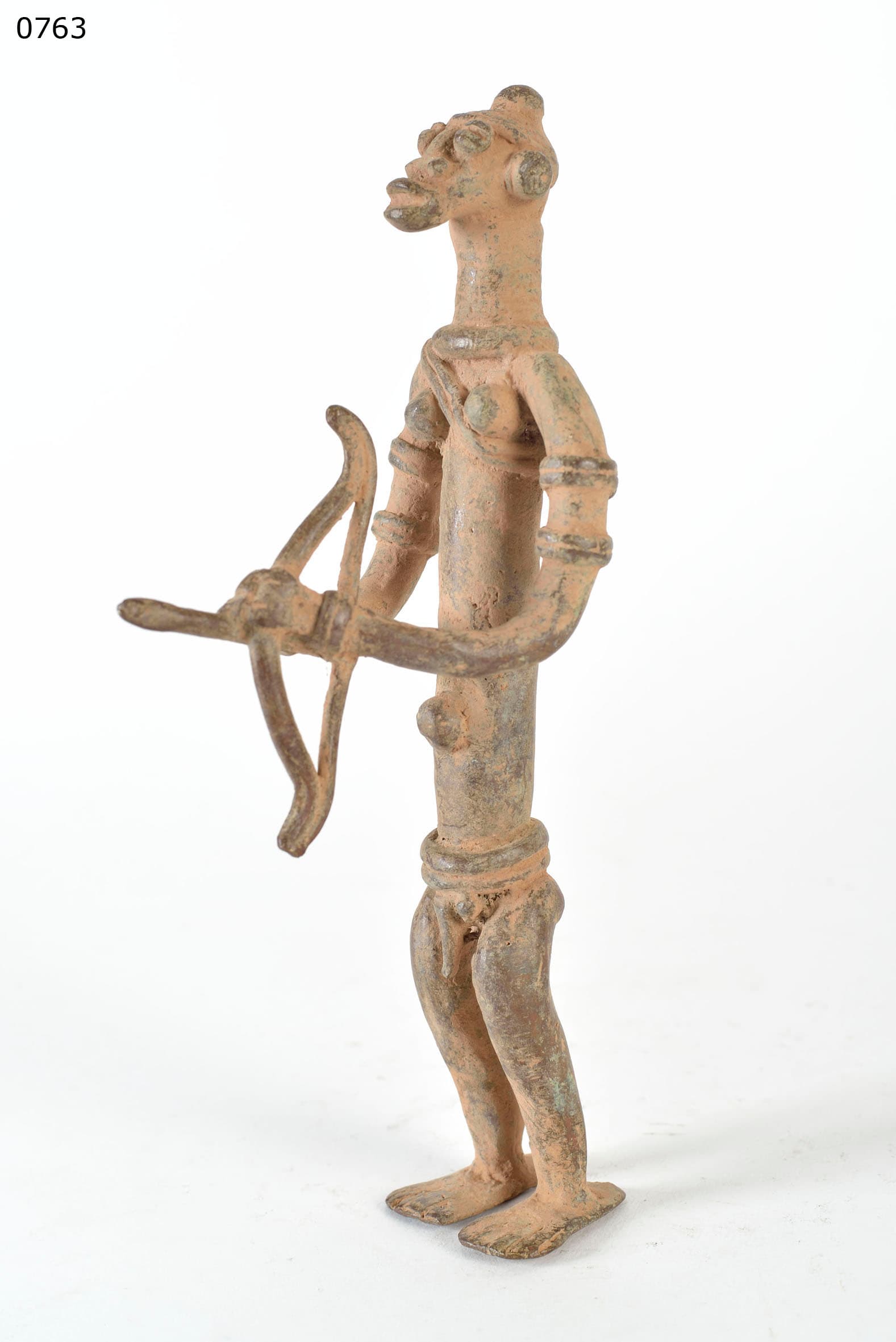
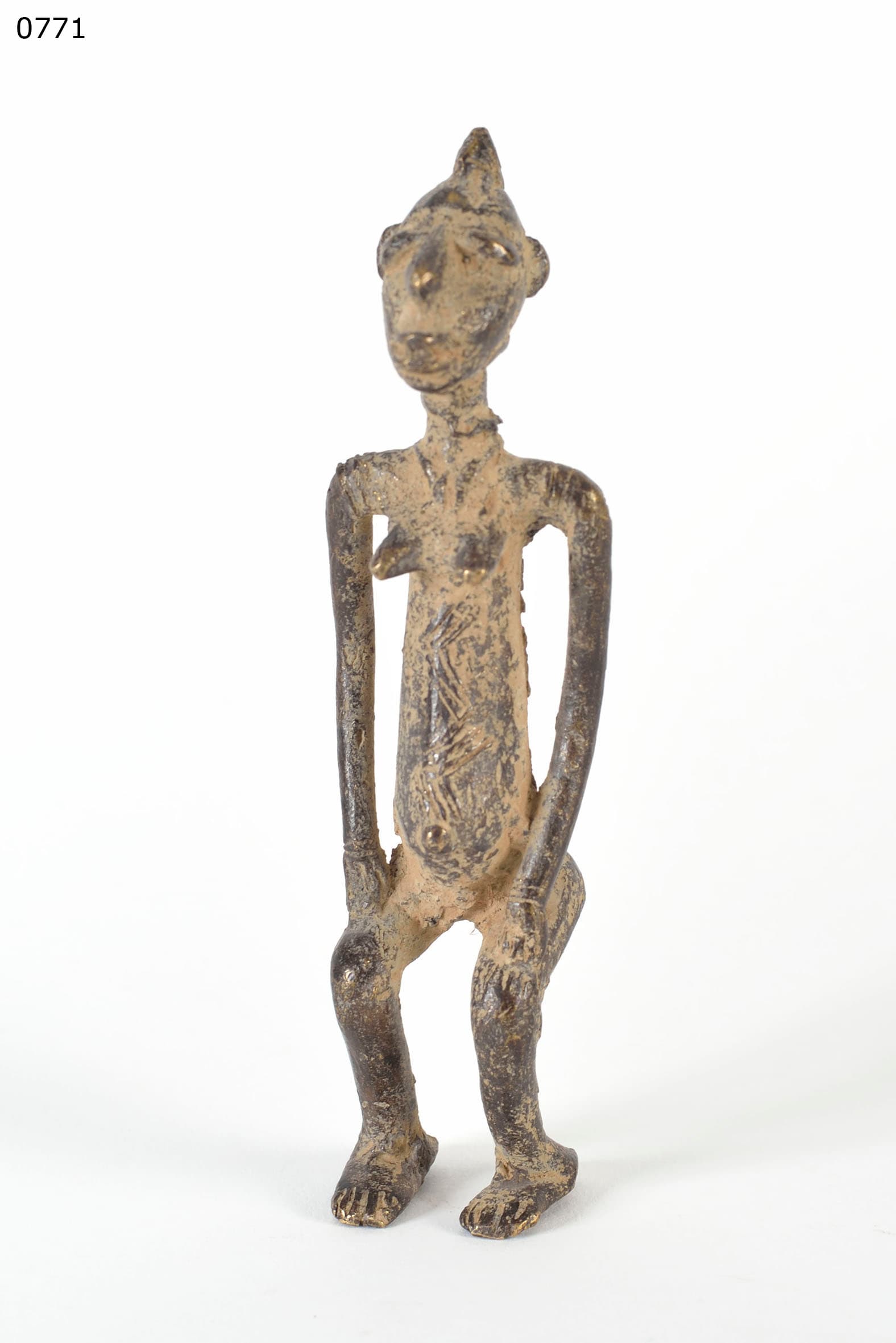
Eines von drei schweren Bronzeornamenten. Es handelt sich um ein dickes, rundes Band, das mit einer einzelnen sitzenden menschlichen Figur als skulpturalem Abschluss geschmückt ist. Es weist eine dicke, stark verkrustete archäologische Patina mit lebhafter grüner und brauner Oxidation auf.
1. Ästhetischer Stil und regionale Merkmale
Das Volk der Gan ist bekannt für seine alten, komplizierten Bronzegüsse im Wachsausschmelzverfahren (cire perdue). Dieses Stück veranschaulicht in besonderer Weise ihr ornamentales Repertoire, bei dem schwere, gedrehte und gesprenkelte Metallarbeiten verwendet werden, um einen skulpturalen Schlussstein zu tragen. Die Einbeziehung einer menschlichen Figur in ein tragbares Band macht dieses Stück von einem reinen Schmuckstück zu einer erzählerischen, tragbaren Skulptur, die die Ikonographie eines sitzenden Ältesten auf den Körper des Trägers komprimiert.
2. Rituelle Funktion und königliches Prestige
In der Gesellschaft der Gan werden massive bronzene Fußkettchen und Armbänder traditionell mit Königen, hochrangigen Eingeweihten und einflussreichen Priesterinnen in Verbindung gebracht. Das schiere Gewicht der Bronze diente als auffälliges Zeichen von Reichtum und sozialer Unbeweglichkeit (da die Träger keine körperliche Arbeit verrichteten). Die sitzende Figur beschwört den Schutz der königlichen Ahnen herauf, während die Masse des Bandes den langsamen, bedächtigen Gang betont, der von den Mitgliedern der Elite erwartet wird.
3. Physische Patina und Altersnachweis
Die Oberfläche dieser Bronze zeigt deutliche Spuren einer tiefgreifenden metallurgischen Alterung. Sie ist mit einer dicken, stabilen Schicht aus Cuprit und Malachit (grün-braune Kruste) überzogen, was darauf hindeutet, dass sie entweder in einem Grab beigesetzt oder über lange Zeit in der feuchten Erde eines Schreins aufbewahrt wurde. Diese ausgeprägte Mineralisierung spricht für ein hohes Alter, das mit der vorgeschlagenen Datierung in das 16. bis 19. Jahrhundert vereinbar ist.
Zusammenfassung
Dieses Ornament aus Gan-Bronze veranschaulicht die hochentwickelten Fähigkeiten des Wachsausschmelzverfahrens und die komplexe Ikonographie der traditionellen Herrscher von Burkina Faso. Eingefasst von einer ausgeprägten, verkrusteten Patina ist es ein seltenes Ornament von historischer Bedeutung.
KI-unterstützt erstellt aus Sammlungsgutachten, Objektfotografie und eigener Recherche, redaktionell geprüft. Fehler sind möglich — Hinweise darauf sind uns willkommen. Zum Verfahren →