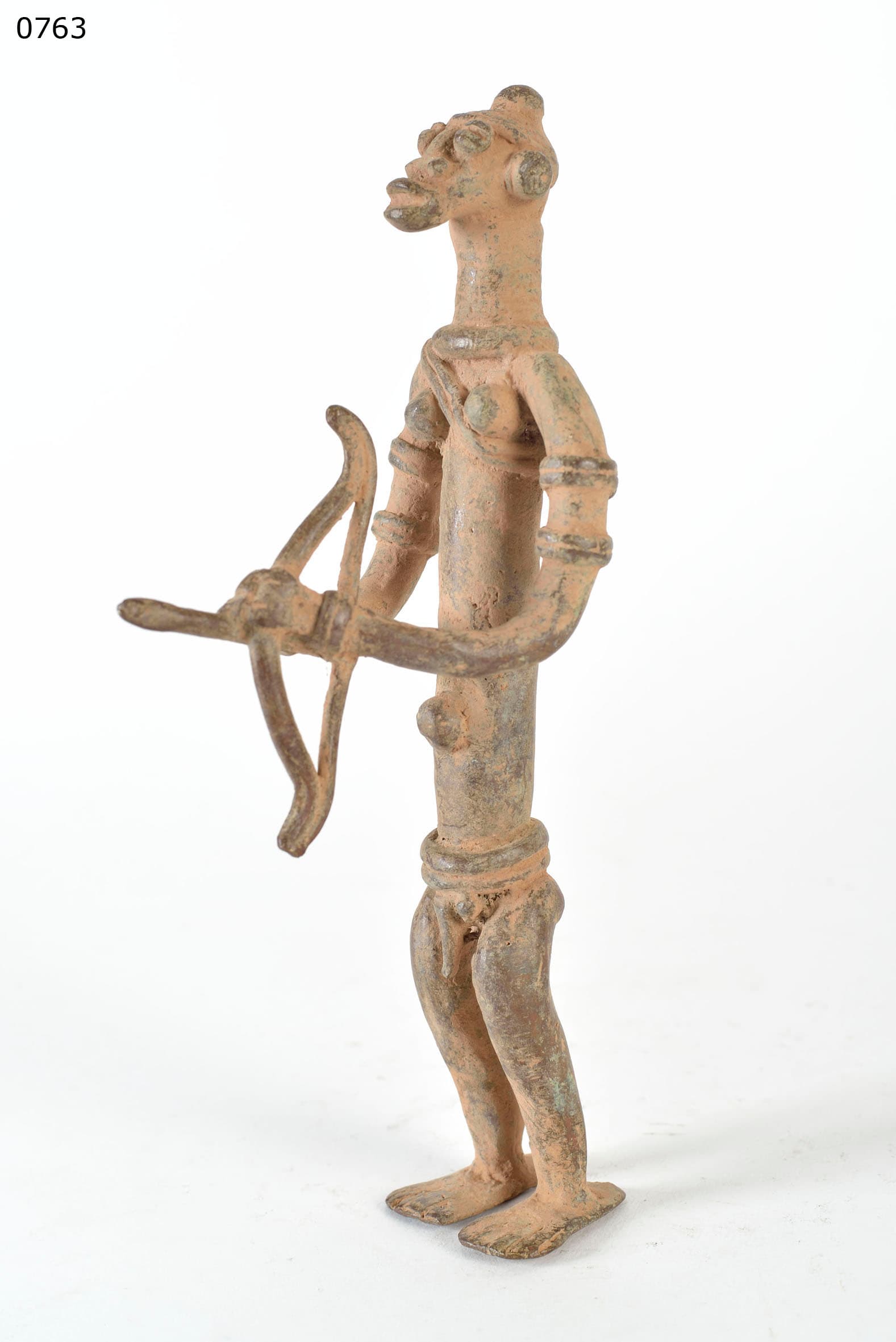
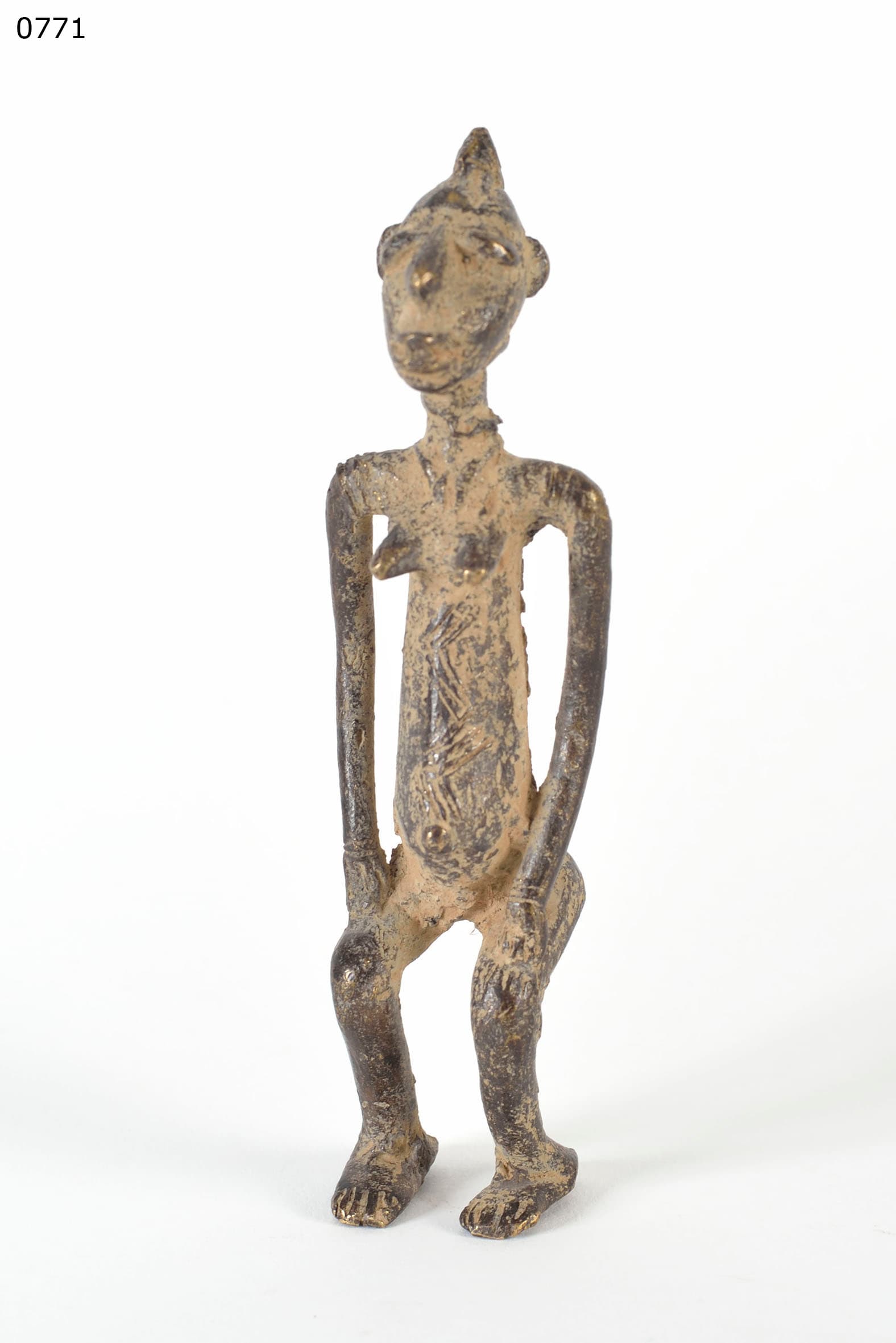
Eines von drei schweren Bronzeornamenten. Dieses Stück trägt zwei skulpturale Zwillingsfiguren, die aus einem zentralen Knotenpunkt auf dem Band herausragen. Das dicke Metall ist stark oxidiert und weist eine tiefe, erdige grüne und braune Patina auf.
1. Ästhetischer Stil und regionale Eigenheiten
Das Volk der Gan in Burkina Faso hat die Technik des Wachsausschmelzverfahrens (cire perdue) zur Herstellung von tragbarer Architektur weiterentwickelt. Im Gegensatz zu typisch westlichem Schmuck, der sich dem Körper anpasst, ragen diese massiven Armbänder und Fußkettchen aggressiv in den Raum. Die strengen geometrischen Formen - und hier die skulpturalen Zwillingsfiguren, die aus dem Band herausragen - verwandeln das menschliche Glied in einen monumentalen Sockel. Diese Ästhetik setzt auf schieres Volumen, strukturelle Spannung und räumliche Dominanz und spiegelt eine bildhauerische Philosophie wider, in der Masse mit sozialer Macht gleichgesetzt wird. Das Motiv der Zwillingsfiguren verschlüsselt insbesondere die Ikonographie der gepaarten Ahnengeister, die im Pantheon von Gan eine zentrale Rolle spielen.
2. Rituelle Funktion und königliches Prestige
In der hochgradig stratifizierten Gesellschaft der Gan waren Ornamente von diesem Gewicht und dieser Komplexität ausschließlich Königen, hochrangigen Eingeweihten und mächtigen Priesterinnen vorbehalten. Die schiere Masse der Bronze diente als auffällige Zurschaustellung von Reichtum und als physisches Zeichen des Elitestatus, da die Träger von manueller Arbeit befreit waren. Die Zwillingsfiguren fungierten als tragbare Beschwörungen des schützenden Ahnenpaars und verteilten ihre doppelte Präsenz auf den Körper des Trägers.
3. Physische Patina und Altersnachweis
Die Oberfläche ist ein Lehrstück für die tiefgreifende metallurgische Alterung. Sie ist vollständig von einer dicken, stabilen Schicht aus Cuprit und Malachit (grüne und braune Oxidationskruste) umhüllt, die den ursprünglichen Metallglanz effektiv verdeckt. Diese ausgeprägte Mineralisierung spricht für einen langwierigen Prozess; sie legt nahe, dass das Objekt über einen langen Zeitraum in feuchter Erde oder einem Ahnenschrein aufbewahrt wurde, was eine Datierung auf das 16. bis 19. Jahrhundert stützt.
Zusammenfassung
Diese Gan-Bronze gilt als herausragendes Beispiel des voltaischen Wachsausschmelzverfahrens und fungiert sowohl als eindrucksvolle Körperrüstung als auch als architektonische Eliteskulptur. Ihre tiefe, krustige Patina spricht für ein hohes Alter und stützt die Einordnung als historisch bedeutendes Artefakt.
KI-unterstützt erstellt aus Sammlungsgutachten, Objektfotografie und eigener Recherche, redaktionell geprüft. Fehler sind möglich — Hinweise darauf sind uns willkommen. Zum Verfahren →