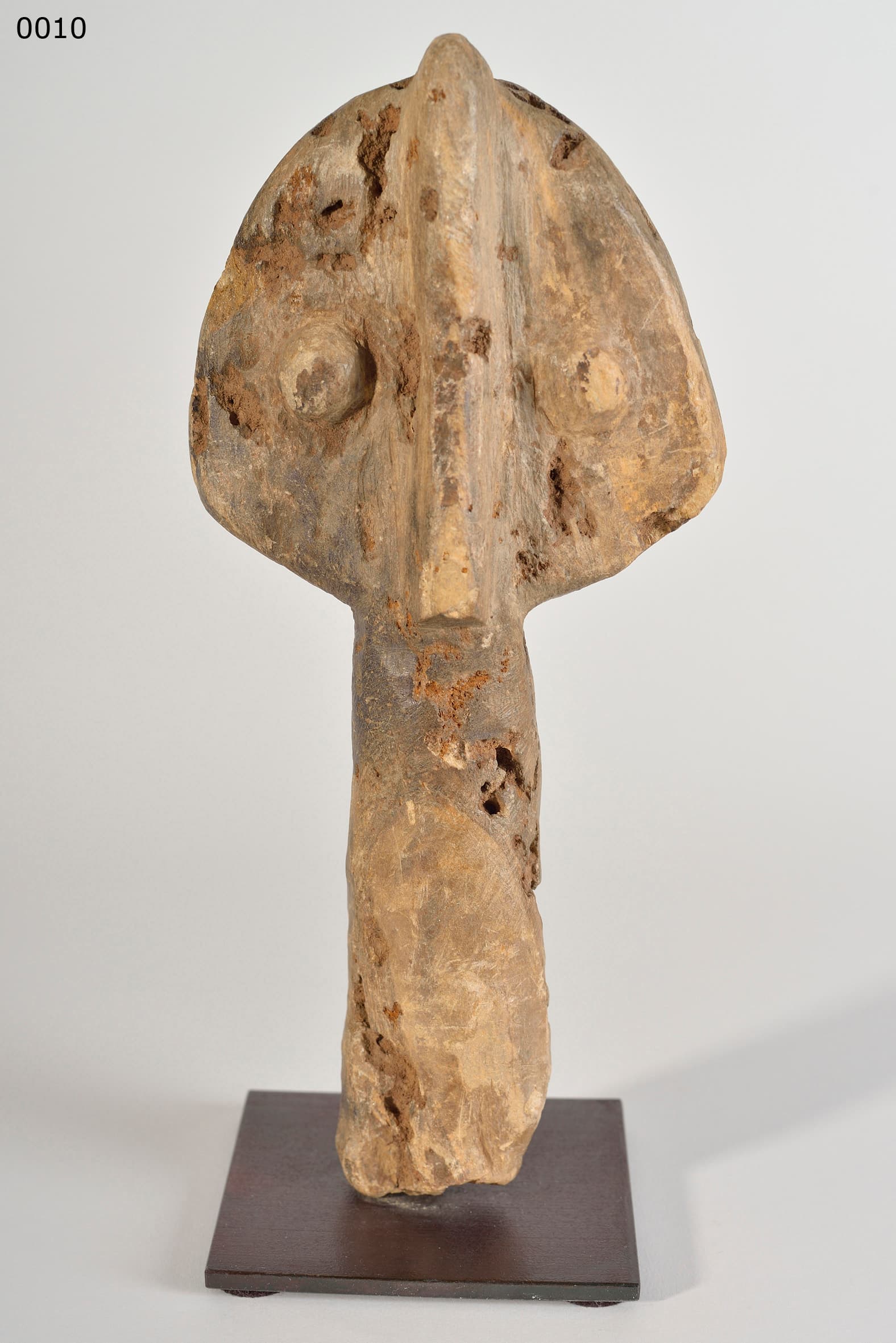
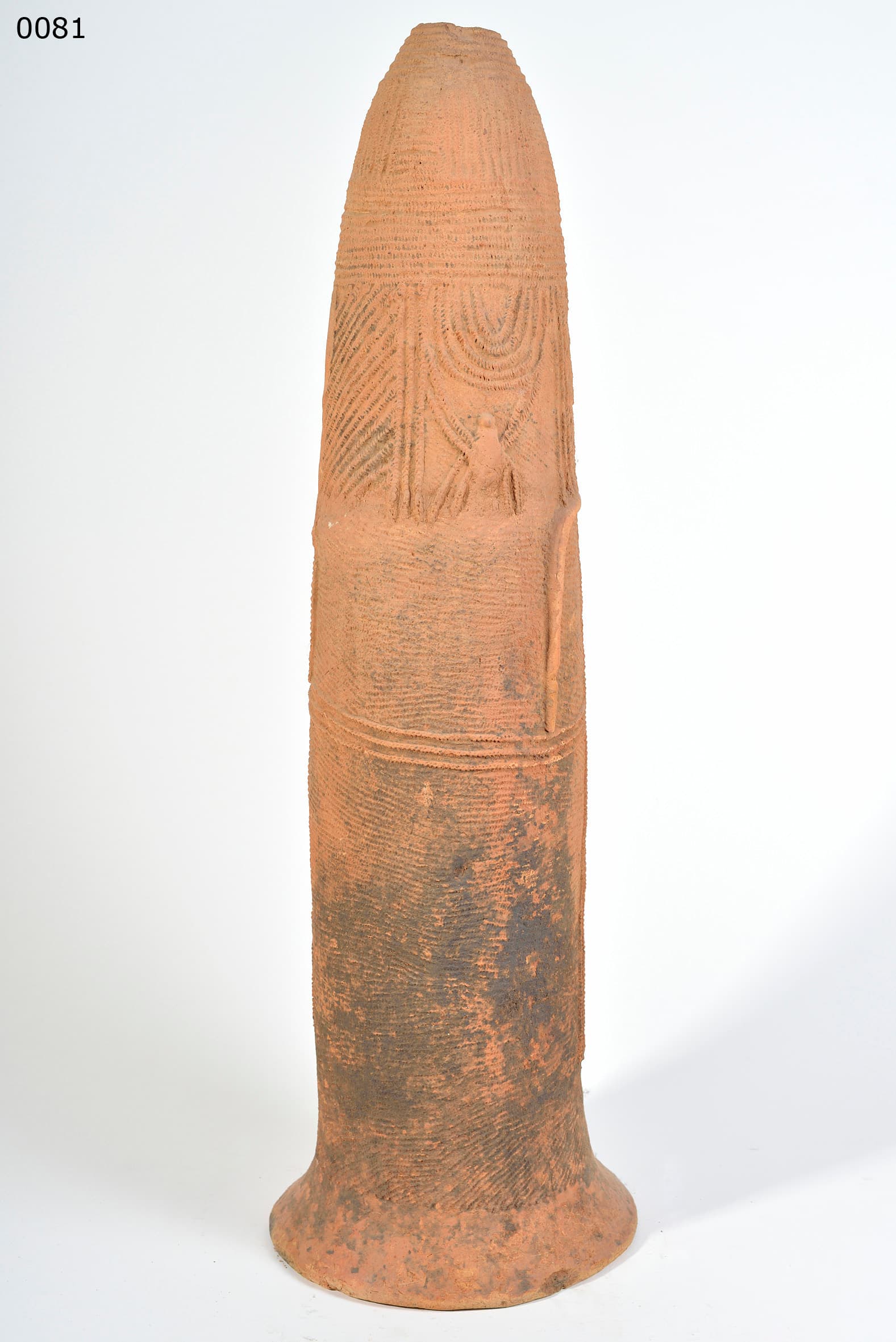
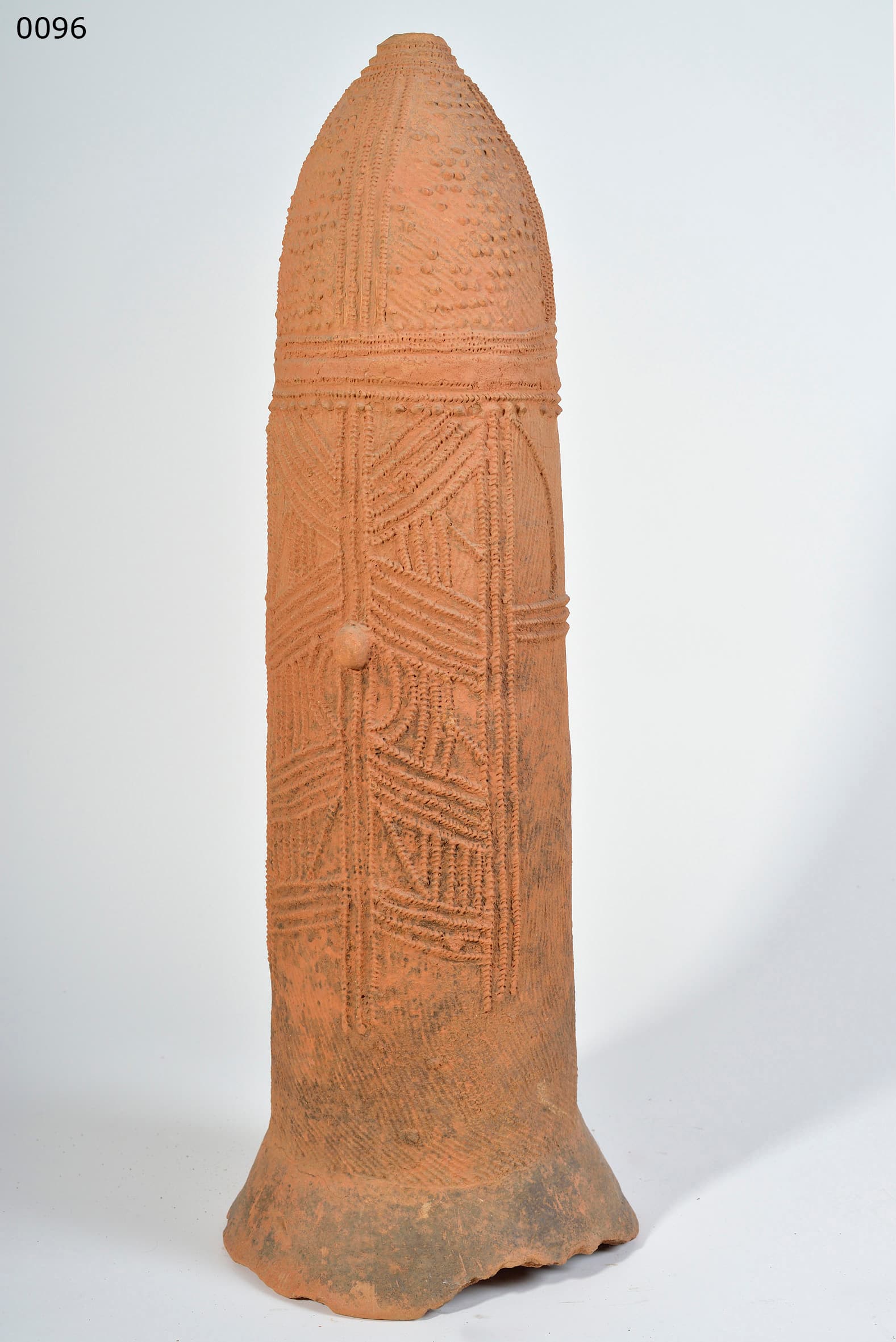
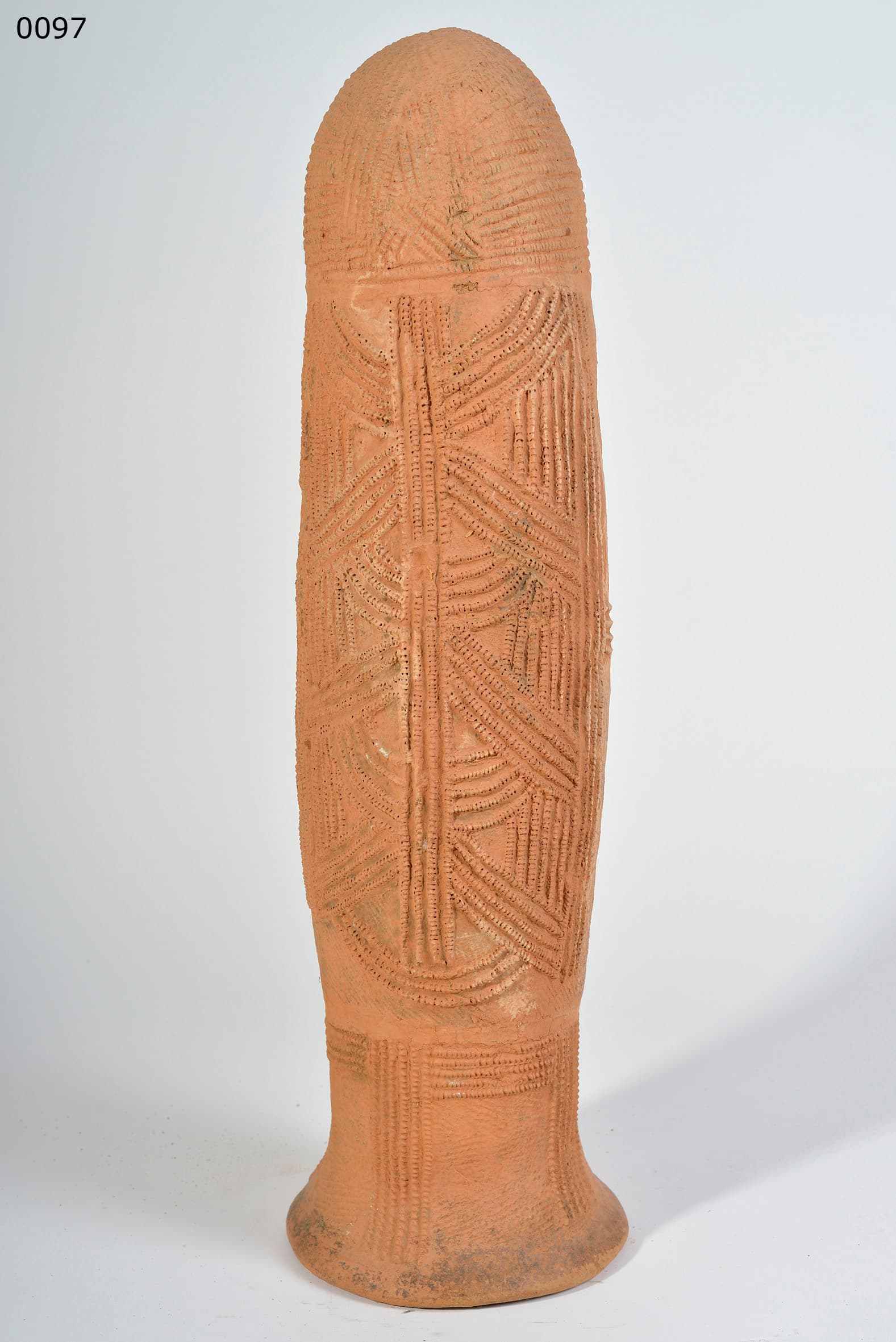
Eine massive, hoch aufragende, kugelförmige Terrakotta-Urne (3.-11. Jh., 93 cm) aus der Bura-Asinda-Sikka-Kultur an der Grenze zwischen Niger und Burkina Faso - an der Basis ausgestellt, vollständig mit komplexen, roulettierten geometrischen Bändern bedeckt. Das höchste Stück der Serie (siehe Sammlung Nr. 81, 96, 97).
1. Die antike Nekropole der Sahelzone
Diese Urne gehört zur archäologischen Bura-Asinda-Sikka-Kultur (3.-11. Jahrhundert) - ein antiker Sarg.
- Sekundärbestattung: Die Bura praktizierten die Sekundärbestattung. Nachdem das ursprüngliche Fleisch verwest war, wurden die verbleibenden Knochen und der Schädel in den hohlen Schaft gelegt und aufrecht in die Erde in riesigen "Städten der Toten" gepflanzt
2. Die Symbolik der Wiedergeburt
Die offenkundig kugelförmige, phallische Form ist durchaus beabsichtigt. In der frühen westafrikanischen Kosmologie wurde der Tod als eine Rückkehr zur Erde betrachtet, um neues Leben zu ermöglichen. Indem die Bura die Ahnen in phallischen Gefäßen bestatteten, pflanzten sie symbolisch den vitalen Samen des Verstorbenen zurück in die Erde und sicherten so die fortgesetzte Fruchtbarkeit und das Überleben der lebenden Nachkommenschaft.
3. Die Textur der Identität
Keine zwei Bura-Urnen sind genau gleich. Die faszinierenden Oberflächenmuster, die durch das Rollen von geflochtenen Fasern, geschnitzten Holzrouletten und Muscheln über den feuchten Ton entstanden, dienten als Clan-Register, das die spezifische Abstammung, den Reichtum und den sozialen Status der darin beigesetzten Person identifizierte.
Zusammenfassung
Diese Bura-Urne, die mit 93 cm die größte der Serie ist, ist ein spektakuläres Monument der alten afrikanischen Archäologie. Sie vereint die Konzepte des Todes und der männlichen Fruchtbarkeit in einem reich verzierten, ewigen Terrakotta-Samen, der in die sahelische Erde gepflanzt wurde.
KI-unterstützt erstellt aus Sammlungsgutachten, Objektfotografie und eigener Recherche, redaktionell geprüft. Fehler sind möglich — Hinweise darauf sind uns willkommen. Zum Verfahren →